Healthcare Statistics
Underserved Populations
Workshop Pop-Quiz
GRAM & RAM
100
Although these communities make up nearly 20% of the U.S. population, about 80% of them are considered medically underserved.
What are rural areas?
Over 60% of all areas classified as primary care, dental, and mental health professional shortage areas are rural. As of June 2023, dental was the highest, with 67% of provider shortages located in rural areas.
100
An analysis of federal survey data from over 120,000 adults found that total healthcare use was 35–42% lower among people whose primary language is this, compared to English speakers.
What is Spanish?
Due to language barriers, 25 million Spanish speakers receive about a third less health care than other Americans, a large study of U.S. adults shows.
In 1 out of 5 U.S. households, the occupants mainly speak a language other than English, according to the U.S. Census Bureau. However, 29% of hospitals don’t offer access to the patient portal in a language other than English, and just 11% offer access in English, Spanish and a third language.
100
Rate of compressions during CPR
100 to 120 compressions per minute
100
At least 5 services within Medical, Dental, & Vision that RAM provides at their pop-up clinics
Dental - Cleanings, fillings, extractions, x-rays
Vision - Eye exams, eye health evaluations, eyeglass prescriptions, selected frames and glasses made on-site
Medical - General medical exams, physicals, women's health services (a variety of medical services depending on the volunteer specialties)
200
This part of Florida has one of the highest incidence rates of uninsured residents in the United States.
What is South Florida?
According to the US Census Bureau, the percentage of uninsured individuals under the age of 65 in the State of Florida is 13.9%. Yet in South Florida, the 3 major counties uninsured rate is higher than that of the State: Broward County – 15%, Miami Dade County – 16.7%, and Monroe County – 18.7%.
This is particularly true among low-income, Black and Hispanic residents.
200
Leading cause of death for both U.S. men and women
What is heart disease?
A recent study attributed 60-70% of excess heart disease among low-income Americans to poverty rather than traditional risk factors.
Results found that if we want to improve the health of patients, we have to address poverty, low education, housing affordability and the stress of poverty itself.
200
The proper steps to apply a tourniquet
Apply the tourniquet 2-3 inches above the wound (avoid placing on a joint), tighten until the bleeding stops, don't remove until help arrives
200
What patients need when entering a RAM clinic.
Trick question! They do not need ID, payment, or insurance.
300
This percent of Remote Area Medical (RAM) patients have nowhere to go for healthcare other than the emergency room.
What is 51%?
📊54% are uninsured.
📊 31% haven’t seen a medical professional in over 5 years.
📊 30% of patients said their health has worsened in the last five years.
300
5 social determinants of health
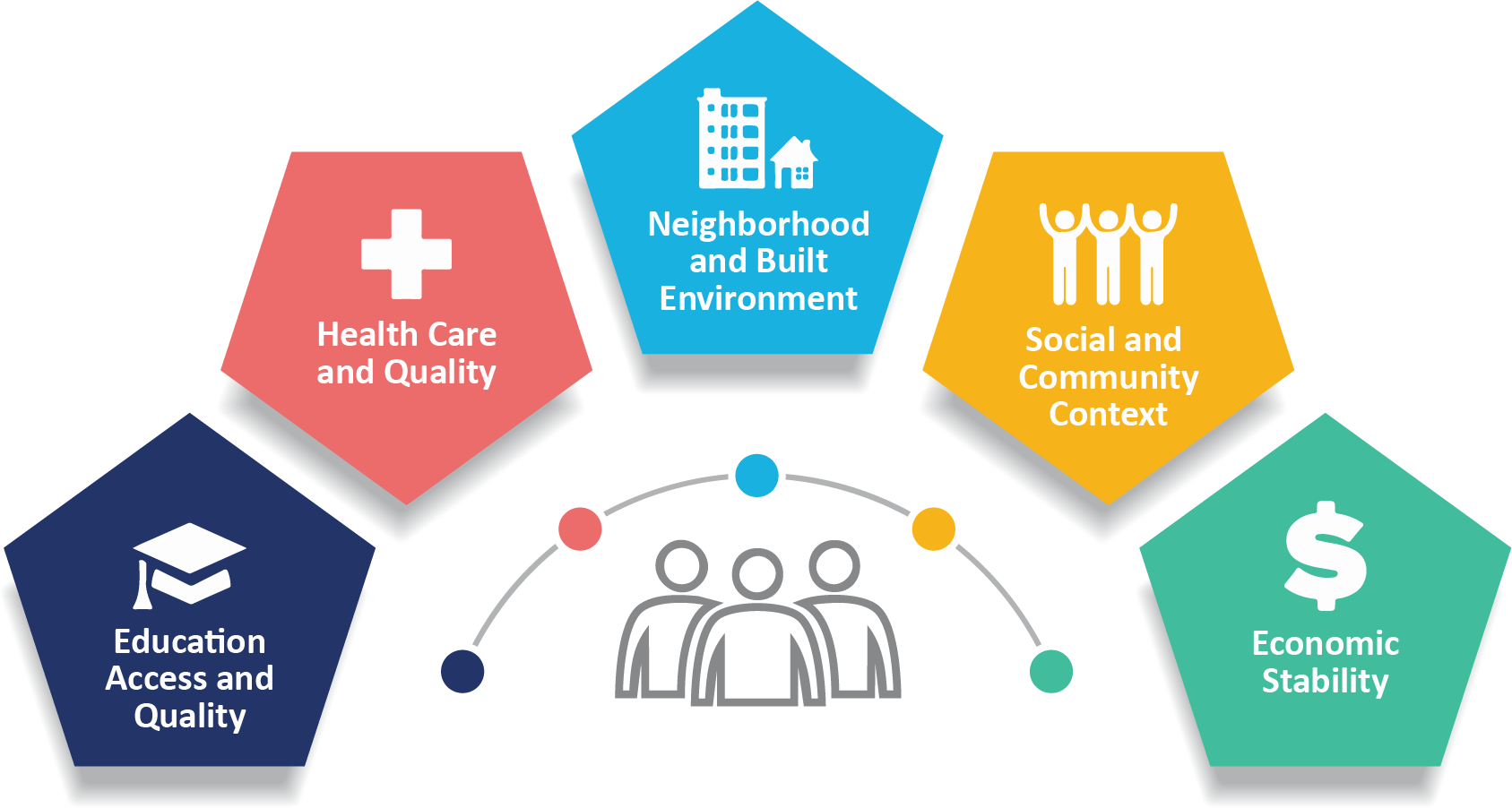

300
Signs of an opioid overdose to recognize before administering Naloxone (Narcan)
What is
- Blue or purple fingernails and lips
- Unresponsive to voice or touch
- Pinpoint pupils (center part of eye is very small)
- Slow, irregular, or stopped breathing
- Slow heartbeat or low blood pressure
- Pale, clammy skin?
300
Type of workshops GRAM has hosted
What is CPR, Stop the Bleed, Substance Education & NARCAN Training, Insurance, Vitals, & Crochet (Suture Workshop coming soon!)
400
The approximate percentage of the US's GDP that it spends on healthcare
What is 17-18%?
The Paradox - It doesn’t capture health outcomes or quality of care. It fails to account for the distribution of health care resources and access to care. It doesn’t reflect the efficiency of health care spending.
The U.S. doesn't consume more care, but pays significantly higher prices for hospital visits, procedures, and pharmaceuticals compared to other nations.
The U.S. has big disparities, so even high spending doesn’t reach everyone equally
400
This practice stemmed from decades-old U.S. policies labeling some neighborhoods “desirable” and others “undesirable,” creating racial segregation and unequal access to hospitals and resources.
What is redlining?
Studies and statistics show that people from formerly redlined neighborhoods face multiple health disparities including a lower life expectancy.
Historical redlining is linked to higher rates of diabetes, high blood pressure, and early heart disease because it limited people’s economic opportunities and access to education, skills, and resources that help them live healthier lives.
400
These five health insurance terms describe: a monthly payment to keep coverage, the amount you must pay before insurance helps, a fixed fee per visit, a percentage of costs you pay after the deductible, and the maximum you’ll pay in a year
What are premium, deductible, copay, coinsurance, and out-of-pocket maximum?
400
The number of patients and cost in services that GRAM has helped provide thus far.
4,928 patients and $3,296,209 in services