Retro Mania
Incidentalomas!
Urine Trouble
The Leaky Faucet
Is it Cancer? MRI Edition
100
Name the fascial layer that separates the anterior pararenal space from the posterior pararenal space:
(Two answers will be accepted)
Gerota's Fascia (Also known as the Renal Fascia)

100
What is the inner most zone of the adrenal cortex, and what hormone does it produce?
Zona reticularis (androgens)

100
What are the three phases of a CT Urography?
(100 additional bonus points will be given if timings are provided for the second and third phase - total of 200 additional points)
- Unenhanced CT of the Abdomen and Pelvis
- Nephrographic phase through the kidneys (100 seconds after IV)
- Excretory phase (15 mins after IV)
100
What is the most common cause of urethral stricture in males?
(Will accept one of two answers)
Prior urethral injury or infection

100
What are the three layers of the uterine wall?
(Need all three for full points)
Endometrium, myometrium, serosa (perimetrium)

200
What are the primary contents of the anterior pararenal space?
(Full points will be given to team able to name at least two structures)
Pancreas, duodenum, ascending and descending colon

200
What clinical syndrome presents with this CT finding, and a physical exam consistent with facial roundness, weight gain, and easy bruising?
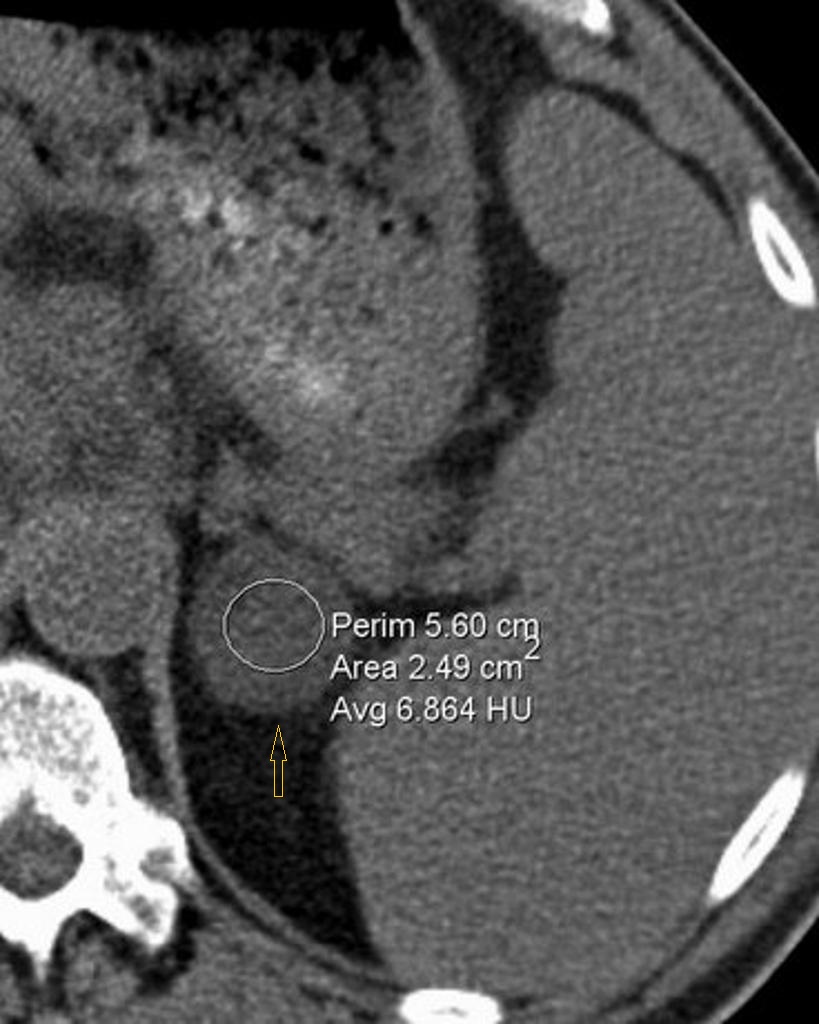
Cushing Syndrome
Teaching Point: Adrenal Adenoma presents as homogeneous, well-defined, <4cm, often with low attenuation on CT
200
This lesion represents the most common ureteral neoplasm:
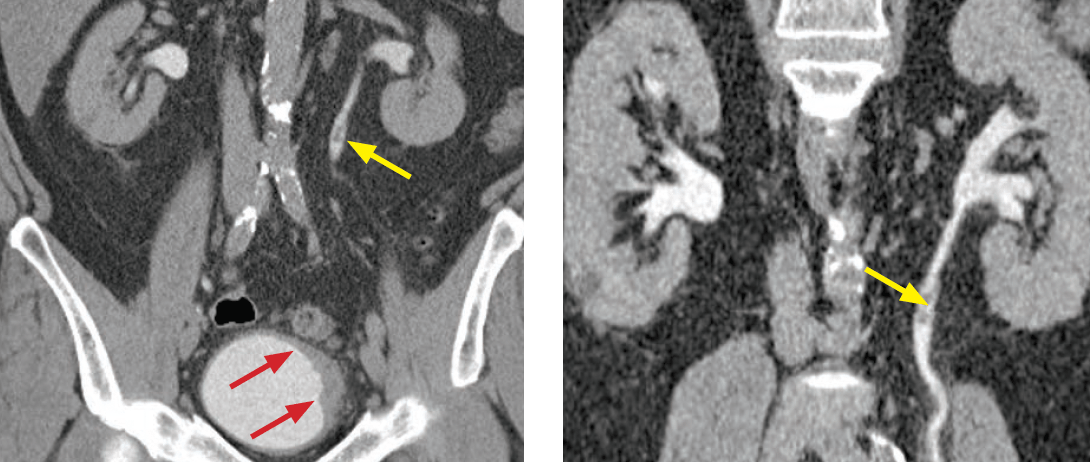
Transitional Cell Carcinoma
Teaching Point: High predilection for multifocality, thus bladder should additionally be carefully evaluated.
200
What imaging modality is typically used to evaluate the urethra?
(Will accept one of two possible answers)
Voiding cystourethrogram (VCUG)
Retrograde urethrogram (RUG)
Teaching point: VCUG focuses on the posterior urethra, while RUG focuses on the anterior urethra.
200
What is the most common type of ovarian cyst?
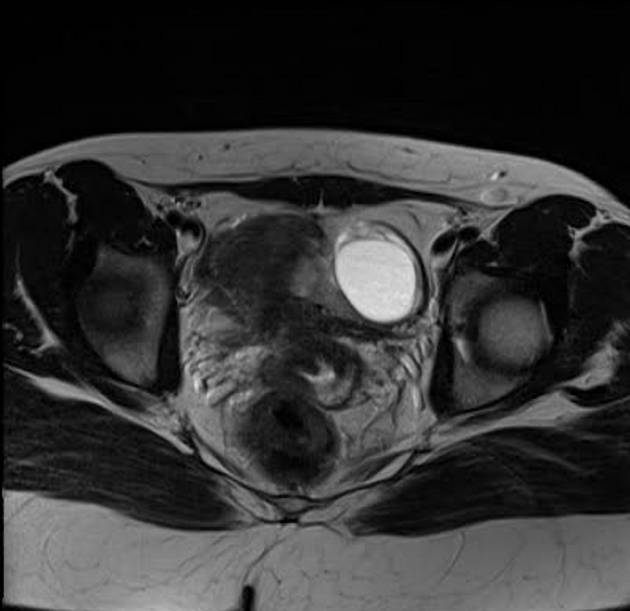
Follicular Cyst
Teaching Point: By definition, if <3cm, the lesion is to be termed an ovarian follicle rather than an ovarian follicular cyst.
300
A patient presents with flank pain and a retroperitoneal mass displacing the kidney. What are a few key differential diagnoses?
Name at least two differentials for full points
Retroperitoneal sarcoma, lymphoma, neurogenic tumor, psoas muscle abscess

300
What pathology is the "salt and pepper" appearance on MRI characteristic of in the adrenal gland?
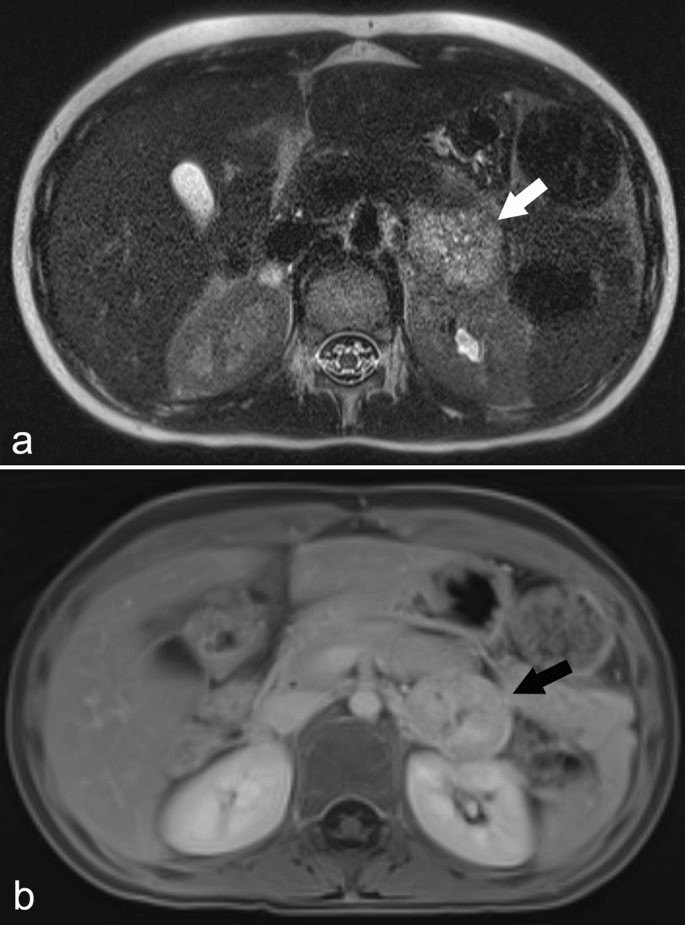
Pheochromocytoma
Teaching Point: This appearance is caused by the tumor's high vascularity and potential for internal hemorrhage
300
This lesion represents the most common benign tumor of the ureter:
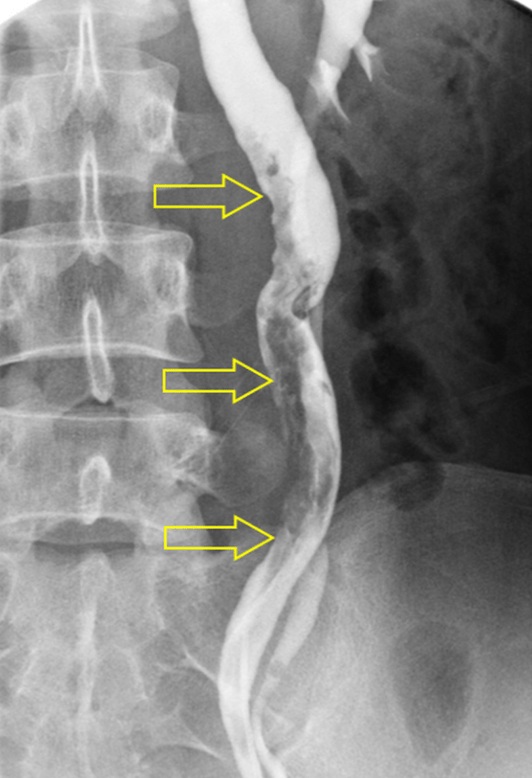
Fibroepithelial polyp
Teaching Point: Features a long stalk and appears as an elongated smooth tubular lesion.
300
What urethral complication may present with postvoid dribbling, urethral pain, and dyspareunia (painful sexual intercourse)?
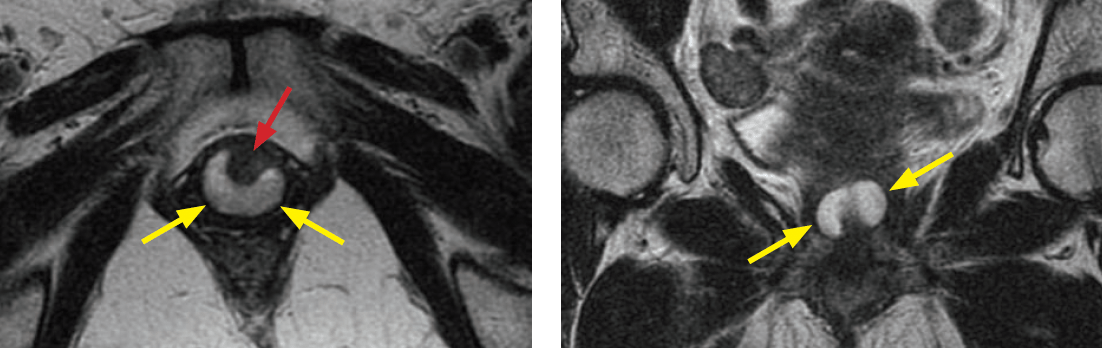
Urethral Diverticulum
300
This pelvic pathology classically demonstrates mutiple hyperdense masses on T1 weight images, and characteristic shading on T2 weighted images
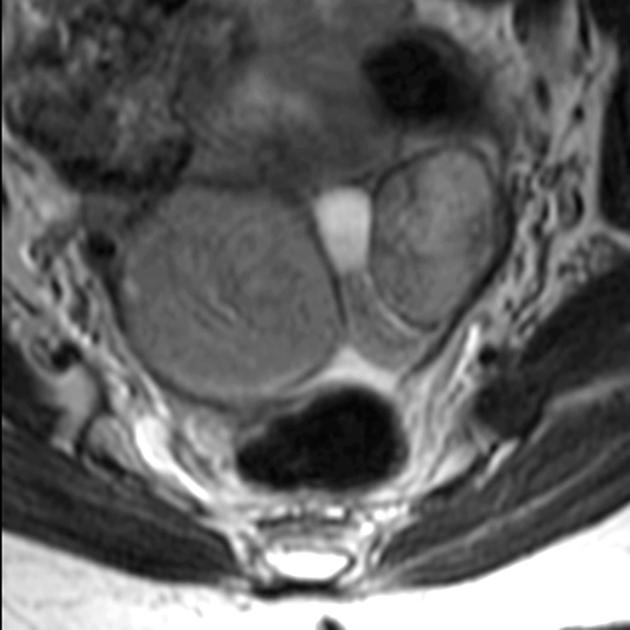
Endometriosis
Teaching Point: Laparoscopy is the gold standard for evaluation of suspected endometriosis.
400
What is the most common primary retroperitoneal malignancy in adults?
Liposarcoma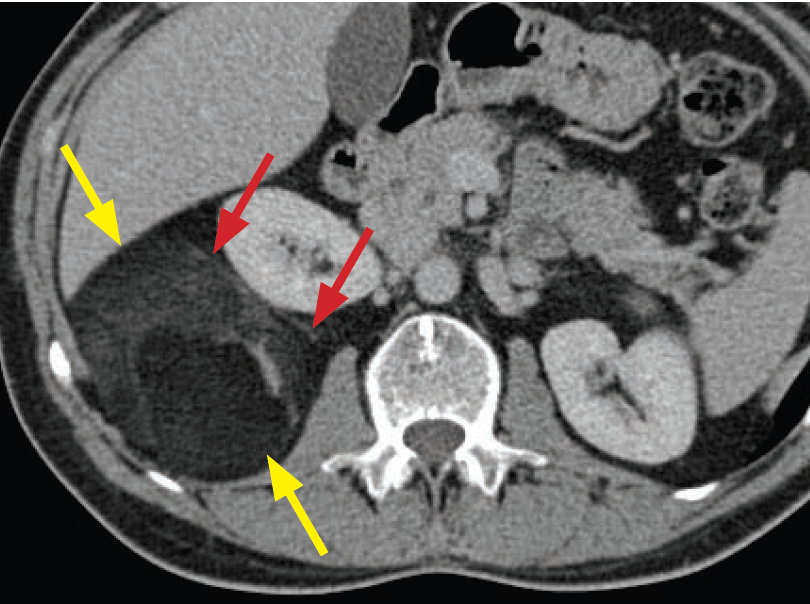
Teaching Point: 10-15% of all liposarcomas arise from the retroperitoneum
400
What is the most common extra-adrenal site for pheochromocytoma?
Organ of Zuckerkandl

400
What renal lesion is the most commonly resected benign entity, which has many overlapping imaging findings with RCC?
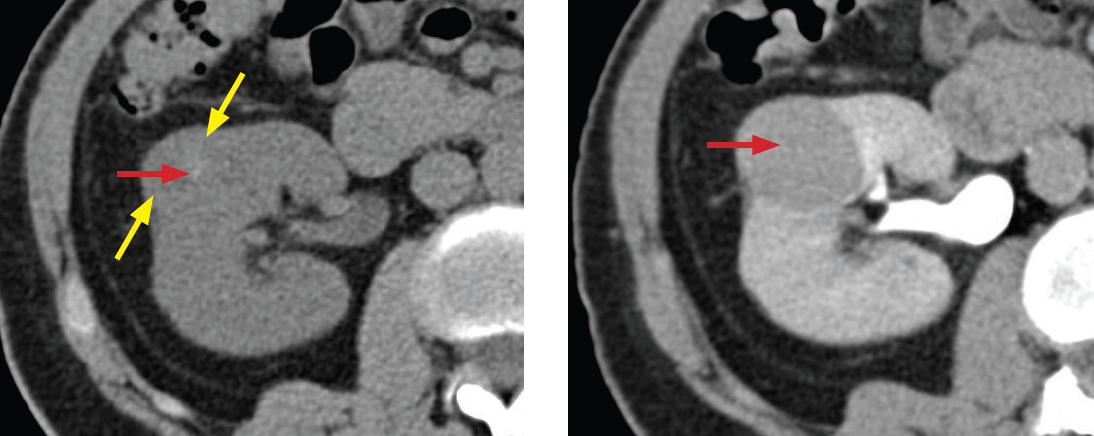
Oncocytoma
Teaching Point:Imaging can be hit or miss with this lesion, although key findings for an oncocytoma are homogenous enhancement and a central scar.
400
The (pelvic) molar tooth sign, image below, should raise concern for what acute intrapelvic abnormality?
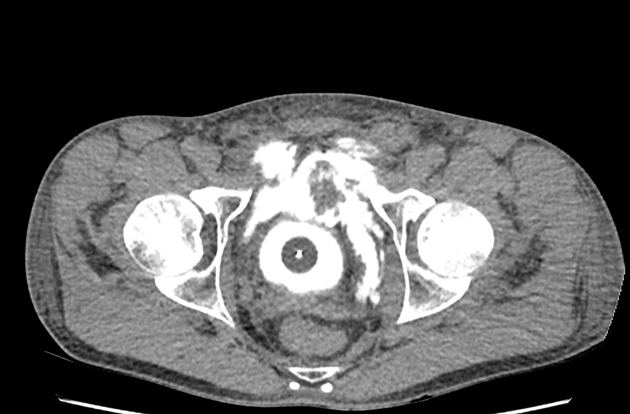
Extraperitoneal bladder rupture
Teaching Point: Sign refers to appearance of contrast media spilling out of the urinary bladder
400
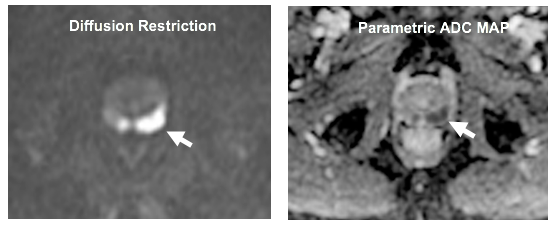
What is the typical appearance of prostate cancer on diffusion-weighted imaging (DWI)?
Restricted diffusion on DWI, often appearing as a bright signal on high b-value images.
500
"Ormond's Disease" is another name for what retroperitoneal condition?
Idiopathic Retroperitoneal Fibrosis
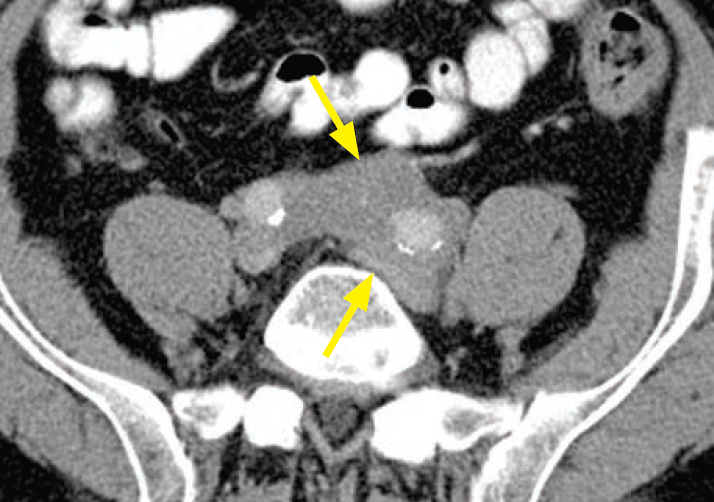
Teaching Point: A rare inflammatory disorder which causes increased fibrotic deposition in the retroperitoneum. Does NOT elevate the aorta off the spine.
500
What imaging modality is most sensitive for detecting small adrenal metastases?
PET/CT
500
What rare renal injury, often in the setting of acute ischemia, may lead to cortical nephrocalcinosis.
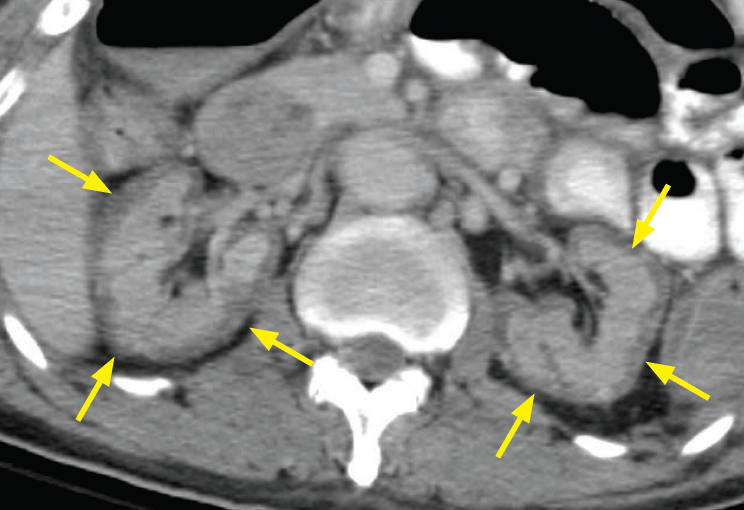
Cortical Necrosis
Teaching Point: Leads to chronic renal failure in up to 50% of patients
500
What is the significance of a "cobra head" sign on an intravenous pyelogram?

Ureterocele
Teaching Point: Refers to the dilatation of the distal ureter, typical of an uncomplicated ureterocele
500
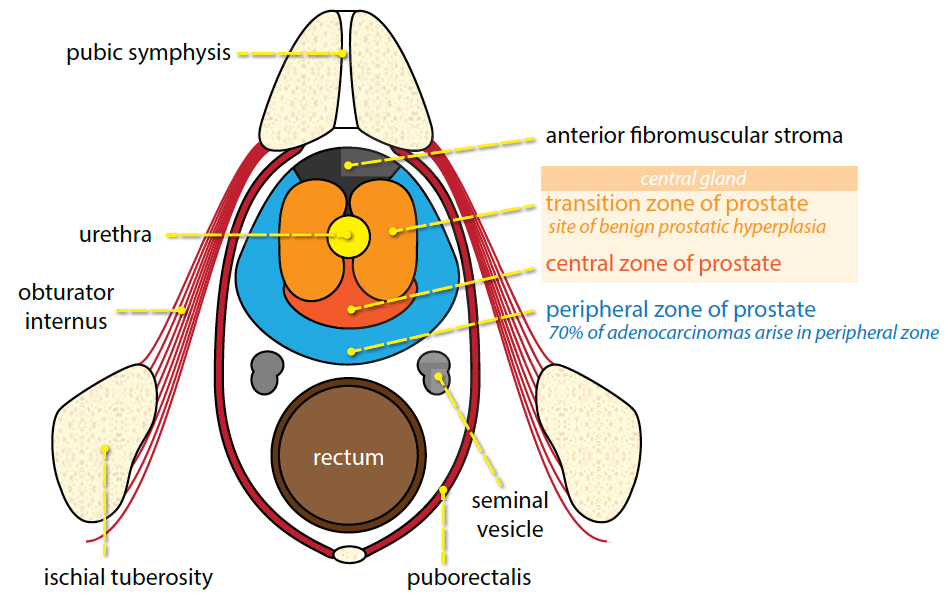
Which zone of the prostate does approximately 70% of adenocarcinomas typically arise?
Peripheral Zone