Definitions
Diseases
Whittaker and Kingdoms
Specific Diseases
Kingdoms and Microbes Classification
100
What is the definition of health?
state of complete physical, mental and social well being and not just the absence of any disease
100
What are the two types of diseases?
1) Infectious diseases(also called communicable or transmissible diseases)
2) Non-infectious diseases
100
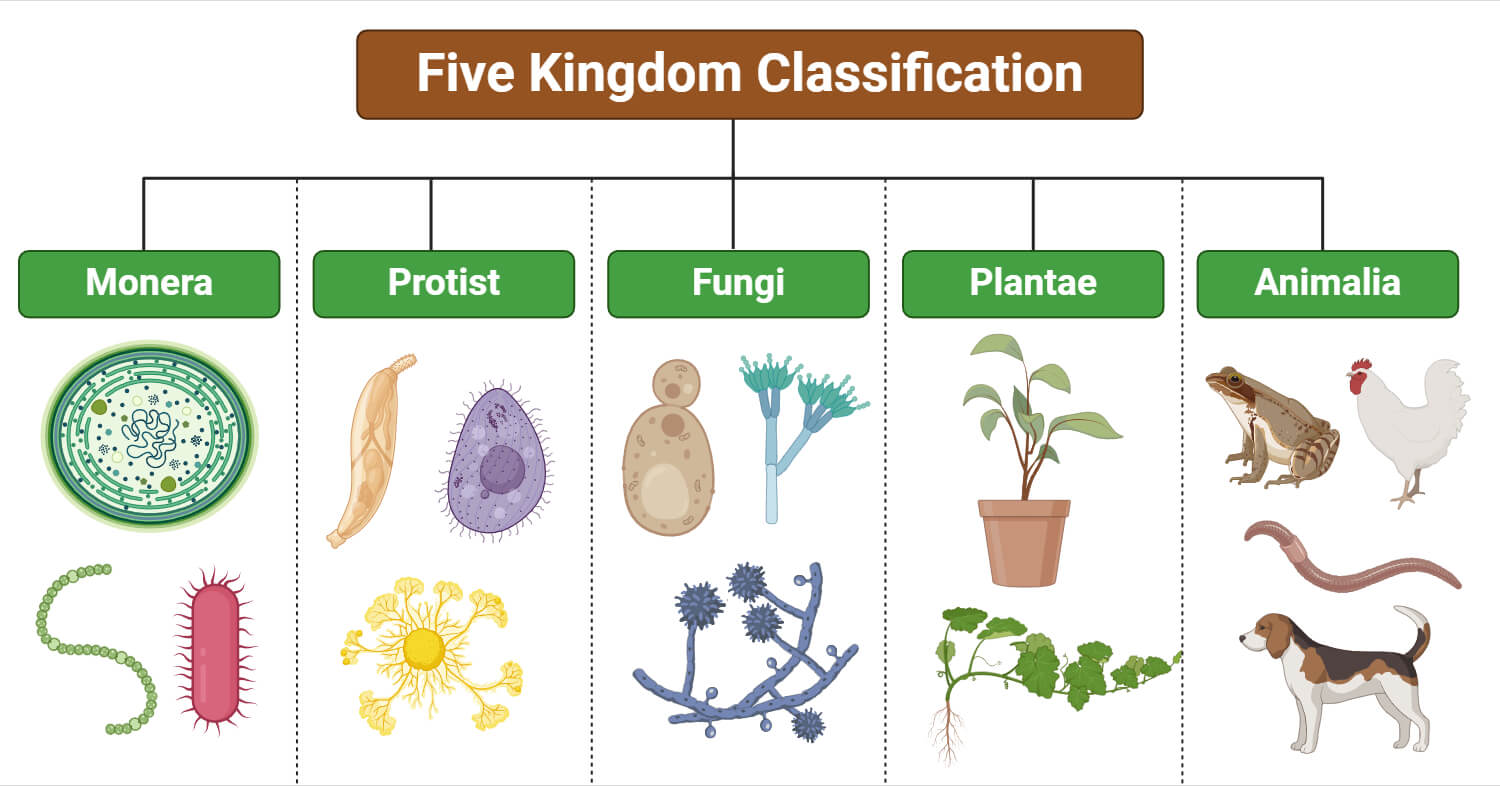
What are the 5 kingdoms in Whittaker's classification?
100
What disease can be described as uncontrolled abnormal cell growth
Cancer
100
Name two descriptive factors of a fungi(reproduction, size, examples, etc)
1) Found on decaying organic matter and dead bodies of plants and animals
2) Eukaryotic organisms, some unicellular, some visible with the naked eye
3) Saprotrophic(absorbs food from decaying organic matter)
4) Reproduce sexually or asexually by cell division or budding
5)Size: approx 10-100 micrometers
6) Examples: Baker’s yeast, Candida, mushrooms
200
What is the definition of disease?
condition of disturbances in physiological or psychological processes of body . Each disease has its own specific symptoms
200
What are infectious and non-infectious diseases, respectively, caused by?
Infectious disease are caused by pathogens, such as viruses, bacteria and fungi
Non-infectious diseases are caused by factors such as genetics, environment and lifestyle
200
Name two factors Whittaker's classification is based on
any two of these;
- phylogenetic relationship
- complexity of cell structure
- mode of nutrition
- complexity of organisms
- lifestyle
200
What is dengue?
mosquitoes lay eggs in water-logged places -> population increases
spread by Aedes aegypti.
caused by DEN-1-4 virus belonging to flavivirus
200
What kingdom is aquatic?
Algae
300
What is the definition of prokaryotic/eukaryotic?
Prokaryotic cells are simple, single-celled organisms that lack a true nucleus or membrane-bound organelles. Their DNA floats freely in a region called the nucleoid. In contrast, eukaryotic cells are larger, more complex cells that contain a distinct nucleus (which encloses their DNA) and various membrane-bound organelles.
300
Give 3 examples of an infectious disease
Colds
Influenza
Chicken pox
Herpes
Measles
and many more!
300
What kingdom are Bakers Yeast, Penicillium and Mushrooms examples of?
Fungi
300
What is AIDS?
AIDS = Acquired Immunodeficiency Syndrome
Caused by HIV (Human Immunodeficiency Virus) which leads to progressive weakening of immunity
300
Describe the cell(s) of a bacteria?
Cell is prokaryotic but has a cell wall, though distinct nucleus or cell organelles are absent
400
What is the definition of heterotrophic?
Being heterotrophic (derived from the Greek words heteros meaning "other" and trophe meaning "nourishment") means an organism cannot make its own food. Instead, it must obtain its energy and nutrients by consuming other living or dead organic matter. All animals, fungi, and many bacteria are classified as heterotrophs. They rely on primary producers, such as plants, which manufacture their own food through processes like photosynthesis
400
Give 3 examples of a non-infectious disease
Down syndrome
Hemophilia
Skin cancer
Cardiovascular disease
and many more
400
What produces its own protein with the help of host cell, replicates destroy the cell and then infects new cells?
Virus
400
What is swine flu and what virus causes it?
(Extra points if symptoms can be listed)
Occurs through pigs and humans
Spread through secretions of throat, nose and saliva.
Caused by virus influenza A H1N1
Symptoms
Difficulty in breathing
Sore throat
Body ache
400
How does a bacteria reproduce?
Reproduces by simple binary fission.
In favorable conditions, bacteria can double their number in 20 minutes!
500
What is the definition of saprotrophic?
organisms, such as fungi or bacteria, that obtain their nutrients by feeding on dead and decaying organic matter. They perform external digestion by secreting enzymes to break down the material, and then absorbing the resulting nutrients
500
What disease is this?
Viral disease caused by the bite of an infected dog, cat or monkey.
Virus enters the brain via neurons
Symptoms such as fever for 2-12 weeks, hydrophobia
and exaggerations in behaviour
Rabies
500
Describe a protozea(type of cell, size, examples, etc)
1) Found in soil, freshwater, seawater and sometimes in the bodies of other organisms and pathogens
2) Unicellular organisms with an eukaryotic cell
3) Variation in cell structure, locomotion, organs and nutrition modes
4) Reproduce by simple cell division
5) Size: approx 200 micrometers
6) Examples: amoeba, paramoecium, plasmodium vivax
500
What disease fits this description, and what is it?
Causes- Heredity, Lack of physical exercise, Obesity, Poor diet
Symptoms-, frequent urination at night, obesity/ weight loss
Diabetes --
Insulin hormone produced in pancreas controls glucose level in the blood,
If insulin secreted is low, the glucose level cannot be controlled
500
What are the three defining traits of a protista?
1)Single celled with well-defined nucleus enclosed in a nuclear membrane
2) Have pseudopodia, hair-like cilia or whip-like flagella for locomotion(movement)
3) Autotrophs or Heterotrophs