Decimals
Fractions
Ratios and Proportions
Conversions
Misc
100
Add: 1.332 + 0.067
Answer: 1.399
Rationale: Line the decimals and add.
100
6/8 + 6/8 = ?
Answer: 1 1/2
Rationale: 6/8 + 6/8 = 12/8. Do not leave your answer as a mixed number. Now, it becomes 1 4/8. Remember to always simplify your answer. The answer is 1 1/2.
100
Solve the proportion: x:63 :: 24:72
Answer: 21
Rationale: First, rewrite the proportion as a fraction. x/63 = 24/72. Then cross multiply. (x)(72) = (24)(63). It would then be written as 72x = 1512. Solve for x. 1512 ÷ 72 = 21
100
How many grams in 5 kilograms
5,000 grams
100
If x =2, then solve 3x - 1
Answer: 5
3(2) - 1
6 - 1 = 5
200
Multiply: (2.5)(0.03)
0.075
Rationale: Multiply the whole numbers together and place the decimal by adding the total decimal places from both original numbers. In this case, 3 decimals so multiple 25 x 3 = 75 and move the decimal place 3 times from the right.
200
1 1/2 - 9/8 = ?
Answer: 3/8
Rationale: Change the denominators so that it's easier to subtract. Multiply 1/2 by 4 to get= 4/8. Then, Change so that they're both mixed numbers. 1 whole is 8/8 + 4/8 = 12/8. Finally, you can subtract. 12/8 - 9/8 = 3/8
200
How would you change this fraction 19/22 to a ratio?
19:22
200
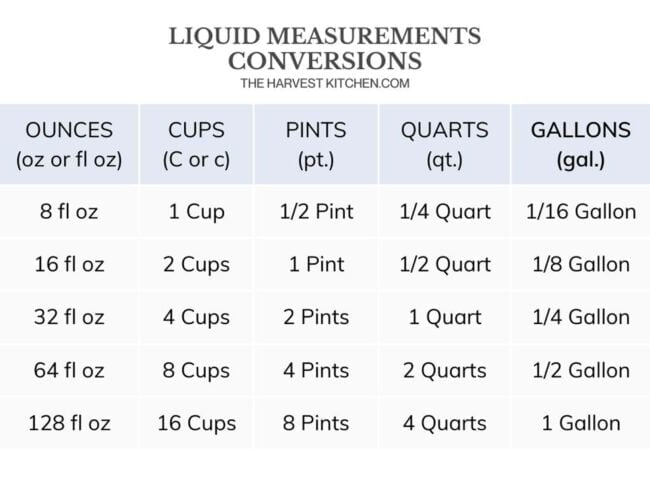
How many pints in 8 quarts?
16 pints. 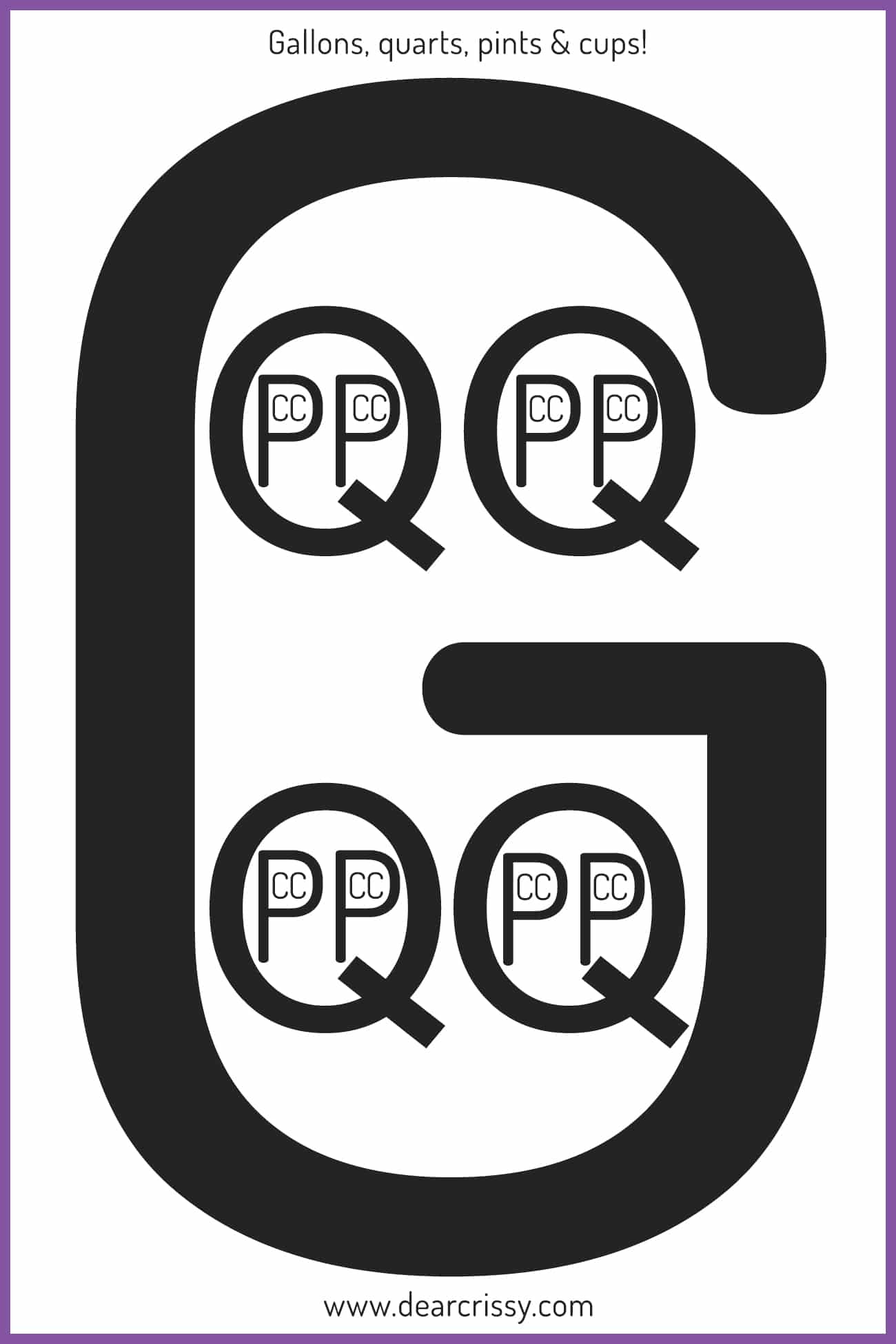
200
In the number 743.25, which digit represents the tenths space?
Answer: 2
.png)
300
Divide: 2.25 ÷ 0.15
Answer: 15
Rationale: Move the decimals to the right for both numbers to get whole numbers. It would now be 225 ÷ 15. 15 is the divisor (what you're dividing by) & goes outside the symbol while 225 is the dividend (the number being divided). Solve.
300
Multiply 1/2 x 9/6 = ?
Answer: 3/4
Rationale: Simply multiply the numerators together and then the denominators together. 1 x 9 = 9 (numerators), 2 x 6 = 12 (denominators) = 9/12. ALWAYS SIMPLIFY = 3/4.
300
If a nurse sees 1.7 patient/per hour, how many patients should she be expected to see in 9.5 hours? Round to the nearest whole number.
Answer: 16
Rationale: Put 1.7:1 hour :: x:9.5 hour. Change these proportions to fractions. 1.7/1 = x/9.5. Then cross multiply to get (x)(1) = (1.7)(9.5) = (x) = 16.15. Rounded to 16 patient/per hour
300
Convert 35C to F
F = (C*1.8) +32
F = (35*1.8) +32
F = 63 + 32
F = 95
300
Sally eats 3/5 of her lunch. John eats 75%. Who ate more?
Answer: John ate more.
Rationale: Change 75% to a fraction = 3/4. 3/4 > 3/5.
400
Order the decimals from largest to smallest: 0.0688, 0.667, 0.68, 0.6
Answer: 0.68, 0.667, 0.6, 0.0688
400
Divide 3/4 ÷ 8/9 = ?
Answer: 27/32
Rationale: Keep the dividend (3/4) how it is. Flip the numerator and denominator of the divisor (8/9) to (9/8). When you flip, it becomes its reciprocal so now you can multiply. Therefore, 3/4 x 9/8 = 27/32
400
Of all the patients that visited the ER yesterday, 5% required admission. If 6 patients were admitted yesterday, how many total patients visited the ER yesterday?
Answer: 120 patients
Rationale: 5% it out of 100%. 5:100 :: 6:x. Then put these as fractions. 5/100 = 6/x. Then cross multiply to get (100)(6) = (5)(x) = 600 = 5x. Then solve for x. 600 ÷ 5 = 120.
400
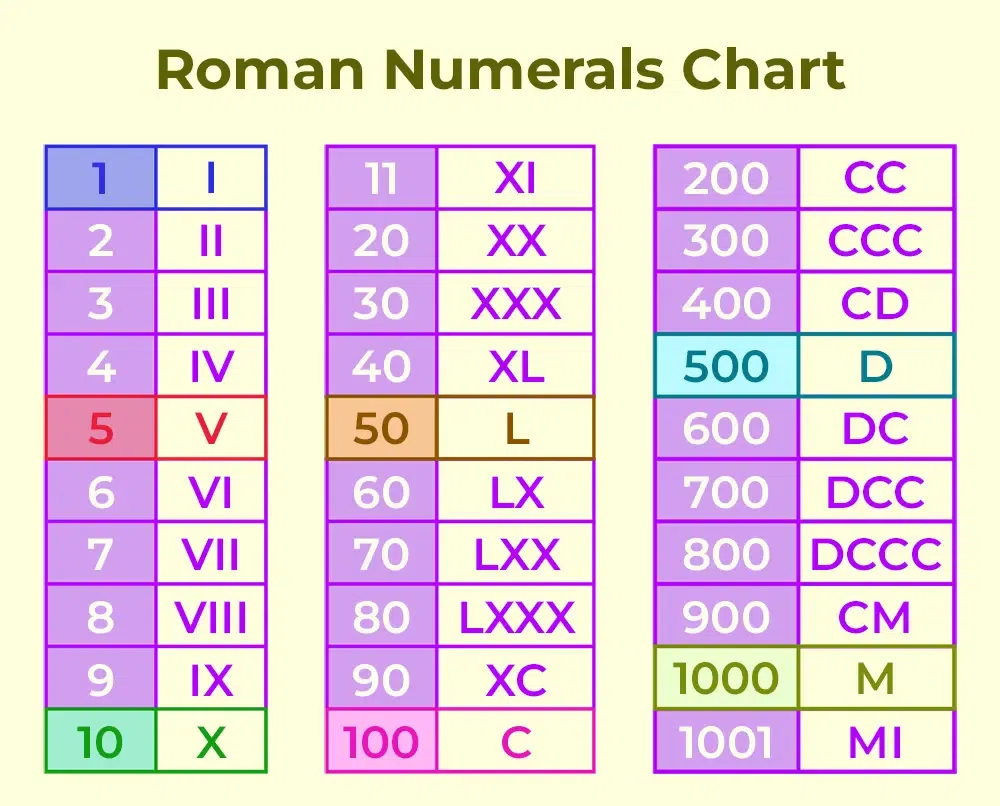
What is the number for: LXXXIV
84
400
What is 33% of 300
Answer: 99
Change 33% to a decimal and then multiply to the whole number. 0.33 x 300. Move the decimal 2 spaces to the right to make it a whole number. 300 x 33 = 9900. Then move the decimal back 2 spaces. 99.00 = 99
500
A nurse working at a medical clinic earns $17.81 per hour. The nurse works three 8-hour shifts and one 12-hour shift every week, and is paid weekly. Weekly deductions are: federal tax $102.80, state tax $24.58, federal insurance $18.13, and family health insurance $52.15. What is the nurse's take-home pay each week?
A: $158.54
B: $443.50
C: $514.74
D: $641.16
Answer: $443.50
Rationale: First, calculate how many hours she works weekly. Three 8-hour shifts + one 12-hour = 3(8) + 12 = 24 +12 = 36 hours/week
Find the salary. 36 x $17.81 = $641.16
Add the deductions. $102.80 + $24.58 + $18.13 + $52.15 = $197.66
Salary - deductions = $641.16 - $197.66 = $443.50
500
What is the reciprocal of 6?
A: 1/2
B: 1/12
C: 1/3
D: 1/6
Answer: 1/6
Rationale: In math, the reciprocal means the opposite of itself. 6/1 is how to write 6 in fractions. Therefore, the opposite is switching the numerator and denominator. 1/6 is the correct answer.
500
A farmers productions statistics finds that it takes 2 chickens to produce 6 eggs in 24 hours. How many chickens will be needed to produce 24 eggs in one day?
Answer: 8 chickens
Rationale: 2:6 :: x:24. Convert to fractions. 2/6 = x/24. Then cross multiply to get (x)(6) = (2)(24) = 6x = 48. Then solve for x. 48 ÷ 6 = 8.
500
An IV solution is set for 30 drops per minute. There are 15 drops per milliliter of IV solution. Over the course of 4 hours, how many milliliters of IV solution will have been delivered?
Answer= 480 mL
Use dimensional analysis. 30 gtts/min x 1mL/15gtts x 60min/hr x 4 hr = 480mL
500
Change 0.025 to a ratio
1:40
Rationale: Change the ratio to a fraction. There's 4 decimal places so 1000 is the denominator. 25/1000. Simplify the fraction by dividing each number by 25. 1/40. Then it can be written as 1:40