Homeostasis
Stimulus-Response Model
Regulatory Organs
Feedback Loops
Thermoregulation
BGL
100
The maintenance of a stable internal environment in the body
homeostasis
100
Detects the stimulus
receptor
100
Organ that releases hormones to regulate blood glucose levels
pancreas
100
The two types of feedback in homeostasis are:
negative and positive
100
Rapid muscle contractions that generate heat are known as:
shivering
100
This hormone lowers blood glucose levels.
insulin
200
This organ system uses electrical signals to help maintain internal balance.
nervous system
200
Compares conditions to the set point and sends signals to the effectors
control center
200
Gland in the brain that regulates many body processes including temperature.
hypothalamus
200
When the body corrects a change by reversing it—such as lowering high temperature—it is using this type of feedback.
negative
200
When skin blood vessels widen to increase heat loss from the skin.
vasodilation
200
Name an activity that increases blood glucose levels
Eating carbohydrates
300
This organ system uses hormones to help maintain internal balance.
endocrine system
300
A change or shift from normal conditions, detected by the body is called a :
stimulus
300
This pair of organs helps regulate the amount of water in the blood
kidneys
300
When you cut yourself, platelets sticking to the wound trigger chemicals that attract even more platelets to seal the injury. Is this negative or positive feedback?
positive feedback
300
When skin blood vessels narrow to reduce heat loss from the skin.
vasoconstriction
300
This hormone raises blood glucose levels when they become too low.
glucagon
400
The ideal target value for a variable in a homeostatic system.
set point
400
Muscles or glands that act to correct the change are known as
effectors
400
This organ stores glucose for use when blood glucose levels are low.
liver
400
When CO₂ levels in the blood rise, this triggers faster, deeper breathing to remove more CO₂, bringing levels back down. Is this an example of negative or positive feedback?
negative feedback
400
Control centre in the thermoregulation feedback loop
hypothalamus
400
Type 1 Diabetes is caused by what?
the immune system destroying most or all of the beta cells within the pancreas
500
What is a term we can use to describe a long term disruption to homeostasis,
Acceptable answers:
Disorder
Disease
Illness
500
When the condition is brought back within the normal range
response
500
This part of the brain detects high carbon dioxide (low oxygen) levels in the blood and sends signals to increase breathing and heart rate.
Chemoreceptors in the Medulla Oblongata
500
At what point on the provided graph would represent when insulin begins being released into the bloodstream by the panceas
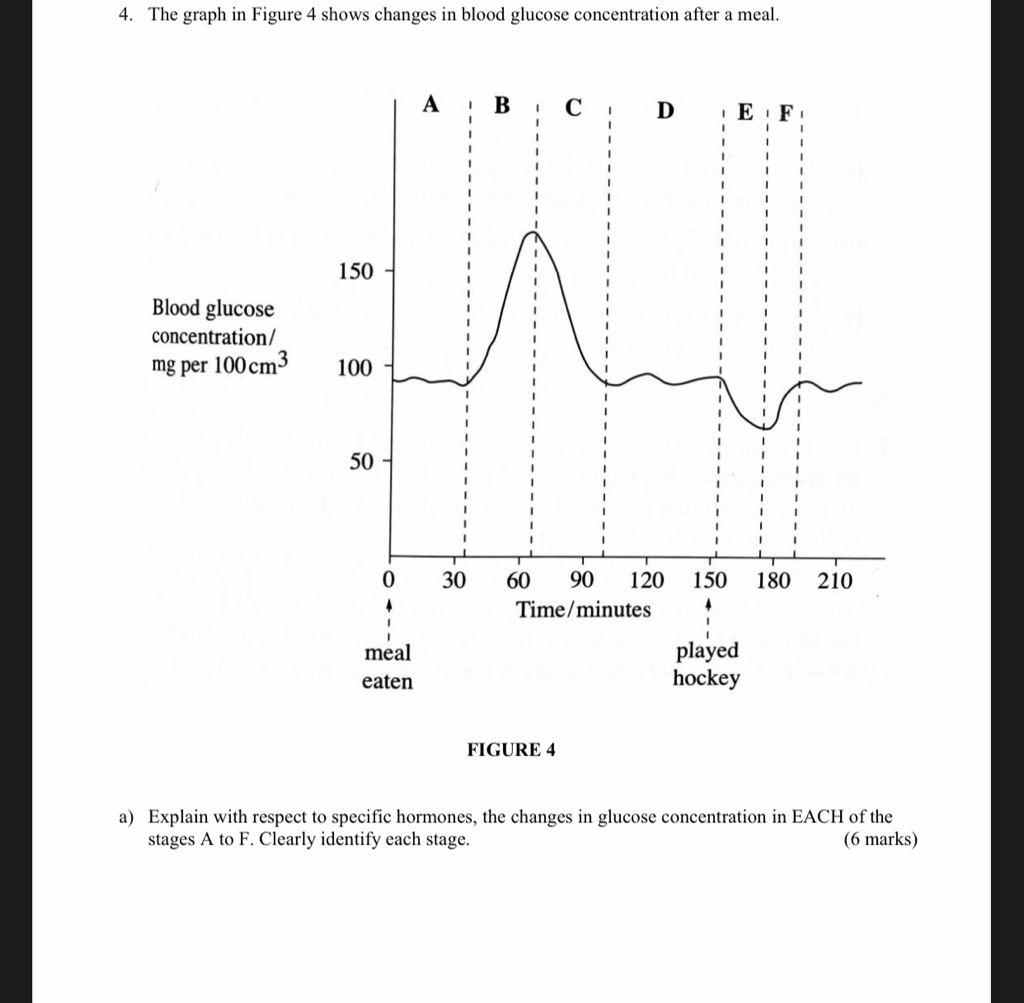
B
500
Special group of neurons in the hypothalamus that monitor blood temperature directly.
thermoreceptors
500
The liver stores glucose as a molecule called _____________.
glycogen