Practice Problem
Negative or Positive?
Parts of a Feedback Loop
Nervous System
Muscular System
100
Our bodies try to maintain a constant temperature close to 98.6 ºF (37ºC). If the blood temperature falls too low (gets too cold), specialized neurons in the hypothalamus part of the brain sense the change and the brain sends signals to the muscles. The muscles contract causing a shiver, which produces heat.
What is the stimulus?
Blood temperature gets too cold
100
When the response is opposite to the stimulus
Negative Feedback
100
the maintenance of a constant state
homeostasis
100
Function of the nervous system?
Controls your body’s actions and responds to changes inside or outside your body.
100
The type of muscle used to grab something
Skeletal
200
Our bodies try to maintain a constant temperature close to 98.6 ºF (37ºC). If the blood temperature falls too low (gets too cold), specialized neurons in the hypothalamus part of the brain sense the change and the brain sends signals to the muscles. The muscles contract causing a shiver, which produces heat.
What is the receptor?
Hypothalamus part of the brain
200

Positive Feedback
200
What processes information from various sources and sends instructions for a response
The control center
200
The _____________ Nervous System contains the brain and spinal cord
Central Nervous System
200
The type of muscle used to make your heart beat
Cardiac
300
Our bodies try to maintain a constant temperature close to 98.6 ºF (37ºC). If the blood temperature falls too low (gets too cold), specialized neurons in the hypothalamus part of the brain sense the change and the brain sends signals to the muscles. The muscles contract causing a shiver, which produces heat.
What is the control center?
Brain
300
When a change away from a normal level causes an even bigger change away from the normal.
positive feedback
300
Detects the change
The Receptor
300
This part of the nervous system is often the control center of a homeostatic loop.
The Brain
300
The type of muscle used to make food move through your intestines
Smooth
400
Our bodies try to maintain a constant temperature close to 98.6 ºF (37ºC). If the blood temperature falls too low (gets too cold), specialized neurons in the hypothalamus part of the brain sense the change and the brain sends signals to the muscles. The muscles contract causing a shiver, which produces heat.
What is the Effector?
The muscles that contract
400
When the response is the same as the stimulus (make the stimulus even greater)
Positive Feedback
400
The part of the body that does the response
The Effector
400
Cells of the nervous system
Neurons
400
Are smooth muscles moved voluntarily or involuntarily?
involuntarily
(Ex. you do not choose to make your intestines constrict)
500
Our bodies try to maintain a constant temperature close to 98.6 ºF (37ºC). If the blood temperature falls too low (gets too cold), specialized neurons in the hypothalamus part of the brain sense the change and the brain sends signals to the muscles. The muscles contract causing a shiver, which produces heat.
What is the response? AND... is this negative or positive feedback?
shivering produces heat
Negative feedback (stimulus and response were opposite)
500
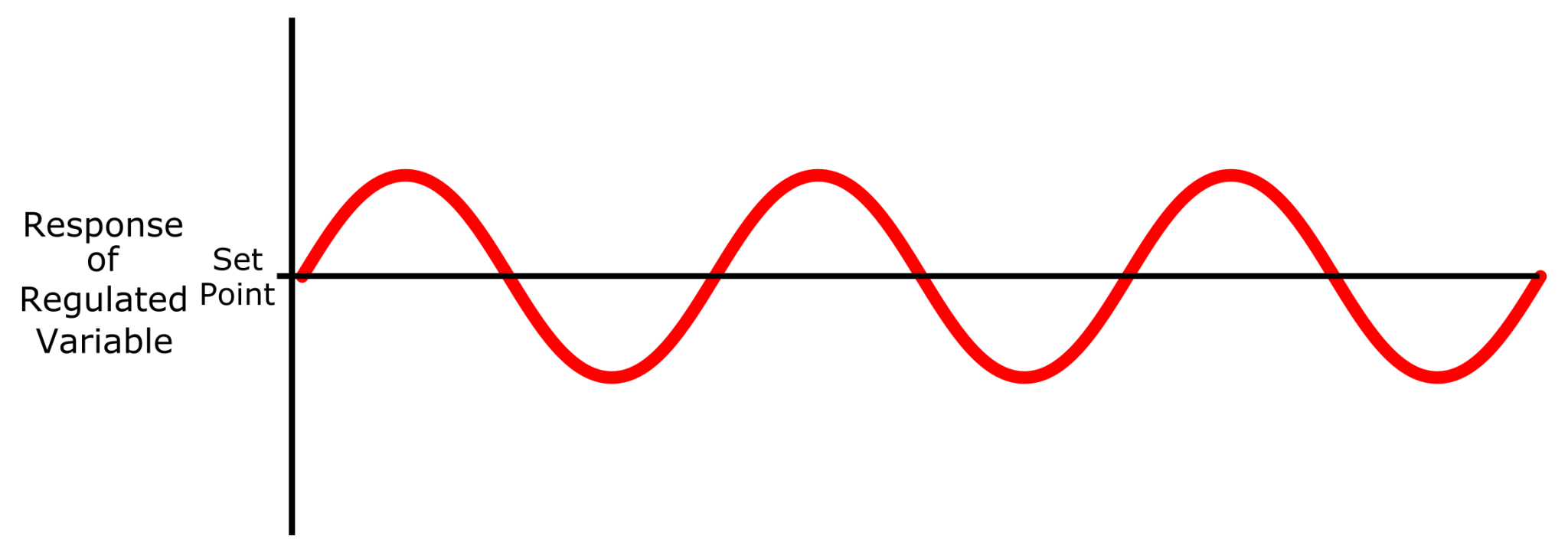
Negative Feedback - it stays within a range
500
The initial change that starts a homeostasis feedback loop.
The Stimulus
500
The neurons that allow the receptor to tell the control center about the stimulus in a reflex arc.
These neurons bring information from our senses.
sensory neurons
500
Is your heart beating a voluntary muscle movement or involuntary muscle movement?
involuntary (you cannot choose to make your heart beat - the brain controls it subconsciously)