Atomic Radius
Electronegativity and Ionization Energy
Mixed
Basics
Types
Final Jeopardy
100
Indicate which element in the pair has the greater atomic radius; sodium or lithium.
What is sodium?
100
Elements that do not have electronegativity.
What are noble gases?
100
This type of ion wants to gain electrons.
What is an anion?
100
The most electronegative element.
What is F?
100
A non-metal that on the left side of the periodic table.
What is hydrogen?
100
The element name with greatest electronegativity of the elements marked on the periodic table below. 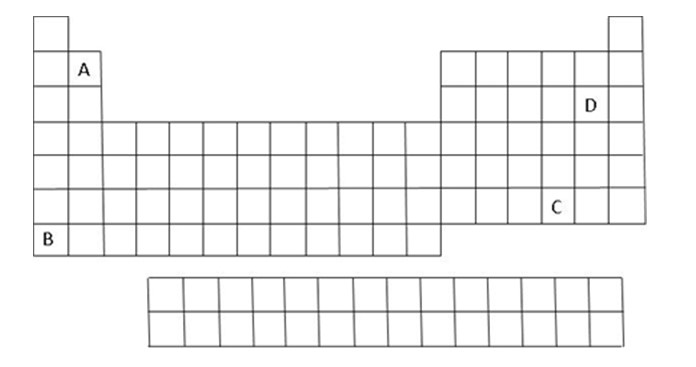
What is chlorine (d)?
200
Indicate which element has the greater atomic radius; strontium or magnesium.
What is strontium?
200
True or False
Ionization energy in potassium is greater than lithium.
What is false?
200
Calcium will ____ _______valence electrons.
What is lose 2 electrons and is a cation?
200
The most reactive non-metals.
What are halogens?
200
The least reactive metals.
What are transition metals?
300
Indicate which element has the greater atomic radius; carbon or germanium.
What is germanium?
300
Which element has the greater electronegativity: cesium, aluminum or Helium?
What is aluminum?
300
Definition: how much an atom wants an electron.
What is electronegativity?
300
Non-Metal element has a charge of (+3) when ionized
What are Boron?
300
The "father" of the the periodic table developed using properties and atomic masses.
Who is Mendeleev?
400
Which element has the greater atomic radius; selenium, oxygen,or sulfur.
What is selenium?
400
Arrange the following elements in order of increasing electronegativity; beryllium, magnesium, and strontium.
What is strontium, magnesium, and beryllium?
400
All metals create this type of ion.
What is a cation?
400
The elements that are inert.
What are noble gases?
400
He is credited for developing the Modern Periodic table using atomic numbers and properties.
Who is Moseley?
500
The smallest element on the periodic table.
What is Helium?
500
Definition: how much energy it takes to remove the first electron from an atom.
What is ionization energy?
500
Phosphous wants to _________ 3 valence electrons.
What is gain?
500
Group of Elements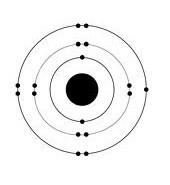 with similar properties to the image.
What are halogens?
500
List the non-metal elements with Lewis dot structure
oxygen, sulfur, selenium