What is Biology?
Energy in Cells
Experimentation
Genetics
Ecology
100
This is the smallest unit of life.
What is the cell?
100
This is the molecule that cells use for energy, also known as the “energy currency” of the cell.
What is Adenosine Triphosphate, or ATP?
100
Which experimental variable is the one that you, the experimenter, change?
What is the independent variable?
100
There are four DNA nucleotide bases: Adenine, Guanine, Thymine, and ________________.
What is Cytosine?
100
This is the source of all energy for all organisms on the surface of the Earth.
What is the Sun?
200
The term used to describe the diffusion of a solvent across a selectively permeable barrier.
What is osmosis?
200
The term used to describe an organism that makes its own food using energy (like sunlight).
What is an Autotroph?
200
This part of an experimental report contains the research question, background research, and hypothesis.
What is the Introduction?
200
One allele for this recessive trait confers protection against Malaria.
What is sickle cell trait?
200
_______% of Earth’s water is freshwater, the rest is saltwater.
What is 2.5%
300
This characteristic of life maintains stable internal conditions in organisms.
For example: humans sweat to cool off; lizards bask to warm up.
What is homeostasis?
300
The following equation represents what process in cells?
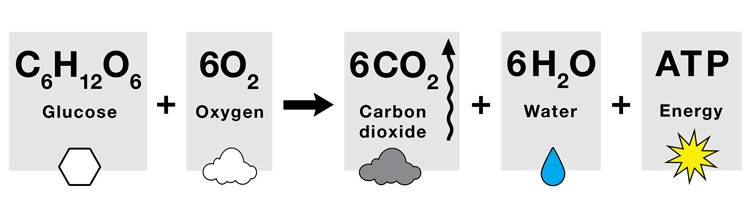
What is cellular respiration?
300
A hypothesis is never __________________, only supported or refuted.
What is "proven"?
300
There are two types of mutations where a frameshift in the DNA sequence happens, where all codons after the mutation shift. This change usually has a large, and often harmful, effect on a protein. Name one of the two types of mutations.
What is Insertion, or Deletion?
300
In terms of Trophic levels, a butterfly would be considered a _____________________.
What is a Primary Consumer?
400
Animals are made up of these types of cells which have no cell wall.
What are Eukaryotic cells?
400
During aerobic respiration, this number of ATP are produced.
What is 36?
GLYCOLYSIS (2) → KREBS CYCLE (2) → ELECTRON TRANSPORT CHAIN (32) = 36
400
An important part of the reflection process, after conducting an experiment, is to recognize these in your experimental method.
What are experimental biases?
400
In this first step of DNA replication, DNA is unzipped and complementary nucleotides added to an mRNA strand.
What is transcription?
400
This percentage of energy is passed from one trophic level to the next.
What is 10%?
500
The function of this organelle is to package and ship molecules. It is often thought of as the "post office" of the cell.
What is the Golgi Apparatus?
500
During anaerobic respiration in animal cells, this product builds up in the cell sometimes causing muscle cramping.
What is lactic acid?
500
A research question is considered ________________ when it can be answered through an experiment, not just research or opinion.
What is testable?
500
This Amino acid, made up of three RNA sequences tells a ribosome to "start" building a strand of protein.
What is methionine, or AUG?
500
This interconnections, rather than a direct line of relationship, between several predator and prey relationships are best illustrated through this.
What is a food web?