1
2
3
4
5
6
7
100
What is another method of preservation for a fossil or remains?
a. Sand
b. Sun
c. Amber
d. Liquid water
Amber

100
What are preserved remains or traces of an organism that lived in the past called?
Fossils
100
What is another method of preservation for a fossil or remains?
a. Sun
b. Liquid water
c. Plants
d. Ice
d. Ice

100
Who was the naturalist with the theory of evolution by natural selection?
a. Charles Wallace
b. Charles Darwin
c. Darwin Mendel
d. Niles Darwin
Charles Darwin

100
The _______ of a radioactive element is the time it takes for half of the atoms in a sample to decay.
a. Full-life
b. Half-life
c. Quarter-life
d. Third-life
Half-life
100
Which of the following is not used as evidence for evolutionary relationships among organisms?
a. DNA sequences
b. Body structures
c. Stages of early development
d. Body color
Body color
100
What is another method of preservation for a fossil or remains?
a. Sun
b. Liquid water
c. Uranium
d. Tar
Tar

200
What is A trait that helps an organism survive and reproduce called?
Adaptation
200
The harden layers of sediments, where fossils will be found, are called what?
Sedimentary rocks
200
What would this diagram be called? 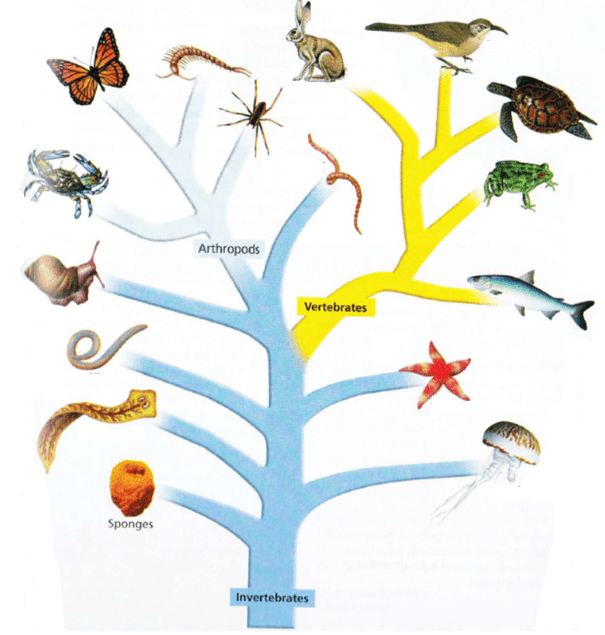
A branching tree diagram
200
If no members of a species are still alive, this species is considered to be what?
Extinct
200
Which islands did Darwin observe the most variation among different species and similar species?
Galapagos islands
200
The dodo bird, woolly mammoth, and the saber-toothed tiger are all examples of _____ animals.
extinct
200
How do fossils form in sedimentary rocks?
The bones get buried in the different dirt layers and because stuck in the sedimentary rocks
300
What is a hollow space in sediment in the shape of an organism called?
Mold

300
A group of similar organisms that can mate with each other and produce fertile offspring is called a(n)
Species
300
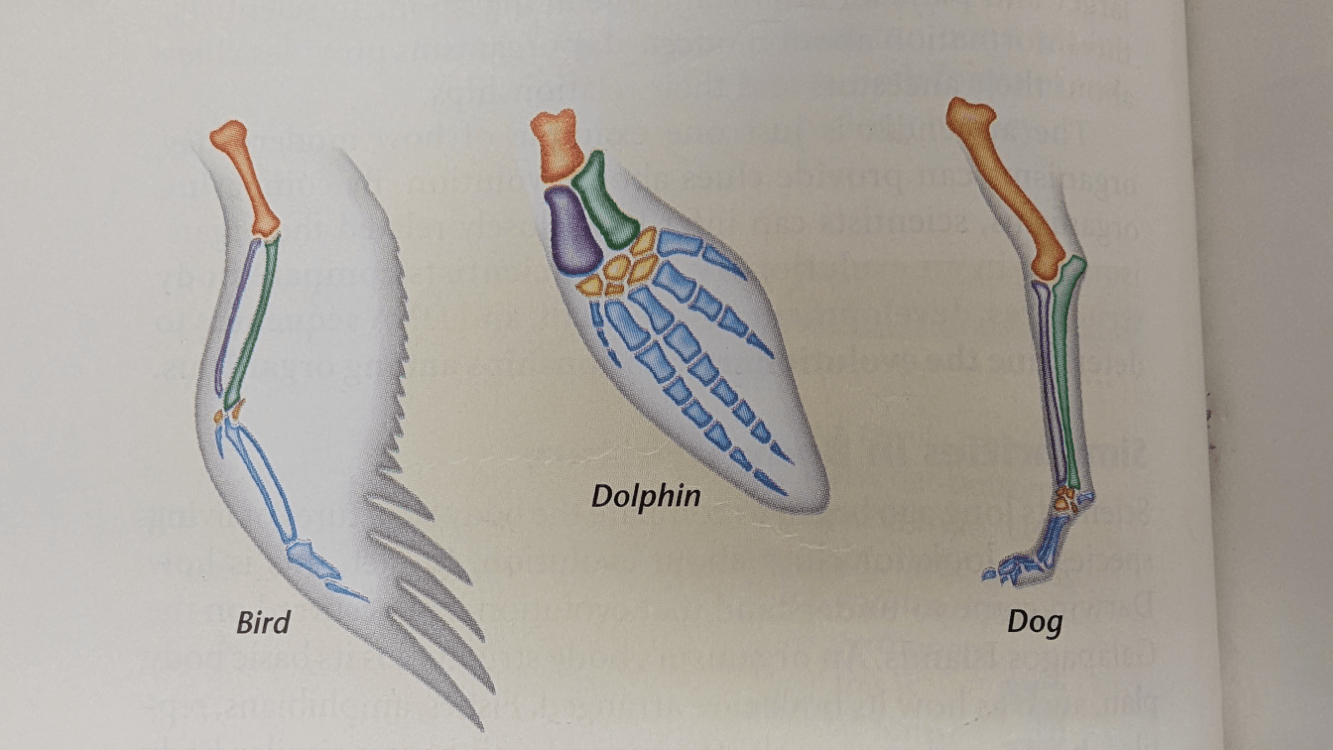
When comparing body structures of organisms to see if they are related, scientists are looking at which part of the body?
Bones
300
When a mold becomes filled in with hardened minerals, it forms a(n) what?
Cast
300
The finches (birds) on the Galapagos Islands adapted to their environments by changing which factor?
Their beaks

300
The process by which individuals that are better adapted to their environment are more likely to survive and reproduce than other members is called what?
Natural selection
300
What is the Geological Time Scale?
Calendar or timeline of the history on Earth
400
What are radioactive elements?
Unstable elements that decay, or break down, into different elements
400
What is a scientific theory?
A well-tested concept that explains a wide range of observations
400
What is absolute dating?
A technique used to determine the actual age of fossils
400
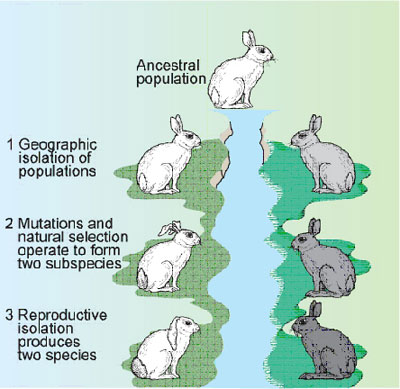
What happens when small groups of individuals are geographically isolated?
They change or evolve into a new species based on location
400
What is Variation?
Any difference between individuals of the same species (having different traits)
400
What is a branching tree?
A diagram that shows how scientists think different species or organisms are related
400
What are homologous structures?
Similar structures that related species have inherited from a common ancestor
500
When looking at this diagram, who would the frog be most closely related to?

The fish
500
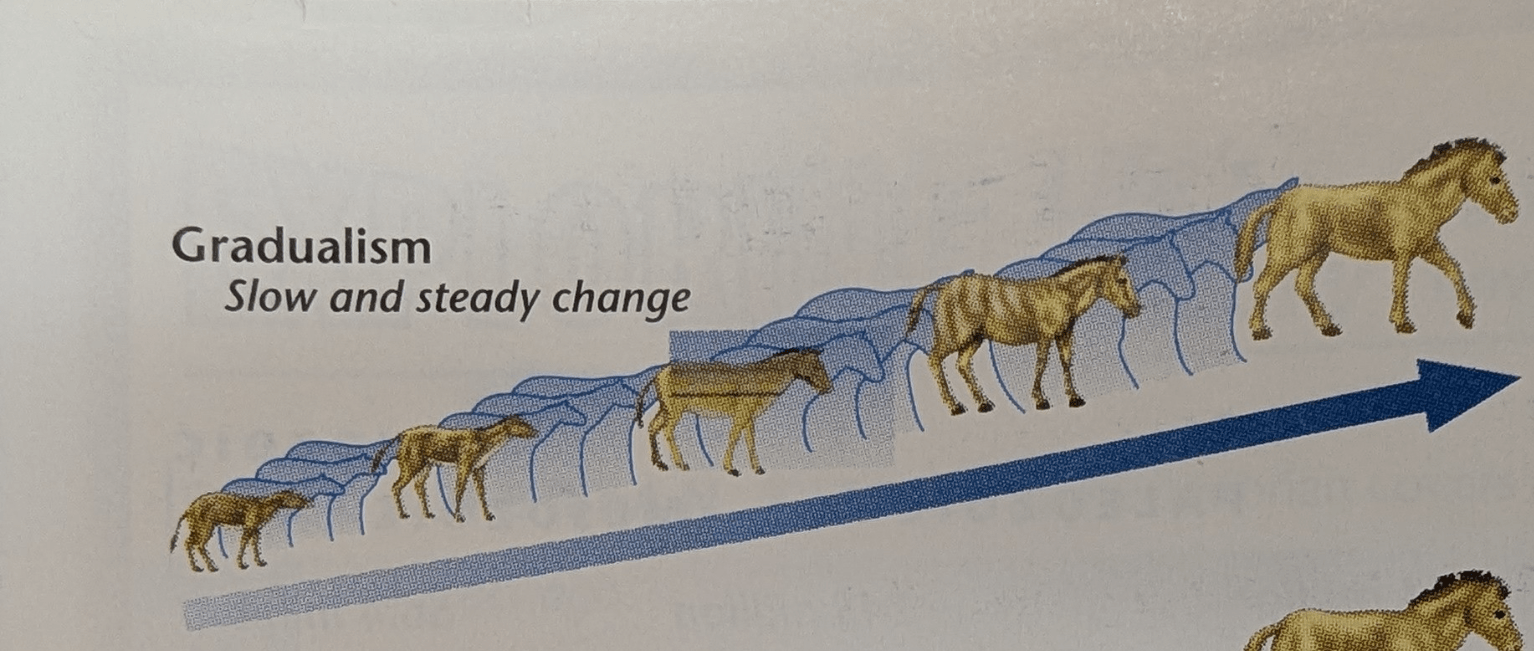
Describe Gradualism
A theory that proposes evolution occurs slowly but steadily over long periods of time
500
What are the 3 ways scientists determine the evolutionary relationships among organisms?
Homologous structures, Early development, DNA
500
What are the factors that affect the process of natural selection?
Competition, Variation, and Overproduction
500
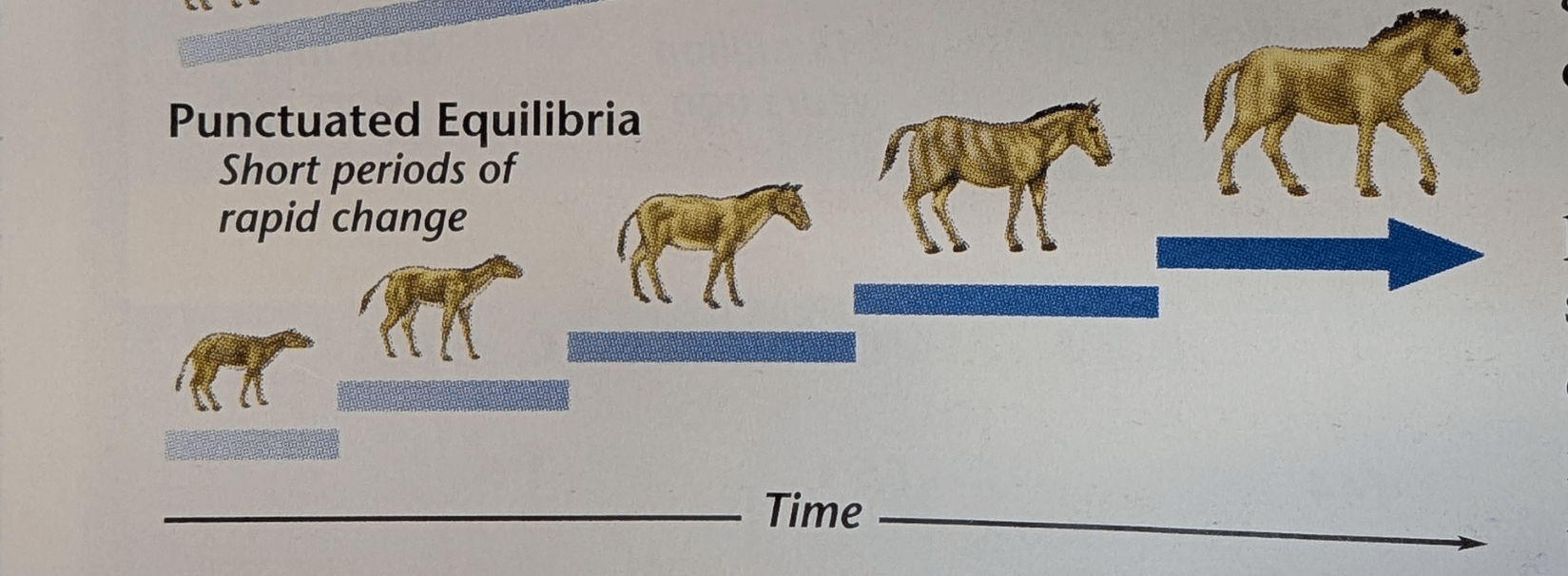
Describe Punctuated equilibria
A theory that proposes species evolve during short periods of rapid change
500
When looking at this diagram who would be the common ancestor of the butterfly, centipede, spider and crab?
Arthropods
500
How does competition affect natural selection?
Different species or even individuals of the same species will compete for a limited number of resources so only some will survive.