Research Design
Biological Approach
Cognitive Approach
Sociocultural Approach
Developmental/ Abnormal
100
To transform a question into a workable research objective with clear variables, scientists engage in this process.
Operationalization
100
A brain cell is called this and the "connection" between two is called this.
Neurons align and have microscopic gaps between them called synapses.
100
Name five cognitive processes.
Perception, Thinking, Decision-Making, Problem-Solving, Memory, Language, Attention
100
The foundational idea that we can learn from others and the environment.
Social Cognitive Theory
100
Definitions of normality fall into these two categories.
Practical and Conceptual
200
Provide an example research and null hypothesis to the following research question:
What is the effect of bilingualism on cognitive decline in adults over the age of 70?
Research: Bilingual abilities will decrease the effects of cognitive decline.
Null: Bilingualism has no effect on cognitive decline.
200
Name one neurotransmitter and describe its specific effect.
Adrenaline, Noradrenaline, Dopamine, Serotonin, Gaba, Acetylcholine, Glutamate, Endorphins
200
Fiske and Taylor's research led to this theory which is exemplified through these 3 tenets.
Cognitive Misers:
I don't know, I don't care, I don't have time
200
Explain social identity theory and outline one study which supports it.
SIT: a theory which states that an individual's sense of self is developed on the basis of group membership, and this identity is shared with other members of the same group.
Tajfel or Chen's research can support.
200
The three largest classification systems are these. (Full Names)
Diagnostic and Statistical Manual of Disorders, International Classification of Disorders, Chinese Classification of Mental Disorders
300
Define probability and non-probability samples providing two examples of each.
Probability samples use randomization to ensure that each member of the population is equally likely to be chosen. Stratified Random and Simple Random.
Non-Probability samples use any non-random technique to select participants. Convenience and Purposive.
300
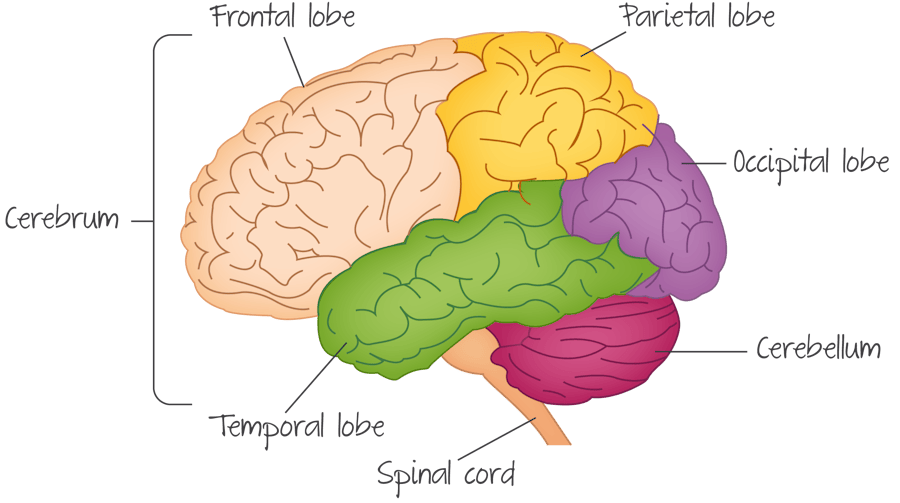
Name three parts of the brain and describe their specific functions. Provide the name of this concept.
Localization of Function
300
Define Schema and outline one piece of research that supports their importance.
Schema: a mental representation of an individual's pre-existing knowledge about the world and experiences in the world.
Bartlett's Cultural Schemas/ Bransford & Johnson's Schemas and understanding
300
Describe two sociocultural explanations of stereotyping.
Realistic group conflict theory: Groups compete over limited resources and this drives those groups to label the competing group negatively.
Social Identity Theory: As your identity is derived from your group membership, you seek to demonstrate your groups superiority/ outgroup inferiority. This is positive distinctiveness.
Illusory Correlation: Minority groups become associated with negative traits due to the fact that experiences with them are less frequent. This can be expectancy or distinctiveness based.
300
Explain validity and reliability with research support for both concepts.
Validity refers to whether a study, procedure, measurement instrument or result actually reflects what it is supposed to measure. This was seen through Rosenhan's research.
Reliability refers to how consistently a study, test or measure produces the same results. This was seen through Regier's research.
400
Name the six most common ethical considerations and provide two pieces of legitimate research that show the violation of two of these principles.
Consent, Anonymity, Right to Withdraw, Deception, Undue Harm/ Distress, Debrief
Countless Examples: NO Stanford Prison Experiment
400
Compare and Contrast Hormones and Neurotransmitters.
Both are chemical signals released by the body. Neurotransmitters are released in the brain and hormones are released by the endocrine system. As such hormones travel through the bloodstream and are slower to effect behavior. Hormones regulate long-term processes such as growth.
400
Compare two models of memory.
Both the multi-store and working memory models agree on the existence of sensory, short-term, and long-term stores. However, the multi-store model is much more focused on how information moves between the stores emphasizing control processes i.e. rehearsal and structural components i.e. decay. The working model focuses almost exclusively on short-term which it breaks down into the central executive, the phonological loop, and the visuospatial sketchpad.
400
Name the two types of conformity and describe how they are illustrated by research.
Normative conformity is conforming to fit in during unambiguous situations.
Informational conformity is conforming to be right during ambiguous situations.
Asch's research showed normative conformity and informational conformity in lower numbers during the line task. This was revealed during the debrief interviews.
400
Outline two models of cognitive development.
Piaget's model of development must mention sensorimotor, preoperational, concrete operational, and formal operational with accurate definitions of each.
Vygotsky's model of development must mention mko, zpd, scaffolding and clearly understand the emphasis on language.
500
The results of Mann Whitney U Test produced a P Value of 1. Explain what the researcher should conclude and why.
The researcher should conclude that the relationship between their variables was due to chance and accept their null hypothesis. This is known because 1 is > than the significance thresholds of .1 and .5.
500
Outline one piece of animal research and explain how it either followed or disobeyed the 3 R's.
Reduce, Replace, Refine
Followed: Massen & Koski/ Berns Apes, Brooks, and Spivak Dogs
Disobeyed: Rosenzweig & Bennet's Rats, Harlow's Monkeys
500
Explain the amygdala's role in memory and outline one study that supports this.
The amygdala is the final connection between sensory stimuli and memory. It works in tandem with the hippocampus to give memories significance, primarily emotional.
Phelps shocked participants while showing them a square. Participants wo/ functioning amygdala recognized the pattern, but didn't fear the shock. While those wo/ functioning hippocampi exhibited consistent fear as though the shock were random.
Canli et al. used an fmri to show that participants had higher amygdala activation when they rated a scene as more emotional and that the more emotional scenes were more likely to be remembered.
500
Name the 6 cultural dimensions and outline the research that codified them.
Hofstede's content analysis demonstrated the cultural dimensions of:
Individualism v Collectivism, Power Distance, Indulgence v Restraint, Uncertainty Avoidance, Long-term v Short-term orientation, and Masculinity v Femininity
500
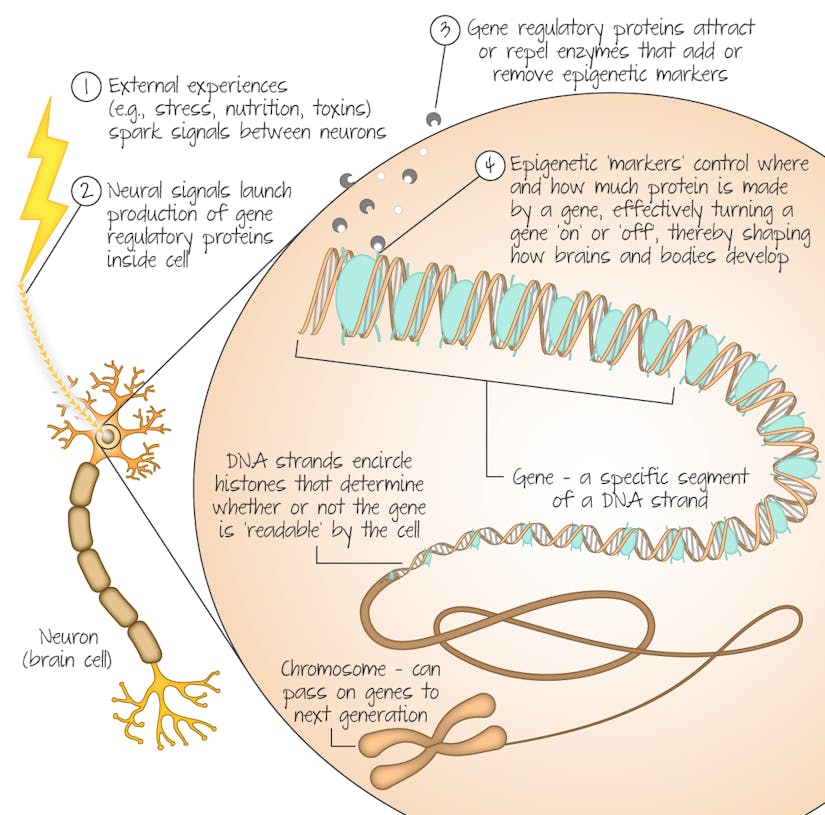
Define Epigenome and describe the 4 step process that outlines how it effects development.
Epigenome is a collection of molecules that attach themselves to our DNA and perform actions on our DNA, in effect, turning our DNA ‘on’ or ‘off’.