Space Distances
Life and Death of Stars
Galaxies and Other Objects
Expansion of the Universe
Keplers Laws
Wild Card
100
The average distance between the earth and the sun (approximately 150 million km).
What is an Astronomical Unit (AU)?
100
The stage our Sun is currently in, where it steadily fuses Hydrogen (H) into Helium (He) in its core.
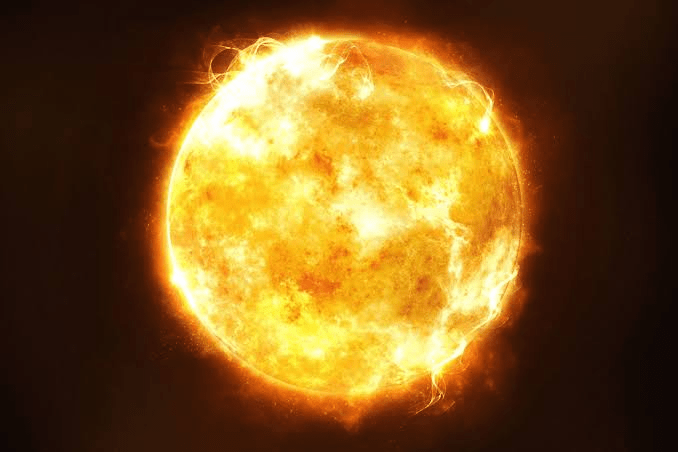
What is the main-sequence stage?
100
The name of our home galaxy, which contains our solar system.
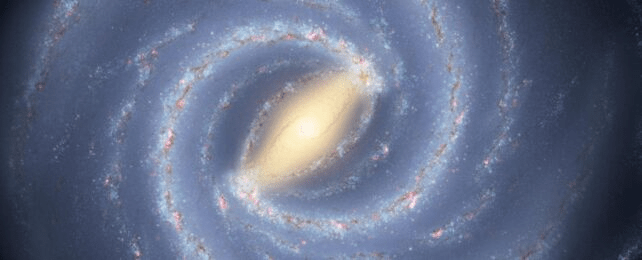
What is the Milky Way galaxy?
100
Also called the Doppler effect; objects appear red when they are moving away.
What is redshift?
100
Each planet moves in an elliptical orbit around the sun.
What is the Law of Orbits?
100
The study of what is beyond Earth.
What is Astronomy?
200
The distance that light travels in 1 year (about 5.88 trillion miles).
What is a Light Year (LY)?
200
A massive cloud of gas and dust where stars begin their lives (like a star nursery).
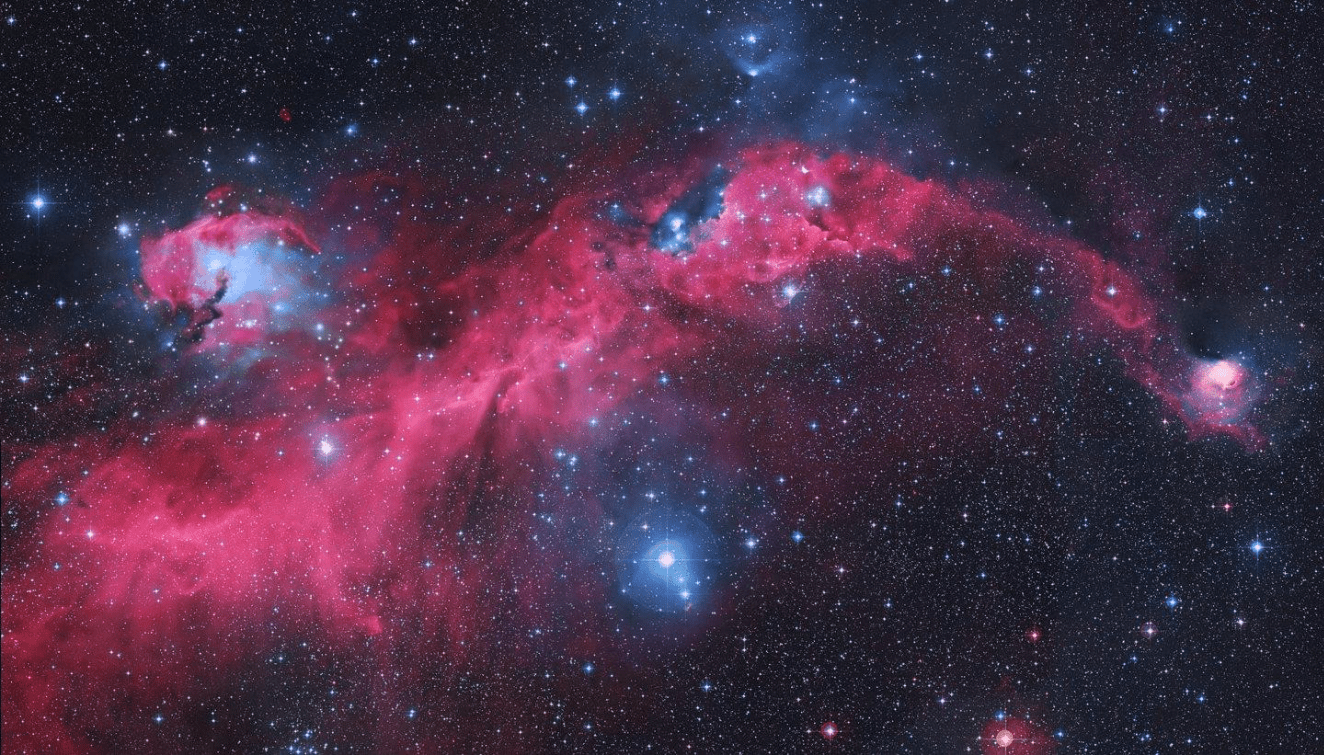
What is a nebula?
200
Large rocky objects, found mostly between Mars and Jupiter in a belt, that orbit the Sun.
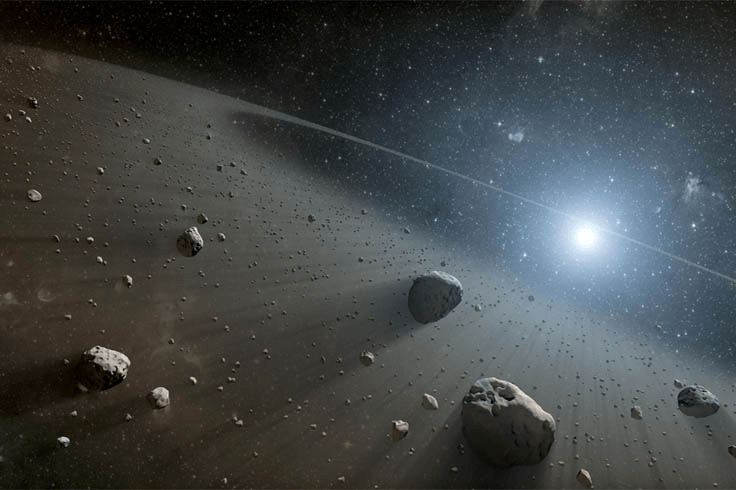
What are Asteroids?
200
The time period during the expansion of the universe when the first heavy elements were created and the galaxies, stars, and planets formed.
What is present day (T=14 Billion years)?
200
Planets don't travel at constant speeds; they move faster the closer to the Sun they are due to the Sun's gravitational pull.
What is The Law of Areas?
200
The distance that light travels in one minute.
What is a light minute?
300
The unit of measurement most practical for measuring distances within our solar system.
What is an Astronomical Unit (AU)?
300
An energy-releasing reaction that combines two atoms of Hydrogen (H) to make one Helium (He).
What is fusion?
300
This type of galaxy is a flat, spherical shape or stretched out oval.
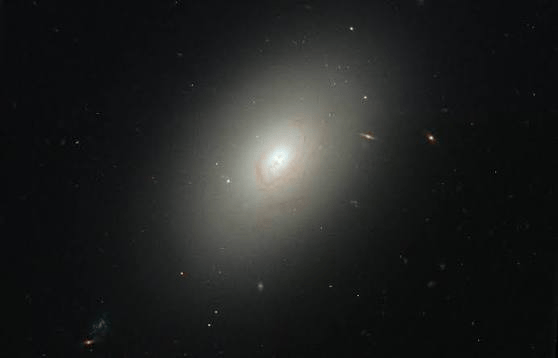
What is an elliptical galaxy?
300
This time period of expansion was characterized by protons (p+), electrons (e-) and neutrons combining to form atoms.
What is T=300,000 years?
300
Planets move faster when they're closer to the sun due to gravity pulling harder, while they move slower when they're further away due to gravity pulling on them less.
What is the Law of Periods?
300
This type of galaxy is made up of newly forming as well as old stars.
:max_bytes(150000):strip_icc()/1330px-M82_Chandra_HST_Spitzer-98ad247c47a24d0284aed82e246d442b.jpg)
What is an irregular galaxy?
400
The unit Astronomers use to measure distances between stars and galaxies.
What is a Light Year (LY)?
400
These stars are created by the smashing together of protons and electrons when a star collapses.
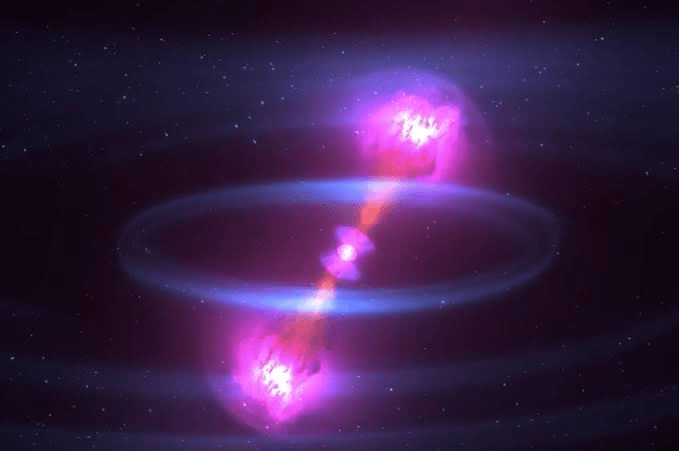
What is a neutron star?
400
These are chunks of frozen matter that, when they approach the Sun, are warmed up, turn into gases, and produce a bright tail.

What is a comet?
400
The exact time when the Big Bang occured.
What is T=0?
400
The sun is not at the center of a planet's orbit, but at one of the two focal points (foci).
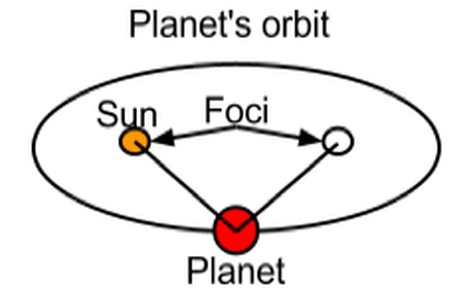
What is The Law of Orbits?
400
In about 4.5 billion years, our star will cool enough to leave the main sequence and form this type of star.
What is a red giant?
500
If something is 300 million km away, Astronomers say it is this distance away from Earth.
What is 2 Astronomical Units (2 AU)?
500
Stars can be arranged on a chart (called an HR diagram) based on these two factors.
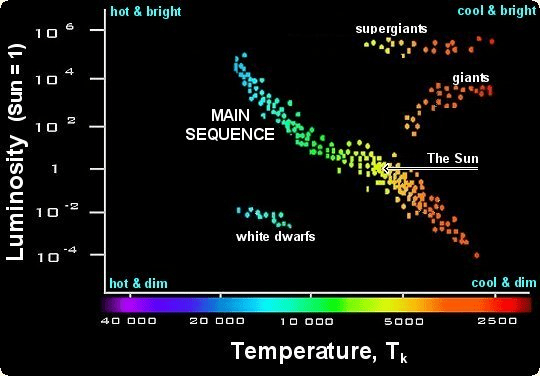
What are temperature and luminosity?
500
These can be found on the surface of the Earth as they are large meteoroids that don't completely burn up in the atmosphere.

What is a meteorite?
500
This theory states that the universe started out as an extremely compact, small, dense, structure 14 BYA before beginning to expand to its present state.

What is the Big Bang Theory?
500
Planets farther from the Sun take longer to complete one full orbit than planets that are closer to the Sun.
What is the Law of Periods?
500
This law states that the distance between the planet and the sun changes continuously.
What is Kepler's Law of Orbits?