Name That Structure
Where in the Brain?
Lights Out
Thirst Trap
Hangry
100
Name the green structure
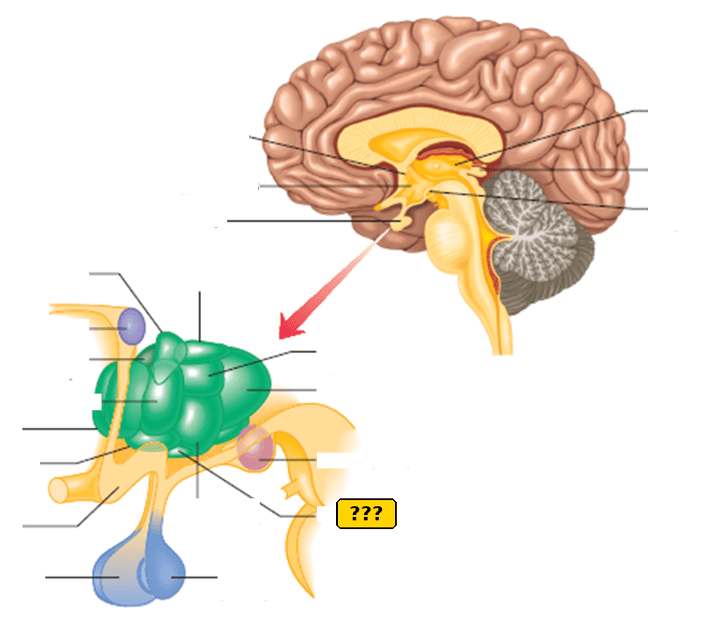
The hypothalamus
100
The body's master clock; it sits just above the optic chiasm in the hypothalamus
The suprachiasmatic nucleus (SCN)
100
German for "time giver": the cue, like sunlight, that resets your circadian rhythm
Zeitgeber
100
Also called antidiuretic hormone, it lets the kidneys reabsorb water and make concentrated urine
Vasopressin (ADH)
100
The "hunger hormone": released by an empty stomach, it peaks right before meals
Ghrelin
200
Name the structure marked ??? (Hint: (PGO waves start here during REM))
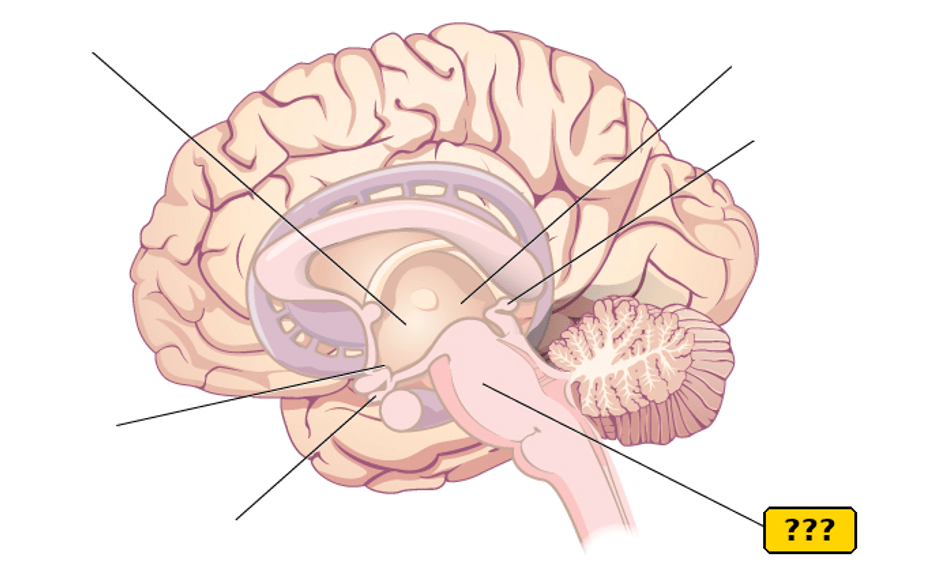
Pons
200
Neurons here release histamine to keep the whole brain awake, which is why antihistamines make you drowsy
Hypothalamus
200
Sleep spindles and K-complexes are the EEG signature of this stage
Stage 2 sleep
200
Too many solutes per volume of water; best relieved by drinking pure water
Osmotic thirst
200
Made by fat cells, it is the brain's long-term gauge of energy stores, and its threshold helps trigger puberty
Leptin
300
Name the structure in blue
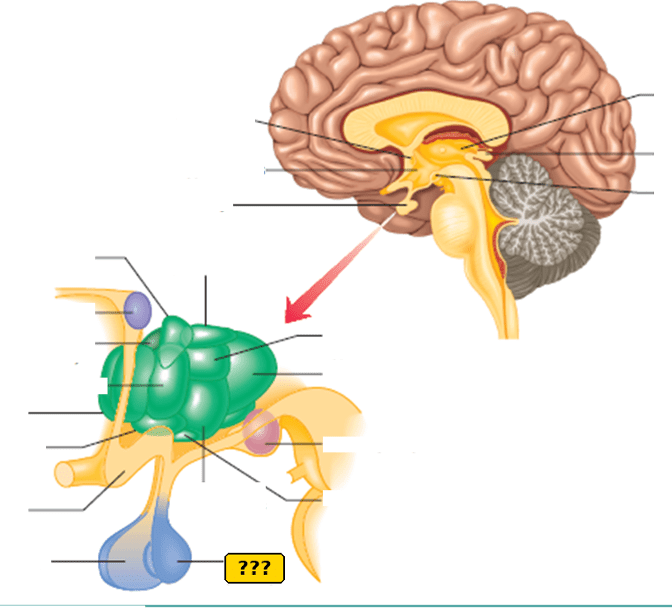
pituitary gland
300
While you sleep, this structure replays the day's learning, then hands memories off to frontal and parietal cortex via sharp-wave ripples
Hippocampus
300
Called "paradoxical" because the EEG looks awake but postural muscles are at their most relaxed
REM sleep
300
Ectothermic animals like lizards control body temperature this way, by basking in sun or seeking shade
Behavioral thermoregulation
300
Name the phenomena: As the stomach fills, its walls stretch and mechanoreceptors detect it. This stretching is the main signal to stop eating.
Stomach distention
400
Name the structure marked ???
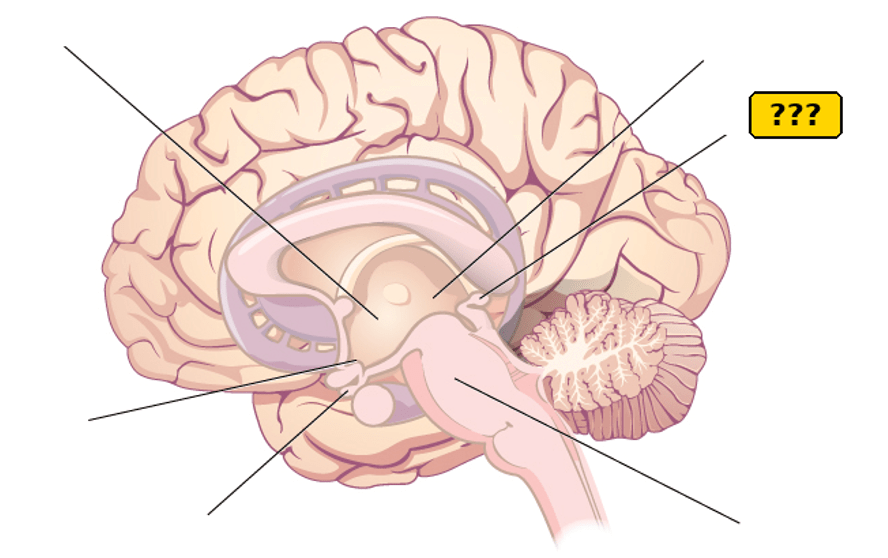
pineal gland
400
Heat it and an animal pants or sweats; cool it and it shivers. Prostaglandins act here to raise the set point during fever
Preoptic area / anterior hypothalamus (POA/AH)
400
Narcolepsy is the only behavioral disorder diagnosable by a biochemical marker: low levels of this hypothalamic wake-promoting neurotransmitter
Orexin
400
A patient can’t produce enough vasopressin, so they are constantly thirsty and urinate too much. Name the disorder.
Diabetes insipidus
400
Name the hormone released by the duodenum when fats and proteins arrive, it closes the pyloric sphincter so the stomach stays full longer
Cholecystokinin (CCK)
500
Name this (blue) structure AND say what its neurons detect
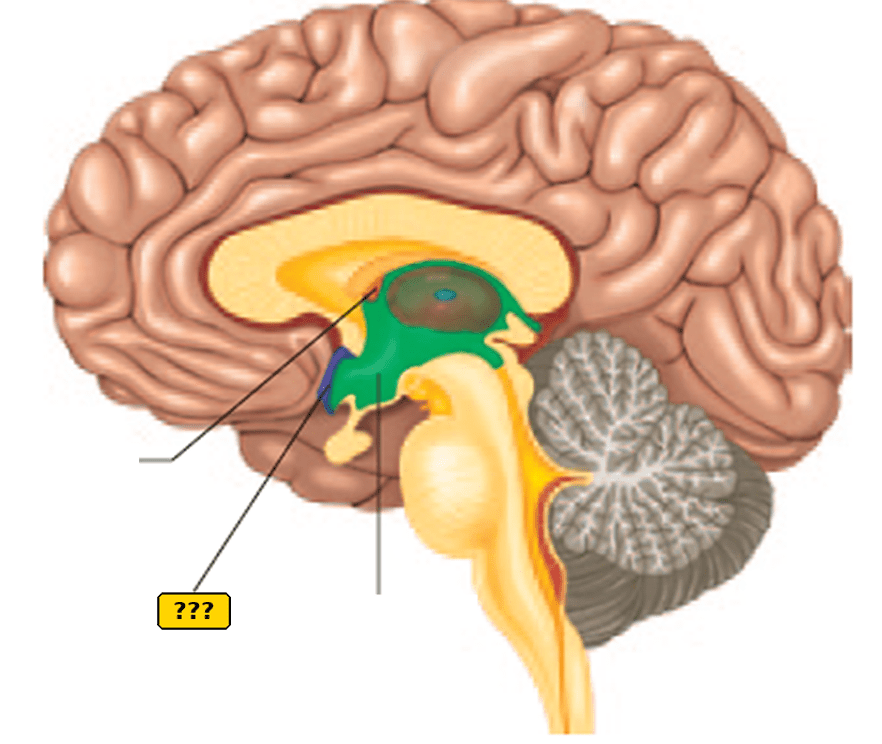
the OVLT
Osmoreceptors that detect solute concentration (osmotic thirst)
the blood–brain barrier is weak here
500
Dopamine release in this structure is the signal that starts REM sleep
Amygdala
500
People blind from cortical damage still entrain to day and night. Name the retinal photopigment that explains why
Melanopsin (These ganglion cells reach the SCN via the retinohypothalamic path; no rods or cones needed)
500
A patient lost a lot of blood in a car accident and is very thirsty. Name the type of thirst, and say whether pure or slightly salty water is the better drink, and why.
Hypovolemic thirst.
Slightly salty water, because the problem is low volume and pure water would dilute body fluids.
500
Explain the paradox: in Type 1 diabetes, people eat more than normal yet lose weight
Little or no insulin, so glucose can't enter cells; cells starve while glucose stays high in the blood and is lost in urine