Types of Sculpture
Techniques
Safety
Materials/
Tools
of the trade
Tools
of the trade
Clay
100
Your tiles and coin sculptures were examples of this type of sculpture.
High/low Relief.
100
These 4 steps (starting with S) are how you properly join two pieces of clay.
Score, Slip, Smoosh, Smooth
100
This mineral in clay is a health hazard when airborne.
Silica
100
Kiln
100
After greenware is fired, it becomes this. It is permanent and can last 1000s of years!
Bisquware
200
This technique involves carving into and away from the surface of clay.
Subtractive.
200
This is the skeletal structure sculptors use to build on top of. They can use any combination of wire, cardboard, or other material as this base.
Armature
200
Never carve clay when it is in this state to avoid releasing fine clay dust into the air.
Bonedry
200
Using carving tools to undercut shapes, and carve deeper into clay helped create the illusion of this. It is especially important in landscapes.
Depth
200
This clay has been fired twice and coated in shiny, powdered glass suspended in liquid.
Glazeware
300
While relief sculpture can only be viewed in one direction, this type of sculpture can be viewed from 360 degrees.
Sculpture in the Round
300
This process involves pushing an object into the surface of the clay.
Stamping
300
Long-term (15-20 years) exposure to this substance can result in breathing difficulties/scar tissue in the lungs, and irreversible lung shutdown.
Silica.
300
These tools can be used to carve or shape plastic and leather hard clay.
Wooden Sculpting tool, Metal Rib, paddles, ribbon tools
300
Minerals, such as kaolinite and silica, which are found in the earth, are materials found within this substance. This substance can be shaped and fired to create durable objects.
Clay
400
This type of relief sculpture protrudes minimally from the surface.
Low or Bas relief
400
The word used when applying heat to change a ceramic material.
FIRE!
400
These practices can help us avoid releasing clay dust into the air (there are 4).
Clean all tools/desks/materials.
Avoid carving bone-dry clay.
Never brush clay onto the floor (use mats/crumb bucket).
Never sweep; wet mop only
400
This is a wonderfully dynamic sculpting material made up of minerals found in the earth, such as kaolinite and silica.
clay/ceramics
400
These are the characteristics of bonedry clay.
Chalky, whitish, VERY Fragile, no moisture
500
This is an example of this type of art in which is built in an entire space. Viewers can walk around and touch this sculptural piece.

Installation art
500
This material can be used in an armature.
tin foil, tape, newspaper, cardboard, wire, etc
500
If you follow the safety procedures of the ceramics studio, you can work with clay and avoid breathing this in.
Silica
500
What tool allows ceramicists to smooth their pieces?
Metal/Wooden rib, sponge
500
This is the stage of clay that is moldable/malleable, bendable, has an even distribution of moisture, and is ideal for beginning a sculpture.
plastic clay
600
This technique involves attaching clay forms onto the surface of the sculpture to build it up as well as add texture.
Additive.
600
This technique is used to create the illusion that a layer/form in a relief sculpture is not attached to the flat clay surface.
Undercutting
600
To avoid cracks forming in your pottery/sculptures, you should dry your projects this way.
SLOWLY!
600
The tool allows ceramicists to cut clay.
Fettling knife or wire tool
600
This stage of clay is no longer malleable but is ideal for carving into or building with slabs or adding handles to. It still has some moisture, but if you bend it, it will break
leather hard
700
This is an example of that type of art. These portraits are made of1000s of MetroCards cut up and glued together!

Found object or assemblage
700
This technique involves rolling clay into flat or round strips and attaching and layering them to build structures.
Coil building
700
Wedging is an important step when working with clay. If you want to start a project over, you must wedge it to remove this.
To remove air bubbles and mix clay
700
These tools allow ceramicists to score clay for joining pieces.
Serrated rib, needle tool, fork, comb
700
This stage of clay has been fired once, but is still porous and ideal for coating with glazes.
Bisquware
800
This kind of sculpture is created by carving designs that remain attached to a flat background, allowing for minimal projection.
relief sculpture
800
If you want your piece to be waterproof, colorful, and shiny, you apply this substance and fire your piece to the proper temperature.
Glaze
800
This process involves adding water to break down the clay particles.
Slaking
800
These tools are used to shape and smooth the surface of clay.
Sponge, smooth rib tool, chamois, paintbrush.
800
Which stage of clay has no moisture? At this stage you can no longer sculpt or carve and it is extremely fragile. Clay must dry out to this stage before it can be fired in the kiln.
Bone-dry
900
This kind of sculpture involves building an indoor/outdoor space with pieces that sometimes are interacted with (walking through/under, or even moving!)
Installation Art.
900
A handbuilding technique involving rolling out clay so it is flat and cutting out shapes to attach and create forms like boxes.
Slab building
900
Firing clay that is NOT bone dry can lead to this happening inside the kiln.
Clay explosion!
900
This tool comes in many sizes and involves a sharp metal piece in the shape that gives it its name. It is used for subtractive clay carving techniques.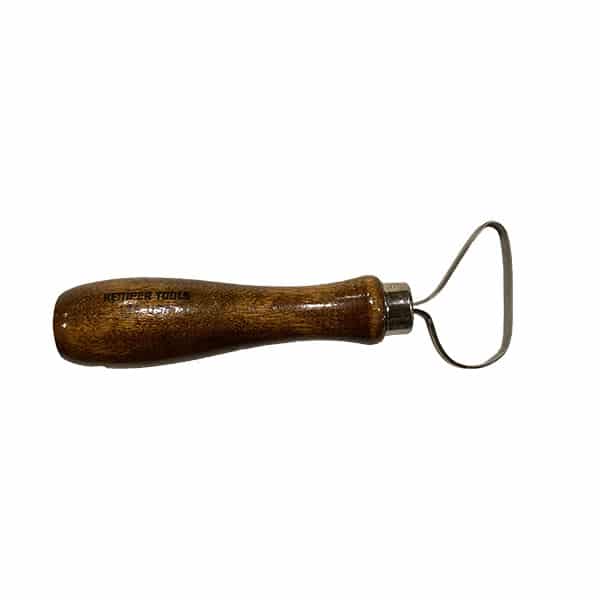
Ribbon Loop tool
900
When clay is fired, it becomes this amazing material that can be used as dishware, jewelry, home decor, building material like bricks, floor, roof or bathroom tiles. It is even used in some parts of jet engines or space exploration equipment!
Ceramics
1000
This type of sculpture involves recycling materials and turning them into art.
Found object or Assemblage
1000
These 4 techniques help to add texture to clay.
Subtractive, additive, carving, stamping, slip trail
1000
If you fire sculptures that have glaze on the bottom. This is what happens.
The sculpture will stick to the kiln shelf.
1000
What type of mold looks like a bowl that you press clay INTO to form the shape of the bowl?
Slump mold
1000
This stage of clay is most saturated with water and is creamy in texture. It can be used to combine two pieces of clay. You cannot sculpt with this clay.
Slip