Navigation, Rules
Sound Signal
Lights, Day Shapes
Buoys
Rules, Saftey
100
This is the term used to describe a vessel that is required by the rules to keep out of the way of another vessel.
Give-Way vessel
100
Power driven vessels sound signal in restricted vis making-way
1 prolonged blast every 2min
100
What is the arc of visibility for side lights
112.5 degrees

100
what is the light pattern for lateral buoys
1quick every 4sec
100
According to Rule 3, a vessel is defined by this single word when she is not at anchor, made fast to the shore, or aground is just floating
Underway
200
Rule 14: Head on Situation tells us to do what
When two power driven vessels are meeting on reciprocal or nearly reciprocal courses so as to involve risk of collision each shall alter course to stbd so that each shall pass on their port side of the other.
200
5 short blasts means
WTF, Unsure of intentions/danger
200
What is the day shape required to be displayed by a vessel engaged in towing operation that exceeds an overall length of 200m
Diamond shape
200
When traveling upstream and you approach a Bifurcation buoy "Green Red Green" what is your next course of action
*Bonus points for the flash pattern
Alter course to keep this buoy on port entering the preferred channel
*2 quick+ 1 long every 6 seconds or 2 short + 1 long every 10 seconds
200
Under Rule 5 what does a proper look out state
At all times maintain a proper lookout by sight hearing or by all available means appropriate in the prevailing circumstances and conditions so as to make a full appraisal of the situation and of the risk of collision
300
Rule 18 what is the Pecking Order
NUC, RAM, Constrained by draft, Fishing, Sailing, Power Driven, Seaplane
300
These are the specific number of short blasts used to signal an intention to alter course to Port, Starboard and Astern, respectively.
1 short blast (Starboard), 2 short blasts (Port), and 3 short blasts (Astern)
300
Sailing vessel under power shows what day shape
cone with its apex pointed down
300
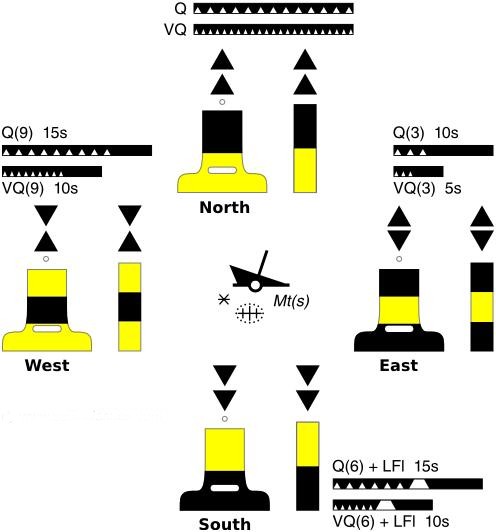
South Cardinal buoy characteristc and flash patern
Yellow top, black bottom with 2 triangles pointing downwards. Flashes 1 long 6 short every 15 seconds or 1 long 6 very quick every 10 seconds.
300
This is why a vessel "constrained by her draught" will never exhibit three vertical all-round red lights while operating within the Great Lakes.
Because all vessels are considered constrained by their draught in the Great Lakes (meaning no vessel shall exhibit them)
400
When is a vessel deemed to be overtaking another vessel under Rule 13
When they are coming from a direction more than 22.5 degrees abaft her beam where at night she would be able to see only the stern of that vessel.
400
What sound signalling equipment must a vessel of 100m or more carry
Bell, Whistle and Gong
400
What light are shown by the towed vessel
side lights, stern lights
400
what is this buoy represent

Information
400
List 7 distress signals from annexIV
November Charlie code flag, Mayday on chl 16, waving warms, orange flag with black circle and square, Morse code SOS, Gun shot once/min, fire on board, SAR transponder, EPIRB, continuous sounding of fog signal, ship to shore distress signal, rocket parachute flair or hand flare showing red, rockets or shells throwing red stars fired one at a time, smoke signal giving off orange colour, distress call via DSC over chl 70, a square on deck, green die in water, flashing light 50/70 per min.
500
According to Rule 9-Narrow Channels, this is exactly how a vessel should navigate when proceeding through a narrow channel or fairway.
Keep as near to the outer limit of the channel which lies on her starboard side as is safe and practicable
500
"Lame Ducks" sound what in restricted visibility
1 long, 2 short no more than every 2 min
500
A dredging vessel is underway and has its gear on the port side what are all its lights and day shapes
ball diamond ball. 2 balls on obstructed side, 2 diamonds on clear to pass side.
Three all around red white red, side, stern, mast lights. 2 all around red lights obstructed side, 2 all around green lights clear side.
500
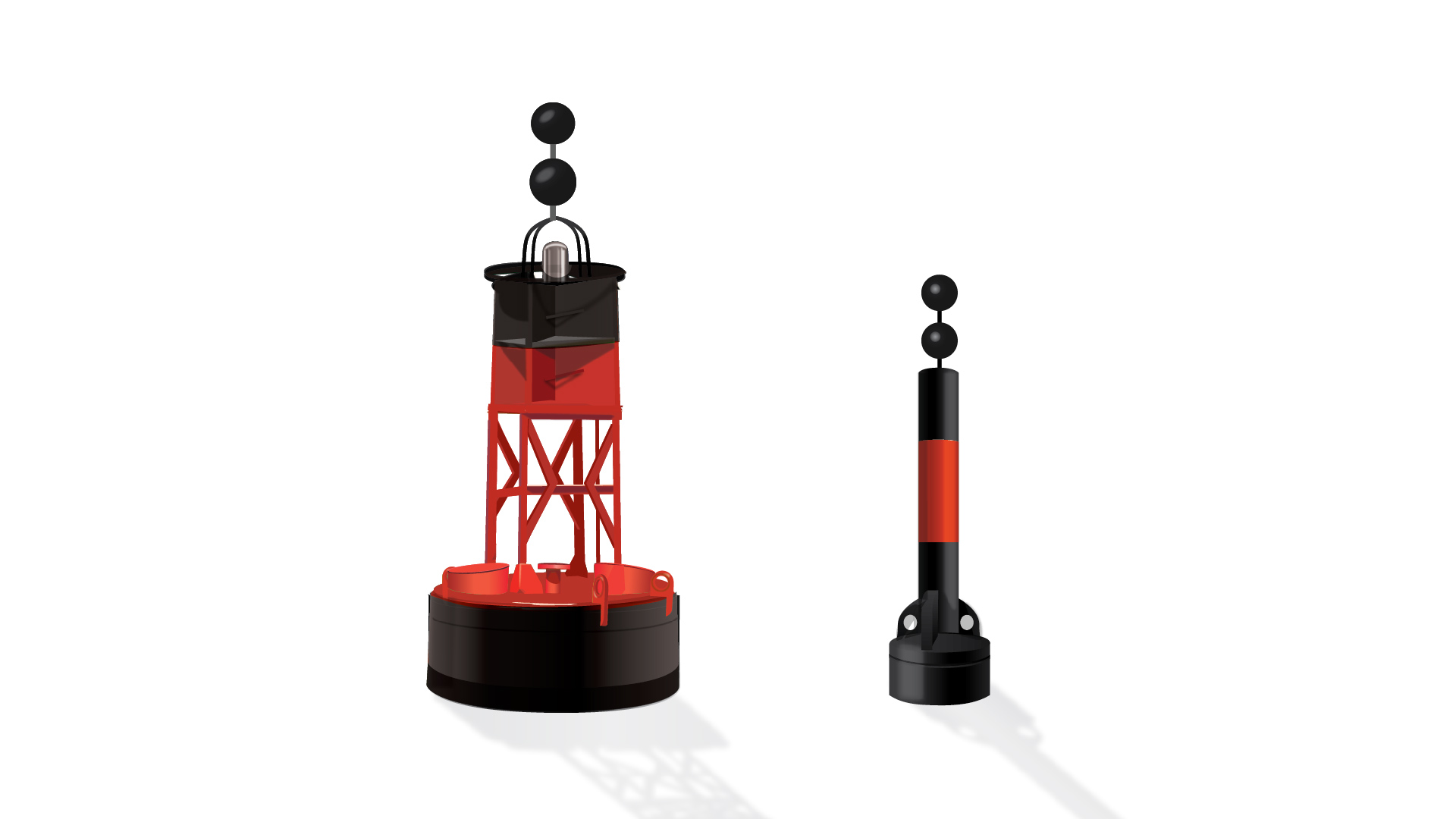
What is the marker on top of an isolation danger buoy
two black balls vertically aligned
500
Rule 6 outlines six primary considerations for determining a safe speed what are they
Visibility, weather conditions, traffic density, Background light at night, available draft, vessel maneuverability.