Period 1: The Global Tapestry & Exchange
(c. 1200–1450)
(c. 1200–1450)
The Song Dynasty utilized this ancient philosophical system and its accompanying meritocratic exam system to maintain political continuity and social order.
What is Confucianism (or the Civil Service Exam)?
In the 15th century, the transition from medieval siege engines to standardized artillery and handheld firearms allowed land-based monarchs to achieve a "military revolution," effectively ending the political autonomy of the landed aristocracy and creating these highly centralized, firearm-dependent states.
What are the Gunpowder Empires? (Acceptable: Ottoman, Safavid, or Mughal Empires)
This political concept, popularized by Rousseau and Locke, suggests that the legitimacy of a government comes from the consent of the governed.
What is the Social Contract?
This concept describes a war in which a government uses all of its population and resources, including propaganda and the targeting of civilian infrastructure.
What is Total War?
This term refers to a social system where the male head of the family holds the power, a continuity seen across most agrarian societies until the 20th century. (Think Social)
What is Patriarchy?
This 16th-century causal link created the first truly global economy: Spanish colonizers used the Mita system to extract silver in the Americas, which was then traded across the Pacific via the Manila Galleons to satisfy the "insatiable demand" for currency in this Asian empire.
Who is Ming China?
This West African empire's expansion was facilitated by the use of camel saddles and control of the gold-salt trade.
What is the Mali Empire?
Following the arrival of the Spanish in the Americas, this "system" of racial classification was created to maintain social hegemony based on a person's heritage, depicted in the image below.
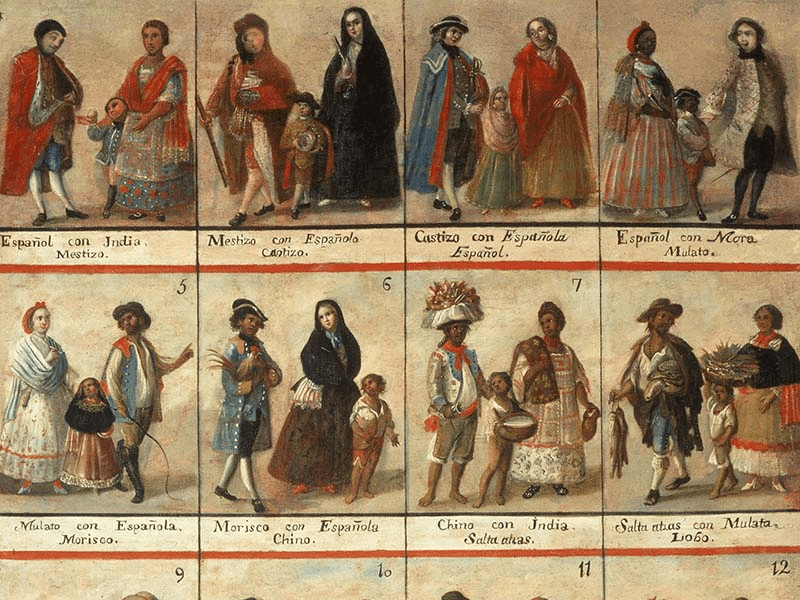
What is the Casta System?
As a result of the Industrial Revolution, this new social class emerged, consisting of factory owners and professionals who often challenged the power of the traditional aristocracy.
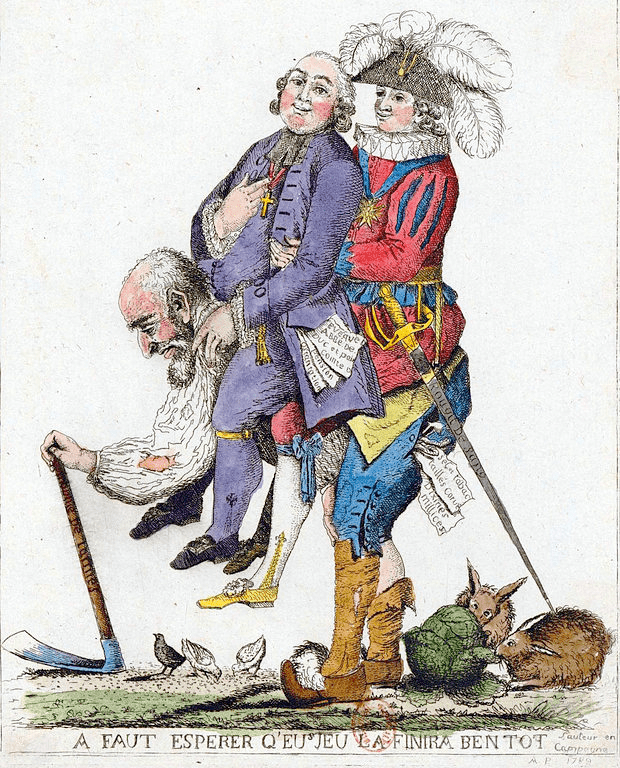
Who are the Bourgeoisie (or the Middle Class)?
This 1948 document, created by the United Nations, outlines the basic rights and freedoms to which all human beings are entitled.
What is the Universal Declaration of Human Rights?
This political system, dominant in Medieval Europe, was characterized by decentralized rule and land-for-service exchanges between lords and vassals. (Think Political)
What is Feudalism?
This causation chain tracks the decline of the Qing Dynasty: Internal peasant revolts (like the Taiping Rebellion) weakened the state, leading to increased Economic Imperialism by the West, which ultimately set the stage for this 1949 event that shifted the balance of power in the Cold War.
What is the Chinese Communist Revolution?
This term describes the blending of different beliefs, such as the emergence of Neo-Confucianism in China or Zen Buddhism in Japan.
What is Religious Syncretism?
This economic doctrine argued that a state’s power was dependent on its wealth, leading European monarchs to grant monopolies to joint-stock companies.
What is Mercantilism?
This form of "new" imperialism relied less on direct territorial conquest and more on extraterritoriality and the creation of "spheres of influence" in places like China.
What is Economic Imperialism?
Following WWII, this process led to the emergence of new independent states in Africa and Asia, often involving armed struggle or negotiated settlements.
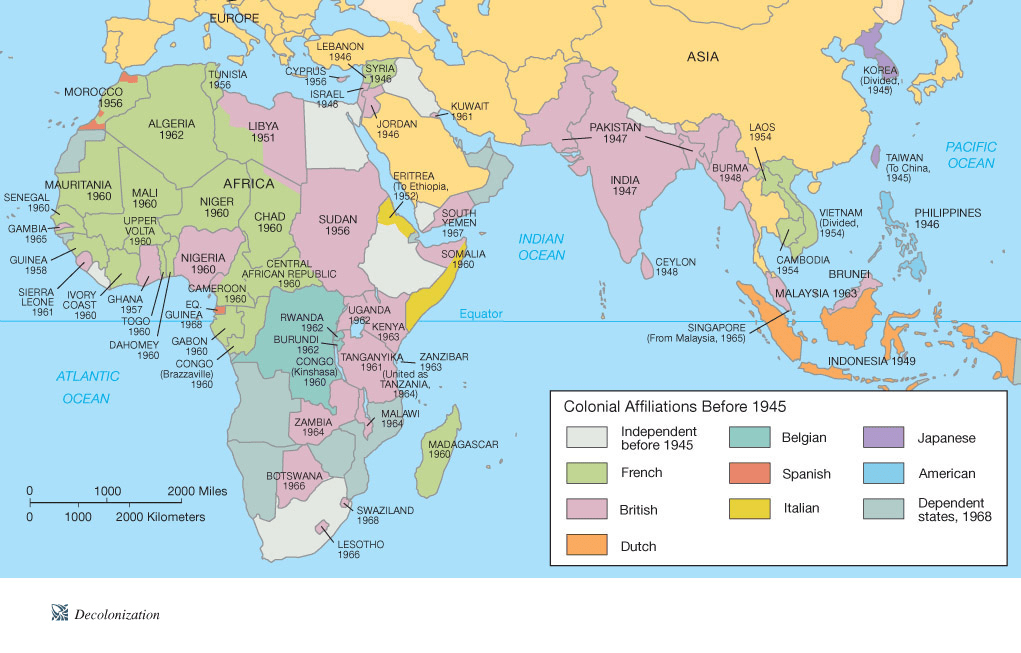
What is Decolonization?
This historical phenomenon refers to the intentional or accidental movement of plants, animals, and pathogens that changes a region's biodiversity.
(Think Humans Interacting with the Environment)
What is Biotic Exchange (specifically the Columbian Exchange)?
This causation chain explains a global health and social crisis: the European demand for a luxury crop led to the creation of the Atlantic Slave Trade and the Plantation System (Unit 4); later, the industrialization of this product (Unit 5) transformed it from a luxury into a staple, leading to the "lifestyle diseases" of the modern era (Unit 9).
What is Sugar?
To facilitate long-distance trade, the Mongols protected these roadside inns, which acted as centers for both commercial exchange and communication across the Silk Roads.
What are Caravanserai?
Land-based empires, such as the Qing or the Ottomans, developed extensive bureaucracies and used this practice of collecting taxes through intermediaries to fund their militaries.
What is Tax Farming?
This 19th-century Chinese reform movement attempted to modernize the military and industry while maintaining traditional Confucian values.
What is the Self-Strengthening Movement?
This 20th-century agricultural movement used chemical fertilizers and high-yield seeds to dramatically increase food production.
What is the Green Revolution?
This religious movement in India sought to spread Hinduism through a personal, emotional connection to a deity. (Think Cultural)
What is the Bhakti Movement
This illustrates a massive change in maritime technology, but a continuity in strategy: Just as the Magnetic Compass and Sternpost Rudder allowed the Ming to dominate the Indian Ocean, and the Steam Engine allowed Britain to force open Chinese ports, modern governments today still compete for hegemony over this specific "chokepoint" through which 40% of global trade passes. Pictured below.
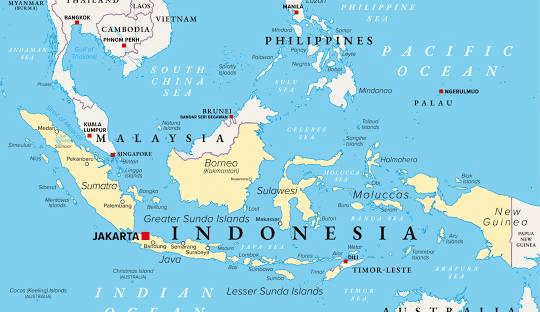
What is the Strait of Malacca?
This historical process, accelerated by the Mongols and Islamic Caliphates, refers to the transfer of knowledge (like Hindu-Arabic numerals) across different civilizations.
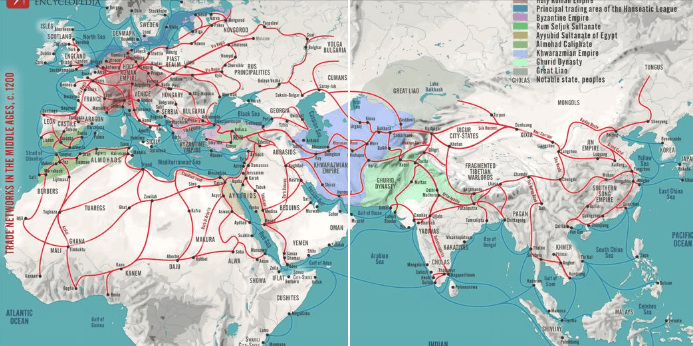
What is Cross-cultural exchange or Cultural Diffusion?
Rulers like Louis XIV (Versailles) and Shah Jahan (Taj Mahal) used monumental architecture as a specific tool to do this to their political power...
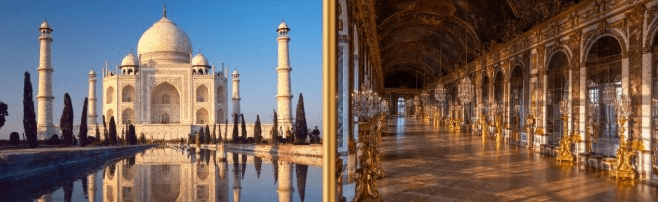
What is Legitimize (legitimization)?
This theory was used by imperialists to justify the takeover of "lesser" societies based on ideas of natural selection and racial superiority.
What is Social Darwinism? (Also acceptable, scientific racism)
This term describes the 20th-century mass movements of people from former colonies to their former imperial capitals (like Indians to London), creating multicultural societies.
What are Migration patterns (or the growth of Metropoles)?
This labor system involves people being forced to work through various means, including chattel slavery, serfdom, or the corvée system (Think Economic)
What is Coerced Labor?
This causation chain tracks a deadly ideology: it began when 19th-century imperialists misused the biological theories of Charles Darwin to justify Social Darwinism, which was then used by European colonizers to create rigid ethnic hierarchies in Africa, eventually providing the "historical" justification for this 20th-century genocide.
What is the Rwandan Genocide?