The Bolus Stops Here
Stuck in the middle
Pressure Makes Perfect (manometry)
Scope it out
(endoscopic findings)
(endoscopic findings)
Not today, Steak
100
These three normal anatomic narrowings are the most common sites where foreign bodies become lodged in the esophagus.
What are the upper esophageal sphincter, the level of the aortic arch/left main bronchus, and the lower esophageal sphincter?
100
A 32-year-old man with a history of allergic rhinitis reports that steak or bread gets stuck in his chest about once a month. He occasionally has to drink large amounts of water—or regurgitate—to clear the food. Between episodes, he feels well. You suspect this diagnosis.
What is EoE?
100
This test uses a pressure-sensing catheter to measure esophageal contractions and lower esophageal sphincter relaxation during swallowing.
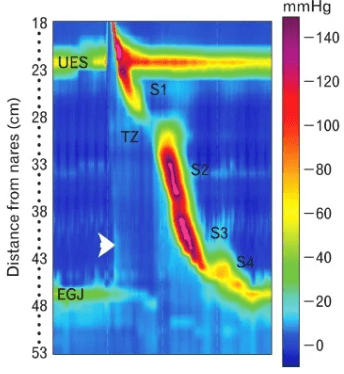
What is High Resolution Manometry?
100
a benign hyperplasia of the esophageal squamous epithelium
What is glycogenic acanthosis?
100
The most common food to get stuck in the esophagus.
What is steak?
200
This type is initiated by a swallow, which propels the swallowed bolus from the pharynx to the stomach which begins with the vagal mediated swallow center in the brainstem.
What is primary peristalsis?
200
A 58-year-old patient says both liquids and solids have been difficult to swallow since symptoms began six months ago. Barium esophagram shows a "bird's beak" appearance. You suspect this diagnosis.
What is achalasia?
200
Measured in mmHg·sec·cm, this metric quantifies the vigor of an esophageal contraction and helps distinguish ineffective motility from hypercontractile ("jackhammer") esophagus.
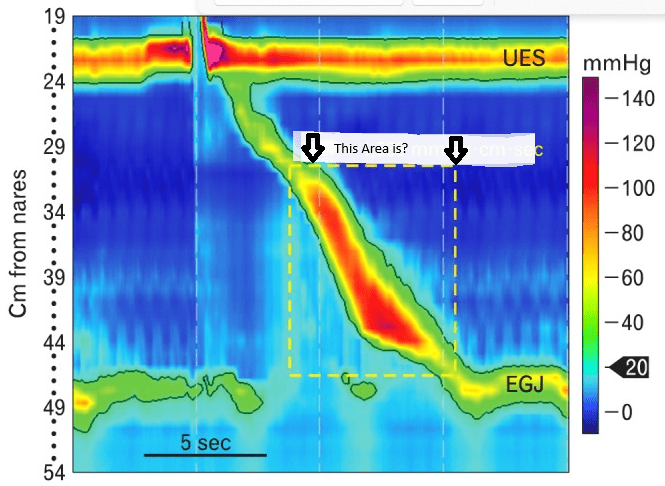
What is the Distal Contractile Integral (DCI)?
200
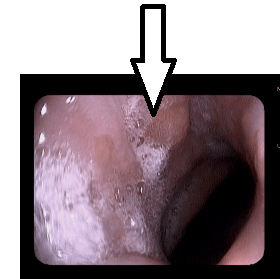
Also called the Z-line, appears during an endoscopy as a distinct, smooth, evenly scalloped or slightly serrated line where pale pinkish-white squamous esophagus tissue meets salmon-pink columnar stomach mucosa
What is the Squamocolumnar Junction or SCJ.
200
After removing an esophageal food bolus, current practice is to obtain biopsies from the proximal and distal esophagus to evaluate for this underlying disorder.
What is EoE?
300
This wave clears residual material from the esophagus without requiring a new swallow.
What is secondary peristalsis?
300
A 68-year-old with a 40-pack-year smoking history reports progressively worsening dysphagia that started with solids and now includes some liquids. He has unintentionally lost 20 pounds over three months. You suspect this diagnosis.
What is esophageal Cancer?
300
A patient with dysphagia and chest pain during meals has a high-resolution manometry demonstrating an elevated IRP with preserved peristalsis. Before diagnosing this motility disorder, supportive testing such as a timed barium esophagram or FLIP is recommended.
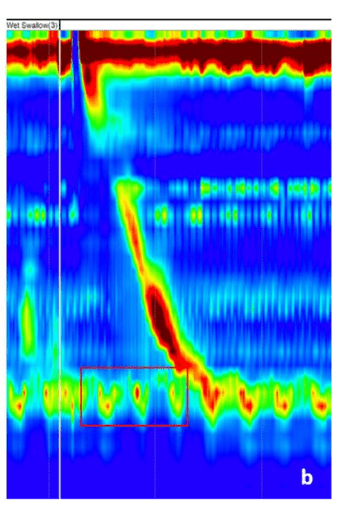
What is EGJOO?
300

6 to 14 percent of patients who receive a routine barium swallow test of the esophagus are found to have this.
What is a Schatzki Ring?
300
This is the first-line treatment for an acute esophageal food impaction that does not pass spontaneously.
What is an EGD?
Endoscopic removal also accepted.
400
This important barrier is comprised of 4 structures, the lower esophageal sphincter, the crural diaphragm, the angle of his, and the intraabdominal segment of the esophagus, with the LES being most important.
What is the antireflux barrier?
400
A 50-year-old experiences intermittent dysphagia to both solids and liquids, accompanied by episodes of severe, non-cardiac chest pain. Endoscopy is normal. You suspect this diagnosis.
What is distal esophageal spasm?
400
This type of achalasia, pictured here, where a manometry study shows an elevated IRP and panesophageal pressurization after nearly every swallow.

What is type II Achalasia?
400
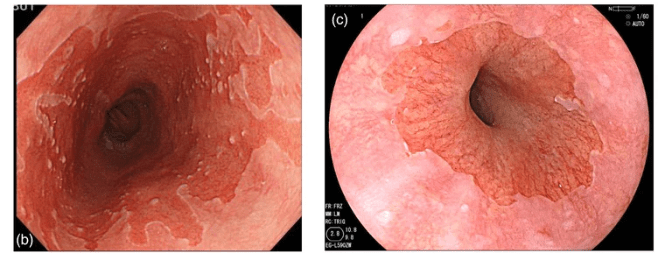
an acquired metaplastic condition where the normal distal stratified squamous epithelium of the esophagus is replaced by columnar epithelium containing goblet cells
What is Barrett's Esophagus?
Long segment vs short segment
400
This structural abnormality is commonly found at the gastroesophageal junction and is notorious for causing intermittent steakhouse syndrome.
What is a Schatzki ring?
500
The type of esophageal muscle comprising the upper third of the esophagus controlled directly by sequential vagal motor neuron activation from the nucleus ambiguus.
What is striated (skeletal) muscle?
500
A 61-year-old has persistent dysphagia despite a normal endoscopy. EndoFLIP demonstrates reduced EGJ distensibility, but high-resolution manometry does not meet criteria for achalasia. A timed barium esophagram shows delayed emptying. You confirm this diagnosis.
What is esophagogastric outlet obstruction?
500
The diagnosis for this patient with premature contractions with a distal latency <4.5 seconds.
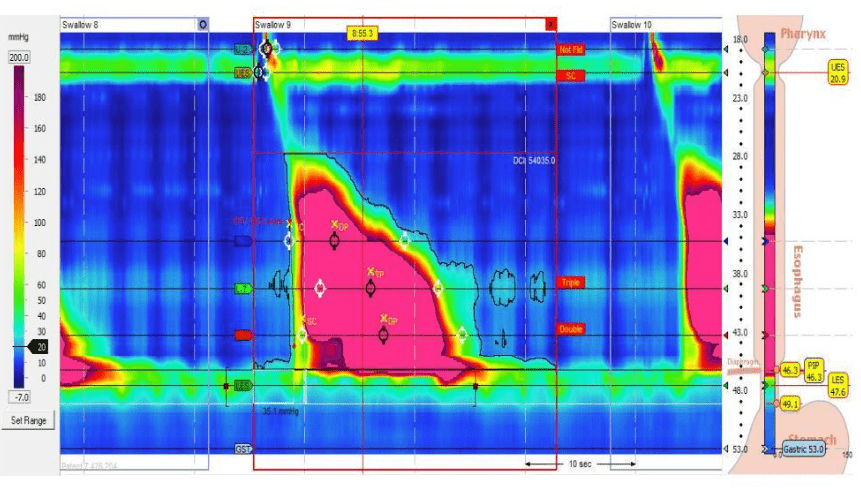
What is Jackhammer esophagus?
500
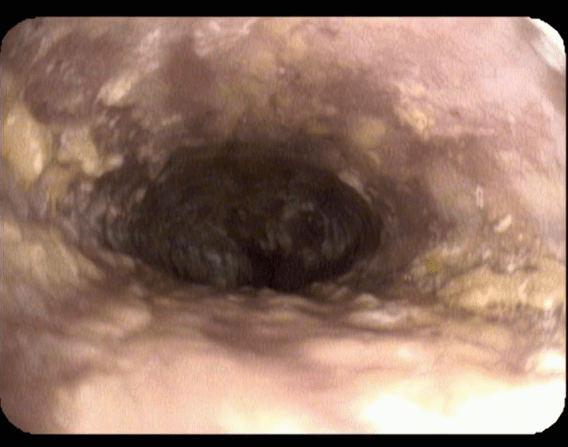
Usually found on endoscopy in a patient with dysphagia, often on ICS therapy or immune compromised.
What is candida esophagitis?
500
Following successful food impaction removal, this intervention is generally deferred if significant mucosal edema, ulceration, or suspected EoE is present.
What is esophageal dilation?
600
8-10 seconds for liquids
10-15 seconds for solids, occasionally up to 20 seconds
What is normal esophageal transit time?
600
A 47-year-old presents with dysphagia to solids and liquids, regurgitation, and weight loss. Endoscopy is normal. Barium esophagram demonstrates a bird's beak appearance. High-resolution manometry reveals an elevated IRP with 100% failed peristalsis and absent panesophageal pressurization. This is the diagnosis.
What is Type I achalasia?
600
This is the single most important manometric measurement to evaluate before interpreting the remainder of an HRM study.
What is IRP?
600
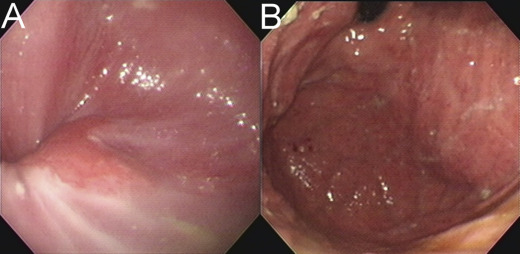
Not all bird's beaks are benign. Rapid symptom progression, age over 60, and significant weight loss should make you suspect this achalasia mimic.
What is Pseudoachalasia?
600
A patient presents with recurrent food impactions. Endoscopy reveals rings, linear furrows, and white exudates. Biopsies show at least this many eosinophils per high-power field.
What is ≥15 eosinophils per high-power field?