Back to the Basics…
If This, Then That
By the Numbers (and Letters)
Object-ively Speaking
Function Junction
200
This keyword allows a variable to be reassigned but not redeclared in the same scope.
What is let?
200
This operator checks if two values are equal in both value and type.
What is === (strict equality)?
200
This is returned by "hello"[1]
What is "e"?
200
This notation is required when the property name is stored in a variable.
What is bracket notation?
200
This will be returned: 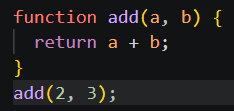
What is 5?
400
This happens when you declare a variable without assigning it a value, then log it.
What is undefined?
400
This will be the result of the expression: 5 > 3 && 2 > 4
What is false?
400
This will be logged: 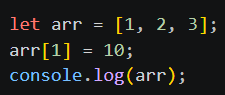
What is [1, 10, 3]?
400
This will be logged:

What is Ava?
400
This will be returned: 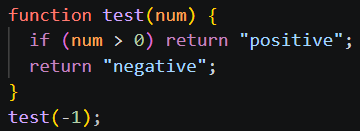
What is "negative"?
600
This term describes storing one variable’s value inside another variable.
What is assignment (assigning one variable to another)?
600
This structure is often used instead of multiple if-else statements for cleaner branching.
What is a switch statement?
600
This explains why you cannot directly change a character in a string.
What is string immutability?
600
This notation must be used if a property name contains a space.
What is bracket notation?
600
This pattern stops a function early when a condition is met.
What is the return early pattern?
800
This type of number can lead to precision issues like 0.1 + 0.2 !== 0.3.
What is a floating-point (decimal) number?
800
This will be logged: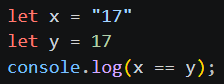
What is true?
800
This will be logged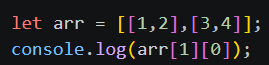
What is 3?
800
This will be logged:
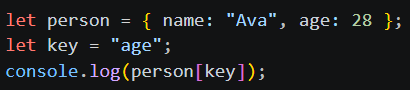
What is 28?
800
This will be returned:
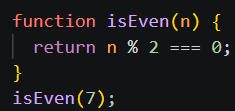
What is false?
1000
This method is commonly used to format a number to a fixed number of decimal places and returns a string.
What is .toFixed()?
1000
This concept explains why "10" == 10 evaluates to true.
What is type coercion?
1000
This method adds an element to the beginning of an array.
What is unshift()?
1000
This JavaScript keyword removes a property from an object.
What is delete?
1000
This will be returned:
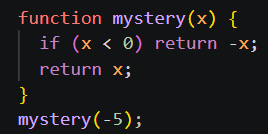
What is 5?