Anemia
Diabetes
Electrolytes
Fluids
Wild Card
100
A patient has the following findings on her anemia workup:
Hb: 10.1 g/dL
MCV: 78 fL
Iron Panel: Low serum iron, High Ferritin, and Low TIBC.
What is the primary molecular driver of this patient's anemia?
Hepcidin
Anemia of chronic disease: Inflammation triggers the liver to make high levels of hepcidin, which "hides" iron away and can lead to anemia of chronic disease.
100
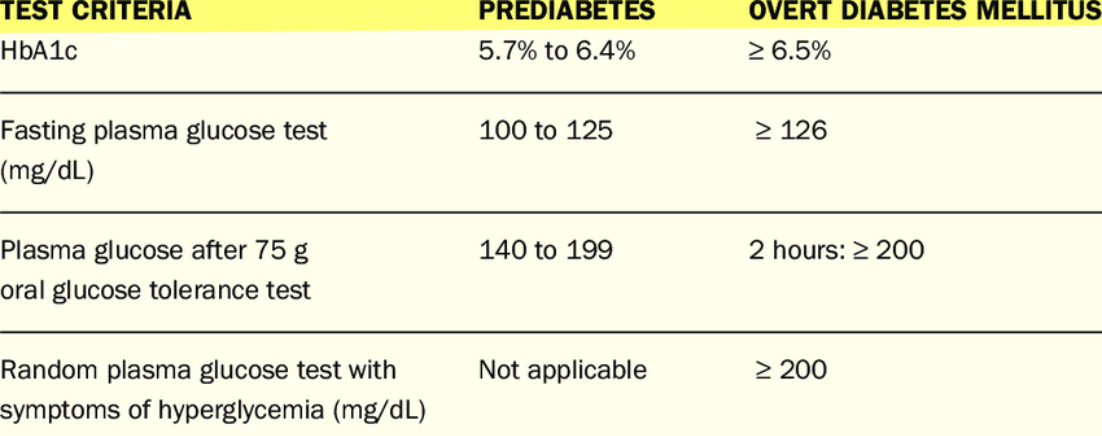
What A1c gives a diagnosis of diabetes?
100
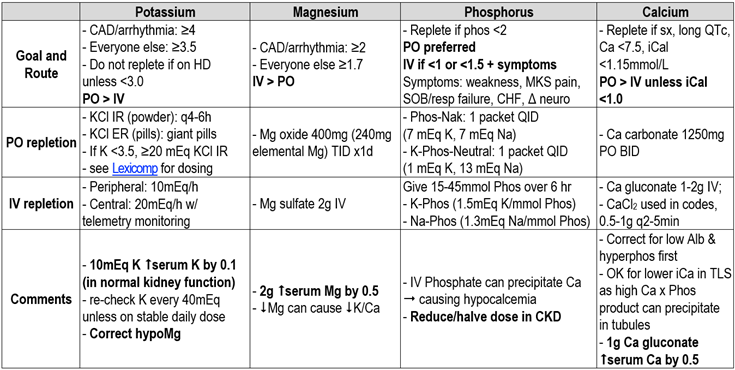
A patient was CAD, HTN, HLD, diabetes, GERD, and hypothyroidism has a K is 3.7. How much potassium would you give them?
30 mEq
100
What is insensible losses?
Insensible fluid loss is the continuous, daily loss of body water that cannot be easily seen/felt/measured. It mainly happens through passive water evaporation from the skin (not active sweating) and water vapor lost through breathing from the lungs,
- Average Volume: An adult loses about 600 to 800 milliliters per day this way.
- Fever: Higher body temperature increases these losses. Fast breathing or dry air also makes the body lose more water
100
What type of bleed ccurs proximal (above) the ligament of Treitz and typically present with hematemesis or melena?
Upper GI bleed
200
What does a low reticulocyte index represent?
A hypo proliferative state (bone marrow hypoproliferation) or a "production" problem
200
The medical term for excessive thirst, which is a classic sign of high blood sugar.
Polydipsia
200
What two electrolytes do we watch closely while diuresing patients?
Magnesium and potassium
200
What "type" of fluid is albumin?
Colloid (e.g., albumin, blood products)
Other types crystalloid (e.g., NS or LR), free water (e.g., D5W)
200
What PFT pattern shows a reduce FEV1/FVC ration with a normal or reduced FVC?
Obstructive
300
Would you expect the following labs to be high or low in hemolysis:
LDH
Haptoglobin
Unconjugated bilirubin
LDH: high
Haptoglobin: low
Unconjugated bilirubinL high
300
What form of insulin starts to work 1-2 hours after administration and does not peak?
Long-acting insulin i.e. Glargine (Lantus) and Detemir (Levemir)
300
An abnormal drop in serum potassium below 3.5 mEq/L can lead to these characteristic cardiac changes and muscle issues.
Dysrhythmias, muscle weakness/cramps)
300
This type of IV solution has a higher solute concentration than blood, causing water to move out of the cells.
Hypertonic fluid (we often use hypertonic (3% saline))
300
What is the patient positioning that is commonly used by patients with COPD to ease severe shortness of breath, fix trapped air, and helpings expand?
Tripoding
400
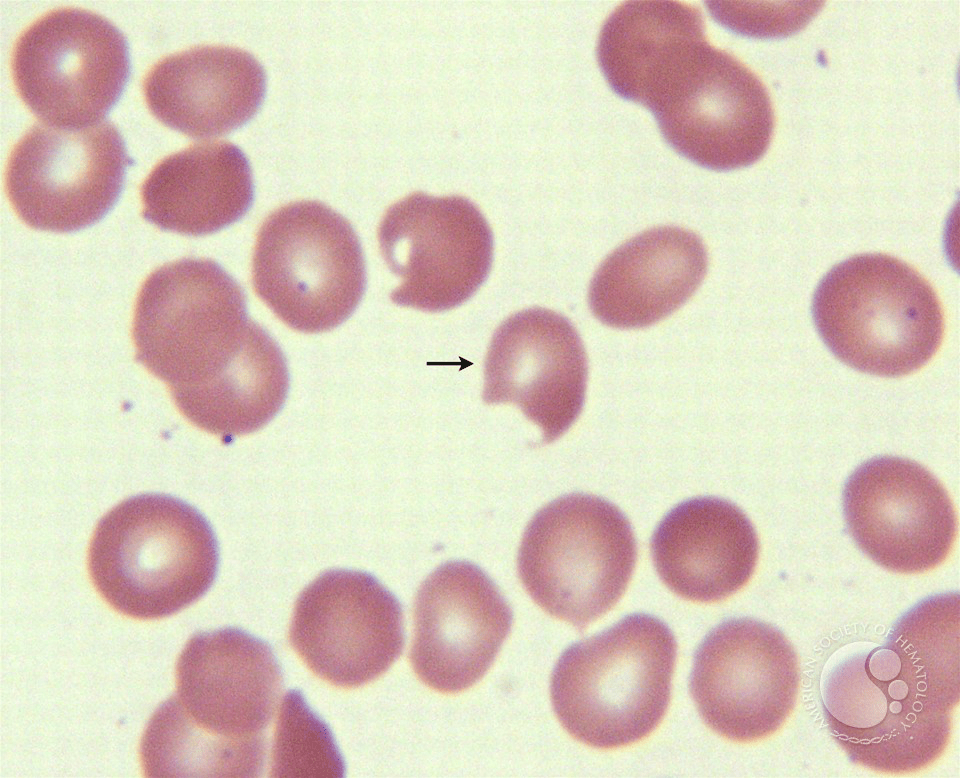
What blood smear finding is commonly associated with G6PD deficiency?
Bite cells (and heinz bodies)
400
What form of insulin is often given if a patient needs glycemic control while on high dose steroids?
NPH 0.1U/kg/d for every 10mg prednisone (or equivalent), up to 0.4U/kg/d (dose BID)
Steroids cause hyperglycemia peaking in the afternoon. Morning NPH matches this glucose curve effectively.
400
In medical or kidney dialysis contexts, medications called "binders" such as sevelemer are used to soak up excess amounts of this element in the blood.
Phosphorus
400
Name a clinical scenario for when you would give bolus fluids instead of continuous fluids?
Bolus fluids = volume expansion in distributive/hypovolemic shock, GI losses, burns
Continuous fluids = Goal to replace daily losses while preserving electrolyte balance +/- supplying a sugar source.
400
What two medications can you pick to cover a MRSA pneumonia?
Vancomycin and Linezolid
500
This vital vitamin requires intrinsic factor produced in the stomach for proper absorption; a deficiency leads to pernicious anemia.
B12
500
This first-line oral biguanide medication reduces glucose production in the liver.
metformin
500
Trousseau's sign—carpopedal spasm induced by an inflated blood pressure cuff—tests for a deficit in this electrolyte.
Calcium (hypocalcemia)
500
Name a scenario why you would choose NS rather than LR
Indications where NS likely > LR:
- ↑ICP (LR is slightly hypotonic and may ↑cerebral edema).
- Hyperkalemia with kidney impairment (due to K in LR).
- Advanced liver disease (due to lactate in LR)
500
What type of fluid is D5W?
Hypotonic/free water
Fluids can be isotonic (NS more isotonic than LR), hypotonic (D5W, 1/2 NS, 1/4 NS), or hypertonic (3% saline)
Hypotonic fluids have a lower concentration of dissolved particles (aka solutes) than normal body blood. They cause water to move out of the blood vessels and into the body's cells, which makes the cells "swell"
Isotonic fluids contain similar concentrations of salt/sugar to human blood. This exact balance allows the body to absorb fluids, carbohydrates, and electrolytes as fast as (or slightly faster than) plain water
Hypertonic fluids work by utilizing higher solute concentrations outside a cell to draw water out through osmosis, causing the cell to shrink. This process is driven by an osmotic gradient where water moves from an area of low solute (high water) concentration inside the cell to an area of high solute (low water) concentration outside