Hem & Onc
Nephro
Cards
GI
Anonymous
100
The patient developed this skin condition after starting warfarin. What is the causative factor?
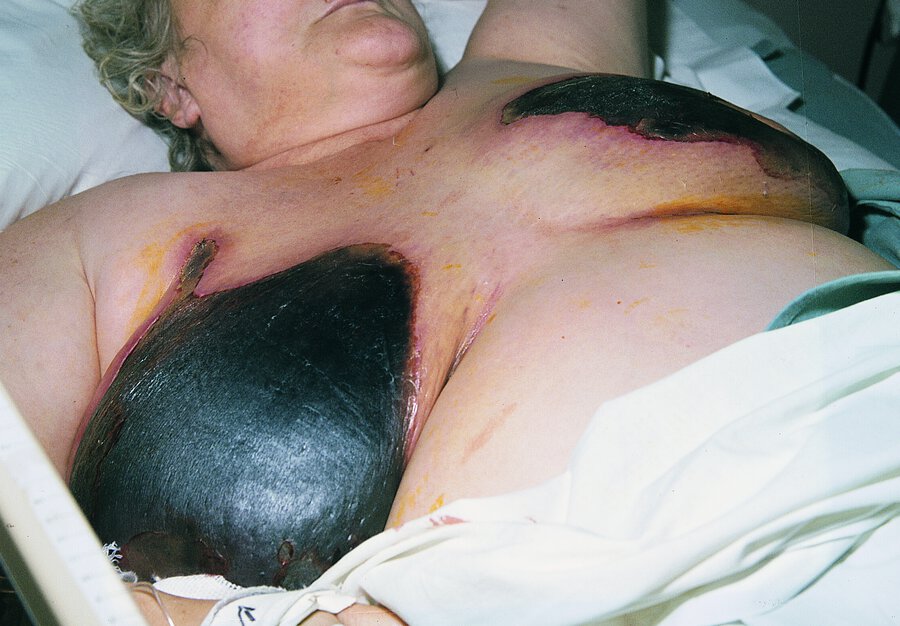
Protein C deficiency
100
Q: High-risk genotype associated with focal segmental glomerulosclerosis and other kidney diseases
A: Apolipoprotein L1 gene (accept APOL1, apolipoprotein 1)
100
Q: Term for intermittent and irregular jugular venous pulsations of greater amplitude than normal reflecting simultaneous atrial and ventricular contraction
A: Cannon a waves
100
Q: The most common cause of lymphocytic gastritis
Celiac disease (accept celiac sprue, nontropical sprue, endemic sprue, gluten enteropathy)
100
Q: Composition of kidney stone most commonly seen after ileostomy
A: Calcium oxalate
200
The patient has the findings of anemia and hypercalcemia, and this finding on the smear

Multiple myeloma
200
Q: Aquaretic medication used to slow the increase in kidney size and the decrease in function in adult polycystic kidney disease
A: Tolvaptan (accept Samsca, Jynarque)
200
Q: Most common objective finding of Lyme carditis
A: Atrioventricular conduction block (accept AV nodal block or AV block)
200
Q: Initial medical therapy for primary biliary cholangitis
A: Ursodeoxycholic acid (accept UDCA, ursodiol)
200
Q: Hematologic condition for which crizanlizumab is approved to treat
A: Sickle cell disease
300
Q: Inborn error of metabolism that precludes use of rasburicase
A: Glucose-6-phosphate dehydrogenase deficiency (accept G6PD deficiency)
300
Q: Non-eponymous name for the vasculitis commonly associated with anti-proteinase-3 antibodies
A: Granulomatosis with polyangiitis (accept GPA)
300
Q: Two cardiac valves in which regurgitation can cause a pulsatile liver
A: Tricuspid and aortic
300
Q: Eponymous stratification tool that identifies upper GI bleeding patients who are “low risk” and candidates for outpatient management
A: Glasgow-Blatchford score (accept Blatchford score or Rockall score)
300
Q: Error type defined by the rejection of a true null hypothesis
A: Type I error (accept 'false positive')
400
Q: Eponymous syndrome characterized by autoimmune hemolytic anemia and immune thrombocytopenia
Evans syndrome
400
Q: Condition characterized by a normal anion gap metabolic acidosis with a negative urine anion gap
A: Diarrhea (Also accept laxative abuse or GI losses)
400
Q: Antiplatelet prodrug that requires two enzymatic conversions in the liver before being active
A: Clopidogrel (accept Plavix)
400
Q: Syndrome characterized by common hepatic duct obstruction caused by an extrinsic compression from an impacted stone in the cystic duct
Mirizzi syndrome
400
Q: Graph showing sensitivity (true positive) vs 1 − specificity (false positive)
A: Receiver operating characteristic curve (accept relative operating characteristic curve, ROC curve)
500
Q: Scoring system used to predict ADAMTS13 deficiency in suspected thrombotic thrombocytopenic purpura
A: PLASMIC score
500
Q: Toxin implicated in Balkan endemic nephropathy
A: Aristolochic acid
500
Pictured arrhythmogenic syndrome
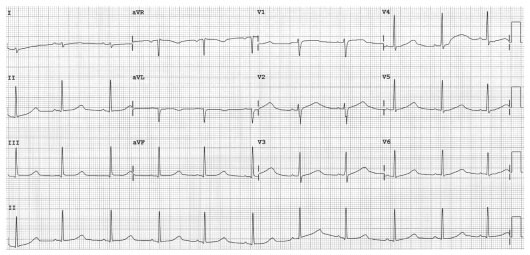
Long QT syndrome (accept long QT, LQTS)
500
Q: Syndrome of gastrointestinal bleeding from angiodysplasia in the presence of aortic stenosis
A: Heyde syndrome (Triad of aortic stenosis, acquired vWS, and GI bleed)
500
Q: Hypersensitivity reaction caused by administration of nonhuman sera or foreign proteins
A: Type III hypersensitivity reaction (accept immune complex-dependent reaction or serum sickness)