Fetal Surveillance
ATI
Fetal Well-Being
PowerPoint Notes
Review
100
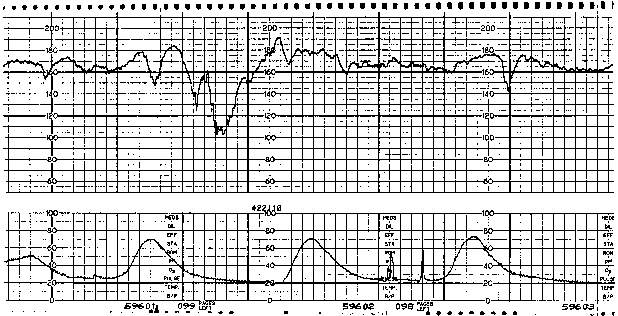
What is a variable deceleration? Abrupt decrease 15 beats below baseline (or more) x 15 seconds or more
that involves cord compression
100
A nurse is caring for Wilma who is pregnant and undergoing a non-stress test. Wilma asks the nurse why she is using an acoustic vibration device. Which of the following responses should the nurse make?
A. "It is used to stimulate uterine contractions."
B. "It will decrease the incidence of uterine contractions"
C. "It lulls the fetus to sleep."
D. "It awakens a sleeping fetus."
What is ........It awakens a sleeping fetus. The acoustic vibration device is activated for 3 secs on the maternal abdomen over the fetal head.
100
Changes from baseline patterns in FHR that occur with uterine contractions.
What are periodic changes
100
Explain a Non-Stress Test
To determine fetal well being
Normal baseline, moderate variability, and 2 accelerations within a 20 min period (no decelerations)
normal acid base balance
neurologically intact
100
Involution of the uterus
What is return to non-pregnant state? This can take up to 6 weeks.
200
 484 × 202
What are accelerations? Everything is okay
HR increase 15 beats above baseline for atleast 15 seconds (> 32 weeks gestation).
10 x 10 < 32 weeks gestation
200
Nurse Jonna is caring for a client who is in preterm labor and is scheduled to undergo an amniocentesis. Nurse Jonna should evaluate which of the following tests to assess fetal lung maturity?
A. Alpha-fetoprotien (AFP)
B. Lecithin/Sphingomyelin (L/S) ratio
C. Kleihauer-Betke test
D. Indirect Coombs' test
What is ....... B. L/S ratio is done as a part of an amniocentesis to determine lung maturity.
200
Expected irregular fluctuations in the baseline FHR of 2 cycles per minute or greater as a result of the interaction of the sympathetic and parasympathetic nervous system.
What is variability?
200
What is a CST and explain the difference between a POSITIVE contraction stress test and a NEGATIVE contraction stress test.
2 methods: Nipple stimulated contraction stress test and Oxytocin stimulated contraction stress test
InterpretationPositive--persistent late decelerations--associated with poor fetal outcomes.
Negative--no late decelerations with the contractions and are associated with good fetal outcomes.
200
BUBBLE-HEP
Breasts, Uterus, Bladder, Bowels, Lochia, Episiotomy, Homans, Emotional, and Pain level
300

What is a late deceleration? Placental insufficiency.
Peak of uterine contraction is the start of the deceleration
300
Nurse Avril is reviewing findings of a client's biophysicial profile (BPP). Nurse Avril should expect which of the following variables to be included in this test? Select all that apply
A. Fetal Weight
B. Fetal Breathing Movement
C. Fetal tone
D. Fetal Position
E. Amniotic fluid volume
What is ....B, C, E
Fetal breathing movement, fetal tone, and amniotic fluid volume
300
Two methods of assessment that use digital sound, or light stimulation to determine the reaction of the FHR.
What are fetal scalp stimulation and vibrocoustic stimulation
300
Discuss the legalities of documentation of FHR pattern.
Nurses are legally responsible for interpreting the FHR pattern, utilizing appropriate nursing intervention, documenting outcomes, and when provider has been notified.
300
Most common cause of PPH
What is uterine atony?
400
 379 × 314
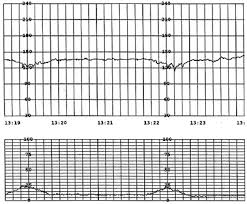
What is an early deceleration? Head compression.
decelerations mirror contractions
400
Nurse Samantha is caring for Katrina who is pregnant and is to undergo a contraction stress test. Which one of the following findings are indications for this procedure? Select all that apply
A. Decreased fetal movement
B. Intrauterine growth restriction (IUGR)
C. Postmaturity
D. Placenta previa
E. Amniotic fluid emboli
What is A, B, C,
Decreased fetal movement
IUGR, and postmaturity
400
A visually apparent abrupt decrease anytime during a contraction in response to umbilical cord compression.
What is a variable deceleration
400
Indications for EFM external fetal monitoring
What are Maternal DM, chronic HTN, HTN of IUP, IUGR, maternal cyanotic heart disease, post maturity, hx stillbirth, other chronic medical conditions.
400
This is an emergency situation in which the perfusion of body organs can become severely compromised and death can ensue.
What is Hemorrhagic (Hypovolemic) Shock.
500
What are the interventions to decelerations?
POISON
Position change, O2, IVF bolus, sterile vaginal exam, Oxytocin off, notify provider
500
Nurse Margaret is teaching Mary who is pregnant about the amniocentesis procedure. Which of the following statements should the nurse include in the teaching?
A. "You will lie on your right side during the procedure."
B. "You should not eat anything for 24 hours before the procedure."
C. " You should empty your bladder before the procedure."
D. "The test is done to determine gestational age."
What is.......C. the client should empty their bladder to avoid a puncture to during the procedure.
500
Changes in the FHR from baseline that are not associated with uterine contractions
What are episodic changes
500
This costly maternal blood test is offered between 10 and 20 weeks gestation. It provides definitive diagnosis of fetal Rh status, fetal gender, and some paternally transmitted single gene disorders.
What is a Cell-Free DNA? This test is offered to women at risk for chromosomal abnormalities, AMA, +maternal serum screeens, and ultrasound abnormalities.
500
Leading cause of maternal morbidity and mortality
What is a PPH
SVD EBL 500ml
C/S EBL 1000ml