Code of Nine
Number Architect
Pattern Detective
Mirror Math
Break It Down
100
What is the divisibility test for 9?
A number is divisible by 9 if the sum of its digits is divisible by 9.
100
What is the first triangular number?
1
100
What does finite differences help us identify?
Patterns in sequences.
100
What is a palindrome?
A number or word that reads the same forward and backward.
100
Factor x²−25
(x−5)(x+5)
200
Is 7,344 divisible by 9?
Yes.
7+3+4+4 = 18.
200
What are the first five triangular numbers?
1,3,6,10,15
200
What are the second differences of 2,5,10,17,26?
2,2,2
200
Reverse 482.
284
200
Factor x²+7x+10
(x+5)(x+2)
300
Why does adding the digits work?
Because every power of 10 leaves remainder 1 when divided by 9.
300
What is the formula for the nth triangular number?
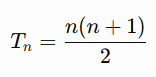
300
Constant second differences indicate what kind of sequence?
Quadratic
300
Compute 731−137
594
300
Factor 3x²+12x
3x(x+4)
400
Without dividing, determine whether 91,827 is divisible by 9.
9+1+8+2+7 = 27
Yes.
400
Find the 10th triangular number.
55
400
Find the next term. 4,9,16,25,36,...
49
400
What is the first step in the reversal process?
Reverse the digits.
400
Factor x²−9x+20
(x−5)(x−4)
500
Name the branch of mathematics used to justify the divisibility rule.
Modular Arithmetic.
500
How do triangular numbers differ from square numbers?
Triangular numbers form triangles while square numbers form squares.
500
Why are finite differences useful?
They help predict formulas and future terms.
500
Why is reversal arithmetic interesting?
Because repeated reversals reveal numerical patterns.
500
Why do mathematicians factor expressions?
To simplify expressions and solve equations more easily.