Pus, Plugs, and Problems
Cutaneous Clues
The Clot Thickens
Keeping up with the Cholesterols
Road work? I sure hope it does.
100
A 60-year-old woman is evaluated for a 7-year history of cough, voluminous yellow-green sputum, and recurrent episodes of fever, worsening cough, and occasional hemoptysis. She has no fever or weight loss.
Vital signs are normal. Wheezing is heard over the right lower lung. Chest radiograph shows increased right lower lobe bronchovascular markings.
Which of the following is the most appropriate diagnostic test to perform next?
A. Bronchoscopy and bronchoalveolar lavage
B. Chest MRI
C. High-resolution CT of the chest
D. Sweat chloride testing
C. High-resolution CT of the chest
- Bronchiectasis should be considered in the differential diagnosis of any patient with a chronic cough, especially if the patient has a history of frequent respiratory infections or if the cough is productive.
- High-resolution CT of the chest is the gold standard diagnostic test for bronchiectasis.
100
69M with follicular lymphoma on bendamustine and rituximab was started on Bactrim for PCP prophylaxis approximately 2 weeks ago. He presents to clinic with subjective fevers, myalgias and skin eruption involving 20% of BSA. He has positive Nikolsky sign. What is the diagnosis?
A. SJS-TEN Overlap Syndrome. Remember: if involving < 10% of BSA: SJS, > 30%: TEN; in between? SJS-TEN overlap syndrome
100
A 40-year-old woman is evaluated for an episode of dyspnea and syncope.
CT angiogram is shown.
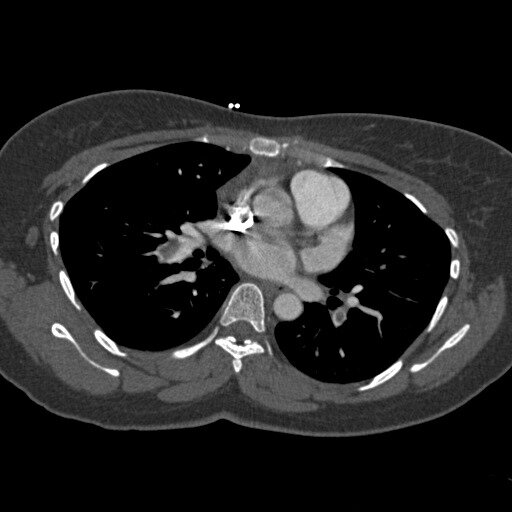
Which of the following is the most likely diagnosis?
A.Aortic dissection
B.Cardiac tamponade
C.Pulmonary embolism
D.Tension pneumothorax
C. Pulmonary embolism
100
A 57-year-old woman undergoes follow-up evaluation 3 months after hospitalization for a myocardial infarction. She underwent emergent percutaneous coronary intervention with stenting of the left anterior descending artery. No other obstructive coronary disease was found, and left ventricular function was normal. The initial LDL cholesterol level was 140 mg/dL (3.63 mmol/L). Her remaining hospital course was uncomplicated. She has no other medical conditions. She does not use tobacco. Medications at discharge were aspirin, clopidogrel, metoprolol, lisinopril, and high-intensity rosuvastatin.
On physical examination, blood pressure is 118/72 mm Hg, pulse rate is 62/min, and oxygen saturation is 98% breathing ambient air. All other findings are unremarkable.
Laboratory studies:
HDL cholesterol 39 mg/dL (1.01 mmol/L)
LDL cholesterol 52 mg/dL (1.35 mmol/L)
Non-HDL cholesterol 82 mg/dL (2.12 mmol/L)
Which of the following is the most appropriate strategy to manage this patient's cholesterol level?
A.Add ezetimibe.
B.Measure high-sensitivity C-reactive protein level.
C.Switch rosuvastatin to atorvastatin.
D.No change in management
Answer: D No change in management
- Patients with known atherosclerotic cardiovascular disease (ASCVD) should be treated with fixed high-dose statin therapy regardless of initial LDL cholesterol level.
- The goals of statin therapy in secondary prevention of ASCVD for patients not at very high risk for future events include a reduction in LDL cholesterol of 50% or greater, an LDL cholesterol level below 70 mg/dL (1.81 mmol/L), and a non-HDL cholesterol level below 100 mg/dL (2.59 mmol/L).
100
Finish that vine: How do you know what's good for me?
THAT'S MY OPINIONNNNN!!!
200
Name 3 extra pulmonary complications of cystic fibrosis.
Pancreatic insufficiency, CFRD (Cystic Fibrosis Related Diabetes), Liver Disease, GERD, infertility/reduced fertility, Osteoporosis/Osteopenia
200
55M with recent hospitalization for MSSA bacteremia presents with a rash that began yesterday. At the start of his hospitalization, he was started on vancomycin, but switched to nafcillin 5 weeks ago. He complains of feeling “swollen,” especially in the face. He also feels “sick” with muscle and joint aches. He is admitted to the hospital and diagnosed with DRESS. He was started on corticosteroids, however continues to have symptoms. What is next line treatment?
What is cyclosporine? Steroids have the most evidence in the treatment of DRESS, followed by cyclosporine. Cyclosporine should be used in steroid refractory cases or if there are contraindications to steroid use.
200
A 65-year-old man is evaluated in the emergency department for bloody sputum and shortness of breath, which developed 2 hours ago. Three weeks ago, he underwent resection of a stage IIA adenocarcinoma of the colon. Medical history is otherwise unremarkable, and he takes no medications.
On physical examination, blood pressure is 122/68 mm Hg, pulse rate is 105/min, and respiration rate is 18/min. Oxygen saturation is 94% with the patient breathing ambient air. Lungs are clear to auscultation. A well-healed abdominal incision is noted.
Laboratory studies:
Creatinine 0.8 mg/dL (70.7 μmol/L)
Which of the following is the most appropriate diagnostic test to perform next?
A.CT angiography of the chest
B.D-dimer measurement
C.Lower extremity ultrasonography
D.Magnetic resonance pulmonary angiography
CT angiography (CTA) of the chest (Option A).
The first step in evaluating patients with possible pulmonary embolism (PE) is ascertaining the likelihood of disease (the pretest probability). PE may be ruled out in patients with a very low pretest probability using the Pulmonary Embolism Rule-Out Criteria (PERC) (Table: PERC for Predicting Probability of PE). No further testing is necessary in patients with a PERC score of zero and a very low clinical probability of PE. In patients with a non–very low pretest probability or a PERC score of 1 or greater, the choice of testing should be driven by the clinical probability determined by clinical gestalt, or a validated risk stratification system such as the Wells criteria (Table: Wells Criteria for PE). The Wells criteria score stratifies patients into either two (≤4: PE unlikely; >4: PE likely) or three (<2: low; 2-6: intermediate; >6: high) levels of likelihood of PE. In patients with an unlikely or low pretest probability, D-dimer testing should be pursued. If a patient has a “likely,” intermediate, or high pretest probability, imaging studies are usually indicated, although D-dimer testing may be considered in some patients with intermediate (approximately 20%) pretest probability. CTA is the preferred imaging test for assessment of PE in patients without contraindication. This patient has a Wells score of 8 (hemoptysis, tachycardia, major surgery, active cancer, PE most likely diagnosis), indicating a high or likely probability of PE. He should undergo CTA of the chest.
D-dimer testing (Option B) is sensitive for detecting thrombotic disease, and a negative result in a patient with a low pretest probability of PE obviates the need for imaging. However, D-dimer testing has poor negative predictive value in patients with a high probability of PE. This patient has a high pretest probability of PE, and CTA is indicated.
Ultrasonography (Option C) is recommended in patients with a high pretest probability of deep venous thrombosis as determined by the Wells criteria. This patient has a high pretest probability of PE, and CTA is the most appropriate test to perform next. Even if CTA is positive for PE, lower extremity ultrasonography is not routinely indicated in the absence of lower extremity symptoms.
Magnetic resonance pulmonary angiography (Option D) is not an appropriate first-line test in evaluating possible PE. Using MRI to diagnose PE avoids ionizing radiation and can visualize intraluminal filling defects in the pulmonary vasculature, but not as well as CTA. Although the role of MRI in the diagnosis of VTE is evolving, CTA remains the test of choice.
200
A 78-year-old man is evaluated for left calf and foot pain with ambulation that has been stable over the past 6 months. Pain lasts approximately 5 minutes and is reliably relieved by rest; it does not occur at rest. Medical history is significant for hypertension and dyslipidemia. He has had several trials of statin therapy, but each was discontinued because of myalgias. He quit smoking 4 years ago. Medications are aspirin, losartan, and metoprolol succinate.
On physical examination, blood pressure is 128/76 mm Hg; other vital signs are normal. Left popliteal and pedal pulses are diminished.
Ankle-brachial index is 0.98 on the right and 0.72 on the left.
Laboratory studies:
LDL cholesterol 136 mg/dL (3.52 mmol/L)
Low-dose rivaroxaban is started, and the patient is referred to a supervised exercise program.
Which of the following is the most appropriate additional treatment strategy?
A.Discontinue metoprolol.
B.Increase losartan.
C.Start atorvastatin.
D.Start ezetimibe
The Answer is D
- For patients with peripheral artery disease (PAD) who are unable to receive statin therapy, using ezetimibe, a proprotein convertase subtilisin/kexin type 9 inhibitor, or bempedoic acid is reasonable.
- Although there is no clear LDL cholesterol (LDL-C) target in patients with PAD, guidelines recommend that patients with atherosclerotic cardiovascular disease be treated to reduce LDL-C levels below 70 mg/dL (1.81 mmol/L).
200
Finish that vine: You know what? I'm about to say it.
A: I don't care that you broke your elbow
300
What is the pathogenesis of bronchiectasis? OR What are the three pillars of bronchiectasis?
1. Impaired Clearance
2. Inflammation
3. Immune Dysfunction
300
44M walks into the ED with flu like symptoms and headache. He was bitten by his dog the day prior. While undergoing CT scan, he develops a pupuric rash that rapidly progresses into blood filled blisters.
Which of the following is the most likely diagnosis:
A. SJS
B. TEN
C. Purpura Fulminans
D. CMV infection
Purpura Fulminans – a true emergency. Sometimes called DIC in the skin. IT is a microvascular occlusion in the skin with platelet rich thrombi. No inflammation is seen on biopsy, it is purely vascular. Differential includes infection, catastrophic APLS, protein C/S deficiency (pediatric population).
300
A 52-year-old woman is evaluated for a 3-day history of sharp right-sided lateral chest pain. The pain does not radiate or worsen with breathing or activity. She reports no dyspnea, cough, or recent trauma. She takes a combined oral contraceptive pill.
On physical examination, vital signs, including oxygen saturation, are normal. Cardiac examination is normal. Lungs are clear to auscultation. She has no lower extremity swelling.
Chest radiography and ECG are normal.
Which of the following is the most appropriate diagnostic test to perform next?
A.CT angiography of the chest
B.D-dimer measurement
C.High-sensitivity troponin measurement
D.Transthoracic echocardiography
D-dimer measurement (Option B).
Choice of testing for PE depends on the clinical probability of disease. In patients with a very low clinical probability, the Pulmonary Embolism Rule-Out Criteria (PERC) score can be used to rule out the diagnosis. In patients with a PERC score of greater than 0 and those without a very low probability of disease, test choice is driven by the clinical probability as determined by clinical gestalt or a validated score such as the Wells score. The Wells score stratifies patients into either two (≤4: PE unlikely; >4: PE likely) or three (<2: low; 2-6: intermediate; >6: high) levels of likelihood of PE.
In patients with an unlikely or low pretest probability, D-dimer testing is indicated. If a patient has a likely, intermediate, or high pretest probability, imaging studies are usually indicated; however, D-dimer testing may be considered in some patients with intermediate (~20%) pretest probability.
This patient's new-onset chest pain and estrogen use make PE an important diagnostic consideration. Her PERC score is >1 based on her age, but she has a low clinical probability of PE by the Wells score and D-dimer testing is appropriate.
CT angiography (CTA) of the pulmonary arteries (Option A) is the preferred initial test for assessment of PE in patients with a high clinical likelihood of disease. This patient has a low likelihood of PE and should undergo D-dimer testing rather than CTA.
High-sensitivity troponin measurement (Option C) is a crucial test in the evaluation of chest pain when acute coronary syndrome is a possible diagnosis. This patient, however, is very unlikely to have acute coronary syndrome based on her right-sided lateral chest pain and normal ECG. Troponin measurement is not indicated.
Transthoracic echocardiography (TTE) (Option D) is indicated in the evaluation of chest pain when pericardial disease is suspected. It can also be helpful in selected patients with suspected pulmonary hypertension or myocardial disease. This patient has nonpleuritic right-sided chest discomfort and a normal ECG, making pericardial disease unlikely. TTE is not indicated.
300
A 65-year-old woman undergoes follow-up evaluation for dyslipidemia. She has tolerated low-intensity rosuvastatin well; however, previous trials of higher doses caused severe myalgia. She was also previously intolerant of low-intensity atorvastatin. She has coronary artery disease complicated by acute coronary syndrome, heart failure with reduced ejection fraction, gout, hypertension, and type 2 diabetes mellitus. Her other medications are aspirin, ezetimibe, dapagliflozin, carvedilol, sacubitril-valsartan, eplerenone, allopurinol, and metformin.
On physical examination, vital signs and other findings are normal.
Laboratory studies:
Total cholesterol 188 mg/dL (4.87 mmol/L)
HDL cholesterol 56 mg/dL (1.45 mmol/L)
LDL cholesterol 110 mg/dL (2.85 mmol/L)
Non-HDL cholesterol 132 mg/dL (3.42 mmol/L)
Triglycerides 127 mg/dL (1.44 mmol/L)
Which of the following is the most appropriate additional treatment?
A.Bempedoic acid.
B.Evolocumab.
C.Icosapent ethyl.
D.Niacin
Answer B: Evolcumab
- In patients with atherosclerotic cardiovascular disease and very high risk for recurrent events, proprotein convertase subtilisin/kexin type 9 monoclonal inhibitors should be considered if maximally tolerated statin therapy does not reduce the LDL cholesterol level to less than 55 mg/dL (<1.42 mmol/L).
Bempedoic acid (Option A) lowers LDL cholesterol by working upstream to the hydroxymethylglutaryl–coenzyme A reductase pathway inhibited by statins, but it only modestly reduces LDL cholesterol (20%-30%). Although well tolerated, it can cause hyperuricemia, and gout is a relative contraindication. A PCSK9 inhibitor is more appropriate for this patient with gout because of its stronger LDL cholesterol–lowering potential and lack of effect on uric acid levels.
In patients with either established ASCVD or diabetes with one other ASCVD risk factor and persistently elevated triglyceride levels (>150 mg/dL [1.70 mmol/L]) despite statin therapy, adding icosapent ethyl (Option C) decreases the risk for MACE. However, this patient does not have significant hypertriglyceridemia, and icosapent ethyl is not indicated.
Niacin (Option D) does not effectively reduce LDL cholesterol and has not been shown to clearly decrease MACE. A PCSK9 inhibitor is more appropriate to achieve the necessary decrease in LDL cholesterol in this patient.
300
I'm here at Del Taco. They got a new thing called
A: Free-sha-vaca-do
400
A 78-year-old woman is evaluated for a 2-week history of worsening dyspnea with exertion and cough. She has bronchiectasis of unknown cause. She reports her chronic cough has increased in frequency and is now productive of green sputum. She has had no fever or chills. She increased the frequency of her airway clearance methods 1 week ago, without improvement. Medications are nebulized albuterol and nebulized 3% sodium chloride; she also uses a flutter valve.
On physical examination, vital signs are normal. Lung examination reveals bibasilar crackles. No clubbing or cyanosis is noted.
Laboratory studies:
Leukocyte count
6000/µL (6.0 × 10⁹/L)
Sputum culture from 9 months ago showed pan-sensitive Pseudomonas aeruginosa and Escherichia coli. Repeat sputum culture is ordered.
Chest radiograph shows chronic bronchial wall thickening and no infiltrate.
Which of the following is the most appropriate management?
A. Amoxicillin-clavulanate
B. Bronchoscopy with bronchoalveolar lavage
C. Ciprofloxacin
D. Prednisone
C. Ciprofloxacin
Empiric antibiotic therapy is recommended for an exacerbation of bronchiectasis and may be based on previous culture data until the results of the current sputum culture become available; if previous data are not available, a fluoroquinolone may be started to ensure Pseudomonas coverage until sputum culture results are available.
400
This is a hallmark of neutrophilic dermatoses such as Pydoerma Gangrenosum, Sweet Syndrome and Behcets Syndrome that occurs when there is an exaggerated skin reaction where there is minor trauma.
What is pathergy?
400
A 72-year-old man is evaluated in the emergency department for pleuritic chest pain and shortness of breath of 2 days' duration. Medical history is unremarkable, and he takes no medications.
On physical examination, blood pressure is 124/72 mm Hg, and pulse rate is 98/min. Oxygen saturation is 94% with the patient breathing ambient air. The remainder of the physical examination is normal.
Laboratory studies show an elevated D-dimer level and normal troponin and B-type natriuretic peptide levels.
CT angiogram of the chest shows a left-sided segmental pulmonary embolism without right ventricular enlargement.
Which of the following is the most appropriate management?
A.Discharge home and treat with apixaban.
B.Hospitalize and start rivaroxaban.
C.Hospitalize and start unfractionated heparin.
D.Hospitalize for thrombolytic therapy
A. Discharge home and treat with apixaban.
Although most patients with pulmonary embolism (PE) require hospitalization, a subset of patients with an excellent prognosis can be safely treated as outpatients. The Pulmonary Embolism Severity Index (PESI) is a validated prediction tool for assessing the clinical severity and potential outcomes of patients with PE (see Table: Simplified PESI). It can be used to identify patients who may qualify for outpatient treatment. The simplified PESI defines patients with PE as low risk for adverse outcomes if the following criteria are met:
- 80 years or younger without significant comorbidity
- Pulse rate less than 110/min
- Systolic blood pressure of 100 mm Hg or greater
- Oxygen saturation of 90% or greater
Many patients with a simplified PESI score of 0 can be treated as outpatients, if it can be done logistically and no other contraindications exist. DOACs such as apixaban and rivaroxaban are the preferred treatment for most patients with venous thromboembolism and are approved for use as initial therapy without antecedent parenteral therapy, making them ideal for outpatient treatment. This patient has a newly diagnosed PE with a simplified PESI score of 0, which places him at low risk for adverse outcomes. Outpatient treatment with apixaban is appropriate.
This patient with a low-risk PESI score and no other contraindications to outpatient management does not require hospitalization for treatment with a DOAC such as rivaroxaban (Option B). However, rivaroxaban and other DOACs are the preferred treatment for most patients with venous thromboembolic disease and would be appropriate treatment in this patient even if he were to require hospitalization.
Unfractionated heparin (UFH) (Option C) is not routinely used for the treatment of PE, unless thrombolytic therapy or emergent surgery is being considered. UFH may be preferred in these patients because of its short half-life, but it is otherwise inferior to other treatment options. This patient has stable vital signs and a low-risk PESI score; therefore, UFH is not the most appropriate choice.
Thrombolysis (Option D) is strongly indicated in patients with PE with shock or those with clinical deterioration despite anticoagulation. Thrombolytic therapy is not recommended in most patients with acute PE without hypotension, although the role of thrombolysis for submassive PE is unclear. This patient with normal vital signs and no other markers of increased risk, such as elevated biomarkers or right ventricular strain, has no indication for thrombolysis.
400
A 48-year-old man is evaluated during a follow-up visit for acute coronary syndrome diagnosed 2 months ago. Coronary angiography revealed three-vessel coronary artery disease; he underwent coronary artery bypass graft surgery and has fully recovered. He also has type 2 diabetes mellitus, hypertension, and dyslipidemia. Medications are aspirin, ticagrelor, metoprolol, ramipril, semaglutide, metformin, and atorvastatin.
On physical examination, blood pressure is 106/58 mm Hg and pulse rate is 54/min and regular. BMI is 32.7. Cardiac examination is normal. A well-healed median sternotomy site is noted.
Laboratory studies:
HDL cholesterol 38 mg/dL (0.98 mmol/L)
LDL cholesterol 54 mg/dL (1.40 mmol/L)
Triglycerides 320 mg/dL (3.62 mmol/L) H
Serum creatinine 1.0 mg/dL (88.4 µmol/L)
Hemoglobin A1c 6.2% H
Which of the following is the most appropriate medication to add to reduce this patient's risk for future major adverse cardiac events?
A.Alirocumab
B.Icosapent ethyl
C.Insulin
D.Niacin
Answer B Icosapent Ethyl
- In patients who have established atherosclerotic cardiovascular disease (ASCVD) or are at high risk based on the combination of being 50 years of age or older, having diabetes, and having at least one other ASCVD risk factor, as well as persistently elevated triglyceride levels despite statin therapy, adding icosapent ethyl may prevent future cardiovascular events.
High-intensity statin therapy is indicated in patients with ASCVD who are at very high risk for recurrent events (see Table: Identification of Patients with ASCVD at Very High Risk) to achieve a goal LDL cholesterol (LDL-C) reduction of 50% or more from baseline and an LDL-C level less than 55 mg/dL (1.42 mmol/L). The addition of a proprotein convertase subtilisin/kexin 9 inhibitor, such as alirocumab (Option A), or ezetimibe is a reasonable next step if this LDL-C goal is not achieved. Adding these agents, however, is not indicated to improve triglyceride levels not adequately reduced with statin therapy. Icosapent ethyl is a better choice in this scenario.
Improving glycemic control in patients with diabetes usually results in a decrease in triglyceride levels. This patient, however, already has reasonable glycemic control as shown by the hemoglobin A1c of 6.2%, and adding insulin (Option C) is likely to cause hypoglycemia without a significant improvement in triglyceride level.
Niacin (Option D) is incorrect because, unlike icosapent ethyl, it provides no long-term improvement in clinical outcomes. It also may be difficult to tolerate and may worsen control of diabetes. The American College of Cardiology/American Heart Association cholesterol guidelines have excluded the use of niacin.
400
Hey, my name's Trey...
I got a basketball game tomorroww
500
In order to clear the airway you need to "BE HAPPY". Name the 7 aspects of this pneumonic.
1. Bronchodilator (5-15 min)
2. Wait 15 min
3. Hypertonic Saline (15-20 min)
4. Airway Clearance (30 min)
5. Pulmozyme/Dornase alfa (5 min)
6. Inhaled Corticosteroid (5-15 min)
7. Inhaled Antibiotic (15-20 min)
Total 1-2 hours!!!
500
55M is hospitalized for a complicated cystitis. He was started on antibiotics, developed a generalized, pustular rash on hospital day 2.
What is the most likely diagnosis?
AGEP (Acute Generalized Exanthematous Pustulosis), a drug eruption which occurs 1-2 days after exposure to drug. Only need 1 exposure! Treatment is typically topical or systemic steroids if necessary. Time course matters!
500
A 34-year-old woman is evaluated in the emergency department for 2 days of increasing shortness of breath, fever, and blood-tinged sputum. She has a 3-year history of systemic lupus erythematosus. She has had difficulty adhering to medications in the past, and she currently is not taking any medications.
On physical examination, temperature is 38.8 °C (101.8 °F), blood pressure is 110/60 mm Hg, pulse rate is 110/min, and respiration rate is 24/min. Oxygen saturation is 90% with the patient breathing high-flow oxygen. Malar rash is observed. Cardiac examination is normal. Lung examination demonstrates diffuse crackles but no rubs. There are small knee effusions and 1+ pitting edema in the lower extremities.
Laboratory studies:
Hematocrit 28%
1 month ago: 35% L
Leukocyte count 4200/μL (4.2 × 10⁹/L)
Platelet count 235,000/μL (235 × 109/L)
C3 complement 65 mg/dL (650 mg/L)
C4 complement 8 mg/dL (80 mg/L) L
Anti–double-stranded DNA antibody titer 400 U/mL (normal range, <10 U/mL) H
Antiphospholipid antibodies Negative
Chest radiograph reveals diffuse pulmonary infiltrates.
Bronchoalveolar lavage shows increasing erythrocyte counts with sequential aliquots.
Which of the following most likely explains this patient's acute presentation?
A.Acute lupus pneumonitis.
B.Diffuse alveolar hemorrhage.
C.Pulmonary embolism.
D.Pulmonary infection
Answer B: DAH
DAH is a rare but serious complication of active SLE. Onset is acute (hours to days) and is associated with fever, dyspnea, cough, and blood-tinged sputum; hemoptysis is present in 57% of cases. A decrease in hematocrit further suggests the diagnosis. Chest radiographs demonstrate diffuse infiltrates, and CT scan may show ground-glass changes, but neither is diagnostic.
Bronchoalveolar lavage is the most useful test to confirm DAH and should be performed early to evaluate for infection. An increasing erythrocyte count from sequential bronchoalveolar lavage aliquots is considered diagnostic and would not be seen in a patient with infection or acute lupus pneumonitis.
Additionally, she has SLE-associated risk factors for DAH, including her history of nephritis, anti–double-stranded DNA antibody positivity, and low-normal C3 and low C4 complement levels.
Acute lupus pneumonitis (Option A) is another rare but serious manifestation of SLE. It occurs in the context of an SLE flare, and manifestations include cough, dyspnea, fever, hemoptysis, and hypoxemia. Radiographs usually demonstrate diffuse pulmonary infiltrates, and pleural effusions may also be present. Acute lupus pneumonitis may be difficult to differentiate from infection. This patient's bronchoalveolar lavage results support the diagnosis of DAH rather than pneumonitis.
Patients with SLE are at elevated risk for pulmonary embolism (Option C) compared with the general population. The risk is further increased in patients with SLE who have antiphospholipid antibodies because these patients can have up to a sixfold increased risk for pulmonary embolism. Plain radiographs of the chest may be normal or show nonspecific abnormalities, and CT angiography is usually used to make the diagnosis. The presence of diffuse pulmonary infiltrates and the bronchoalveolar lavage results in this patient make DAH more likely.
Pulmonary infection (Option D) can mimic SLE-specific pulmonary manifestations and is a common cause of morbidity and mortality in SLE. Patients with SLE are at increased risk for infection because of immunosuppression. Staphylococcus aureus and Streptococcus pneumoniae are the most common organisms to cause lung infections in SLE, but atypical organisms must also be considered. DAH is more likely in this patient given the bronchoalveolar lavage results.
500
An 81-year-old woman is evaluated during a follow-up visit after hospitalization for an exacerbation of COPD. She reports weakness, poor balance, several falls, and decreased physical activity. She has had several hospitalizations during the past year for pneumonia and has lost 5.9 kg (13 lb). In addition to COPD, she has dyslipidemia, mild cognitive impairment, and chronic kidney disease. Medications are moderate-intensity rosuvastatin, amlodipine, oral iron, vitamin D, furosemide, and inhaled tiotropium-salmeterol.
On physical examination, vital signs are normal. BMI is 22. The thigh muscles are tender to palpation bilaterally. The rest of the examination is normal.
Laboratory studies:
Creatinine 2.1 mg/dL (185.64 µmol/L) H
Total cholesterol 196 mg/dL (5.08 mmol/L)
LDL cholesterol 134 mg/dL (3.47 mmol/L)
HDL cholesterol 42 mg/dL (1.09 mmol/L)
Triglycerides 176 mg/dL (1.99 mmol/L) H
Which of the following is the most appropriate management of this patient's dyslipidemia?
A.Add icosapent ethyl
B.Change to high-intensity rosuvastatin.
C.Discontinue rosuvastatin.
D.Obtain coronary artery calcium score
Answer C: Discontinue rosuvastatin
- Managing dyslipidemia in the primary prevention of atherosclerotic cardiovascular disease for patients aged 75 years and older requires an individualized approach.
- It is reasonable to forgo initiating a statin or to stop statin therapy in patients with functional decline, multiple comorbid conditions, frailty, or reduced life expectancy.
500
Jared, can you read number 23 for the class? No I cannot...
A: What's up? I'm Jared. I'm 19 and I never learned how to read.