Key Features
Solving Systems
Polynomials
Factoring
Linear Functions
Final Jeopardy
100
What is the negative interval
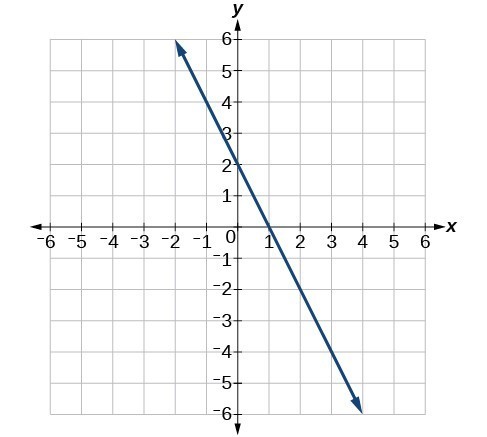
(1, ∞)
100
How can you tell if a linear system has infinitely many solutions or no solution?
INFINATELY MANY: The equations are the same, the graphed lines lie on top of one another, or solving the system provides a true statement with no variables.
NO SOLUTION: The lines are parallel or they have the same slope and different y-intercepts or when you solve the equations and get a false statement with no variables remaining.
100
Simplify the expression
(4x^3-2x^2+6xy-7y)+(3x^2+3xy-5)
4x^3+x^2+9xy-7y-5
100
What is the G.C.F. of the polynomial?
28x^4-42x^3+70x
14x
100
y=mx+b is called
slope-intercept form
200
Given the graph for
f(x)=|x-3|+6 find the increasing interval
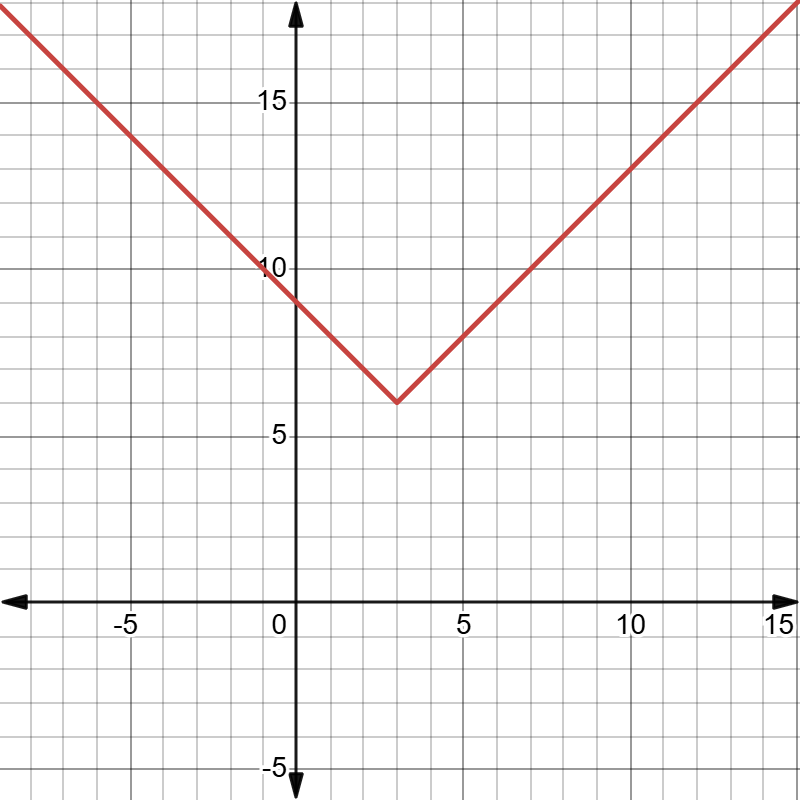
The function increases over the interval
[3,oo)
200
What is the solution for the system graphed below?
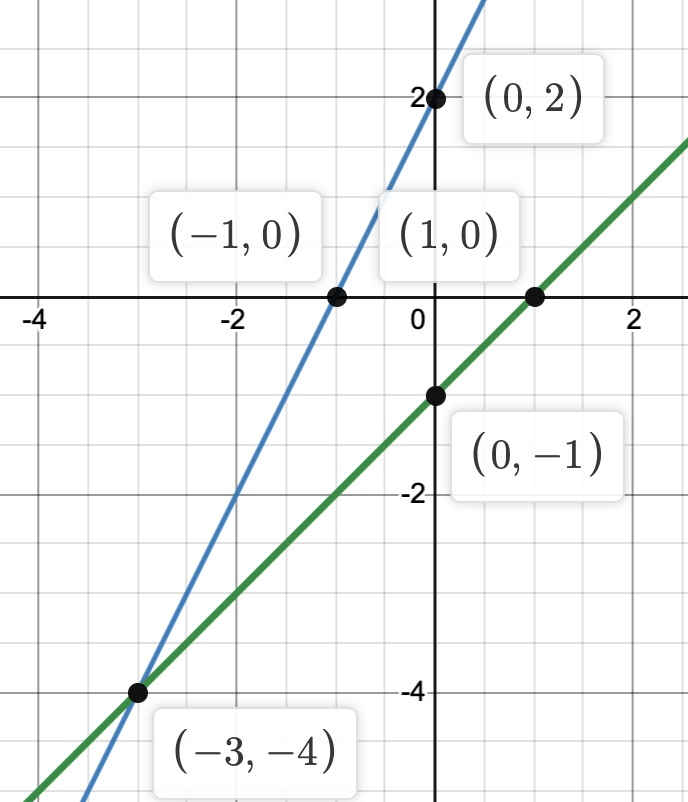
(-3, -4)
200
Simplify the expression
(5x^4-2x^2+10x)-(4x^4+12x^3-2x^2+6x)
x^4-12x^3+4x
200
Factor the polynomial using G.C.F.
56x^6-48x^4+16x^2
8x^2(7x^4-6x^2+2)
200
What can you say about a line with the following equation? y=-3x+2
The line is decreasing (heading down) and crosses the y-axis at y=2
300
What is the domain and range for the function below?
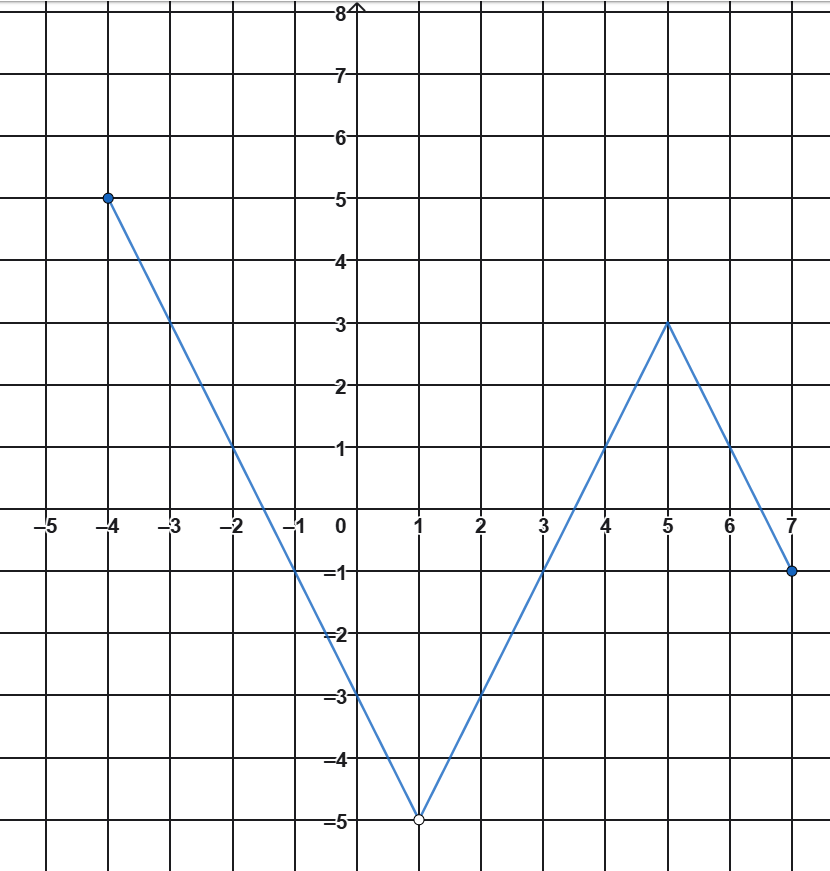
Domain: [-4,1)uu(1,7]
Range: (-5,5]
300
Solve the system
−5y + 8x = −18
5y + 2x = 58
(4, 10)
300
Find the product
(x+4)(2x-1)
2x^2+7x-4
300
Factor the polynomial using grouping or boxes
4x^2-32x+64
Two possible answers:
(2x-8)(2x-8)
or (2x-8)^2
300
The equation for line A is y=3/5x+2
Write the equation for line B, perpendicular to A and crossing the y-axis at y=5
y=-5/3x+5
400
Over what interval is the function below positive?
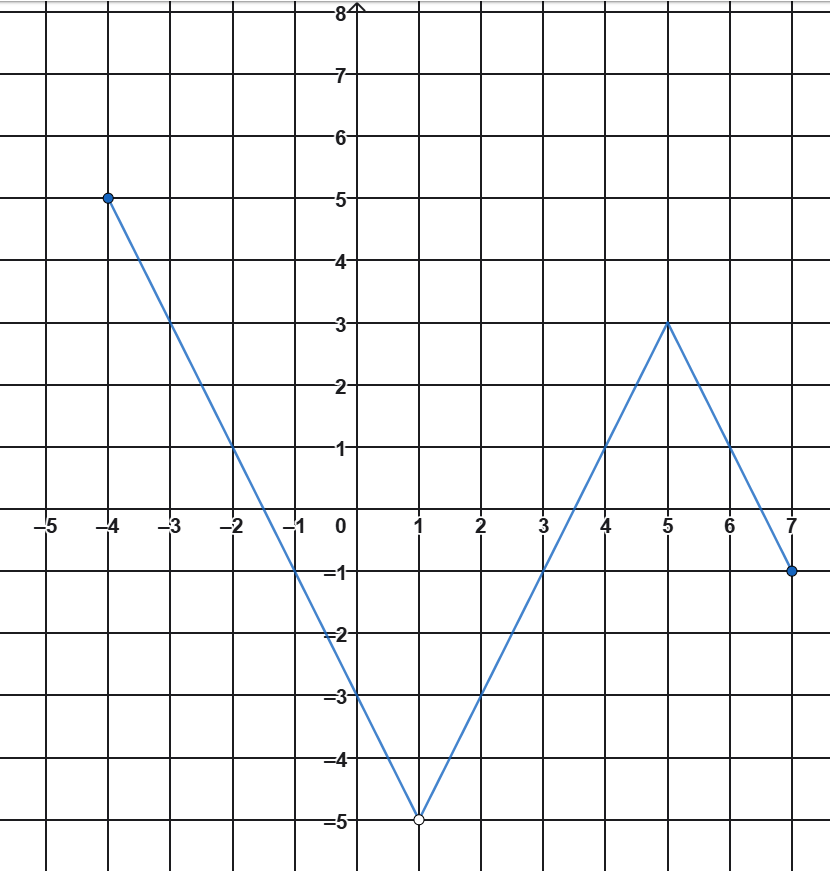
[-4,-1.5]uu[3.5,6.5]
400
Solve the system
x = −3y + 2
−x + 2y = 3
(−1, 1)
400
Divide the polynomial by the monomial
(27x^4-45x^2+18x)/(9x)
3x^3-5x+2
400
Factor the polynomial
-49x^4+25y^2
(5y+7x^2)(5y-7x^2)
400
Johnny and Santi were asked to write the function for a line that is parallel to y=-1/2x+4 and passes through the point (-5,6)
Johnny wrote y-6=-1/2 (x+5)
Santi wrote y+6=-1/2(x-5)
Who has the right function?
Johnny's answer is right, because he remembered to switch the signs after inputting the point (-5, 6) in point-slope form
y-y1=m(x-x1)
500
Max says that the function below is negative over the interval (-oo,-2] . Is his answer correct? If not, what was his mistake?
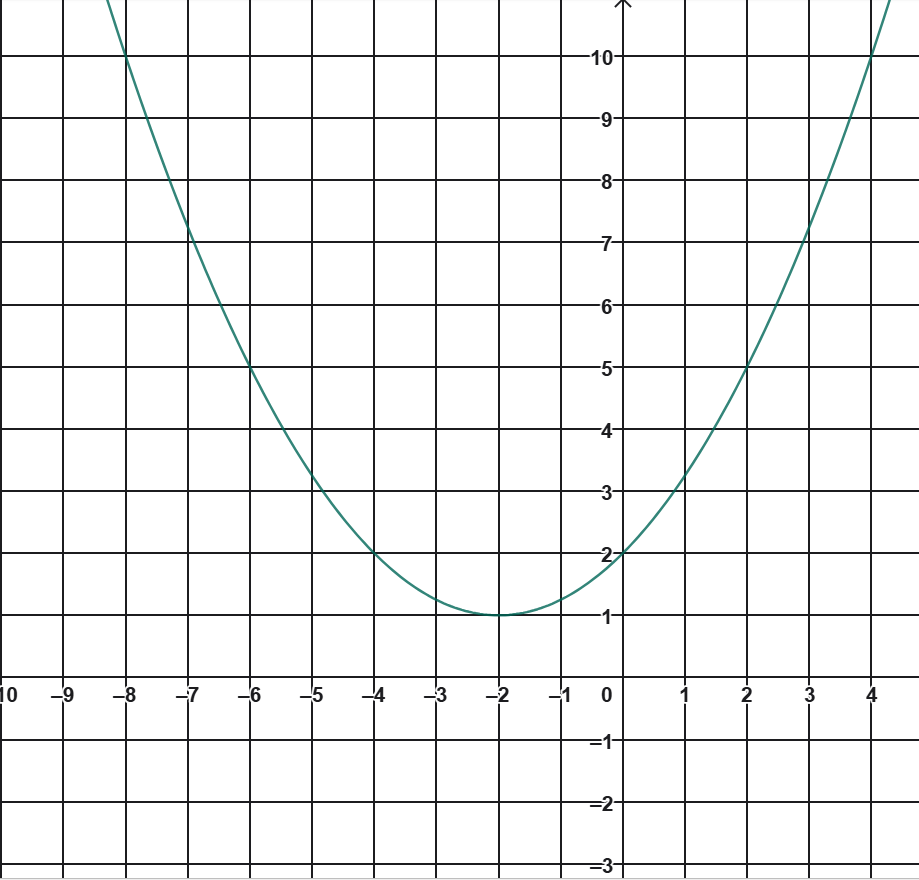
Max is wrong. The function never goes below the x-axis, so there is no negative interval. Instead, Max provided the decreasing interval.
500
Solve the system
3x − 4y = 8
6x − 8y = 16
The system has infinitely many solutions
500
Simplify the polynomial
(−10mn^3 − 4n^4 ) − (−2n^4 − 7mn^3 − 6n^3 ) − (5n^3 + 6mn^3)
−9mn^3 − 2n^4 + n^3
500
Factor COMPLETELY
6x^2-18x+24
6(x+4)(x-1)
500
What can be said about the line with the equation
y-4=1/2(x-6)
The line has a positive slope, so it is increasing. It also passes through the point (4,6)
500
Factor Completely
2x^4-162
2(x^2-3)(x^2+3)(x^2+9)