DNA/Cell Division
Protein Synthesis
Genetics
Evolution
Ecology
1
Cellular reproduction that results in two identical diploid daughter cells.
Mitosis
1
The original nucleic acid from which all mRNA is copied and then proteins are made.
DNA
1
he type of the allele which is most likely to be expressed in offspring.
Dominant
1
Historic evidence that shows the remains of plants or animals and that suggests evolutionary trends.
Fossils
1
Organisms make their own food using sunlight or chemical energy. |
Producer
2
Cellular reproduction that results in 4 haploid daughter cells, each with half of the genetic information of the parent cell.
Meiosis
2
The first of two steps in protein synthesis in which DNA's genetic sequence is copied to make a strand of mRNA.
Transcription
2
The genetic characteristics that makes up an organism.
Genotype
2
Anatomical characteristics that are similar in structure but different in function.

Homologous
2
Organisms that must get their energy from other organisms.
Consumers
3
Double helix strand of nucleic acid found in the nucleus of the cell.
DNA
3
The second of two steps during protein synthesis in which mRNA codons are used to assemble long chains of amino acids on the ribosomes.
Translation
3
The physical characteristics that makes up an organism.
Phenotype
3
Anatomical characteristics that are similar in function but different in structure.
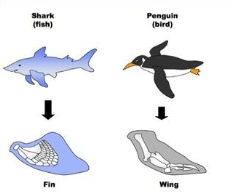
Analogous
3
Ecological factors that encompass all nonliving elements that influence ecosystems, such as landforms, water, air, sunlight, and climate.
Abiotic
4
Single-stranded nucleic acid that has A, U, G and C as its nitrogen bases.
RNA
4
* DAILY DOUBLE*
The “building blocks” of proteins that are coded for first as "codons" within the DNA and then as “anti-codons” within mRNA.
Amino Acid
4
The process in which chromosomes exchange a portion of DNA and that results in genetic diversity.
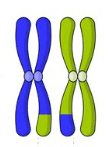
Crossing-over
4
The evidence for evolution that compares similarities and differences in early-stage organisms.
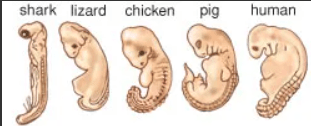
Embryology
4
*DAILY DOUBLE *
An ecological factor that constrains a population's size and slows or stops it from growing such as food, mates, and competition with other organisms for resources.
limiting
5
A section of a chromosome that controls a particular trait.
Gene
5
A type of mutation that occurs when a single nitrogen base is missing or replaced and can result in an altered protein.
Gene or point mutation.
5
The random process where new combinations or sequences of DNA result in new genotypes of phenotypes.
Mutation
5
The process in which humans intervene in breeding to experiment with or create new combinations of genes.
Artificial Selection
5
The maximum number of individuals within a species that can be supported by a given area of land, water, or air.
Carrying capacity