Geography
Egypt & Kush Similarities & Differences
Achievements
Vocabulary
Bonus Category
100
What river flows through Kush?
The Nile

100
What is similar about the way that the Kushites and Egyptians buried their royalty?
They built pyramids as tombs.
100
Estimate how many pyramids the Kushites constructed.
More than 200
100
What does deity mean?
A deity or god is a supernatural being who is considered divine or sacred.
100
Name at least one student who has a birthday in March.
Various answers accepted
200
What is the relative location of Kush?
Various responses accepted
Ex: South of Egypt
200
What religious connections existed?
Kushites and Egyptians worshipped many of the same gods (often in different ways) and held similar beliefs about the afterlife.
200
Why were cities in Kush important centers of trade?
-location on the Nile
-link between northern and southern Africa
200
What does dynasty mean?
A line of rulers from one family
200
What is your group's favorite thing that we've studied in social studies? You have to give a clear reason why.
Various answers accepted
300
Which was closer to Kush? Upper or Lower Egypt?
Upper Egypt 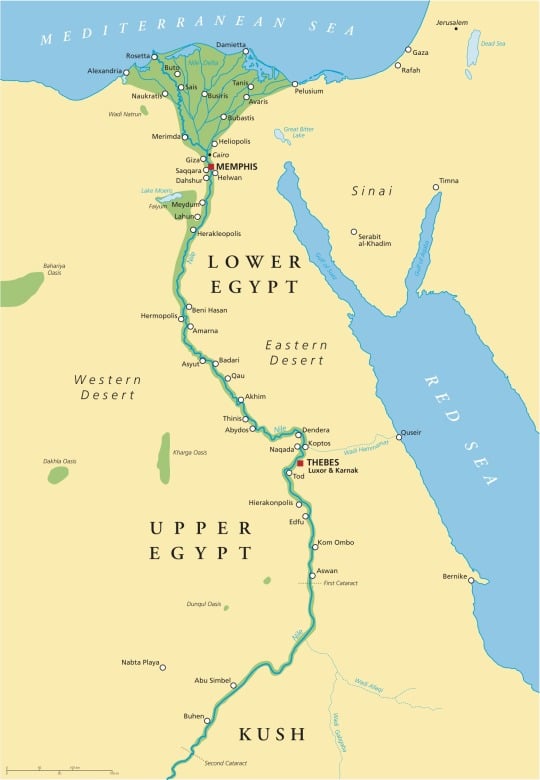
300
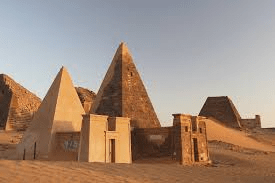
What are differences between Kushite pyramids and Egyptian pyramids?
Kushite pyramids were narrower.
Ancient Egyptians buried leaders in the pyramid and the Kushites buried them under.
300
What metal production was Kush famous for?
Iron
300
What does polytheistic mean?
Worshipping and believing in many gods
300
Which of the three ancient Egyptian seasons are we in?
We just entered Shemu.
400
What was the first capital city of Kush?
Kerma

400
What are reasons that Kush and Egypt influenced each other so much?
-They took over and occupied each other at different points in history
-They were trade partners
-They both were on the Nile
400
What type of warriors was Kush famous for?
Archers (bow & arrow)
400
What is Meroitic?
The language and writing of Ancient Meroë. One form was influenced by Egyptian hieroglyphics.
500
What was the last capital of Kush?
Meroë
500
Bonus! What was the name of the pharaoh whose tomb was recently discovered?
Thutmose II
500
What ancient power(s) did Kushite Queen Amanirenas famously defeat?
Rome (halting the Roman expansion into central Africa)
500
What are textiles?
A textile is a woven or knitted fabric or cloth. The Ancient Egyptians produced and traded the textile linen, made from flax plants.