Scoliosis
Postural Pathologies
Postural Deviations of LEs
Deviations of LEs (cont.)
1 Hallux Valgus + Aging
100
What are the 2 types of scoliosis curvatures? How do clinicians name the type of scoliosis that a patient has?
Structural (fixed bony deformity) vs. non-structural (functional curves that can be corrected)
Name of scoliosis is based on direction of CONVEXITY (named based on the larger, primary curve)
100
What are the key structural changes that occur with swayback posture?
/Depositphotos_69280161_l-20151-56f1e7c73df78ce5f83ca3af.jpg)
Greater trochanter FORWARD to LOG
Pelvis shifts anteriorly
Hips do extension to maintain COM
Increased thoracic kyphosis, lumbar lordosis
Increased pelvic inclination
Shortening of hamstrings and lower lumbar extensors (from hyperextension)
Lengthened (weakened) hip flexors and abs
100
REVIEW: define coxa valga and coxa vara.

Coxa valga = increase in the femoral angle of inclination (may contribute to genu VARUS at the knee)
Coxa vara = decrease in femoral angle of inclination (may contribute to genu VALGUS at knee)
100
What structural changes occur with excess femoral anteversion?
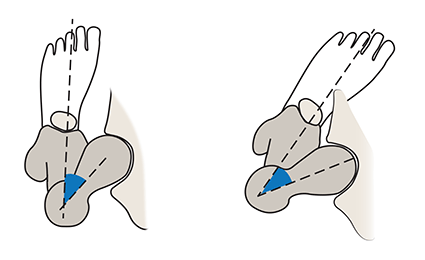
Increased hip IR
Toe-in gait (better position for the femoral head)
Internal tibial torsion
MTT adduction
Decreased Q angle
100
How does hallux valgus affect gait?
Decreases space for the other toes
Great toe can’t press down on the ground during toe off
MT heads 2-5 get overloaded → transfer metatarsalgia
200
The Cobb angle is the curve degree for the spine. A curvature of what degree is considered scoliosis? A curvature of what degree causes decreased lung capacity?
Scoliosis is > 10 degrees
Decreased lung disease is > 50 degrees of rotation
200
What are the key structural changes in flat back posture?

Decreased lumbosacral angle
PPT
Decreased lumbar lordosis
Slight hyperextension of hips and knees
200
REVIEW: define genu valgus and genu varum.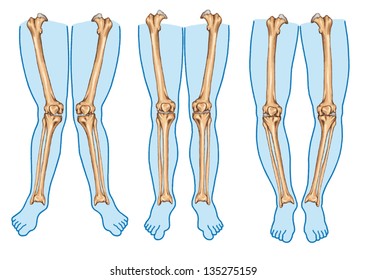
Genu valgus = LOG is lateral to axis; lateral compressive forces with medial tensile forces; greater than 30 degrees valgus
Genu varum = LOG is medial to axis, lateral tensile forces and medial compressive forces
200
What is the difference between “top down” and “bottom up” impairments of the femur/tibia?
“Bottom down” - femoral anteversion or retroversion lead to 1. tibial internal torsion + excess pronation OR 2. Tibial external rotation + excess supination, respectively
“Bottom up” - pes planus or excess pronation may lead to excess internal tibial torsion
Pes cavus or excess supination may lead to excess external tibial torsion
200
What postural and structural changes are associated with aging?
Forward head
Rounded shoulders
Increase OR decrease in lumbar lordosis
Increased hip and knee flexion
Loss of discal fluid for IVD
Degeneration of IVD and vertebral bodies
300
Describe the type of scoliosis. There is lateral flexion to the ____ (L/R). The vertebral body rotates to the ___ (L/R). The spinous processes rotate to the ____ (L/R). The right transverse process goes ____ (A/P). The left transverse process goes ____ (A/P).

R thoracic scoliosis
Left
Right
Left
Anterior, posterior
300
What postural changes do you see in patients with cerebral palsy?
Shortened hip flexors → PPT and knee flexion
Excess PPT in sitting → shortened hamstrings
Shortened gastroc → “toe walk” gait
300
What are other changes associated with genu valgus?
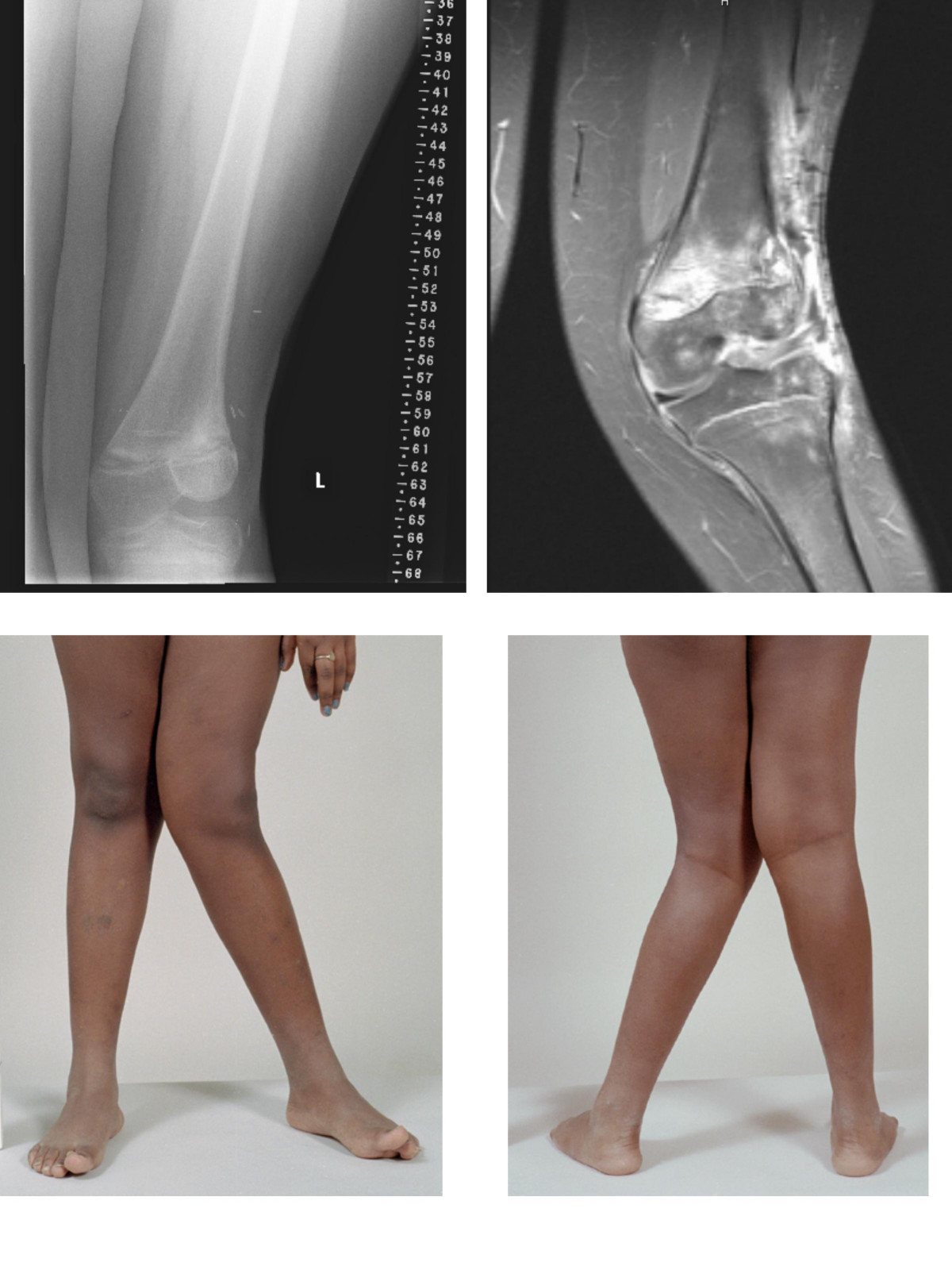
Foot pronation (therefore flattened medial arch)
Increased calcaneal valgus
Lateral tibial rotation
Increased Q angle
300
What are structural changes that occur in pes planus vs. pes cavus? What happens to LOG?

Pes planus - LOG falls lateral to the axis → calcaneal eversion, flat foot, one malleoli appears lower, tension in spring ligament, lengthening of tibialis posterior
Pes cavus - LOG falls medially, locked supination position, high medial longitudinal arch, decreased ability to adapt to different terrains
300
What are the biomechanical effects of aging on posture? (5)
Decreased strength (loss in antigravity muscles)
Sarcopenia
Slowed reaction time
Decreased ROM (especially at hip and knee)
Sensory changes
400
What are potential causes of adolescent idiopathic scoliosis? (5)
Relative anterior spinal overgrowth
Dorsal shear forces
Rotational effect (3D deformity)
Imbalance of forces
Asynchronous growth b/w vertebral and neural, causing neural tension (NOTOM)
400
What postural changes do you see in patients with Parkinson’s disease? Muscle shortening?
Shortened muscles: hip flexors, knee flexors, hip rotators, hip ADD, plantar flexors, neck flexors
Decreased LOS, decreased anterior control with forward lean, decreased feedforward anticipatory response
400
What are the structural changes associated with genu recurvatum?

LOG is anterior to knee joint axis (hyperextension moment at knee)
Greater tensile forces posterior, especially on posterior capsule and arcuate ligaments
400
What is the difference between claw toe and hammer toe deformities of the foot? Where will you see calluses?
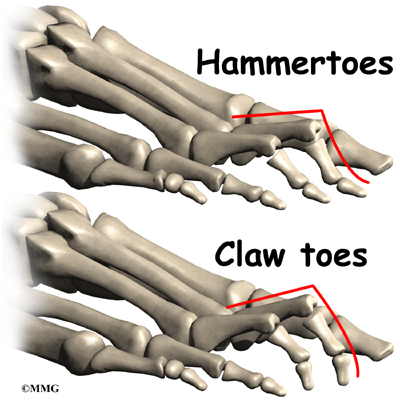
Claw toe: hyperextension of MTP, flexion of PIP, flexion of DIP; affects 2nd-5th toe
Callus formation: Dorsum of PIP/DIP, tip of distal phalanx, ventral MTP head
Hammer toe: hyperextension of MTP, flexion of PIP, extension of DIP; affects 1-2 toes
Callus formation: dorsum of PIP, MTP head, ventral distal phalanx
400
Describe sarcopenia’s effects on posture as we age (3).
Loss of alpha motor neurons (decreased # of functional motor units)
Loss of fast twitch fibers (Type IIb)
Decreased oxidative capacity for muscles (therefore decreased ability to produce torque)
500
Define NOTOM and describe its role in adolescent growth.
NOTOM = Neuro-osseous timing of growth and maturation
Dynamic physiological balance between skeletal size and body schema/neural components
500
What postural changes do you observe in patients after stroke?
Hemiplegia
Increased postural sway
Uneven weight distribution
Hypertonicity
Proximal strategies activated before distal
500
What are the LOG changes associated with flexed knee posture? In what population of patients might this occur?
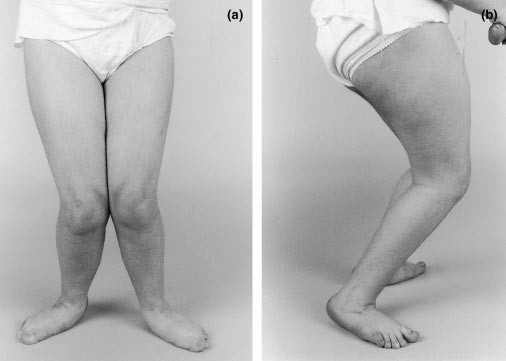
Still anterior to ankle joint axis (external DF moment, need soleus to pull tibia back)
Now posterior to knee joint axis (external flexion moment at knee makes passive insufficiency for quads)
Now anterior to hip joint axis (external flexion moment needs hip extensor activity)
Population: spastic diplegia
500
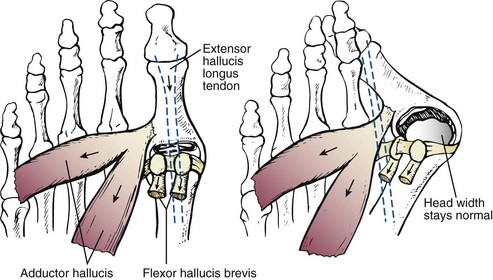
What structural changes occur in hallux valgus?
Medial deviation of 1st metatarsal and lateral deviation of hallux
Prominence of 1st metatarsal head (possible soft tissue enlargement)
Thickening of bursa bc of pressure effect from footwear
Failure of MCL and medial sesamoid (flexor hallucis brevis)
Valgus displacement of proximal phalanx due to its sesamoid attachments
Deep transverse ligament gets pulled
ADD hallucis tendon get pulled even more, ABD hallucis will try to pull it back
Extensor hallucis longus bowstrings laterally
500
What are problems that affect the coordination of muscle response synergies as we age? (4)
Sequencing problems: choosing to do hip strategies over ankle strategies
Delay in activation of said postural responses
Slow initiation and execution of reaching/grasping strategies
Limited ability to adapt movements for balance in dual tasking or changing environments