Natural Landmarks
Monuments
Washington DC
Continents
Oceans
100
This natural landmark was formed about five to six million years ago. Erosion from the Colorado River created the canyon. Erosion is the wearing away of physical features by water, wind, or ice.
Grand Canyon
100
This landmark is carved into the side of a mountain in the Black Hills of South Dakota. It shows the faces of four U.S. presidents. Left to right are: George Washington, Thomas Jefferson, Theodore Roosevelt, and Abraham Lincoln.
Mount Rushmore
100
This memorial is located in Washington, D.C. The president of the United States lives and works here. It gets its name from its white painted sandstone walls.
White House
100
BLUE

Antarctica
100
D
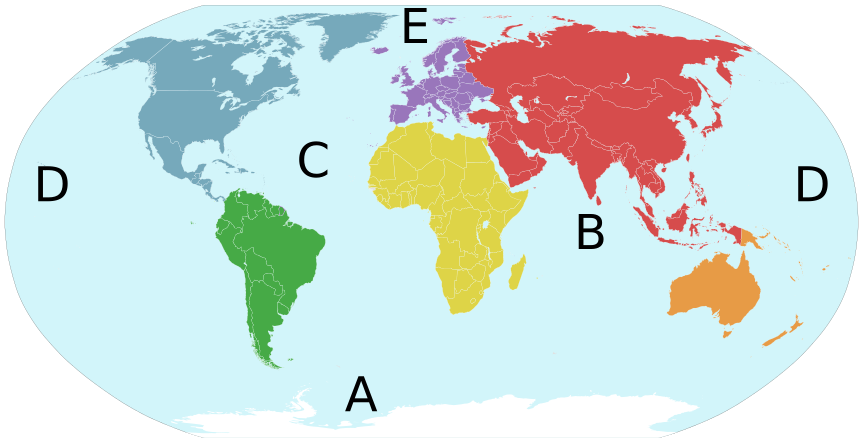
Pacific Ocean
200
This mountain range is a tall and rugged range of mountains in the western U.S. more than 3,000 miles long!
Rocky Mountains
200
This landmark is also an important symbol of the United States. It stands 305 feet above New York’s harbor, on a tiny island.
Statue of Liberty
200
This monument is located in Washington, D.C. It was built to honor our first president. The monument is a tall pillar, known as an obelisk. Gravity and friction hold the monument together. No mortar was used to hold the stones together!
Washington Monument
200
Golden Yellow
North America
200
C
Atlantic Ocean
300
This is a natural landmark on the border of Arizona and Utah. This landmark has clusters of sandstone buttes. The tallest buttes reach 1,000 feet in the air! A butte is an isolated hill with steep sides and a flat top.
Monument Valley
300
This large suspension bridge is located in San Francisco, California. It spans the one-mile strait connecting San Francisco Bay to the Pacific Ocean. It is considered the most-photographed bridge in the world and one of the most famous.
Golden Gate Bridge
300
This landmark is located on Capitol Hill in Washington, D.C. It is where the members of Congress meet and work.
The U.S. Capitol
300
Purple
Asia
300
B
Indian Ocean
400
This natural landmark stretches from northwestern Wyoming to parts of southern Montana and eastern Idaho. The area has many geysers, natural pools that sometimes spray hot water and steam into the air. There are also waterfalls and a large canyon.
Yellowstone National Park
400
The memorial commemorates the Dec. 7, 1941, attack by the Japanese navy. Over 2,000 Americans were killed in the attack. It led to the U.S. joining World War II. Many U.S. Navy ships were sunk. The national memorial includes a floating memorial to the USS Arizona. The memorial is built over the sunken ship.
Pearl Harbor National Memorial
400
This monument is located in Arlington National Cemetery in Washington, D.C. It was built to be a tomb for an unnamed soldier from World War I. Since then, other fallen soldiers have been added to the tomb. The white marble tomb has become a place for people to visit to reflect on all lives lost in military service.
Tomb of the Unknown Soldier
400
Pink
Europe
400
A
Southern Ocean
500
Located in Tennessee and North Carolina, these mountains are part of the Appalachian Mountains. The mountain range gets its name from the fog that gathers around the mountain range every morning.
Smoky Mountains
500
This landmark is located in New York City. This memorial and museum was built to honor the lives of the people who died in the terrorist attacks against the United States. The memorial includes two waterfall pools, which are built where the World Trade Center towers once stood. The names of the victims are engraved around the pools.
September 11 Memorial and Museum
500
This memorial is located in Washington, D.C. It is one of the newest large monuments and was built in tribute to a great civil rights leader. It includes a 30-foot tall statue of the leader, carved in white marble.
Martin Luther King Jr. Memorial
500
Green
South America
500
E
Arctic Ocean