Advanced Neuro
Neuroimaging
Memory
Learning
Cognition
150
What is the reptilian brain? What is it made of?
The set of brain structures in charge of coordinating primitive autonomic functions and keeping the body alive. .
Brain stem (midbrain, pons and medulla) and basal ganglia.
150
Illustrate the 3 anatomical planes

150
Karl Lashley´s failed "Engram" hypothesis proposed that:
Memories left a physical trace or mark in specific neurons, suggesting that if those neurons were damaged, entire memories could simply vanish.
Disproved by Donald Hebb
150
What is the difference between Heuristics and Schemas (schemata)?
Heuristics are logical shortcuts the mind uses to navigate reality with agility, they are often assumptions and evolve through trial and error.
Schemata are mental structures like folders that allow for the accommodation of long-term memories.
150
Describe Perception
Is the organization, identification, and interpretation of sensory information, in order to represent and understand the presented information or environment.
200
Mention 5 structures that are part of the limbic system
Hippocampus, amygdala, nucleus accumbens, hypothalamus, thalamus, limbic lobe, etc.
200
Name 5 types of Neuro imaging techniques
MRI, FMRI, EEG, DTI, CT, PET, etc.
200
Memory is a Supramodal, Multi-channel, neurocognitive function ...
What does this mean?
Supramodal: that doesn´t rely on a single structure or pathway but instead is constructed by many.
Multi-channel: Like experience, it depends on the complex interaction of several senses and input forms.
Neurocognitive: That depends on both structural and functional processes within the CNS.
200
What are Schemata?
Mental structures that allow for the filtering and organization of long-term memory. They allocate new information through categories, associations and significance.
200
What is cognition?
"Cognitions are mental processes that deal with knowledge. They encompass psychological activities that acquire, store, retrieve, transform, or apply information. Cognitions are a pervasive part of mental life, helping individuals understand and interact with the world. "
300
Describe the differences between neurotransmitters, hormones and pheromones. Where are they all located?
Neurotransmitter: Substance that allows communication between neural cells (CNS & PNS)
Hormone: Substance that allows communication with cells via the bloodstream.
Pheromone: Substance that allows communication between members of the same species. They go in through the olfactory nerve in humans*
300
What is the historic importance of post-mortem examinations?
They allowed studying brain structures and even identifying the role of regions and functions before the digital era.
300
What did Donald Hebb say about memory?
Reverberating circuits, Multi-channel experiences codify better (Neurons fire together), supramodal functions.
300
Describe the 3 types of basic learning
Conditioning (Classical and operant) and observational
300
Describe 2 ways in which Emotional Significance plays a role in cognition.
In perception, it filters information subjectively.
In memory, it mediates association of information and build a complex narrative around episodic memories.
In decision making, subcortical processes can overtake cortical ones and affect judgement.
Etc.
400
What is the thalamus? how does it work?
Meaning chamber in greek (Thalami), it is a subcortical structure that connects several regions of the brain, filtering and allocating signals for the corresponding regions. It is key in attention, cognition and working memory. It doesn´t filter out information from the Cranial nerve 1 (Olfactory).
400
Brain tumors require large amounts of energy in the form of glucose, releasing many electrons. An imaging technique that utilises this to create a functional image is:
Positron-Emitting Tomography
400
Describe ways in which short-term memory consolidates into long-term.
Bonus: where are they located structurally?
Information from short-term memory (subcortical, hippocampus) gets filtered through significance, and either proven useful or lost. Sleeping and dreams play key roles in its consolidation into long-term memory (Cortical areas)
400
Describe Piaget´s cognitive learning theory.
Assimilation: The process of integrating new information into existing schemas without changing the schema itself.
Accommodation: The process of modifying existing schemas or creating new ones when new information cannot be explained by current schemas.
400
Through the dual-processing model, describe automatization and mastering.
Repetition of system 2 tasks allow for eventual automation of processes and decrease the cognitive mental effort, to the point where now system 1 operations can complete the same tasks.
--> Cognitive load is filtered better and the effort is optimized.
450
Explain the HPA axis
In the presence of danger awareness, Hypothalamus secretes noradrenaline/norepinephrine into the Pituitary, which then secretes adrenaline/epinephrine to the bloodstream and, reaching the adrenal glands, they are instructed to release cortisol into the bloodstream to increase stress and sympathetic response.
450
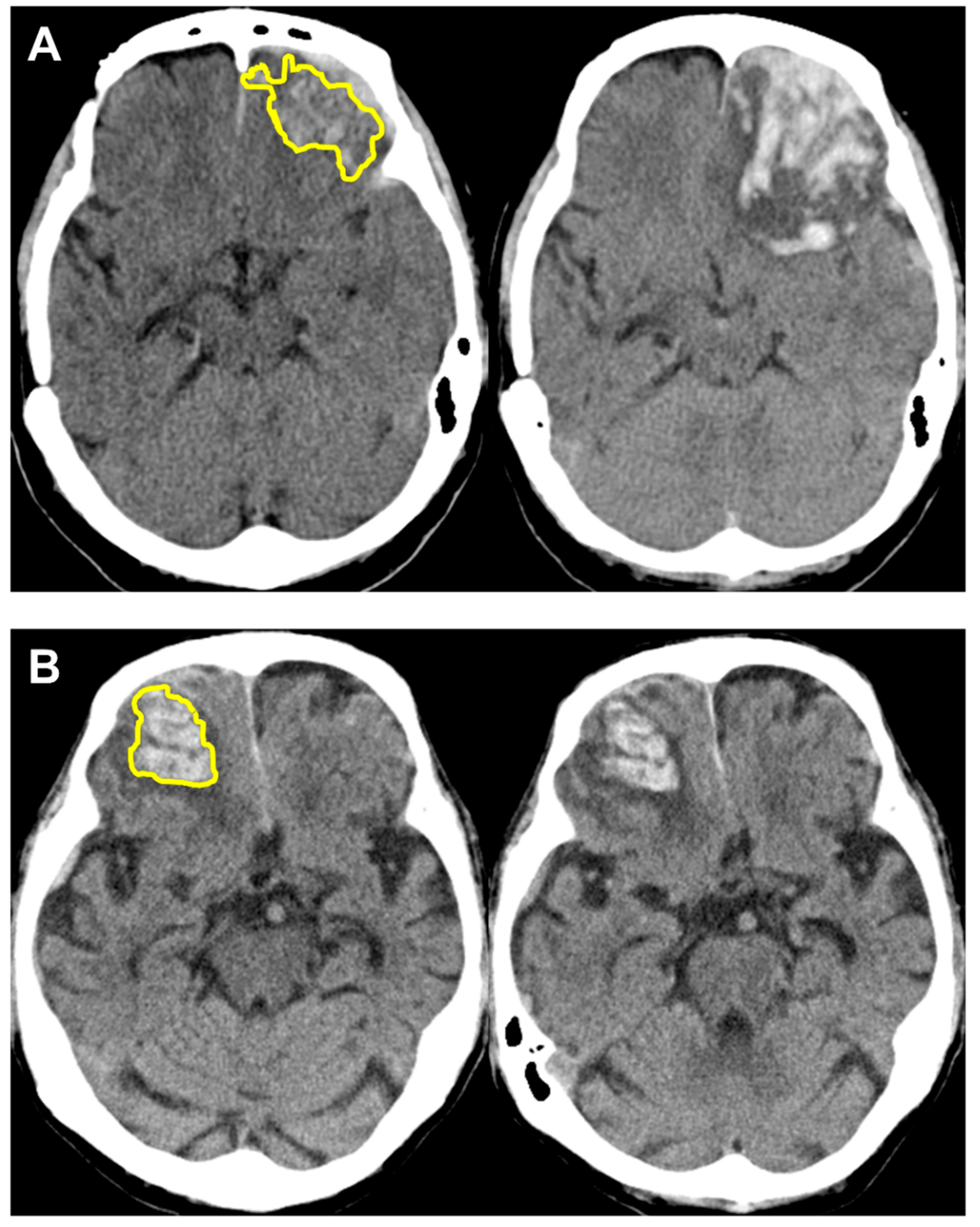
What behavioral alterations would this patient show?
The patient shows a subdural hemorrhage in the frontal lobe.
Pre-frontal cortex is damaged, resulting in alterations in behavior monitoring, impulse control, reasoning, planing and excecutive functions.
450
There are two types of long term memory.
Describe two types of each category.
Declarative (Explicit): Semantic, episodic, autobiographical, spatial.
Non-declarative (Implicit): Emotional, procedural, priming, conditioning.
450
Using learning theories, describe a way in which human societies sustain scientific progress.
Tip: Observational learning, schematas and heuristics
:D
I knew you could do it
450
Describe the dual processing model and give an example of system overtake.
System 2 thinking (Consciouss cognitive effort) can override System 1 thinking (Automatic processing, self-drive mode) when odd environmental elements are presented or a challenge is identified.
E.G. "Is that a new haircut?"