Lecture 1
Lecture 1
Lecture 1
1
What is X-ray crystallography?
A method scientists use to figure out the 3D shape of tiny structures, like molecules, proteins, salts, or minerals.
1
Properties of ionic solids?
High melting points
Hard
Brittle
They shatter instead of bending
Do not conduct electricity as solids
Can conduct electricity when dissolved in water because ions can move
1
Examples of covalent network solids?
Examples:
Diamond
Silica
Graphite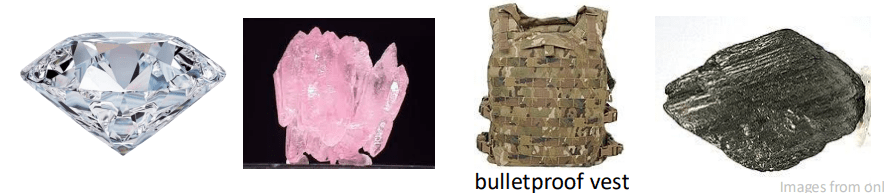
1
Solids can be arranged in two main ways, what are they?
Crystalline solids: a regular, repeating pattern.
Amorphous solids: have a random arrangement.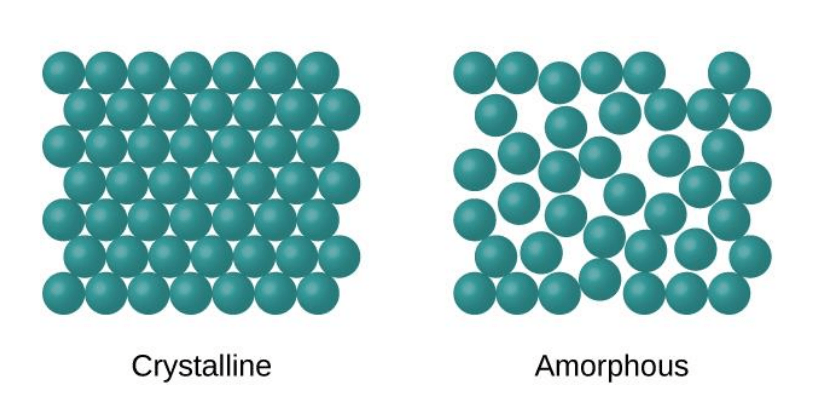
1
What are metallic solids?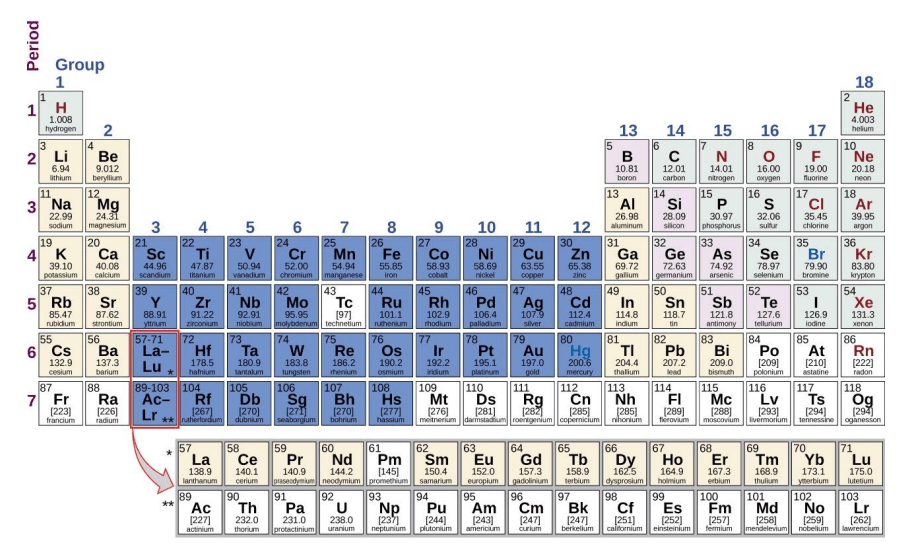
Metallic solids are made of metal atoms. They have positive metal nuclei surrounded by a sea of delocalized electrons.
1
Properties of covalent network solids?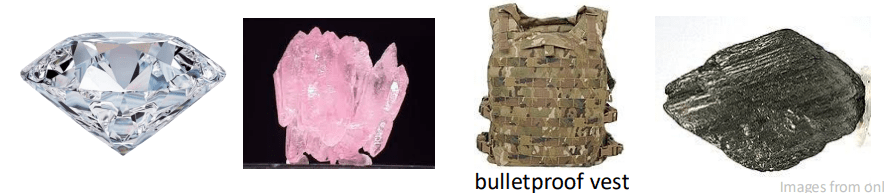
Properties:
Very hard
Very high melting points
Usually do not conduct electricity
1
What are the 4 types of crystalline solids?
Ionic solids
Metallic solids
Covalent network solids
Molecular solids
1
Properties of metallic solids?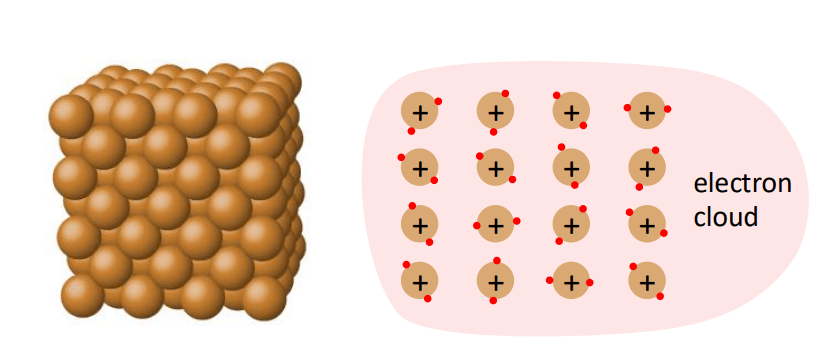
Properties of metallic solids:
Conduct electricity well
Conduct heat well
Shiny
Malleable, meaning they can be hammered into shape
Ductile, meaning they can be pulled into wires
Hard but usually do not shatter
Melting points can vary
1
What are molecular solids?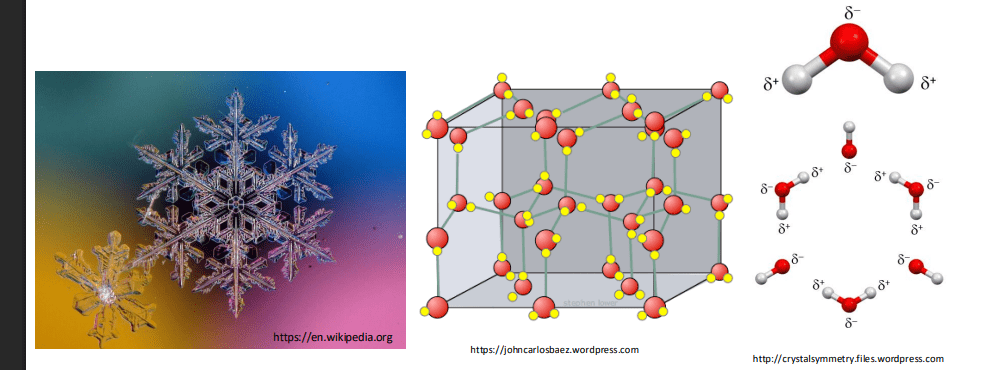
Molecular solids are made of neutral molecules. The molecules are held together by intermolecular forces, not ionic or covalent bonds.
1
What are ionic solids?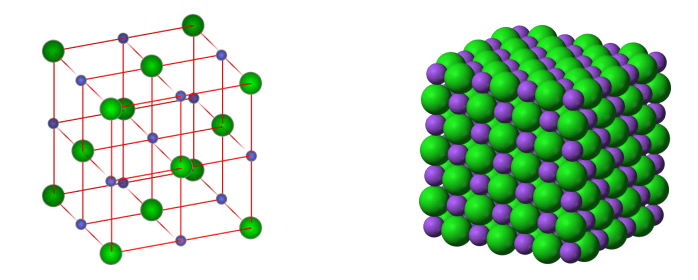
Ionic solids are made of positive and negative ions. The ions are held together by strong electrostatic attractions, also called ionic bonds.
1
Examples of Metallic Solids?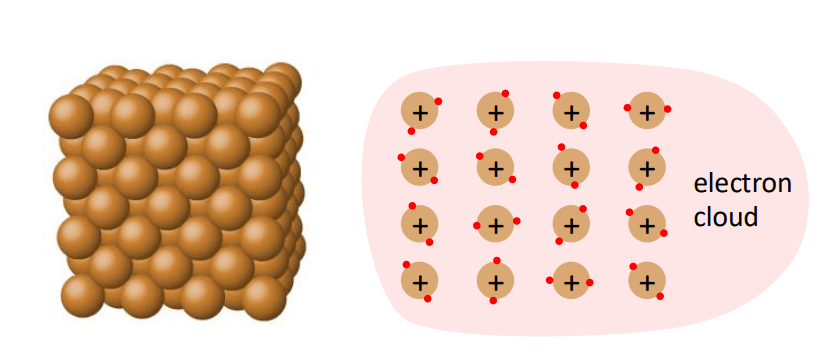
Copper, iron, titanium, lead
1
Examples of molecular solids?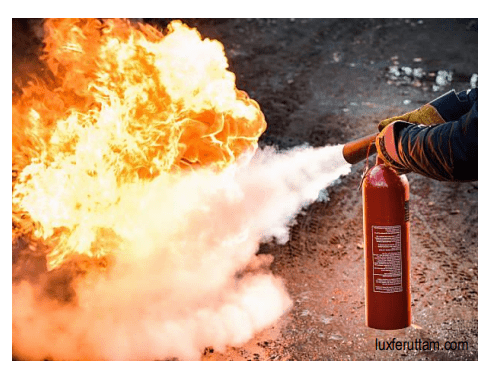
Examples:
Ice, H₂O
Dry ice, CO₂
Iodine, I₂
Table sugar, C₁₂H₂₂O₁₁
1
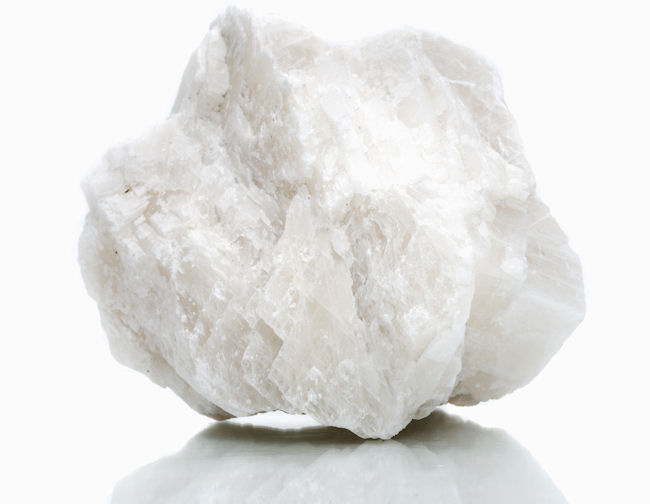
Example of ionic solids?
NaCl, table salt. Limestone.
1
What are covalent network solids?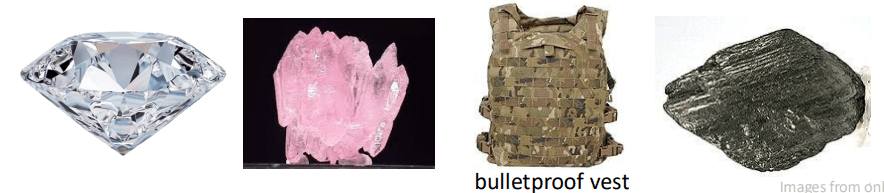
Covalent network solids are made of atoms connected in a large 3D network of covalent bonds.
1
Properties of molecular solids?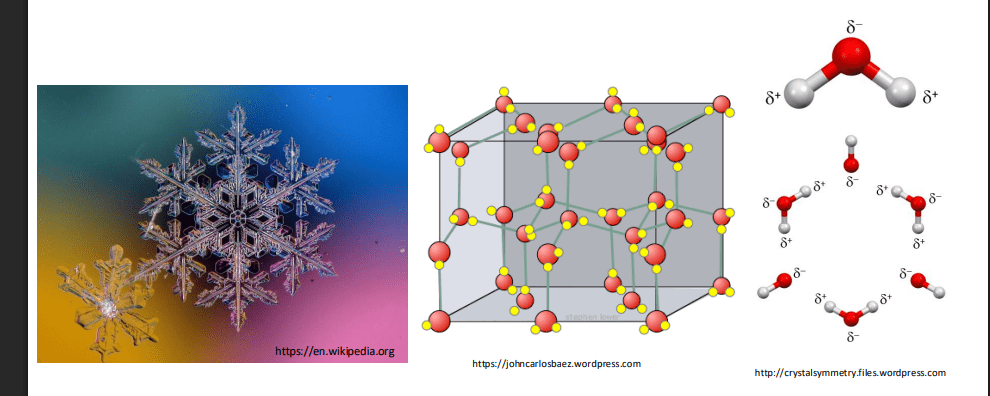
Properties:
Usually low melting points
Do not conduct electricity
Hardness can vary
Brittleness can vary