Respiratory
MSK
Surgical patient/Cancer
Gi
Urinary/infection/immune
Cirrhosis/HIV/ Priority
Integumentary sensory
100
Discuss three nursing interventions for a patient with allergies
Nursing interventions for patients with allergies focus on identifying triggers, preventing exposure, and managing reactions promptly. Key actions include assessing allergy history, documenting allergies prominently, educating on trigger avoidance, and ensuring immediate access to emergency medications like epinephrine autoinjectors.
100
Teaching for a hip patient at discharge
- Do not bend at the hip past 90 degrees (e.g., bringing knee up higher than the hip or leaning forward).
- Do not cross your legs or ankles, whether sitting, standing, or lying down.
- Do not turn your operated leg inward (pigeon-toed).
- Sleep on your back for the first 6 weeks, typically with a pillow between your legs to keep them separated.
- Use a raised toilet seat and avoid sitting on low or soft sofas
100
definne malignant hyperthermia why it occurs and treatment
Malignant hyperthermia (MH) is a rare, life-threatening, inherited hypermetabolic reaction to specific general anesthetics (e.g., sevoflurane, succinylcholine), resulting in severe muscle rigidity, rapid heat production, and high fever. It causes a drastic rise in body temperature and is fatal if not treated immediately, usually requiring the drug dantrolene.
100
What is Steatorrhea
Term for excess fat in the stool, characterized by loose, bulky, frothy and foul-smelling, and often oily stools that frequently float or are difficult to flush. It indicates fat malabsorption, usually caused by digestive issues such as pancreatic insufficiency, celiac disease, or gallbladder problems
100
Explain an IVP procedure and why it is completed.
An intravenous pyelogram (IVP) is an X-ray exam of the urinary tract (kidneys, ureters, bladder) using iodine contrast dye injected into a vein. It is used to diagnose kidney stones, tumors, infections, or structural issues causing symptoms like blood in urine or pain
100
Explain the TIPS procedure
Transjugular Intrahepatic Portosystemic Shunt (TIPS) is a minimally invasive, image-guided procedure that creates a shunt (bypass) in the liver to connect the portal vein to the hepatic vein. It reduces high blood pressure in the liver's portal vein (portal hypertension) to treat severe complications of liver cirrhosis, primarily uncontrollable internal bleeding (variceal hemorrhage) and fluid accumulation in the abdomen (ascites).
100
Evaluates if fluid resuscitation in a burn patient is effective
maintaining adequate tissue perfusion and end-organ function while avoiding volume overload. Key indicators include urine output of at least 30 ml/hr stable heart rate blood pressure, reduced base deficit, and normalized serum lactate.
200
how does a nurse address ineffective airway clearance
A nurse addresses ineffective airway clearance by focusing on maintaining airway patency, promoting secretion removal, and optimizing oxygenation. Key actions include elevating the head of the bed, encouraging deep breathing and coughing exercises, hydration, administering bronchodilators, and performing tracheal suctioning.
200
Teaching for a client following a TKA
Use CPM per order
Ankle Pumps: Move ankle up and down frequently to promote circulation and prevent blood clots.
Do not twist or pivot on the operated leg.
Do not place a pillow directly behind the knee joint.
Do not twist or cross legs.
Do not lift items heavier than 10 lbs for the first 12 weeks.
Avoid high-impact activities like running or jumping for life
200
An unconscious surgical patient would be placed in what position and why
The primary position for an unconscious, breathing patient is the recovery position (also known as the lateral recumbent or side-lying position). This position keeps the airway open, prevents airway obstruction by the tongue, and allows fluids to drain from the mouth, preventing choking
200
How do you know when nursing interventions are effective for a patient with a GI bleed
when the patient achieves hemodynamic stability, evidenced by stabilized blood pressure (no orthostatic changes), heart rate <100 bpm, adequate urine output >30 mL/hr, and normalized hemoglobin levels (>7–8 g/dL). Other indicators include a cessation of hematemesis/melena and reduced lethargy, demonstrating improved tissue perfusion.
200
name risk factors and s/s of bladder cancer
Bladder cancer primarily presents with blood in the urine (hematuria), which may be painless, along with increased frequency, urgency, or pain during urination. The leading risk factor is tobacco smoking, followed by workplace chemical exposure, older age (
), chronic bladder inflammation, and family history.
200
Lab values to monitor for cirrhosis
Key lab values to monitor for cirrhosis include decreased platelets low albumin prolonged INR and elevated bilirubin. Liver enzymes (AST/ALT)
200
Findings that suggest inhalation injury in a burn patient
Inhalation injury in burn patients is strongly suggested by facial/neck burns, singed nasal hairs, soot in the oropharynx, carbonaceous sputum, hoarseness, stridor, and respiratory distress. It often occurs in enclosed spaces and can lead to rapid airway obstruction, requiring early intubation and 100% oxygen
300
Name 4 nursing interventions for a patient with severe COPD
use venturi mask for exact oxygen measurement
Key nursing interventions for COPD focus on optimizing breathing, improving oxygenation, and preventing exacerbations. Core actions include administering prescribed bronchodilators/oxygen (targeting 88-93%), teaching pursed-lip breathing and diaphragmatic techniques, positioning for comfort (tripod position), encouraging smoking cessation, promoting airway clearance, and educating on nutrition and energy conservation.
300
Discuss acute care vs chronic care of the patient with gout
Care of a patient with gout involves managing acute flares through rest, joint elevation, ice application, and prescribed medication (NSAIDs, colchicine,). Long-term care focuses on preventing future attacks by reducing dietary purines, staying hydrated, losing weight, and using uric acid-lowering drugs like allopurinol.
300
Discuss patient in preop
Preoperative (preop) safety focuses on preventing errors and complications before surgery through rigorous patient identification, NPO (fasting) compliance, informed consent, site marking, and infection control. Key steps include verifying the patient, procedure, and site; reviewing allergies/medications; and prepping the skin to reduce infection risks no ambulation once sedation is given
300
Name four risk factors for cholecystitis
Four primary risk factors for developing cholecystitis (inflammation of the gallbladder) are being female, obesity or rapid weight loss, being over the age of 40, and having existing gallstones. Other factors include pregnancy, high-fat diets, diabetes,
300
Name three nursing interventions for urinary conduit
Nursing interventions for an ileal conduit focus on stoma assessment, protecting peristomal skin, managing urine output, and educating the patient on appliance care. Key actions include monitoring for dark red/pink stoma color, measuring the stoma weekly, keeping skin dry, emptying the pouch when one-third to half full, and encouraging fluid intake. Keep drainage bag below stoma and monitor for kinks and do not clamp tubing
300
5 nursing interventions for the client with portal HTN
Nursing interventions for portal hypertension focus on preventing variceal hemorrhage, managing ascites, and preventing hepatic encephalopathy. Key actions include monitoring for bleeding (black stools, vomiting blood), administering beta-blockers (e.g., propranolol), monitoring fluid balance (daily weights, abdominal girth), and implementing a low-sodium diet
300
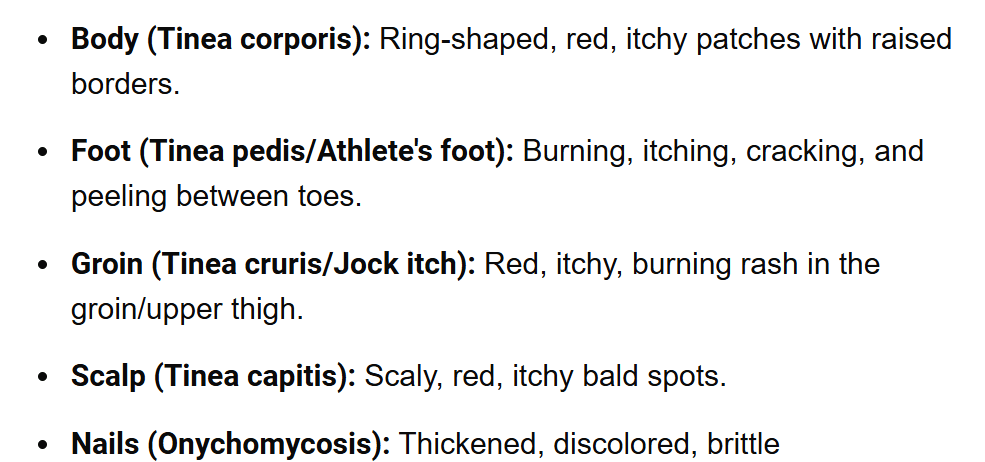
Define tinea pedis, Tinea corporis, Tinea cruris, capitis, Onychomycosis
400
a chronic, long-term inflammatory lung disease that causes the airways to become swollen, narrow, and filled with mucus, making it difficult to breathe. It causes recurring, manageable symptoms like wheezing, chest tightness, and coughing, often triggered by allergies, smoke, or cold air
asthma
400
These are hard, nodular deposits of monosodium urate crystals that build up in the joints, cartilage, and soft tissues in people with chronic, untreated gout.
Tophi
400
What if a patient does no longer what treatment what should the nurse do:
When a competent patient refuses treatment, the nurse must respect their autonomy, assess their capacity to understand risks, explore reasons for refusal, and ensure comprehensive documentation. The nurse should advocate for the patient, communicate risks to the provider, offer alternatives, and provide compassionate care, ensuring they feel supported
400
Factors that can help prevent exacerbations of UC
Limiting ulcerative colitis (UC) exacerbations involves strict medication adherence, stress management, and dietary adjustments. Key strategies include taking prescribed maintenance therapies (like 5-ASAs), avoiding NSAIDs, reducing stress (via yoga/meditation), smoking cessation, and eating smaller, low-fiber meals during flare-prone times, which helps maintain remission.
400
Name seven assessment findings when a patient experiences Dialysis disequilibrium syndrome (DDS)
severe neurological complication occurring during or shortly after hemodialysis, primarily caused by rapid fluid/urea shifts leading to cerebral edema. Common symptoms include intense headache, nausea, vomiting, dizziness, confusion, restlessness, and blurred vision. Severe cases can lead to seizures, coma, or death.
400
HIV monitoring involves
regular laboratory tests—primarily viral load (amount of HIV in blood) and CD4 count (immune health)—to track disease progression and treatment effectiveness. The goal is to achieve an undetectable viral load (undetectable=untransmittable), typically checked every 3–6 months to ensure antiretroviral therapy (ART) success
400
Care of the patient with dermatitis
Care of a patient with dermatitis focuses on repairing the skin barrier, reducing inflammation, and alleviating itching through consistent moisturizing, using gentle, fragrance-free products, and avoiding triggers. Key interventions include lukewarm baths, applying thick emollients immediately after washing, applying prescribed topical steroids, and keeping nails trimmed to prevent infection from scratching.
500
____________a dangerous, often acute condition caused by high pressure buildup within muscle compartments, restricting blood flow and causing tissue damage. It is usually triggered by severe injuries like fractures or crush injuries, resulting in severe pain, numbness, and swelling, necessitating emergency surgery and is treated by _____________
compartment syndrome/fasciotomy
500
Important pre/ post procedure care of a patient undergoing arthrocentesis
Arthrocentesis, or joint aspiration, requires thorough pre-procedure preparation, such as assessing allergies and assessing for anticoagulation therapy, and strict post-procedure care to prevent infection. Key actions include managing pain, applying ice for the first 48–72 hours to reduce swelling, resting the joint, keeping the dressing dry and clean
500
explain malignant vs benign
Benign tumors are noncancerous, slow-growing, and stay in one place, generally non-lethal, while malignant tumors are cancerous, fast-growing, and can spread (metastasize) to other body parts, invading tissues and requiring immediate treatment. Benign tumors rarely return after removal; malignant tumors often do.
500
lab value is critical in monitored for a patient with multiple episodes of diarrhea and why
K
severe diarrhea causes rapid loss of fluids and essential minerals, leading to dehydration, acute kidney injury, arrhythmias, and metabolic acidosis.
500
Discuss important teaching Name 4 topics for a hemodialysis patient
Monitoring Complications: Patients need to recognize symptoms of disequilibrium syndrome (restlessness, headache, nausea), low blood pressure (dizziness, cramps), and infection.
Medication Management: Teaching the importance of holding certain medications (e.g., blood pressure medications) before dialysis, as well as managing phosphorus binders and vitamins.
Vascular Access Care: Patients must learn to feel for a "thrill" (vibration) and listen for a "bruit" (swooshing sound) daily in their arteriovenous fistula or graft. They should be taught to clean the access site and check for signs of infection (redness, swelling, heat).
Fluid and Diet Management: Education on limiting fluid intake and reducing sodium intake to avoid fluid overload, which causes high blood pressure and breathing difficulties between sessions.
500
Name four interventions for an immunodeficient patient
Nursing interventions for an immunodeficient patient prioritize preventing infections, monitoring for early signs of sickness, and promoting protective hygiene. Key actions include strict hand hygiene, implementing protective isolation, avoiding raw foods, limiting visitors, and providing patient education on infection prevention. Effective care often includes close monitoring of WBC counts and nutritional support.
500
Name the best nursing interventions to teach a patient with presbycusis
Best teaching methods for patients with presbycusis (age-related hearing loss) focus on clear, face-to-face communication, reducing ambient noise, and utilizing written, visual aids. Speak clearly and, slowly rather than just loudly, ensuring you are in a well-lit area. Provide written, printed materials for reinforcement, and use simple, direct sentences, allowing time for processing
600
State definition of, exam used to diagnosis and treatment of pleural effusion
A pleural effusion is an abnormal, excessive accumulation of fluid in the pleural space between the lungs and the chest wall, often causing breathing difficulties. It is primarily diagnosed via chest imaging (X-ray, ultrasound, or CT scan) and analyzed using a procedure called thoracentesis, which samples the fluid to determine the cause.
600
Discuss components of the msk assessment
A musculoskeletal (MSK) assessment is a systematic evaluation of body structure and function, including bones, muscles, joints, ligaments, and tendons. Key components include health history, inspection of posture/gait, palpation for abnormalities, active/passive range of motion (ROM), and muscle strength testing to identify impairments and guide care.
600
Discuss three areas of nursing assessment for a patient with breast cancer and on chemotherapy
patients undergoing chemotherapy includes monitoring CBC for neutropenia, assessing for neuropathy and cardiotoxicity (especially with anthracyclines), evaluating for lymphedema, and conducting thorough nutritional and psychosocial screenings. Regular assessment of treatment side effects (nausea, alopecia) and functional status is essential for managing quality of life
600
Diet for a patient with hiatal hernia and GERD
A diet for hiatal hernia and GERD focuses on reducing stomach acid and preventing pressure on the hernia by eating small, frequent, low-fat meals. Key foods include lean proteins (chicken, fish), non-citrus fruits, vegetables, and whole grains. Avoid high-fat, spicy, acidic foods (tomatoes, citrus), chocolate, caffeine, and alcohol. Avoid overeating and eating three hours prior to lying down or going to bed
600
Name 6 strategies to break a link in the chain of infection
Breaking the chain of infection involves interrupting any of its six links—infectious agent, reservoir, portal of exit, mode of transmission, portal of entry, or susceptible host. Key interventions include frequent handwashing, vaccination, using PPE, cleaning/disinfecting surfaces, isolating the sick, safe food handling, and controlling air quality
600
A nurse is assigned to four patients. Which patient should the nurse assess first?
A. A patient with COPD who has an SpO₂ of 90% on 2L nasal cannula
B. A postoperative patient reporting pain 8/10 one hour after analgesic administration
C. A patient with diabetic ketoacidosis whose potassium is 3.2 mEq/L
D. A patient with pneumonia who has a temperature of 101.8°F (38.8°C)
A potassium level of 3.2 mEq/L is hypokalemia and dangerous in DKA because insulin therapy will further decrease potassium, risking fatal arrhythmias. This is the most immediate life-threatening issue. Airway/breathing/circulation and electrolyte instability take priority over pain or fever.
600
how do you best teach a patient with cataract
Teaching a patient with cataracts involves using simple language, visual aids, and repetition with teach back method and Involve Family
700
Name 5 interventions for a patient with atelectasis
Incentive Spirometry (IS): Instruct the patient to take 5-10 deep, slow breaths hourly while awake to promote maximum lung inflation.
Early Ambulation: Assist the patient in walking shortly after surgery to improve respiratory drive and lung expansion.
Positioning: Elevate the head of the bed (semi-Fowler’s) to facilitate deep breathing and turn bedbound patients at least every 2 hours.
Coughing and Deep Breathing: Encourage diaphragmatic breathing and controlled coughing to raise secretions.
Pain Management: Administer pain medication as ordered, specifically before scheduled breathing exercises, to enable deep breaths.
Hydration: Encourage fluid intake (if not restricted) to help thin secretions, making them easier to clear.
Chest Physiotherapy (CPT): Use chest percussion, vibration, or postural drainage to loosen secretions.
Oxygen Therapy: Administer supplemental oxygen as ordered to maintain adequate saturation.
National Institutes of Health (.gov)
National Institutes of Health (.gov)
+8
Assessment and Monitoring:
Monitor for signs of respiratory distress: increased heart rate, blood pressure, or respiratory rate, and low-grade fever.
Monitor oxygen saturation (
).
Auscultate lungs for diminished breath sounds or crackles.
Check chest X-ray reports.
700
Name three age related changes of the msk system
Musculoskeletal changes in the elderly involve a natural decline in bone density, muscle mass (sarcopenia), and joint flexibility, leading to increased stiffness, decreased mobility, and higher fracture risk. Key changes include cartilage breakdown, reduced muscle fibers, and loss of postural stability, often resulting in height loss, slower walking speeds, and improved management through regular exercise
700
A patient receiving chemo a patient has low platelet count and decreased LOC and is about to receive enoxaparin what should the nurse suspect and what should the nurse do
Decreased Level of Consciousness (LOC) in a patient undergoing chemotherapy with low platelets (thrombocytopenia) is a medical emergency that often indicates a critical, life-threatening complication, most notably intracranial bleeding
700
Questions to ask a client if you suspect they may have PUD
If you suspect a client has Peptic Ulcer Disease (PUD), ask about burning upper abdominal pain that improves or worsens with meals, especially at night. Key questions target symptoms like nausea, bloating, and early fullness. Essential queries also cover risk factors like frequent NSAID use (aspirin, ibuprofen).
700
What is cell mediated immunity and what can happen if it is not under control
Cell-mediated immunity is an adaptive immune response that defends the body against intracellular pathogens (viruses, bacteria), cancer cells, and foreign tissue by activating T lymphocytes, macrophages, and NK cells. Unlike antibody-based humoral immunity, this system directly destroys infected host cells to stop the spread of infection
Autoimmune disorders
700
The physician wrote many orders.
Which intervention should the nurse perform first?
A. Administer morphine to a patient with chest pain rated 9/10
B. Apply oxygen to a patient with chest pain and SpO₂ of 88%
C. Obtain a 12-lead ECG
D. Start an IV line
Airway and breathing take priority. Hypoxia (SpO₂ 88%) must be corrected immediately before diagnostics or medications. Oxygen improves myocardial oxygen supply and reduces ischemia.
700
Give instruction on how to administer Timolol ophthalmic
Punctual Occlusion: Press a finger against the inner corner of the eye (tear duct) for 60 seconds after application to help reduce systemic absorption.
Timolol ophthalmic is used in the management of glaucoma or high eye pressure. Proper application is essential for safety and effectiveness: wash hands, tilt the head back, form a pocket with the lower eyelid, and apply the drop without touching the dropper to the ey
800
Discuss each of the various oxygen devices
Key Oxygen Delivery Devices:
Nasal Cannula: The most common device, it delivers 1–6 L/min of oxygen, providing
. It is lightweight, comfortable, and allows for speaking and eating.
Simple Facemask: Covers the nose and mouth, delivering higher oxygen concentrations (
L/min,
) compared to a nasal cannula.
Non-Rebreather Mask: A high-concentration mask with a reservoir bag that delivers
at 10–15 L/min. It includes one-way valves to prevent rebreathing of carbon dioxide.
Venturi Mask: Provides the most precise, consistent oxygen concentration (high flow,
) using color-coded adapters, often used for COPD patients needing precise, lower concentrations.
Face Tent: An open mask that does not touch the face, ideal for patients with facial trauma, burns, or claustrophobia, typically operating at 10–15 L/min.
High-Flow Nasal Cannula (HFNC): A specialized, heated, and humidified system capable of delivering up to 60 L/min of gas
800
Heberden's and Bouchard's nodes are hard, bony enlargements of the finger joints caused by ______ indicating cartilage degeneration. while joint swelling (specifically at knuckles/wrists), morning stiffness, ulnar drift (fingers bending toward the pinky), swan-neck deformity, boutonnière deformity are characteristic of ______________
osteo/ra
800
Name six side effects of chemotherapy
Head & Neck: Dry mouth, mouth sores, difficulty swallowing, change in taste, tooth decay, and jaw stiffness.
Brain: Hair loss, headaches, and in some cases, memory or cognitive function problems.
Chest/Lung: Coughing, shortness of breath, and chest pain.
Abdomen/Pelvis: Nausea, vomiting, diarrhea, constipation, bladder irritation, urinary incontinence, and fertility issues.
Sexual/Reproductive: Vaginal dryness or narrowing in women; erectile dysfunction and lower libido in men.
Fatigue: The most common side effect, often causing physical and emotional exhaustion.
Skin Changes: Redness, dryness, itching, blistering, or peeling in the targeted area.
Hair Loss: Occurs specifically at the site of treatment.
Blood Count Changes: Lower white blood cell or platelet counts, reducing the body's ability to fight infection
800
Explain H pylori
Helicobacter pylori is a type of spiral-shaped bacterium that infects the stomach lining, affecting about two-thirds of the world's population. It is a leading cause of chronic gastritis, peptic ulcers, and stomach cancer, often acquired in childhood and lasting for life if untreated.
The bacteria burrow into the stomach lining and produce an enzyme (urease) that neutralizes stomach acid, allowing them to survive.
800
a patient who has been admitted for knee arthroscopy. Which value is most important to report to the physician before surgery?
1. Hematocrit of 33%
2. Hemoglobin level of 10.9 g/ dL
3. Platelet count of 426,000/ mm3
4. White blood cell count of 16,000/ mm3
4
Centers for Disease Control and Prevention (CDC) guidelines for the prevention of surgical site infections indicate that surgery should be postponed when there is evidence of a pre-existing infection such as an elevation in white blood cell count. The other values are slightly abnormal, but would not be likely to cause postoperative problems for knee arthroscopy
800
The nurse receives report on four patients. Which patient should be seen first?
A. A patient with a new tracheostomy producing thick secretions
B. A patient with heart failure and 2+ pitting edema
C. A patient receiving a blood transfusion with chills and back pain
D. A patient with a urinary tract infection reporting dysuria
Chills and back pain during a transfusion indicate a possible hemolytic transfusion reaction, which can rapidly become life-threatening. The transfusion must be stopped immediately. This is a priority over airway risk unless obstruction is present.
800
name three priority teaching topics for a patient with glaucoma
Nursing management of glaucoma focuses on lowering intraocular pressure (IOP) to prevent further optic nerve damage, primarily through lifelong medication adherence, patient education on proper eye drop administration, and safety measures for vision loss. Key interventions include educating on disease progression, regular screenings, preventing falls, and managing anxiety
900
define atelectasis and assessment findings
Atelectasis is the partial or complete collapse of lung alveoli, leading to reduced lung volume and impaired gas exchange. It is commonly caused by airway blockage, surfactant deficiency, or external pressure, particularly after surgery or prolonged bed rest. Key findings include shallow breathing, dyspnea, decreased breath sounds, and localized dullness.
900
compare and contrast RA vs OA
Rheumatoid Arthritis (RA) and Osteoarthritis (OA) are distinct joint diseases: RA is an autoimmune disorder causing systemic inflammation, while OA is a degenerative "wear-and-tear" condition of cartilage. RA typically causes symmetrical joint pain, morning stiffness lasting over an hour, and systemic fatigue, whereas OA presents with localized pain, stiffness, and cracking that worsens with activity
900
four nursing interventions for cancer patients with severe nausea
Nursing interventions for cancer-related nausea focus on proactive antiemetic administration (e.g., 5-HT3 antagonists, dexamethasone), dietary adjustments (small, frequent, cool, low-fat meals), and complementary therapies like acupressure or ginger. Key actions include managing environmental odors, promoting hydration with clear liquids, and providing oral care.
900
Care for the patient with anorexia
Offer a variety of high calorie high protein snacks and small meals and investigate the cause of the anorexia
900
Which task should the nurse complete first?
A. Reassess a patient 30 minutes after antihypertensive medication
B. Administer insulin to a patient with blood glucose of 250 mg/dL
C. Check a patient with a sudden onset of confusion and slurred speech
D. Provide discharge teaching to a stable patient
Sudden confusion and slurred speech suggest a possible stroke. Time-sensitive intervention (e.g., thrombolytics) is critical. Neurological deficits take priority due to risk of permanent damage.
900
Which patient requires immediate intervention?
A. A patient with hyperthyroidism reporting heat intolerance
B. A patient with a nasogastric tube with 200 mL output in 4 hours
C. A patient with a potassium level of 6.2 mEq/L
D. A patient with anemia and fatigue
Hyperkalemia (6.2 mEq/L) can cause lethal cardiac arrhythmias. This is a critical, time-sensitive condition requiring immediate intervention (e.g., calcium gluconate, insulin/glucose).
900
Four nursing interventions for the care of a patient post stapedectomy
Nursing interventions following a stapedectomy focus on preventing prosthesis dislodgement, protecting the surgical site, and managing vertigo. Key actions include maintaining strict ear dryness, limiting pressure changes (avoiding nose blowing), treating pain, and managing dizziness. Patients are usually discharged with packing and should avoid strenuous activity and heavy lifting for 2-4 weeks.
1000
The nurse employed in an emergency department is assigned to triage clients coming to the emergency department for treatment on the evening shift. The nurse should assign priority to which client?
a. A client complaining of muscle aches, a headache, and malaise
b. A client who twisted her ankle when she fell while rollerblading
c. A client with a minor laceration on the index finger sustained while cutting an eggplant
d. A client with chest pain who states that he just ate hot wings that was made with a very spicy sauce.
D- In an emergency department, triage involves brief client assessment to classify clients according to their need for care and includes establishing priorities of care. The type of illness or injury, the severity of the problem, and the resources available govern the process. Clients with trauma, chest pain, severe respiratory distress or cardiac arrest, limb amputation, and acute neurological deficits, or who have sustained chemical splashes to the eyes, are classified as emergent and are the number 1 priority.
1000
4 nursing interventions for the client with an external fixator
Nursing interventions for an external fixator focus on preventing pin site infection, maintaining skin integrity, managing pain, and monitoring neurovascular status. Key actions include daily pin site cleaning with saline/chlorhexidine using sterile technique, cleaning the device, elevating the limb, and educating on proper hygiene and mobility.
1000
Discuss four nursing interventions for a patient with chemo induced stomatitis
Nursing interventions for chemotherapy-induced stomatitis focus on meticulous oral hygiene, pain management, and mucosal protection. Key actions include brushing with a soft toothbrush after meals, rinsing with baking soda/salt solutions, implementing cryotherapy (ice chips) during infusion, using topical anesthetics for pain, and consuming soft, bland foods to prevent further irritation
1000
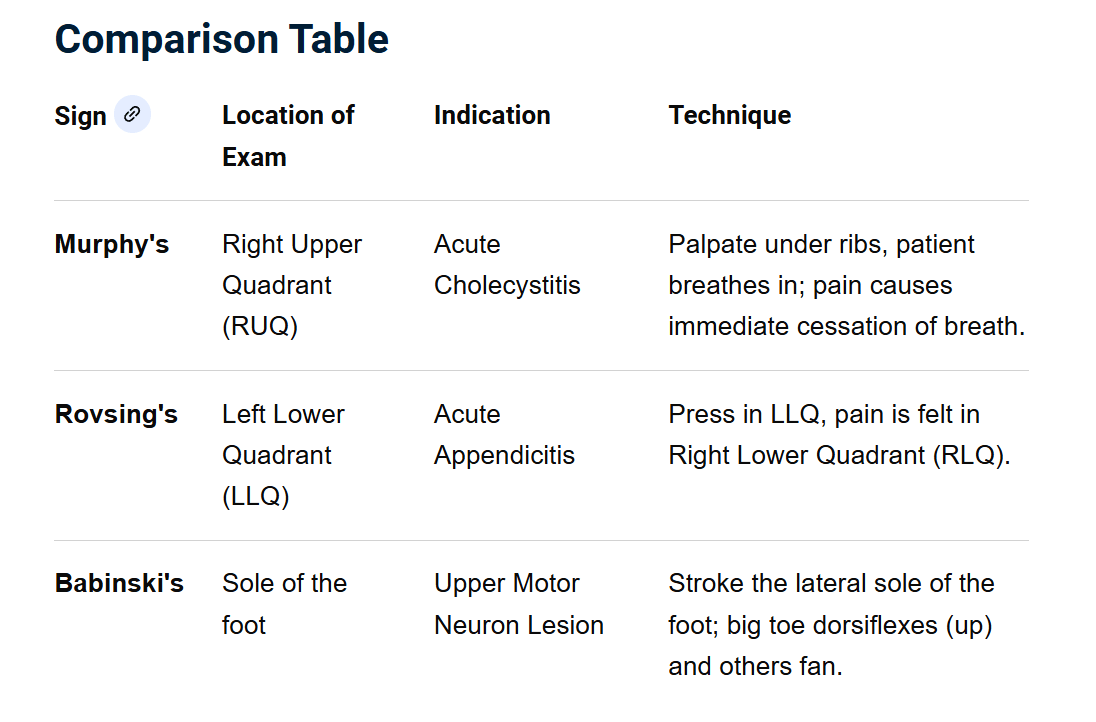
Compare and contrast Murphy's sign, Rovsing's sign, and Babinski's sign
1000
Which patient should be assessed first?
A. A patient with pancreatitis reporting severe abdominal pain
B. A patient with a pulmonary embolism receiving heparin with aPTT above therapeutic range
C. A patient with chronic kidney disease and creatinine of 3.0 mg/dL
D. A patient with nausea after chemotherapy
An elevated aPTT indicates excessive anticoagulation and risk of bleeding, especially dangerous in a patient with PE. This requires immediate evaluation and possible adjustment of therapy.
1000
Which patient should the nurse prioritize?
A. A postoperative patient with a respiratory rate of 10/min after opioid administration
B. A patient with asthma requesting a PRN inhaler
C. A patient with hypertension and BP 150/90 mmHg
D. A patient with a fracture requesting repositioning
A respiratory rate of 10/min after opioids suggests respiratory depression, which can quickly progress to apnea. Airway and breathing take priority over all other concerns.
1000
Define strabismus and explain the care
Strabismus (misaligned eyes) is treated through early intervention, including eyeglasses, prism lenses, patching, eye exercises, or surgery to adjust eye muscles. Treatments aim to straighten eyes, improve depth perception, and correct associated lazy eye (amblyopia). Early diagnosis is crucial, especially in children, to prevent permanent vision loss.