VSEPR, LDS and valence electrons
Try me!
Molecular Geometry
Or Try me!
Polarity
100
The way electron domains determine the shape of a molecule.
What is repulsion between electron domains connected to the central atom? (Electron domains repel each other and adopt arrangements that minimize repulsion.)
100
True or False:To figure out the geometry of a molecule, you just have to count the total number of bonds.
False. Geometry is determined by bonding domains and non-bonding domains.
100
Shape and polarity of this molecule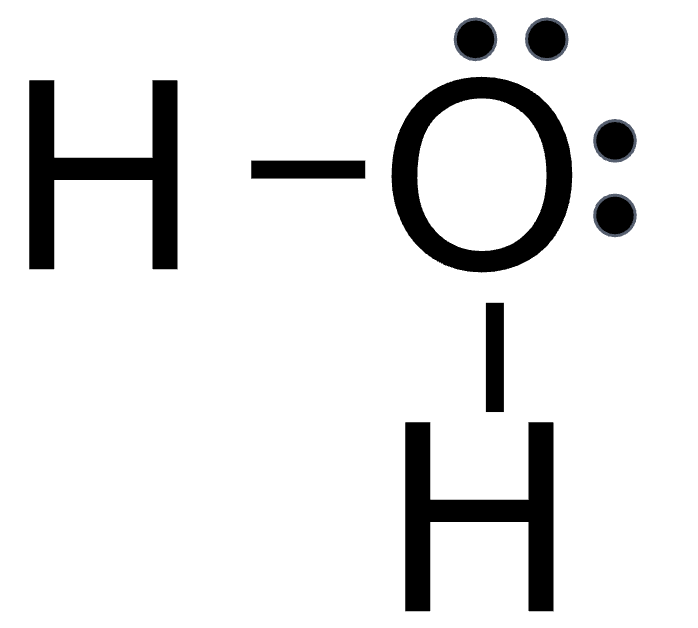
bent, polar
100
Electron repulsion occurs because electrons share this property.
What is negative charge?
100
Is the bond between C-S polar covalent or non-polar covalent, and why?
Nonpolar covalent, because the difference in electronegativity between C and S is less than 0.4.
200
This is what VSEPR stands for.
What is Valence Shell Electron Pair Repulsion theory?
200
If the central atom has 4 bonding domains, the molecule will have this geometry.
Tetrahedral
200
Shape, polarity, and # of valence electrons of this molecule:
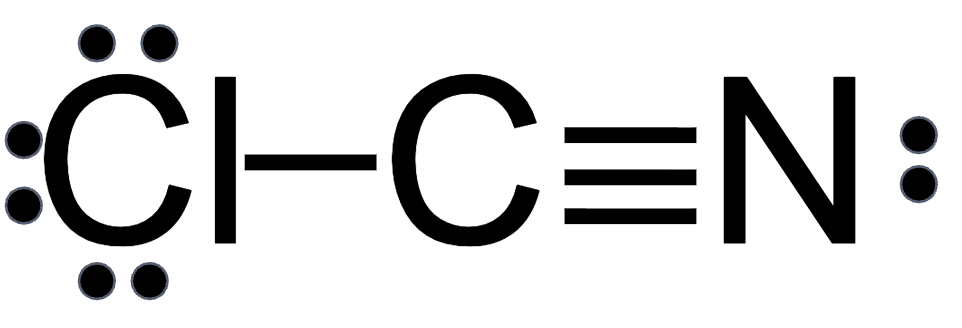
Linear, polar, 16
200
This distinguishes a polar covalent bond from a non-polar covalent bond. (Be specific!!)
polar covalent (EN difference is between 0.4-1.8)
non-polar covalent (EN difference <0.4)
200
Draw the dipole moment and the partial charges for this molecule, and determine if its polar or non-polar.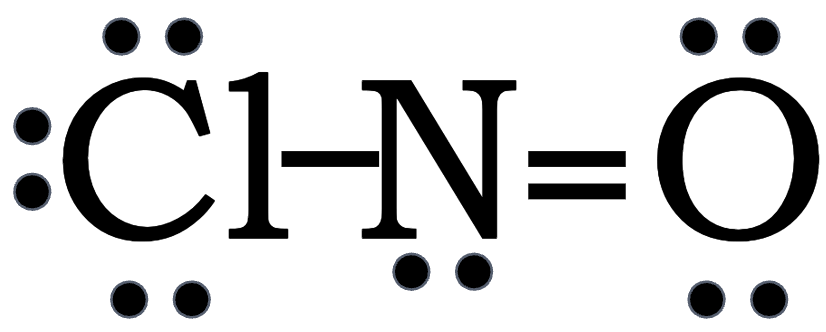
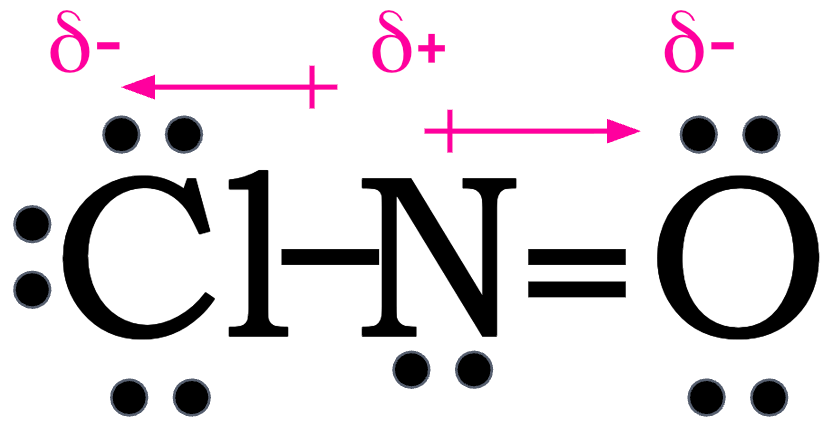
300
Total # of electron domains, bonding domains, and non-bonding domains on the central atom.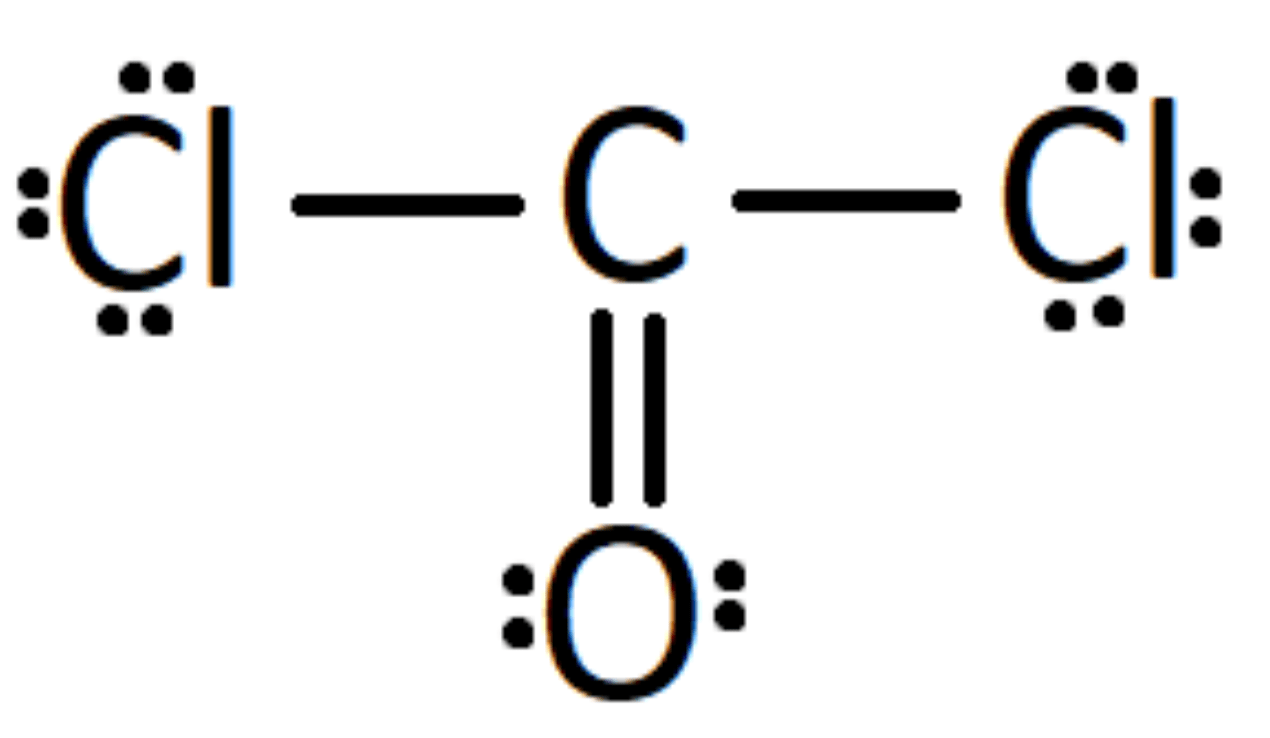
What are: 3 electron domains, 3 bonding domains, 0 non-bonding?
300
The central atom in a trigonal pyramidal molecule has this combination of bonding domains and lone pairs
3 bonding domains, 1 lone pairs (non-bonding domain).
300
Shape, polarity, and total valence electrons in this molecule.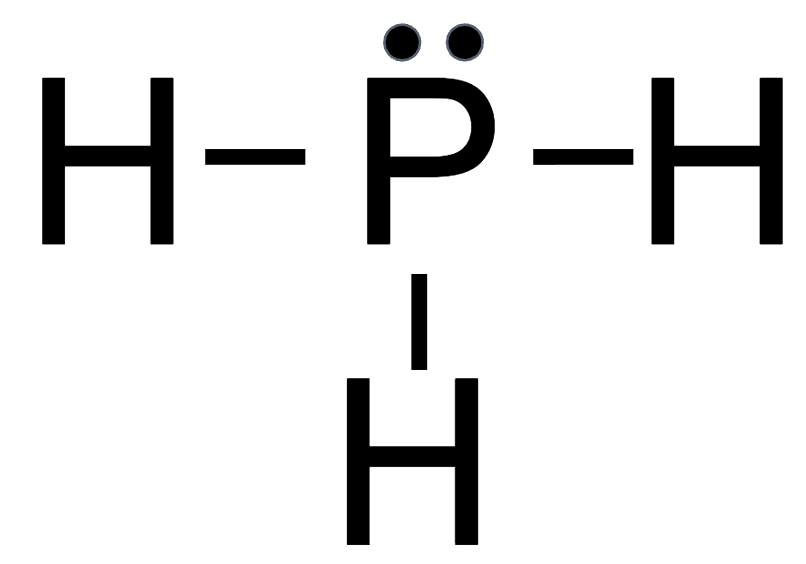
Trigonal pyramidal, polar, 8 valence electrons
300
Why are PFAS chemicals known as "forever chemicals"?
They are difficult to break down so they last a long time in the environment.
300
Order the following bonds from most polar to least polar. H-N C-F Cl-O. N-O.
most polar: C-F H-N N-O. Cl-O least polar. 1.43, 0.8. 0.4, 0.3,
400
Total valence electrons in the molecule, bonding domains and non-bonding domains around the highlighted atom.
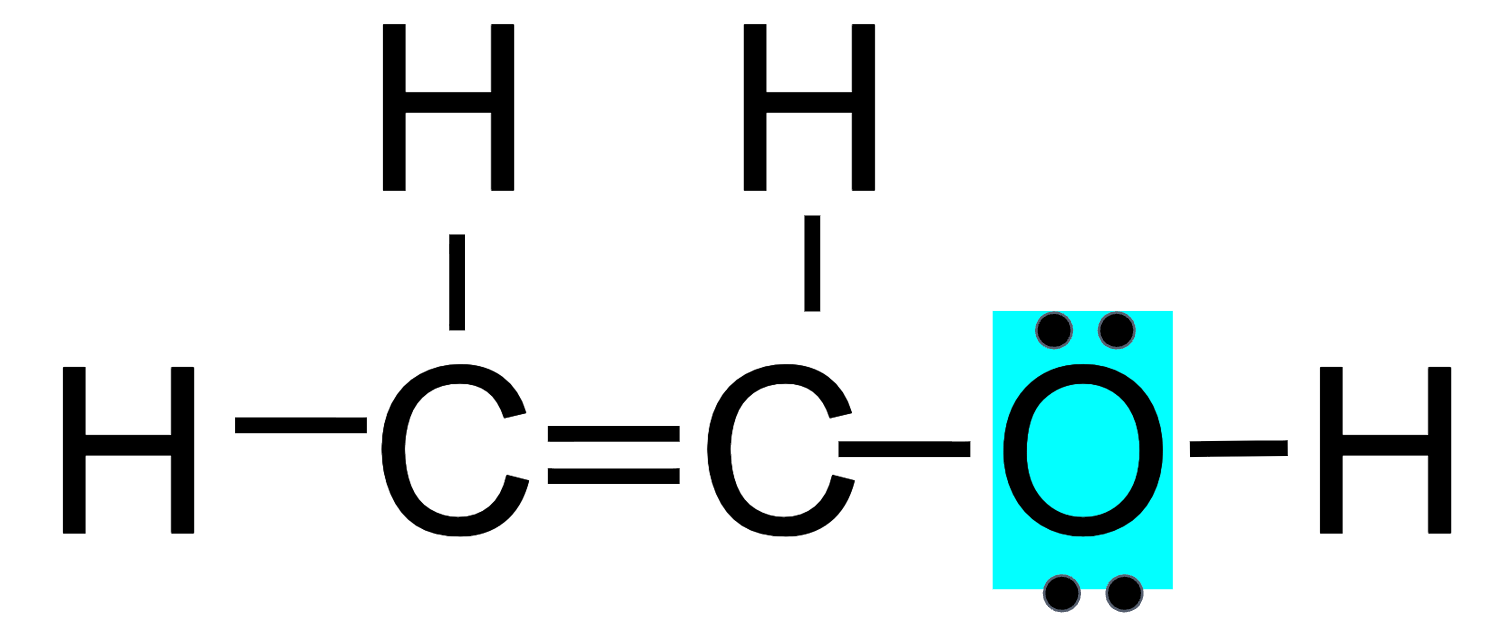
Total valence electrons: 18, bonding domains on O: 2, non-bonding domains on O: 2
400
Find the total # of valence electrons in H3COCF3 , and fix this lewis diagram by adding bonds and lone pairs.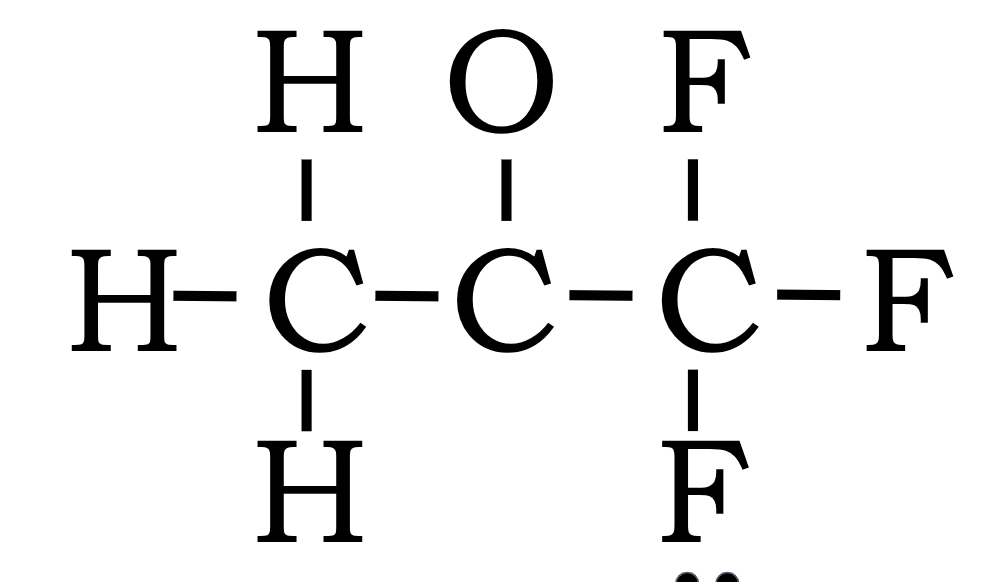
42 valence electrons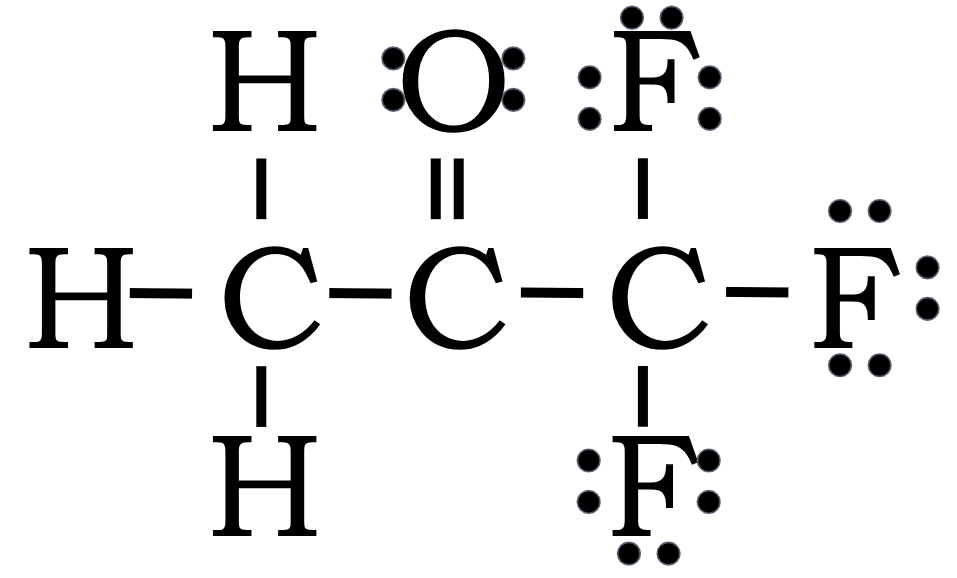
400
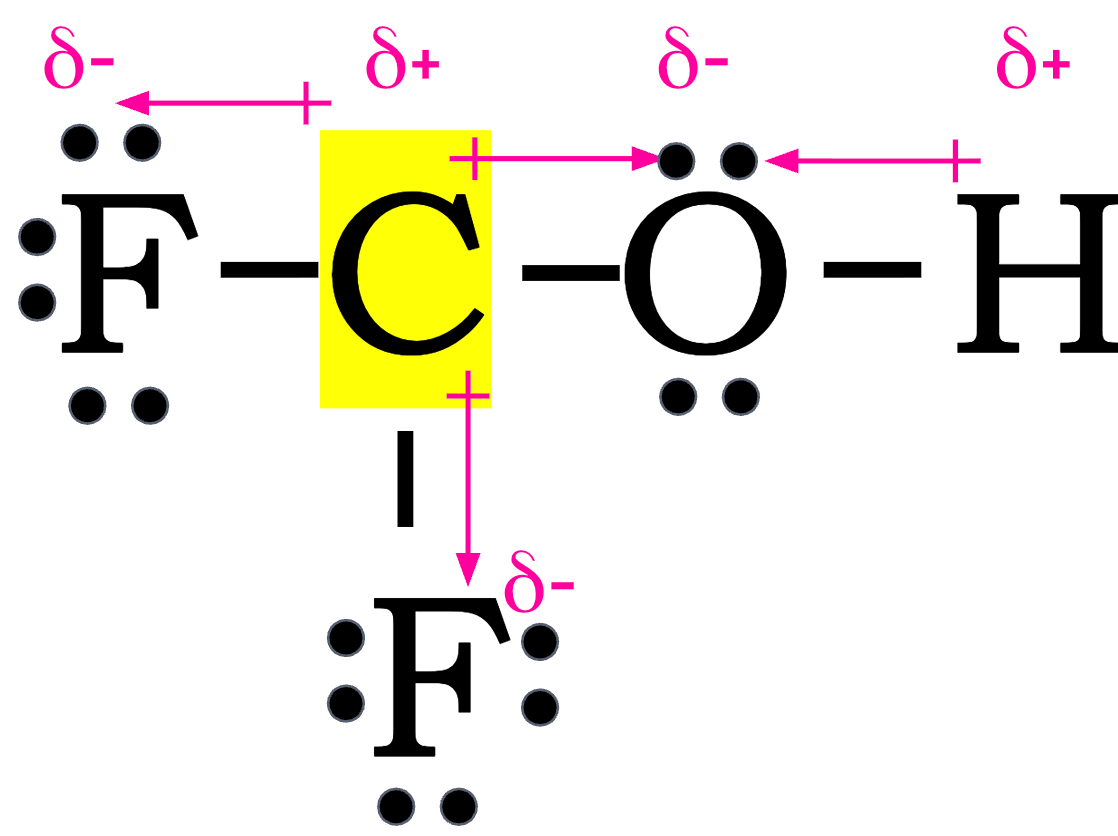
Dipole moments for each bond, shape around the highlighted atom, overall polarity of this molecule.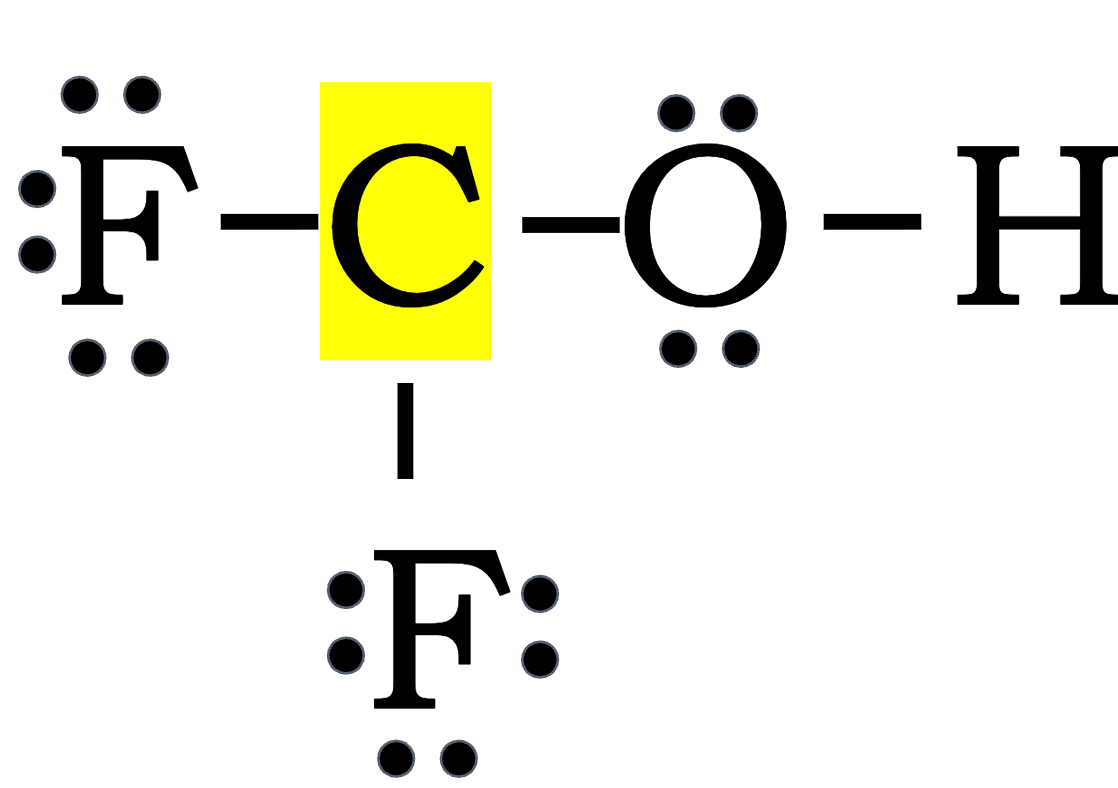
Shape: trigonal planar, polar
400
Classify each bond as ionic, polar covalent, or non-polar (pure) covalent. C-S Mg-O O-H
C-S - pure covalent
Mg-O - ionic
O-H polar covalent
400
Which 2 molecular shapes are typically nonpolar due to symmetric arrangement?
Linear and tetrahedral (sure, trigonal planar can be too)
500
3 clues that this Lewis structure for HNO is incorrect.
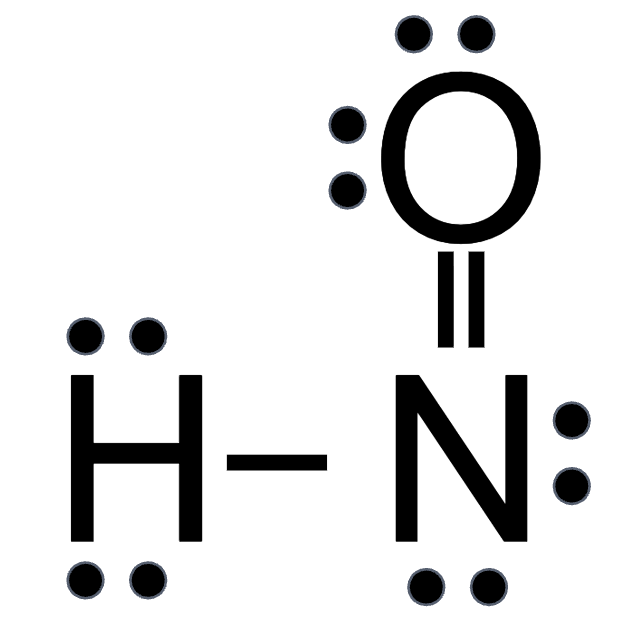
H is connected to too many valence electrons / should have no lone pairs.
Too many total valance electrons
N has 10 valence electrons, should have 8
500
This is what the acronym PFAS stands for.
WHat are Per- and polyfluoroalkyl substances?
500
Geometry around each of the 3 highlighted atoms, and is this a polar or non-polar molecule?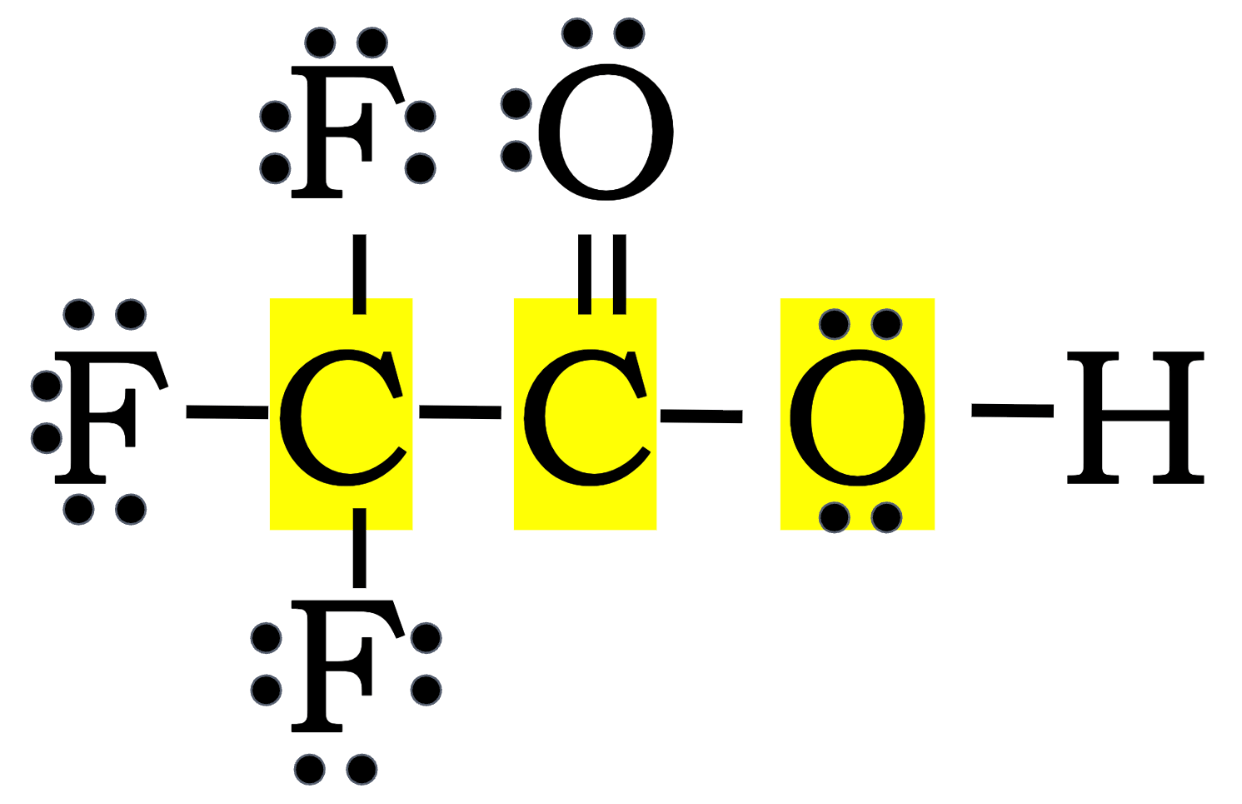
tetrahedral, trigonal planar, bent
Polar
500
Two reasons why the bond energy of a C-F bond is greater than the bond energy of a C-H bond,
There is a greater difference in electronegativity between C-F, so the dipole moment is higher and the bond length is shorter.
500
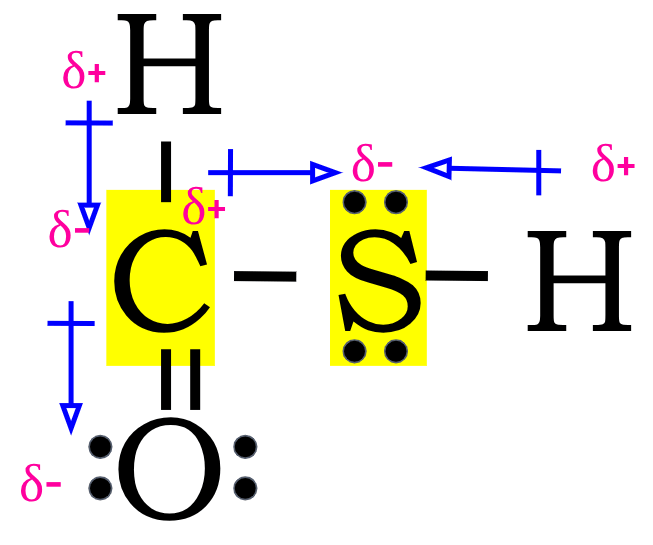
Add the dipoles and the partial charges, then determine molecular geometry around each highlighted atom and overall polarity.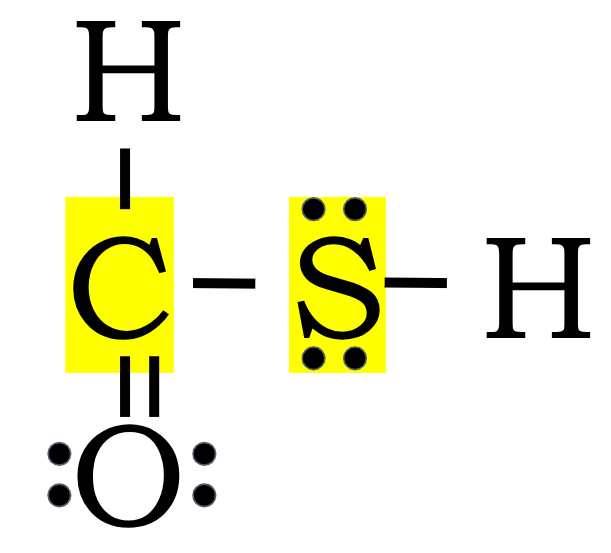
geometry around C: trigonal planar
Geometry around S: bent