Graphs
Expand/ Condense
Solving
Solving 2
Random
100
What is the range? 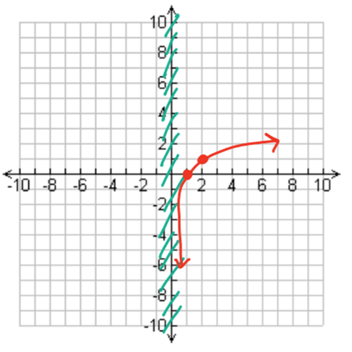
(-oo,oo)
100
Expand.
log_8(x^3y^6)
3log_8(x)+6log_8(y)
100
3^(2x-1)=3
x=1
100
e^x=4
x=1.39
100
Given the function, f(x), what transformations have occured?
f(x-2)+3
Right 2, Up 3
200
What is the domian? 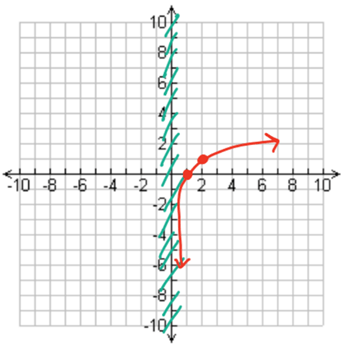
(0,oo)
200
Condense.
ln(x)+2ln(y)
ln(xy^2)
200
log_12(4x-6)=log_12(x)
x=2
200
4^(3x-1)=16
x=1
200
Factor.
x^2+6x+8
x=-4, -2
300
What is the asymptote?
y=5log(x-3)+2
x=3
300
Expand.
log((8y)/z^3)
log(8)+log(y)-3log(z)
300
log_2(x)-log_2(3)=2
x=12
300
log(x)-log(5)=log(31)
x=155
300
Solve.
y=-2x+3
x+y=6
(-3,9)
400
What point, (x,y) would cancel out the log?
y=2log_3(x-1)
(4,2)
400
condense.
2log_2(x)-3log_2(y)-log_2(2)
log_2(x^2/(2y^3))
400
14^(3x)+4=67
x=0.52
400
log_6(x)+log_6(9)=2
x=4
400
Find the inverse.
y=4x+5
y=(x-5)/4
500
Provide the domain, range, asymptote and x-intercept for the following equation:
y=3log_4(x-4)-3
Domain:
(4,oo)
Range:
(-oo,oo)
Asymptote:
x=4
x-int:
(8,0)
500
Expand
ln((2a)/b^2)
ln(2)+ln(a)-2ln(b)
500
-6*15^(v-8.4)=-3
x=8.14
500
14^(n-0.8)+9.2=40
x=2.1
500
You invest $3,500 that is compounded continuously. If the account pays 7% interest, how much money will you have in 18 years?
$12,338.98