General Programming
Health & Safety
CACFP / Meals
Sanitation & Infection
Classroom Environment
MISC.
100
What are the programs hours of operation?
7:45-4:45 - Children
7:30-5:00 - Staff
100
Name the 8 Mandatory Health & Safety Trainings
1.CPR & First Aid - Adult & Pediatric
2. Basic Nutrition
3. Mandated Reporting
4. Fire Safety and Fire Extinguisher Use
5. Sanitation & Infection Control
6. Sudden Infant Death Syndrome
7. Child Car Seat Safety
8. Shaken Baby Syndrome
Notes - An additional 16 hours for staff in direct contact with children
100
What is a family style meal setting & What does it look like in a classroom?
-Staff sitting with children at the table eating the same food & conversing
-Staff should make a plate to showing how to scoop food
-Children should then practice serving themselves with assistance from teacher
-Children should not be rushed to finish eating.
100
When should you wash your hands?
-At arrival & after breaks
-After diapering/toileting
-Before/after handling food
-Before/after giving medication
-Before/after changing gloves
-After wiping & touching nose/mouth
-After outdoor play
-While cleaning
-After handling garbage.
-Hand sanitizer does not replace handwashing! Do not use on children under age 2
100
What is the Daily Classroom Inspection Sheet and why do classroom have them?
A checklist of duties to be done to ensure classroom and outdoor environment is safe, healthy, and free of potential hazards to properly care for children.
100
What is the Head Lice Policy?
Head checks performed when head lice is suspected
**DOCUMENT INCIDENTS**
- Nits can stay for remainder of day
- Live lice go home & provided with Lice removal kit
- Complete Head check upon returning
- Dress up clothes, pillows, soft animals/toys will be washed; Rugs will be vacuumed
- If more than 3 children in a classroom are reported to have lice in a 2-week period, a letter/notice will be sent to all families to inform them of exposure and to do regular head checks on their child
200
What is the Call in Procedure for staff?
Notify direct supervisor and front desk staff no later than 30 minutes prior to shift
200
When do you take the First Aid bag with you?
-Outside
-Gym
-Evacuations
-Field Trips
200
What is the Meals & Infant Feeding Policy?
-Monthly Menu Posted (Follow CACFP serving guidelines)
-Set Meal Times; Breakfast 9:00, Lunch 11:30/12:00, & Snack 2:30/3:30 (Exception; Infants are fed on demand)
-NO OUTSIDE FOODS/BEVERAGES IN CLASSROOM (Exception: Family Events w/ Center Manager Approval)
-Be aware of Allergies
-Obtain Feeding history and special instructions (Example: Introducing new foods or child has special dietary needs)
-Wash hands & tables before after meals
-Staff must be seated with children Family Style, eat the same foods, & encourage conversation.
-Children will not eat off disposable dishes/utensils
-Infants must be held while bottle fed – bottles need to be labeled & washed after use
200
What is the hand washing procedure
-Staff and children should wash hands/wrists/between fingers/under nails for 20 seconds with soap and water. Assist children when washing hands
-Rinse, dry with clean paper towel
-Use clean paper towel to turn off faucet
200
What is the Nap & Rest Time Policy?
-Toddlers have their own cot, sheet, & blanket
-Cots and cribs are to be 3 feet apart
-Teachers shall be positioned to see all children & NOT FALL ASLEEP
-Classrooms should NOT be dark; sufficient amount of light to ensure each child can be seen
-Children who complete a nap or rest quietly a least 30 minutes are not required to remain on cot or go back to sleep; should be offered a quiet activity separate from those who are napping.
-Cots are sanitized daily/after each use
-Soiled cots MUST to be washed & disinfected.
-Infant must have their own crib, sheet, & no soft bedding or blankets. May use Swaddle/Sleep Sack
-Infants must be put to sleep on their backs. Infants shall NOT sleep in car seat/swing/bouncer.
200
What is the diapering & toileting policy?
-Diapering/toileting procedure MUST be posted
-Diapers are changed when wet/soiled
-WEAR CLEAN GLOVES FOR EACH CHILD
-Wash & Spray the Changing Table & Toilet with disinfectant after each use
-Staff AND children MUST wash hands after diapering/toileting
-Staff MUST wash hands before and after changing gloves
-Use clean gloves when cleaning diapering/toileting areas
-Introduce toilet when developmentally read or displaying interest in using toilet
300
What is the Policy/Procedure on Child attendance?
-Goal of 90%
-Drop off is 7:45-9:00, & pick up is 4:45.
-Notify teacher/front desk if child will be absent and/or arriving late due to an appt.
-If a child is unexpectedly gone for 1-4 consecutive days, staff will attempt to contact the family and check on the child’s well-being
-After 5 consecutive days with not contact, parents will be notified by mail and given a contact due date and withdraw date.
300
How oftern are Fire, Tornado, & Lockdown drills conducted? Explain procedures
Fire drills completed monthly
-Use Evac crib for Infants & Toddlers use shape rope
-Bring First Aid bag, attendance, & Emergency contacts
-Follow exit route to Bus/Designated meeting place.
Tornado Drills Completed monthly (April – Sept)
-Go to designated areas in building (Along wall between in hallway & Area between Licensor office & breastfeeding room)
-Sit in safety position low to the ground (Sit/kneel facing wall, tuck into a ball with hands over head & neck)
- Staff with infants (Place infant close to ground & cover with your body)
Lockdown Drill
-Bring everyone in from outside & remain indoor
-Stay in primary classrooms/offices
-No one will leave or enter the building (NO EXEPTIONS)
-Close/Lock doors and windows, close window shades, & turn off lights
-Turn off audio equipment and put cell phones on silent or vibrate
-Ignore fire alarms
-Center Manager will communicate via cellphones/radio, handle meal carts & assist with bathroom breaks.
-Program Manager announces end of lockdown
300
What are the 5 Food components to a creditable meal for children age 1+?
1. Milk
2. Fruit
3. Veggie
4. Grain
5. Meat/Meat Alternative
300
How are infections spread? Can you give an example?
Airborne/Respiratory Route; Spread by droplets through nose, mouth sinuses, throat, lungs, contaminated tissues - (TB, Colds, flu, Strep Throat Chicken Pox, Measles)
Direct Contact Route; Saliva Mucous Eye Drainage Pus or discharge from a sore - (Pink eye, impetigo, Strep, MRSA, Meningitis)
Fecal-Oral Route; Spread by Hands, Food, Mouthed Toys, Toilets, & Diapers - (Hand/Foot Mouth Disease, Rotavirus, Hep A, Salmonella, giardia, meningitis)
Blood Contact Route; Spread through direct contact with blood or bodily fluids containing blood - (Hep B/C/D & HIV/AIDS)
-Dispose of all soiled items in plastic bags with secure ties & sent home with child
-If floors, rugs, carpets are contaminated, additional cleaning by shampooing or steam cleaning may be necessary
-Mops used to clean up body fluids should be cleaned, rinsed with a disinfecting solution and wrung out and hung up to dry
300
What should you do in the event of unacceptable behavior?
1. Calmly approach child with calm voice and gentle touch;
2. Acknowledge feelings; “You look upset/sad”;
3. Restate the problem “it seems like the problem is….”;
4. Ask/state; “what can we do to solve this”;
5. Acknowledge accomplishments “You solved it/We solved it together”;
6. DOCUMENT incident/behavior & share with families (do not share other names);
7. If behaviors are continuous, a meeting with parent, teachers, & management will take place to discuss behaviors and create a plan. Children may need to be separated from the group for short period of time for safety of the other children and staff, but he/she must be supervised at all time.
300
What are some examples of Culture of safety?
-Counting children and staff when leaving/entering the classroom/gym/playground
-Classroom safety – Check for potential hazards, equipment in operable order, & other safety issues, no broken toys/furniture
-Zoning classrooms and playgrounds
-Document all accidents, behaviors, & incidents
-Emergency contacts listed for families and emergency services
-Be aware of disabilities and modify classrooms/routines/lesson plans
400
Who are mandated reporters?
ALL ECD Staff - CCS, Maajiigin, & Miikogin
400
What is the medication policy?
-All medication will be stored in a locked box/cabinet & labeled with child’s name
-Written parent permission must be obtained prior to giving medication - USE MEDICATION ADMINISTRATION FORM
-Lotion/sunscreen/ointments/repellent used only for 1 child must be labeled with child’s name and not shared with others
-Lotion/Sunscreen/Ointment/repellent supplied by program may be shared with proper precaution **Products can’t touch someone else’s skin/dirty gloves**
400
What is a creditable meal for an infant 6wks to 11 mo?
Breakfast, Lunch, & Snack for infants 6 wks-5 mo.
4-6oz Breastmilk or Iron-Fortified Infant Formula
Breakfast / Lunch for infants 6 mo. - 11 mo.
-6-8oz Breastmilk or Iron-Fortified Infant Formula AND;
-0-½oz iron-fortified infant cereal - OR -
-0-4 Tbsp Meat/Meat alternative; 0-2 oz cheese; 0-4 oz cottage cheese; 0-4 oz yogurt; A combination of the above
-AND 0-2 Tbsp vegetable or fruit or a combination of both
Snack for infants 6 mo. - 11 mo.
2-4 fluid oz breastmilk or iron-fortified infant formula AND;
0-½ oz Grain/Bread item - OR - 0-¼ oz eq crackers
0-½ oz eq iron-fortified infant cereal -OR- 0-¼ oz ready-to-eat breakfast cereal
-AND 0-2 tbsp vegetable or fruit or a combination of both
400
Describe the Sanitation Policy
To prevent the spread of illnesses the building will be regularly cleaned and sanitized.
-Post and Follow cleaning schedule
-All equipment is kept clean, sanitary, & in operable condition.
-Immediately clean & disinfect surfaces contaminated with bodily fluids – WEAR GLOVES
CLEAN DAILY & AS NEEDED
-Changing Tables, Toilets, Sinks, Empty Garbage's, Door handles, light switches, Tables/Counter tops, and Food prep areas
-Sweep/Mop/Vacuum Floors & Rugs
-Mouthed toys – Place toys in bucket labeled “Mouthed toys". (Wash with warm soapy water, disinfect, & air dry)
CLEAN WEEKLY & AS NEEDED
-Toys, Blankets, & Sheets
-SPRAY BOTTLES MUST BE LABELED & DATED WEEKLY
-Rinse Spray Bottles On Friday, Let it air dry, & Fill on Monday
400
How do you clean your tables?
1. Wash with a clean or disposable cloth using warm soapy water
2. Spray on Sanitizing Bleach Solution / Sanitizer
3. MUST let air dry or sit for 2 – 5 minutes before wiping off.
4. DO NOT have children at table when spraying any solutions
400
What are some of the Prohibited Actions pertaining to managing behaviors?
- Corporal punishment; Non-Accidental Infliction of pain - Rough handling, shoving, hair pulling, ear pulling, shaking, slapping, kicking, biting, pinching, hitting, or spanking.
- Emotional abuse; Infliction of verbal/psychological abuse - Name calling, humiliation, and or frightening.
- Ostracism; Intentionally excluding, ignoring, or banishing from a social setting.
-Withholding Food, water, light, clothing, or medical care.
-Children will not be separated from group unless to protect the safety of others & has proper supervision.
-No child will be physically restrained by bonds, ties, or straps
500
What is the Vision of Maajiigin/Mikogin?
An Ojibwe language speaking community built around resilient, healthy Anishinaabe families and children.
500
What is the illness policy?
-Children/staff stay home when ill
-Daily health checks – Observe child for signs of obvious illness
-Notify parents & Center Manager of signs symptoms
-Determine if the child can participate in activities with reasonable comfort. And/or Does the illness compromise health/safety of others?
-If a child becomes ill; Remove ill child from direct contact with others & Keep comfortable, Observe symptoms and document, Contact parent/guardian to pick up child
-A Child may return 24-48-hours symptom free or on antibiotics if sent home for; Fever over 100F, Nausea vomiting, More than 3 abnormal bowel movements – Diarrhea, & Impetigo
NOTES: Infants who are teething may have one or more of these symptoms
-Short term exclusions that require physician statement upon returning; Chicken Pox, Strep, Parasites, Conjunctivitis (pink eye), unknown rash, ring worm, scabies, influenza, significant respiratory distress, & unexplained lethargy
-The program staff (NOT the family or medical provider) will make the final decision when a child may return
500
What is Point of Service and when should it be taken?
Meal counts must be taken at the point of service—meaning right at the table when the children are sitting down and being served.
"Write before you Bite"
500
Difference between Cleaning, Sanitizing, & Disinfecting?
CLEANING;
-Cleaning physically remove all dirt/contamination; The friction removes most germs and exposes any remaining germs to be sanitized/disinfected.
SANITIZING;
Sanitizing reduces germs on inanimate surfaces. You cant sanitize a dirty surface.
DISINFECTING;
Disinfectant destroys or inactive germs on any inanimate surfaces
500
How many books should be in a classroom?
Infants & Toddlers - 1 Book per child
Pre School & School Age - 2 Books per child
600
What is the chain of command?
teacher
team lead
center manager
program manager
program director
600
How often do Staff need a Physical and TB?
Physical - Every 2 years
TB - Every 5 years
600
When infants are being bottle fed, the teacher/staff should _______________........
- Hold the infant.
- Bottles can’t be propped. Infants shouldn’t carry a bottle/sippy cup throughout the day
600
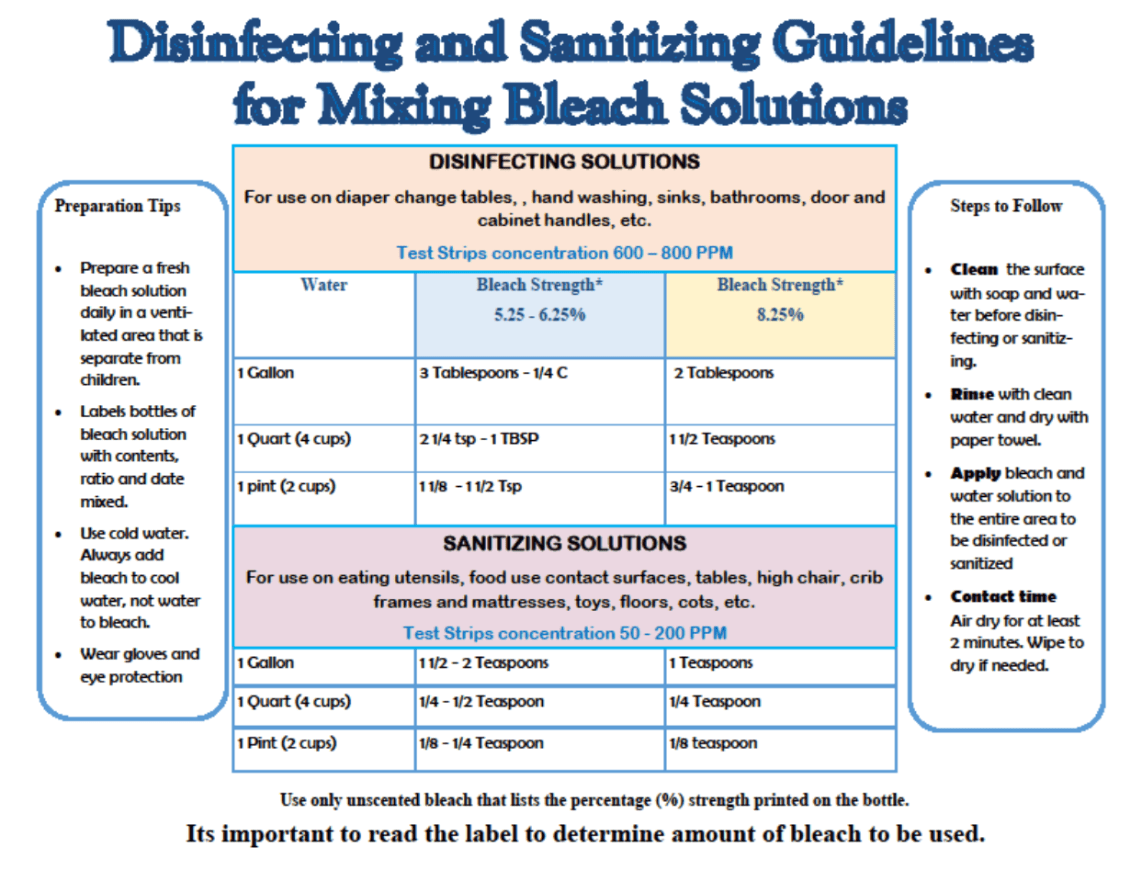
What are the measurements of cleaning products/solutions used for Sanitizing & Disinfecting?
SANITIZING WITH BLEACH SOLUTIONS: (Mouthed surfaces, toys, table tops, high chairs, & cribs/cots)
-Use COLD WATER & Add bleach to water, DO NOT ADD water to bleach.
-Use Test Strips 50-200 PPM
-Bleach strength: 5.25% to 6.25% -OR- 8.25%
-1 Quart: ¼ tsp - ½ tsp -OR- ¼ tsp
-1 Gallon: 1 ½ tsp - 2 tsp -OR- 1 tsp
-Let air dry for 2 minutes
DISINFECTING WITH BLEACH SOLUTIONS: (Changing tables, sinks, bathrooms, doors, & cabinets)
-Wear clean gloves
-Use COLD WATER & Add bleach to water, Not water to bleach
-Use Test strips 600-800 PPM
-Bleach strength 5.25 - 6.25% / 8.25%
-1 Quart: 2 ¼ TSP - 1 TBSP / 1 ½ TSP
-1 Gallon: 3 TBSP - ¼ Cup / 2 TBSP
-Let air dry for 2 minute
BETCO Sanibet Multi-Range Solutions: (Used to sanitize serving ware, utensils, pots & pans, food processing equipment, floors and walls)
-Pre-measured NSF/EPA Approved solution dispenser is available at both Maajiigin/Miikogin.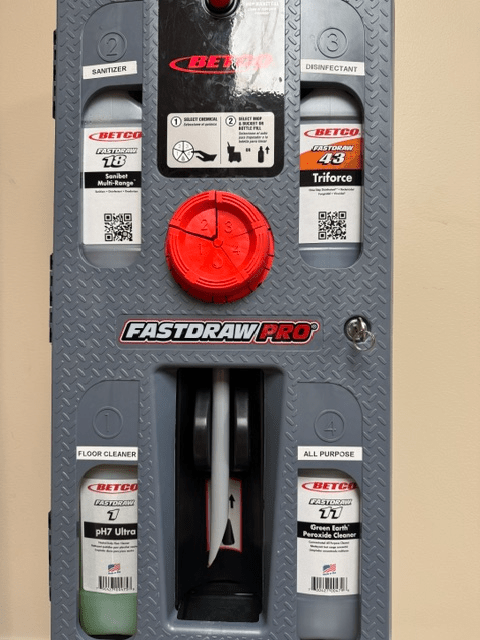
-NSF Certified/EPA approved BETCO as a broad range sanitizer which kills 99.99% of food service organisms-Listeria, E-Coli, and Salmonella.
**ALL SPRAY BOTTLES MUST BE LABELED W/ SOLUTION NAME, USE, STENGTH, & DATE**
600
Do classrooms need a written plan for daily activities?
- Yes, Written plan should include both indoor and outdoor activities (weather permitting) and shall include the goals for children development and learning.
- Plan both active and quiet activities, teacher directed and child directed/initiated that use of variety equipment and materials.