Basics
Definitions
Multiple choice
Surprise
Easy
100
goals (5) of Macroeconomics
1. To Achieve Higher Level of Gross Domestic Product;
2. To Achieve Higher Level of Employment;
3. Stability of Prices;
4. Formulation of Economic Policies;
5. Achievement of Economic Development.
100
What is national income?
It is the money value of all final goods and services produced by residents of a country in a year.
It is also defined as the sum of factor incomes in a country in a year.
It is also expressed in terms of aggregate expenditure of a country in a year.
100
1. The French economist Jean-Baptiste Say transformed the equality of total output and total spending into a law that can be expressed as follows:
a. Unemployment is not possible in the short run.
b. Demand and supply are never equal.
c. Supply creates its own demand.
d. Demand creates its own supply.
Supply creates its own demand.
100
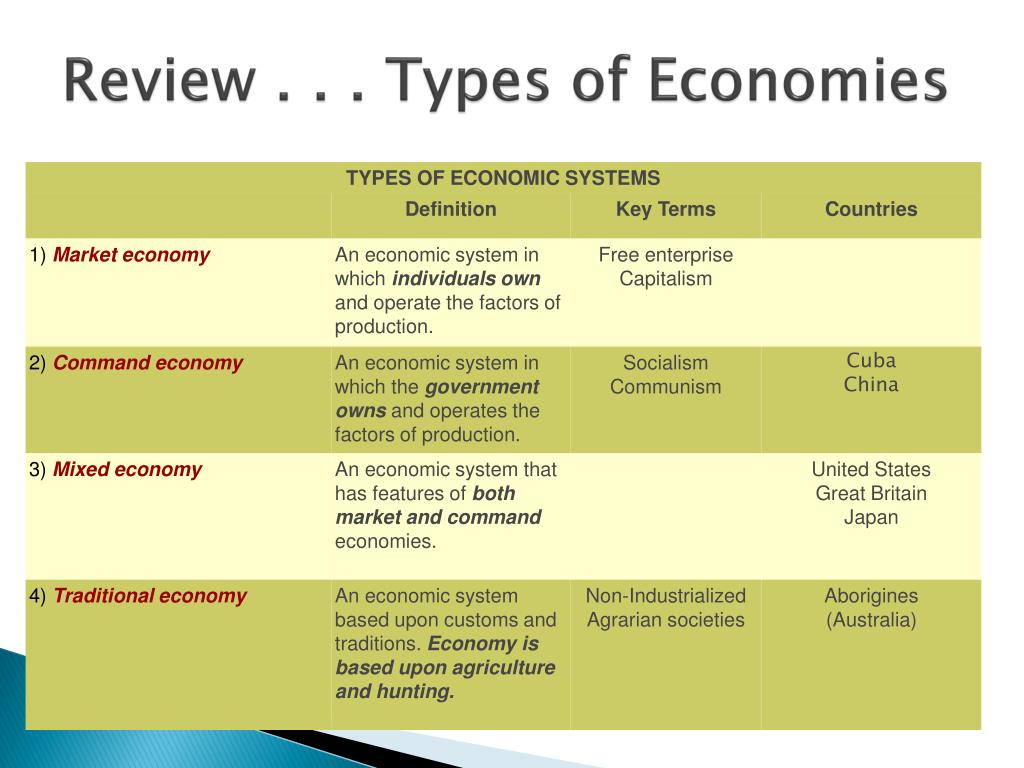
Define types of economic systems.
100
What are opportunity costs?
The value of the best alternative.
200
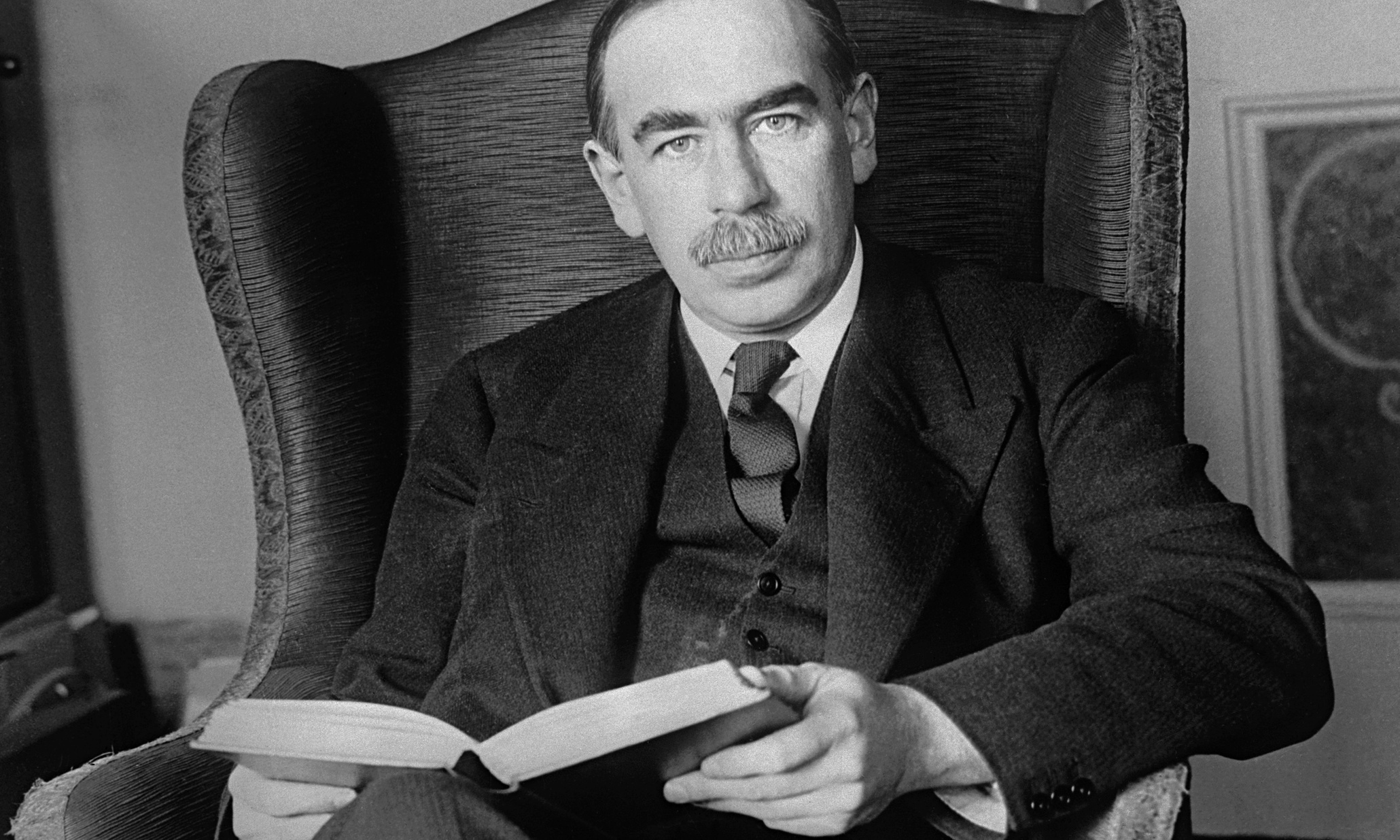
father of modern macroeconomics
J. M. Keynes
200
Define the types of unemployment.
Cyclical Unemployment: It is caused by slackness in business conditions. During depression, investment activities get discouraged. Contraction in business activities renders large numbers of workers unemployed.
Frictional Unemployment: It is a temporary unemployment which exists during the period of the transfer of labor from one occupation to another.
Structural Unemployment: It is the result of the backwardness and underdevelopment of an economy.
200
The consumption function shows the relationship between consumer expenditures and:
a. The interest rate.
b. The tax rate.
c. Savings.
d. Disposable income.
Disposable income.
200
Fixed Exchange Rate?
It refers to the system under which the rate of exchange of a currency is fixed in terms of gold or in terms of another currency.
200
What is scarcity?
The condition in which our wants are greater than our limited resources available to satisfy those wants.
300
The term microeconomics and macroeconomics were first given by
Ragner Frisch

300
AS
AD
What are these terms?
Aggregate Demand: The total demand for goods and services in an economy in a year’s time is called aggregate demand. It is expressed in terms of total expenditure of the community.
Aggregate Supply: It refers to the money value of all goods and services produced in a country in a year’s time. It, in fact, refers to the national income of a country because it is the money value of all goods and services produced in a year’s time.
300
1. An annual statement of the revenue and expenditure by the government is known as-
A. Revenue budget;
B. Budget;
C. Capital budget;
D. None of these.
B. Budget
300
What is Floating Exchange Rate?
When the currency unit of a country is free to fluctuate and find its own level, according to conditions of demand and supply in the foreign exchange market.
300
What is Gross National Happiness?
Gross National Happiness (abbreviated: GNH), or sometimes called Gross Domestic Happiness (GDH), is a philosophy that guides the government of Bhutan. It includes an index which is used to measure the collective happiness and well-being of a population. Gross National Happiness Index is instituted as the goal of the government of Bhutan in the Constitution of Bhutan, enacted on 18 July 2008.
400
What is a multiplier?
Multiplier shows the relationship between change in investment and the resulting change in income.
An increase in investment in an economy leads to an increase in income which is more than the proportionate increase in investment.
400
What is absolute income theory of consumption?
Or, what is Psychological law of consumption?
Prof. Keynes laid stress on the absolute size of income as a determinant of consumption and his theory is known as absolute income theory of consumption. He gave a psychological law of consumption which state that as income increases consumption increases but not by as much as the increase in income.
400
Income inequality metrics:
a. the Lorenz curve,
b. the Gini coefficient,
c. Decile ratios,
d. the Palma ratios
e. all above
All options.
400
How is inflation measured?
Most commonly used inflation indexes are the Consumer Price Index (CPI) and the Wholesale Price Index (WPI).
400
Your Better Life Index?
The OECD Better Life Index, created in May 2011 by the Organisation for Economic Co-operation and Development following a decade of work on this issue, is a first attempt to bring together internationally comparable measures of well-being in line with the recommendations of the Commission on the Measurement of Economic Performance and Social Progress also known as the Stiglitz-Sen-Fitoussi Commission. The recommendations made by this Commission sought to address concerns that standard macroeconomic statistics like GDP failed to give a true account of people's current and future well-being. The OECD Better Life Initiative includes two main elements: "Your Better Life Index" and "How's Life?"
500
What is the Balance of Trade and Balance of Payment?
BOT: An account of the value of visible exports and the value of visible imports by a country during a year.
BOP: A monetary statement of the total receipts and total payments of foreign exchange of a country during a year.
500
What are trade/business cycles?
Changes in aggregate demand bring about changes in the level of output, employment, income and price. These changes are generally cyclical in nature and follow a cycle of four different stages:
1. Prosperity or boom;
2. Recession;
3. Depression or slump; and
4. Recovery.
500
Ways to measure poverty
Some of them:
Multidimensional Poverty Index, Where-To-Be-Born Index (WTBBI), Poverty Gap Index.
500
What are menu costs?
Menu costs are a type of transaction cost incurred by firms when they change their prices. Menu costs are one of the microeconomic explanations offered by New Keynesian economists for macroeconomic price-stickiness, which may lead to the failure of the economy to adjust to changing macroeconomic conditions.
500
What is Income Distribution?
In economics, income distribution covers how a country's total GDP is distributed amongst its population. Economic theory and economic policy have long seen income and its distribution as a central concern.