Compound Interest Pt. 1
Compound Interest Pt. 2
Compound Interest Pt. 3
Exponential Applications
Solving Exponential Equations
100
How do you tell whether to use a calculator or desmos to solve a compounded interest problem?
If you're solving for amount of $$ -> Calculator
If you're solving for amount of time -> Desmos
100
How do you calculate for the amount you gained in interest from the formula below? What variables do you use?
A=P(1+r/n)^(nt)
Interest = Amount Total - Principal = A - P
100
How do you tell whether to use a compound interest formula vs. the continuous compound interest formula?
if it says "compounded continuously" -> continuous formula
If it says "compounded ________" -> compound interest formula
100
Choose the correct term in in parenthesis:
1) If the initial value is (decreasing/increasing) over time, use the growth function.
2) If the initial value is (decreasing/increasing) over time, use the decay function.
1) If the initial value is increasing over time, use the growth function.
2) If the initial value is decreasing over time, use the decay function.
100
Solve for x
x=4/5
200
You invest $5,000 in an account paying 2.1% interest compounded monthly. How much will you have in your account in 4 years?
$5437.74
200
You invest $5,000 in an account paying 2.1% interest compounded monthly. How long will it take to reach $1,000 in interest? round to nearest 10th
8.7 years
200
You invest $5,000 in an account paying 2.1% interest compounded continuously. How much will you have in your account in 4 years?
$5,438.14
200
A deer population is at 170 in the year 2022. if the population has grown 17% every year, what will the population be in the year 2036? Round to the nearest whole
1531 deer
200
Find x
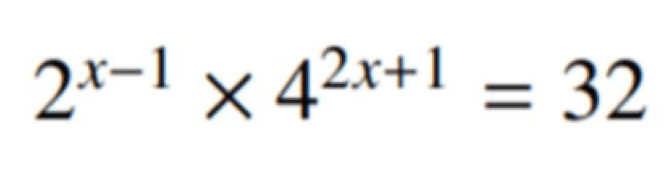
x=4/5
300
You invest $10,000 in an account paying 3.4% interest compounded bimonthly. How much will you have in your account in 8 years?
$13,123.34
300
You invest $10,000 in an account paying 3.4% interest compounded bimonthly. How many years will it take to reach 14,000? Round to nearest 10th.
9.9 years
300
You invest $5,000 in an account paying 2.1% interest compounded continuously. How long will it take to reach $7000 in the account? Round to the nearest whole
16 years
300
A deer population is at 170 this year. if the population has grown 17% every year, how many years will it take to double the population? Round to the nearest 100th
4.42 years
300
Find x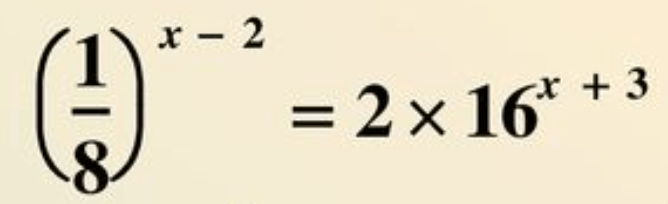
x=-1
400
You're comparing two mortgages for two different houses (that are compounded monthly) below:
Dedham - 30 year loan with 3% interest for $650,000 loan
Brookline - 15 year loan with 5% interest for $700,000 loan
Which mortgage will you end up paying more and by how much?
the Dedham house will cost more. It will cost $117,354.68 more.
400
You're comparing two mortgages for two different houses (that are compounded monthly) below:
Dedham - 30 year loan with 3% interest for $650,000 loan
Brookline - 15 year loan with 5% interest for $700,000 loan
a) How much more will you have paid in interest for the Dedham loan?
b) Why does it make sense that the interest for the Dedham house is much more?
a) The interest for the 30 year loan is $167,354.68 more than the 15 year loan
b) the longer the loan, the more you usually pay for interest. Because interest grows exponentially, 30 year mortgages are often more expensive than 15 year mortgages.
400
In 2019, 1 Apple stock price was $59. The price in 2022 rose to $142 today. Write an exponential function in the form below to model the data. Round your value for b to the nearest 100th. Then find the predicted stock price for 2032.
y=a*b^x
y=59*1.34^x
$1,101.28
400
An analysis shows that the 2022 consumption of gas A in the US is 0.3 trillion cubic feet. if the amount increases by 6.3% every year, what will be the change in consumption from 2052 to 2022. Round to the nearest 100th.
1.88 trillion cubic feet
400
Solve for m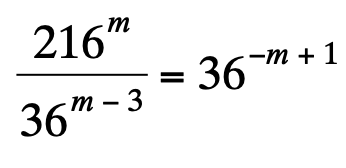
m=-4/3