Category 1: The Olmec
Category 2: Maya Daily Life
Category 3: Maya Technology
Category 4: Maya Roads and Rulers
100
What was the first major civilization in what is now Mexico?
A. Maya
B. Olmec
C. Aztec
D. Inca
B. Olmec
100
Where did the Maya live?
A. Near the Amazon River
B. Along South America’s Pacific Coast
C. Mexico and Central America
D. Central America and the United States
C. Mexico and Central America
100
Which tool for tracking time did the Maya develop?
A. A clock
B. A calendar
C. A stopwatch
D. A wristwatch
B. A calendar
100
Which statement about Maya roads is FALSE?A. They connected only coastal towns.
B. They were raised above ground level.
C. They connected distant communities.
D. They were made of white limestone.
A. They connected only coastal towns.
200
Many surviving Olmec artifacts were made of what material?
A. Wood
B. Paper
C. Copper
D. Stone
D. Stone
200
Which crops did Maya farmers grow?
A. Rice, cotton, and barley
B. Wheat, avocados, and pineapples
C. Corn, beans, and squash
D. Potatoes, fruit, and sugarcane
 C. Corn, beans, and squash
200
Maya priests used their skills as what kind of scientists to guide farming decisions?
A. Biologists
B. Astronomers
C. Chemists
D. Geologists
B. Astronomers
200
What did the Maya believe about their rulers?
A. They represented only wealthy people.
B. They should obey the Spanish.
C. They were godlike.
D. They should ignore priests.
C. They were godlike.
300
What evidence shows that the Olmec traded with other groups?
A. Places where they played games
B. Large stone sculptures
C. Objects from other regions
D. Examples of writing
C. Objects from other regions
300
Which groups were at the top of Maya society?
A. Peasants and traders
B. Nobility and priests
C. Farmers and merchants
D. Artisans and scientists
B. Nobility and priests
300
How did the Maya keep track of goods and services?
A. By building warehouses
B. By building covered markets
C. By using a number system
D. By requiring signed contracts
 C. By using a number system
300
What did the Maya expect of their kings?
A. To ignore religious leaders
B. To be strong military leaders
C. To visit every village each year
D. To sign agreements with explorers
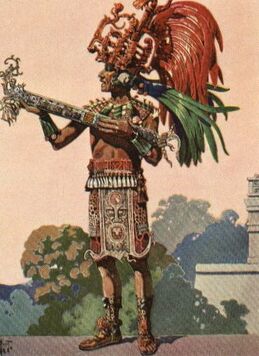 B. To be strong military leaders
400
Which Olmec system influenced later Mesoamerican cultures?
A. Trading
B. Farming
C. Writing
D. Gaming
C. Writing
400
How did Maya farmers adapt to different environments?
A. They moved into caves.
B. They stopped growing crops.
C. They built protective walls.
D. They used terraces and canals.
D. They used terraces and canals.
400
How did the Maya move products between communities?
A. Wheeled vehicles
B. Underground tunnels
C. Waterways and roads
D. Railroads and bridges
C. Waterways and roads
400
Who made laws for Maya society?
A. Councils and city-state rulers
B. Priests and merchants
C. Foreign explorers and traders
D. Warriors and elders
A. Councils and city-state rulers
500
Which farming technique did both the Olmec and Maya use?
A. Slash-and-burn
B. Farming with tractors
C. Growing crops in greenhouses
D. Growing crops without soil
A. Slash-and-burn
500
Which statement best describes Maya society?
A. All social classes were equal.
B. Farmers had as much influence as priests.
C. Traders held the highest government positions.
D. Priests played many important roles.
D. Priests played many important roles.
500
What could Maya writing symbols represent?
A. Only numbers
B. Only pictures of animals
C. Whole words and syllables
D. Letters of the English alphabet
C. Whole words and syllables
500
Who carried out laws and served as judges in smaller Maya communities?
A. City-state rulers
B. Warriors
C. Soldiers
D. Local councils made of nobilty and priests
D. Local councils