Cardiac Era
Respiratory Era
Neuro Era
ED/Disaster Era
Shock/Sepsis/MODS Era
100
Determine the following rhythm
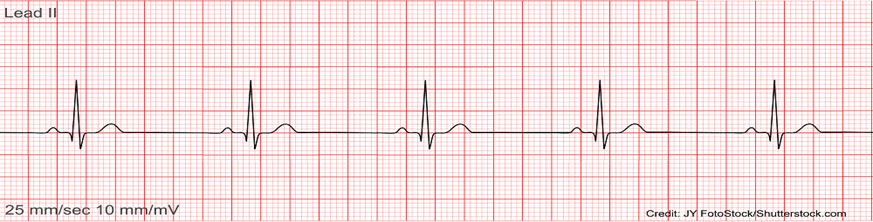
What is Sinus Bradycardia
100
The nurse arrives back from her lunch break and finds her post-op patient that was A/Ox4 now A/Ox1 with an SpO2 of 84% on RA, HR 124, BP 84/66. Rapid Response has been called and patient is in Repiratory Acidosis. The patient was placed on a NRB at 15L with an SpO2 86% and no changes in mentation. What should the nurse anticipate as the next intervention from the provider?
What is intubation for airway protection due to Acute Respiratory Failure.
100
The nurse is reporting to the provider clear drainage coming from the patient's left nostril and bilateral ears in a patient admitted with basilar skull fracture after suffering a 30ft fall onto a concrete bank. The nurse is concerned for CSF leakage, what expected diagnostic test would be ordered to determine this?
What is the halo test
100
What patient should be seen first?
A patient with a fever of 102.2 altered from baseline
A patient requesting to go home
A patient requesting pain management
A patient requesting more therapy and help at home.
What is a patient with a fever of 102.2 altered from baseline
100
The nurse is caring for a patient in septic shock. What of the following orders should be administered first?
Potassium Replacement of 3.4
Tylenol for Fever of 101.2
Lactated Ringer @ 125cc/hr
Piperacillin/tazobactam 3.375 mg IVPB
Vassopressin titrate for MAP >65
What is Piperacillin/tazobactam 3.375 mg IVPB
200
What is a major risk factor of rheumatic fever?
What is Group A streptococcal infections
200
Determine the following ABG:
pH of 7.5 (pH 7.35-7.45), PaO2 of 80 mmHg (80-100 mmHg), PaCO2 of 24 mmHg (35-45 mmHg), and HCO3 of 25 mEq/L (22-26 mEq/L
What is Uncompenstated Respiratory Alkalosis
200
The nurse is educating the student nurse on the Glasgow coma scale (GCS). Why do we utilize this tool on physical exam and components are used?
What is a clinical tool used to objectively assess a patients level of consciousness measuring opening of eyes (e4), verbal response (v5), and motor response (m6).
200
What is the purpose of the secondary survey?
What is a rapid, systematic, head-to-toe physical examination identifying injuries.
200
The nurse is taking her hemodynamics class before becoming prepared to care for ICU patients. To understand the purpose of Vaospressin and Levophed what are the pharmacodynamcs of these medications?
Vasopressors are utilized to increase perfusion to raise the blood pressure, increase systemic vascular resistance by constricting blood vessels, increasing vascular tone and some increase contractility.
300
The patient reports chest pain to nurse. What distinguishing key factors will the nurse determine if the angina is stable vs unstable?
What is stable chest is predictable and diminished wiht rest and treatment vs unstable worsens in frequency, duration, treatment, possibly STEMI.
300
Interpret the following ABG:
ABG:
pH 7.42 (7.35-7.45)
CO2 40 (35-35 mmHg)
HCO3 22 (22-26 mEq/L)
What is Uncompenstated Respirtory Acidosis
300
What is a major risk factor of ischemic stroke?
What is TIA
300
What patient below has the highest ESI?
A patient with intermittent claudication
A patient with a creatinine of 2.5
A patient with a blood pressure of 178/88
A patient with a blood pressure of 134/80 and reported chest pain
What is a patient with a blood pressure of 134/80 and reported chest pain
300
The nurse is caring for a patient with hypovolemic shock. What objective data will the nurse expect to see in the patient?
Decreased preload,Tachycardia, hypotension,d ecreased urine output, cool/clammy/pallor skin, decreased skin turgor
400
Determine the following rhythm:
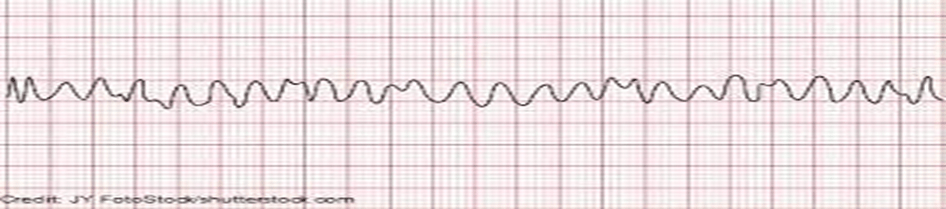
What is Ventricular fibrillation
400
Nausea, vomiting, facial flushing, muscle weakness, decreased deep tendon reflexes, & dizziness are signs and symptoms of what electolyte imbalance?
What is hypermagnesemia
400
What are common signs and symptoms of autonomic dysreflexia?
What is a severe headache, sweating and flushed skin above the injury, pale/cold skin below the injury, and bradycardia.
400
What are major complications of a 40% TBSA burn that the nurse would monitor for in the patient?
What is acute kidney injury, dysrhythmias, fractured long bones, & hyperkalemia
400
What common complications should be monitored during insertion of a Pulmonary Artery Catheter?
What is cardiac arrythmias, specifically Ventricular Tachycardia.
500
The nurse sees the following rhythm on the monitor:
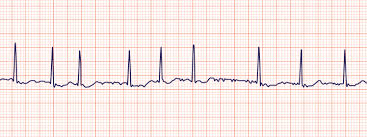
What complications will the nurse monitor for based on this rhythm and what medications will the patient be expected to recieve?
What is Atrial Fibrilation. The nurse will monitor for signs and symptoms of neurological changes (Stroke) and provide education fo BEFAST as well as any cardiac rhythm changes. The patient will be prescribed an anticoagulant for chronic A.Fib. (rhythm control medications in chronic use)
500
The nurse is learning about ventilator management. What complications occur with ventilators?
What is ventilator associated pneumonia (VAP), barotrauma, volutrauma, alveolar hyper/hypoventilation
500
The nurse is caring for a 22yr old male s/p diving accident who suffered a C3 spinal cord injury. The nurse determines the patient is has become hypotensive with a drop in blood pressure from SBP 112 to 88/44, HR is now 43, and skin feels cool to the extremities and warm to the trunk. What concern/complication should the nurse be aware of?
What is neurogenic shock
500
Which patient below would be an ESI of #1?
Patient with abdominal pain and n/v
Patient with a new onset headache
Patient with inability to care for self seeking new place to live
Patient with a tension pneumothroax
What is a patient with a tension pneumothroax
500
The nurse is caring for a patient with cardiogenic shock with the following vital signs:
blood pressure 66/44; pulse 43 and irregular; MAP 50; temperature 95.4 degrees Fahrenheit; oxygen saturation 84% ventilator; capillary refill > 3 seconds, unresponsive off sedation, and mottled skin BLE. What stage of shock is the patient in?
What is the refractory stage of shock