Respiratory
Cardiac
EKG
Procedures
Miscellaneous
100
A patient taking rifampin should be educated about which expected side effect?
Yellow Skin
Blue urine
Orange colored body fluids
Purple stool
orange colored body fluids
100
A client who has a history of myocardial infarction (MI) is prescribed aspirin 325 mg. The nurse recognizes that the aspirin is given due to which of the following actions of the medication?
A. analgesic
B. anti-inflammatory
C. antiplatelet aggregate
D. antipyretic
C. antiplatelet aggregate
100
A nurse is caring for a client with a ventricular pacemaker who is on ECG monitoring. The nurse understands that the pacemaker is functioning properly when which of the following appears on the monitor strip?
A. Pacemaker spikes after each QRS complex
B. Pacemaker spikes before each P wave
C. Pacemaker spikes before each QRS complex
D. Pacemaker spikes with each T wave
C. Pacemaker spikes before each QRS complex
100
The nurse is evaluating a client who had a cardiac catheterization with a left femoral site. Which of the following pulses should the nurse palpate?
A. Brachial pulse in the left arm
B. Left femoral pulse
C. Left pedal pulse
D. Right Femoral pulse
C. Left pedal pulse
100
A home health nurse is making a home visit to a client who takes a daily diuretic for heart failure. Which of the following manifestations should the nurse identify as indicating the client is hypokalemic?
A. Pitting edema
B. Fatigue
C. Dyspnea
D. Oliguria
B. Fatigue
200
A nurse is assessing a client with pulmonary arterial hypertension. Which finding should the nurse expect?
A. Dyspnea and Fatigue
B. Decreased pulmonary Pressure
C. Bradycardia
D. Hypertension in left vent
A. Dyspnea and Fatigue
200
A nurse is caring for a client who has pericarditis and reports feeling a new onset of palpitations and shortness of breath. Which of the following assessments should indicate to the nurse that the client may have developed atrial fibrillation?
A. Different blood pressures in the upper limbs.
B. Different apical and radial pulses.
C. Differences between oral and axillary temperatures.
D. Differences in upper and lower lung sounds.
B. Different apical and radial pulses.
200
A nurse is caring for a client who has a serum potassium level of 5.5 mEq/L. The provider prescribes polystyrene sulfonate. If this medication is effective, the nurse should expect which of the following changes on the client's ECG?
A. Reduction of T-wave amplitude
B. Shortening of P-wave duration
C. Widening of the QRS complex
D. Restoration of QRS complex amplitude
A. Reduction of T-wave amplitude
200
Which action should the nurse perform first for unstable SVT?
Oxygen Therapy
Adenosine
Cardioversion
Vagal Maneuvers
Cardioversion
200
A nurse is providing discharge teaching to a client who has an implantable cardioverter/defibrillator (ICD). Which of the following information should the nurse include?
A. The client cannot travel by air due to security screening.
B. The client should hold his cell phone on the side opposite the ICD.
C. The client should avoid the use of small electric devices.
D. The client can carry his ICD in a small pocket.
B. The client should hold his cell phone on the side opposite the ICD.
300
A nurse is reinforcing discharge teaching about improving gas exchange with a client who has emphysema. What should the nurse include in the teaching?
A. Take rapid, shallow breaths during episodes of shortness of breath.
B Lie flat on your back when resting to allow your lungs to fully expand
C. Limit fluid intake to prevent fluid from accumulating in the lungs
D.Use pursed-lip breathing during periods of dyspnea
D. Use pursed-lip breathing during periods of dyspnea
300
A nurse is caring for a client who has a cardiopulmonary arrest. The nurse anticipates the emergency response team will administer which of the following medications if the client's restored rhythm is symptomatic bradycardia?
A. Epinephrine
B. Magnesium
C. Atropine
D. Sodium bicarbonate
C. Atropine
300
What is this rhythm?
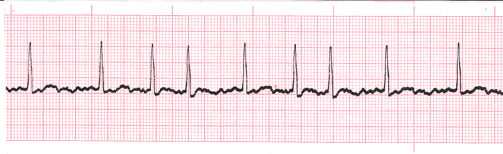
Atrial Fibrilation
300
A nurse is assisting with the care of a client who had a chest tube inserted 12 hours ago. The nurse notes a crackling sensation upon palpation of the skin on the right side of the client's chest. The nurse should notify the charge nurse that the client is demonstrating a clinical manifestation of what?
Crepitus
300
Normal Cardiac Output for a healthy adult at rest is?
5-6 L/min
Cardiac output is the amount of blood that ejected from one ventricle in L/min.
Stroke volume x HR= CO
400
Pericarditis may cause which auscultatory finding?
Murmur
S3 Heart Sound
Friction Rub
Crackles
Friction Rub
400
A nurse in a clinic is caring for a client who has a prescription for digoxin. Which of the following statements indicates the client is experiencing digoxin toxicity?
A. "I am gaining weight."
B. "I am constipated."
C. "My vision seems yellow."
D. "My tongue is red and beefy."
C. "My vision seems yellow."
400
What is this rhythm?
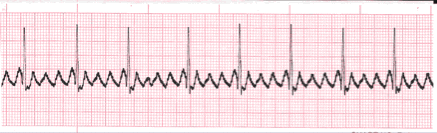
Atrial Flutter
400
A nurse is preparing a patient for a thoracentesis. In which of the following positions should the nurse place the patient:
A. lying flat on affected side
B. Prone with arms raised over head
C. Supine with HOB elevated
D. Sitting while leaning forward over the bedside table
D. Sitting while leaning forward over the bedside table
400
A prolonged QT interval increases risk for which dysrhythmia?
torsades de pointes
Follow up question: What commonly given medication by EMS can cause this if given by ER also?
500
A nurse in a provider's office is assessing a patient who states he was recently exposed to TB. Which of the following findings is a clinical manifestation of pulmonary TB:
A. Pericardial friction rub
B. Weight gain
C. Night Sweats
D. Cyanosis of the fingertips
C. Night Sweats
500
Which condition occurs when fluid accumulates in the pericardial sac and compresses the heart?
Cardiac Tamponade
500
Which ECG component represents ventricular depolarization?
QRS Complex
500
A nurse is planning care for a patient following placement of a chest tube 1 hour ago. Which of the following actions should the nurse include in the plan of care:
A. Clamp the chest tube if there is continuous bubbling in the water seal chamber.
B. Keep the chest tube drainage system at the level of the right atrium.
C. Tape all connections between the chest tube and drainage system.
D. Empty the collection chamber and record the amount of drainage every 8 hr.
C. Tape all connections between the chest tube and drainage system.
The nurse should tape all connections to ensure that the system is airtight and prevent the chest tubing from accidently disconnecting.
500
The median age for nurses in the workforce in 2024 is:
A. 27 years
B. 41 years
C. 34 years
D. 46 years
D. 46 years