Re-architecting the Firm
Becoming an AI Company
Strategy for a New Age
Strategic Collisions
Ethics of AI
AI Safety
Technology Adoption
100
This organizational condition traps data and processes inside separate departments, causing teams to build patchwork fixes and preventing the firm from seeing the full customer journey.
Silos
100
This principle reframes the company around cross-functional teams built to solve customer problems, using rapid experimentation and live feedback loops to continually improve digital products.
Agile, Product-focused Org.
100
This effect emerges when systems get smarter with each interaction — as more data flows in, predictions improve, performance accelerates, and user value keeps rising.
Learning Effects
100
This model scales by adding code, data, and algorithms — enabling learning loops, automation, and global reach without proportional increases in headcount or physical assets.
Digital Operating Model
100
This phenomenon allows digital content to spread instantly and cheaply—where one post, message, or idea can reach millions at almost no additional cost, creating amplification no physical system can match.
Zero Marginal Cost Scaling
100
This issue arises when an AI system follows instructions literally but optimizes for the wrong thing, pursuing outcomes that don’t match what humans actually intended.
Alignment Problem
100
This counterintuitive principle shows that as technology becomes more efficient, total consumption often increases rather than decreases — meaning cheaper AI can actually drive more demand, not less.
Jevons Paradox
200
This phenomenon makes legacy systems and structures resist change, so even simple updates cause cascading problems and prevent a company from modernizing effectively.
Architectural Intertia
200
This principle builds the shared digital backbone — reusable algorithms, data catalogs, common tools, and a unified tech stack — that accelerates innovation across business units.
Capability Foundations
200
This principle explains why products often inherit the shape of the organization that builds them — when teams don’t coordinate, the software they create ends up just as fragmented as the org chart itself.
Conway's Law
200
This moment happens when digital-native entrants invade long-standing industries, out-scaling incumbents through software and learning loops rather than factories, branches, or labor.
Strategic Collisions
200
This effect describes how digital platforms magnify everything—news, opinions, rumors, and misinformation—boosting content outward through algorithms that prioritize engagement over accuracy.
Digital Amplification
200
This emerging class of systems doesn’t just generate text — it takes actions, executes tasks, and interacts with the world, making safety failures exponentially more consequential.
Agentic AI
200
This concept refers to a hypothetical AI system with flexible, human-level cognitive capabilities that can understand, learn, and perform any intellectual task across domains.
AGI
300
Jeff Bezos’ famous mandate pushed every team at Amazon to expose data and functionality through these standardized interfaces, enabling modularity, speed, and seamless connection across services.
APIs
300
This principle emphasizes that an AI transformation only works when the entire enterprise moves together under a unified, long-term vision — not by spinning up isolated digital teams or scattered projects.
One Strategy
300
These powerful digital players sit at the center of massive ecosystems, shaping data flows and controlling access for thousands of businesses built on top of their platforms.
Hub Firms
300
A tiny group of firms earns this label because they sit at the center of massive ecosystems — controlling data flows, shaping markets, and exerting outsized influence across the global economy.
Digital Superpowers
300
This digital-era outcome appears when a few platform firms accumulate outsized power and value, while smaller players become increasingly dependent on ecosystems they don’t control.
Inequality
300
This practice stress-tests an AI model by actively trying to break it — probing for jailbreaks, unsafe behaviors, and failure modes before attackers can exploit them.
Red Teaming
300
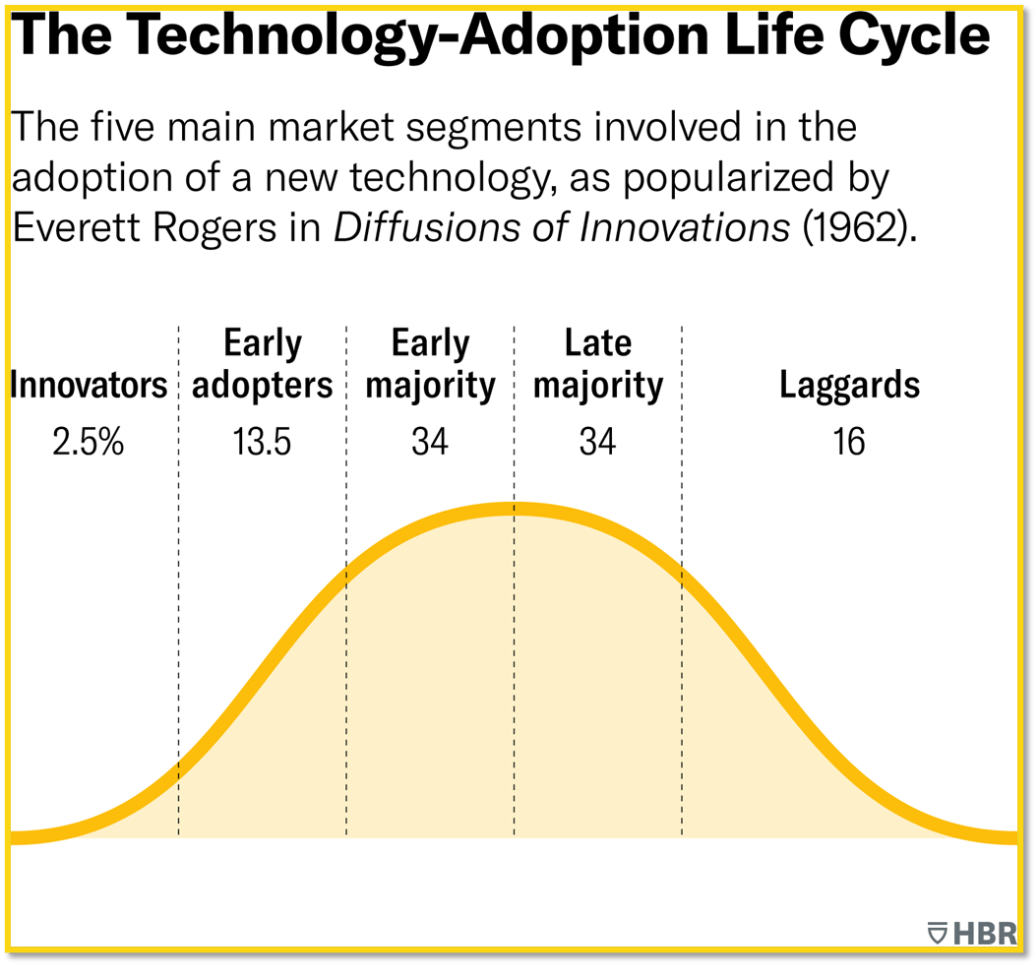
This classic model explains why new technologies spread unevenly across society, starting with innovators and early adopters before reaching the late majority and laggards.
400
This type of cross-functional group includes designers, engineers, and analysts who build quickly, iterate from customer feedback, and avoid bottlenecks caused by waiting on other departments.
Agile Teams
400
This principle establishes enterprise-wide oversight to guide data privacy, security, responsible AI, and ethical use, ensuring that scaling AI doesn’t outpace safeguards.
Clear Multidisciplinary Governance
400
In the AI-era firm, this becomes the core unit of scale — a repeatable decision engine whose performance compounds as more data feeds its prediction-action-feedback loop.
Algorithm
400
This model scales by adding people, assets, and locations — creating more coordination costs with every unit of growth and slowing the firm even as revenue rises.
Traditional Operating Model
400
This form of unfairness appears when an AI system consistently favors some groups over others, not because it was programmed to discriminate, but because it learned skewed patterns from flawed training data.
Algorithmic Bias
400
This technique forces an AI system to bypass its built-in safety rules, coaxing it into producing restricted or harmful content it would normally refuse to generate.
Jailbreaking
400
This term describes the gap between sky-high valuations driven by speculation and the slower reality of building profitable AI business models — echoing the dot-com era’s irrational exuberance.
AI Bubble
500
This firmwide shift moves technology and data to the core of the organization, replacing legacy coordination with digital operating models and enabling continuous learning and experimentation.
Transformation
500
This principle requires that everyone in the organization understand the target data and AI architecture, ensuring consistent, integrated data backed by strong governance for privacy, security, and accessibility.
Architectural Clarity
500
This phenomenon occurs when every new user increases the value of a product or platform for everyone else, creating a powerful growth loop seen in marketplaces, social networks, and ride-sharing apps.
Network Effects
500
This dynamic occurs when more customers generate more data, more data improves algorithms, and better algorithms attract even more customers — creating compounding advantage across every business line.
Scale, scope, and learning Flywheel
500
This occurs when algorithms keep feeding users more of what they already believe, narrowing viewpoints, intensifying opinions, and splintering shared public conversations into self-reinforcing bubbles.
Digital Echo Chamber
500
This attack manipulates an AI system by inserting hidden or misleading instructions that override its original rules, causing it to behave in ways the developer never wanted.
Prompt Injection
500
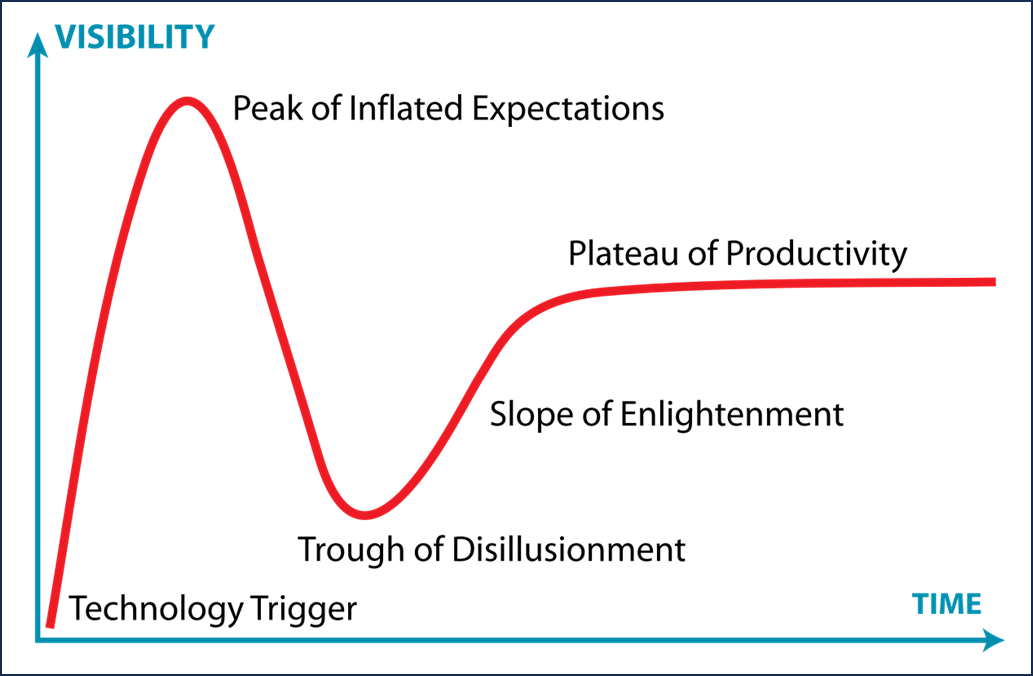
This framework charts how emerging technologies surge into inflated expectations, crash into disillusionment, and eventually climb toward productive, stable adoption.