Peculiar Pharmacology
Disastrous Diseases
Amazing Anatomy
Pathway Plethora
Never-ending Nerves
100
Codeine is metabolized into this substance through CYP2D6
What is morphine?
100
A Chiarai II malformation is associated with this type of neural tube defect that results in meninges and neural tissue herniating out of the vertebral canal.
What is myelomeningocele?
100
This is the only cranial nerve that doesn't travel to the thalamus for sensory relay
What is CN I (Olfactory)?
100
This pathway is responsible for proprioception, vibration, pressure, and discriminative touch in the arms.
What is the Dorsal Column-Medial Lemniscus pathway?
100
This is the term for when a nerve is compressed but there is no damage to the nerve structure itself.
What is neurapraxia?
200
This GABA related structure can be used as a treatment for Alcohol Use Disorder
What is Acamprosate?
200
This disease causes peripheral sensory and motor loss along with foot malformations and has a variety of mutations associated with it, with two of the most prominent involving demyelination or axonal damage.
What is Charcot-Marie-Tooth disease?
200
The striatum of the Basal Ganglia pathway is made up of these two structures.
What are the Caudate nucleus and the Putamen?
200
These types of fibers are associated with slow pain and temperature sensations. This is due to what property (or lack there of) in these fibers.
What are C type fibers, and they are demyelinated.
200
These type of neuron connects from the spinal cord to intrafusal muscle fibers.
What is a gamma motor neuron?
300
This medication type potentiates GABAergic neurons through keeping the duration of the channel open for longer.
What are barbiturates?
300
A patient presents to the ER with an inability to move their lower limbs. When testing their achilles reflex, no movement is noted. As you more closely examine their chart, you note that they were at the hospital 2 weeks previously for acute bloody diarrhea. Based on this information, this is the most likely diagnosis.
What is Guillain Barre Syndrome?
300
Cranial nerves III, IV, VI, and V1 also travel through this opening in the middle cranial fossa.
What is the superior orbital fissure?
300
A pt comes into the hospital due to severe sensory and motor loss. On MRI you find that there is an injury to the left posterior limb of the internal capsule of the thalamus. These are the expected deficits from the corticospinal tract, spinothalamic tract, and dorsal column-medial lemniscus pathways.
Corticospinal: Right sided paralysis
Spinothalamic: Right sided pain and temperature loss
Dorsal Column-Medial Lemniscus: Right sided loss of proprioception (arms), vibration, pressure, and discriminative touch (everything)
300
A decrease in signal strength on EMG indicates this type of neuronal damage.
What is axonal?
400
These two anti-convulsants should be considered first if they have a pregnant patient with a history of seizures
What are lamotrigine and levetiracetam?
400
This tumor common in children is associated with calcification and a "motor oil" like fluid within the tumor itself. It is also derived from the Rathke pouch.
What is Craniopharyngioma?
400
Damage to the region below the pterion could result in this manifestation due to damage to this vessel.
What is/are epidural hemorrhage/hematoma, and middle meningeal artery?
400
These two major cerebellar pathways (2/3 the really talked about in lecture) enter the cerebellum through this structure (what are the pathways and the structure they enter into).
The Vestibulocerebellar and Spinocerebellar pathways, The Inferior Cerebellar Peduncles
400
This enzyme is the main factor in removing dopamine at a synapse. Additionally, this illicit drug is associated with preventing its proper functioning.
What is the Dopamine Transporter and what is cocaine?
500
These two medications are paramount for the treatment of absence seizures. One of them should not be considered for pregnant pts however. These respective medications are...
What are ethosuximide and valproic acid?
500
A pt arrives to the ER with a massive headache, visual changes, and ataxia. Labs are ordered immediately and a CD4 count of 160 cells/mm^3 is returned. On MRI scan, lesions are seen in the forebrain indicating some demyelination of the CNS. The pt most likely has this condition caused by this virus.
What are Progressive Multifocal Leukoencephalopathy and JC virus?
500
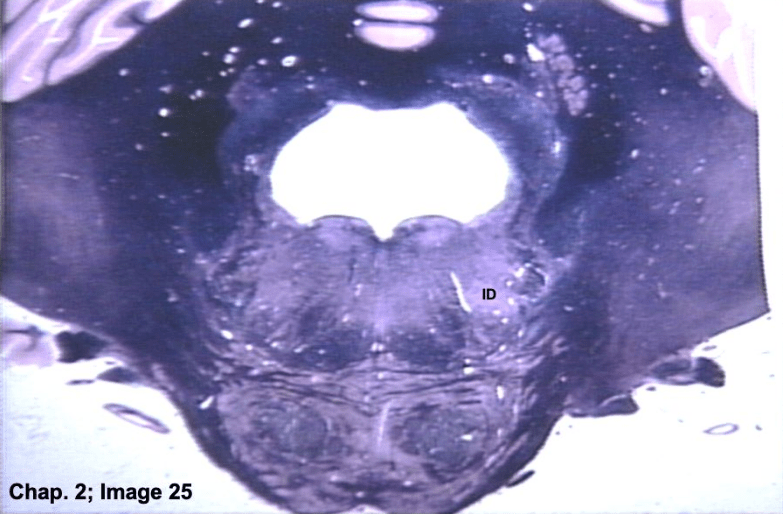
The point of interest in the image above is derived from this pharyngeal construct.
What is the 2nd pharyngeal arch?
500
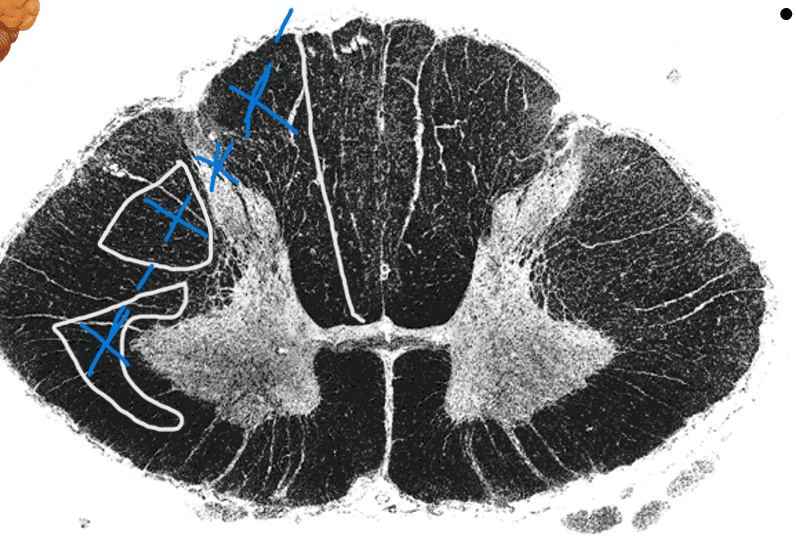
Above is an image of the spinal cord. These are the tracts that would be damaged (be specific with the most dorsal one) (give me an answer for every X). Furthermore, give me side of the body that would be injured.
What is the DCML pathway - fasciculus cuneatus (right)
What is the spinothalamic tract on the ipsilateral (right) side at the level of the cut - substantia gelatinosa
What is the spinocortical tract (right) (more medial is going to be more superior parts of the tract)
What is the spinothalamic tract (left) (more medial is going to be more superior parts of the tract)
500
These cranial nerves are directly involved with sight or eye movement in some way. (There are 5 according to First Aid) - to remove any possibility of it, I'm not including trigeminal (technically it does corneal reflex, but that wasn't exactly what I was honing in on so don't say CN V)
What are CN II, III, IV, VI, VII?