Intro/DNA/Cells
Cellular Respiration
Photosynthesis
Plants
Evolution/Virus & Bacteria
100
What enzyme in DNA replication unzips the DNA strand?
Helicase
100
Where is the most NADH AND FADH created in cellular respiration?
Kreb Cycle
100
What 2 colours absorb in plants the most?
Blue and Red
100
If a bee takes pollen from flower to flower this is called
Cross Pollination
100
What are the ideal conditions for bacteria to grow?
Darkness, moisture, temp, simple nutirents
200
What are the three parts of cell theory?
1. All living things have cells
2. Cells come from pre existing cells
3. Cells are the most basic unit of life
200
What type of Respiration is Alcohol respiration?
Anaerobic no O2
200
What is the ideal CO2 concentration in the atomsphere?
0.03-0.04%
200
What increases surface area for h20 absorption
root hairs
200
what is 4 pieces of evidence for evolution
bone structure, fossil records, geographical distribution of species, early development structures
300
Biosphere, Cell, Organelle, Organ system, Population, Community and Tissue (ORDER THESE FROM MOST COMPLEX TO LEAST)
Biosphere, Community, Population, Organ System, Tissue, Cell, Organelle
300
Explain the process of glycolosis and define?
1) ANAERBOIC no O2
2) Happens outside the mitochandria in cytopalsm
3) Glucose molcule and breaks it down into TWO pryuvates
4) Creates ATP (2) and NADH (2)
300
Lack of iron magnesium nitrogen and light affect the formation of chlorophyll is called...
Chlorosis
300
Name and explain the plant tissue types with an analogy (3)
Dermal - outermost layer like skin
Vascular- conducts water and minerals in plant like blood stream
Ground - cells lie btw dermal and vascular on the groun like an anchor
300
Explain BOTH SIDES to evolution for Darwin VS Lamrack what was their persepctives AND what evidence did they have
Ms. Rai will deciede :
1) EACH side defined
2) Was their evidence supporting their POV
400
What are the 8 characteristics of living things?
1) Reproduce
2) Made up of cells
3) Genetic code
4) Grow and develop
5) Obtain and use material
6)Respond to their environment
7) Maintain a stable internal environment (homeostasis)
8) change overtime (evolve)
400
Write out the Kreb Cycle
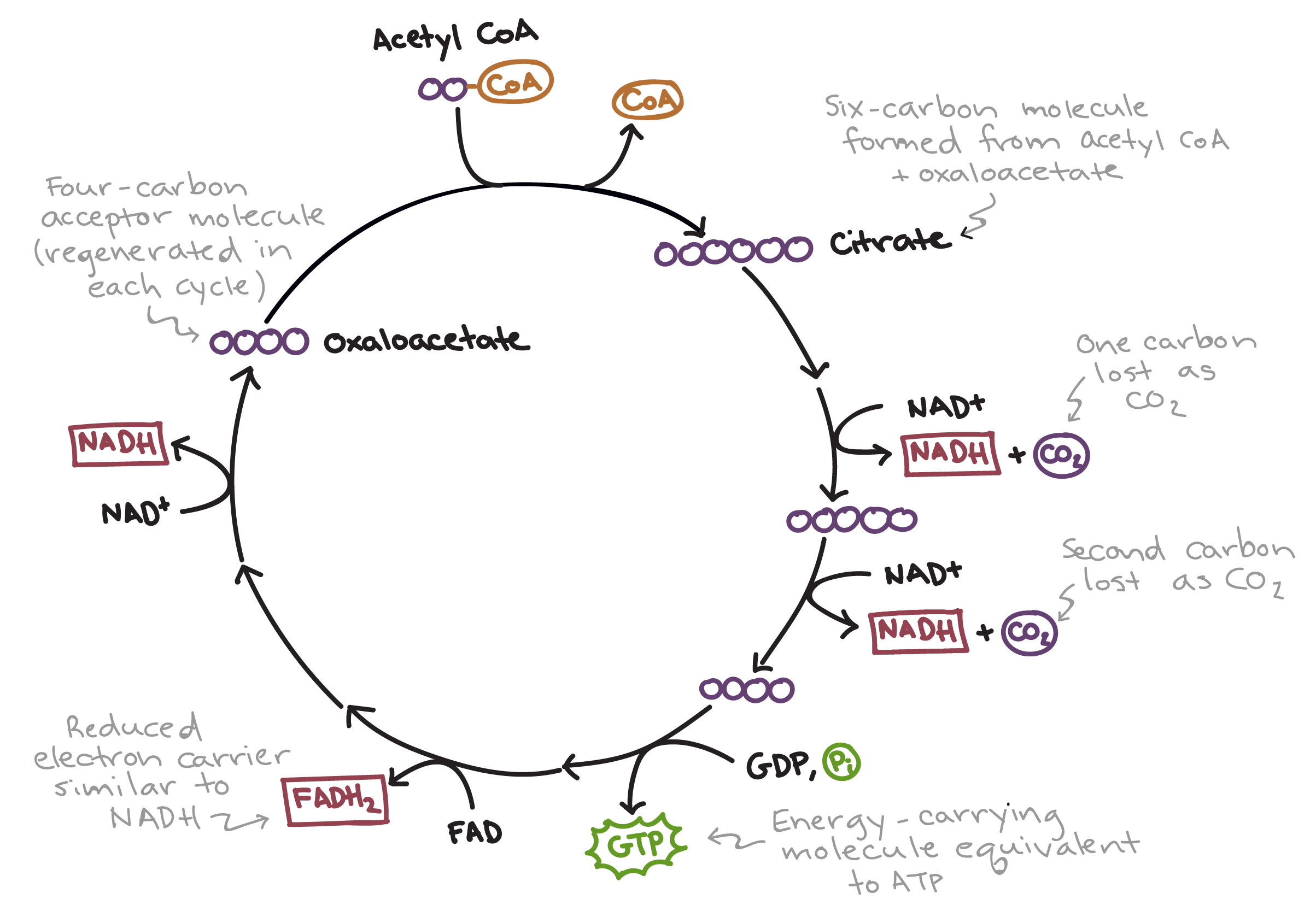
400
Explain why pollution decreases P.S?
1) Produces soot
2) Blocks stomata
3) Blocking stomata reduces oxygen leaving and CO2 coming in
4)Reduces transperncy in leaves
400
1) What does Xylem cells do and describe them (include both strucures)
1) Dead cells SO NO ABSORPTION
2) Water and minerals transport
3) Tracheids - long narraow tubes that are anti H2O
4) Vessel Elements, continous tubes for H20 to move freely
400
Explain Replication
It is when the virus reproduces, -
1)Attaches 2) Enters membrane 3) releases genetic code 4)their code goes to ribosome sites and starts high jacking it 5) Ribosomes create more viruses 6)they go to other cells with the viruses and do the same thing
500
Create a list of 5 things EACH that Prokaryotes and Eukaryotes share and differ
(you can use a ven diagram)
Prokaryotes - Binary fission, smaller, no membrane bound cells, older types of cell, bacteria cells, has a nucleoid (genetic coding just outside in cytoplasm)
Eukrayotes- Mitosis/meiosis, multicellular, DNA in nucleus, membrane bound organelles, larger, plant and animal cells,
Both- Ribosomes, cytoplasm, plasma membrane, DNA, cell wall (possible), unicellular
500
Explain the ETC with a digram of all components and explaining what type of respiration it is and how it works?
H+ pumped through with a clear gradient
Phospholipid Bilayer with protiens
NADH & FADH Carrying electrons
Elctrons being passed down the chain
ATP SYNTHASE making ADP to ATP with phosphate
H+ pumping through ATP synthase and making water
Labelled what side is mitochondria and what side is not
Aerobic Process
500
What are the 7 factors that effect the rate of photosynthesis and indicate if it increases or decreases
1. Wave length (higher = more PS)
2. [CO2] (higher = more PS)
3. Water Supply (higher = more PS)
4. Light intensity (higher = more PS BUT PLATEUS)
5. Temp (has to be in range 25-35 degrees)
6. [choloroplast] (higher = more PS)
7. polluation ((higher = less PS)
500
Differences between Monocots and Dicots
Monocots - One cotyledon, flowers in 3, parallel leaf viens, pollen grains have one pore, Vascular bundles scattered
Dicots- 2 cotyledon, flowers in 4-5, netlike leaf viens, pollen grains have 3 pore, Vascular bundles arranged in a ring
500
5 differences of cells vs viruses
•Viruses lack cytoplasm, cell membrane, & ribosomes like cells have
•Viruses DO NOT grow or carry out metabolic reactions like cells do
•Viruses have only one kind of nucleic acid (either DNA or RNA); cells contain both
•Viruses have few or no enzymes; cells have many
•Viruses can be crystallized and reactivated later; cells cannot
•Viruses DO NOT develop directly from an existing virus; cells come only from other living cells