Random
Gram Stain
Lab Math
Traditional Diagnostics
Molecular
Diagnostics
Diagnostics
100
This online tool compares your unknown DNA sequence with sequences in a database.
What is BLAST?
100
These bacteria appear purple after a correctly performed Gram stain.
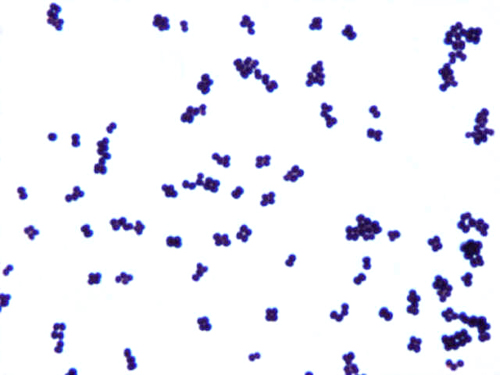
What are Gram-positive bacteria?
100
You mix 1 mL of culture with 9 mL of sterile diluent. This is the resulting dilution.
What is a 1:10, or 10⁻¹, dilution?
100
Adding hydrogen peroxide produces immediate bubbles. This enzyme is present.
What is catalase?
100
This technique amplifies a selected DNA region to produce many copies.
What is PCR?
200
This objective lens requires immersion oil when viewing a Gram-stained slide.
What is the 100× objective?
200
Describe both the Gram reaction and cell shape of the bacteria shown.
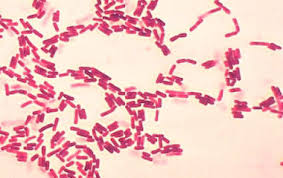
What are Gram-negative rods?
200
You have 5 µL of PCR product. Add this volume of 6X loading dye to obtain a final concentration of 1X.
What is 1 µL?
200
This organism grew and produced pink colonies on MacConkey Agar. What does the pink color indicate?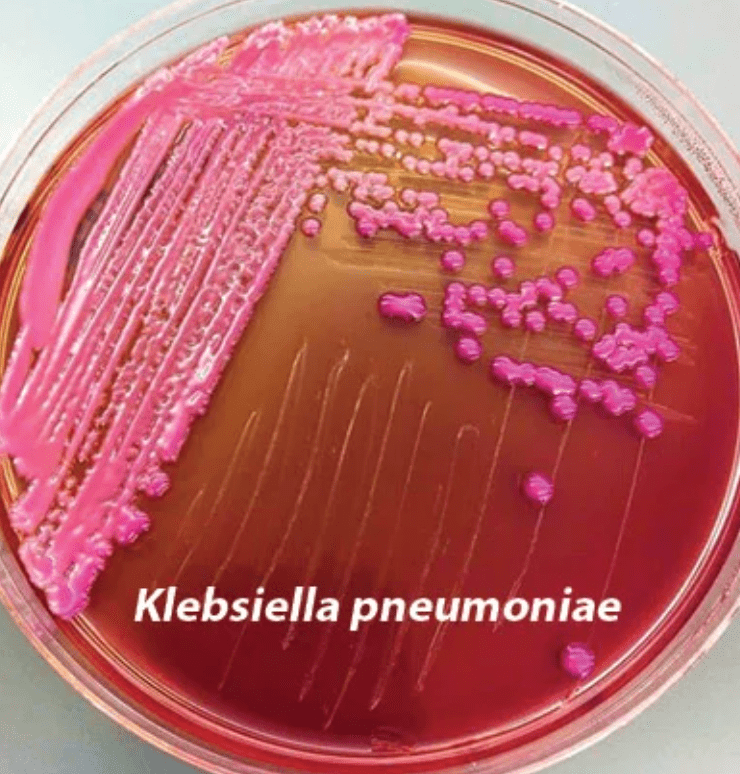
What is lactose fermentation?
200
This lane contains DNA fragments of known sizes and helps estimate the size of your PCR product.
What is the DNA ladder?
300
This bacterial gene is commonly amplified and sequenced to help identify an unknown bacterium.
What is the 16S rRNA gene?
300
This reagent removes the primary stain from Gram-negative cells during Gram staining.
What is the decolorizer/alcohol?
300
Three consecutive 1:10 dilutions produce this overall dilution relative to the original culture.
What is 10⁻³, or 1:1000?
300
This pH indicator turns yellow when carbohydrate fermentation produces acid.
What is phenol red?
300
This is the approximate size, in kb, of the DNA band in lane 4.
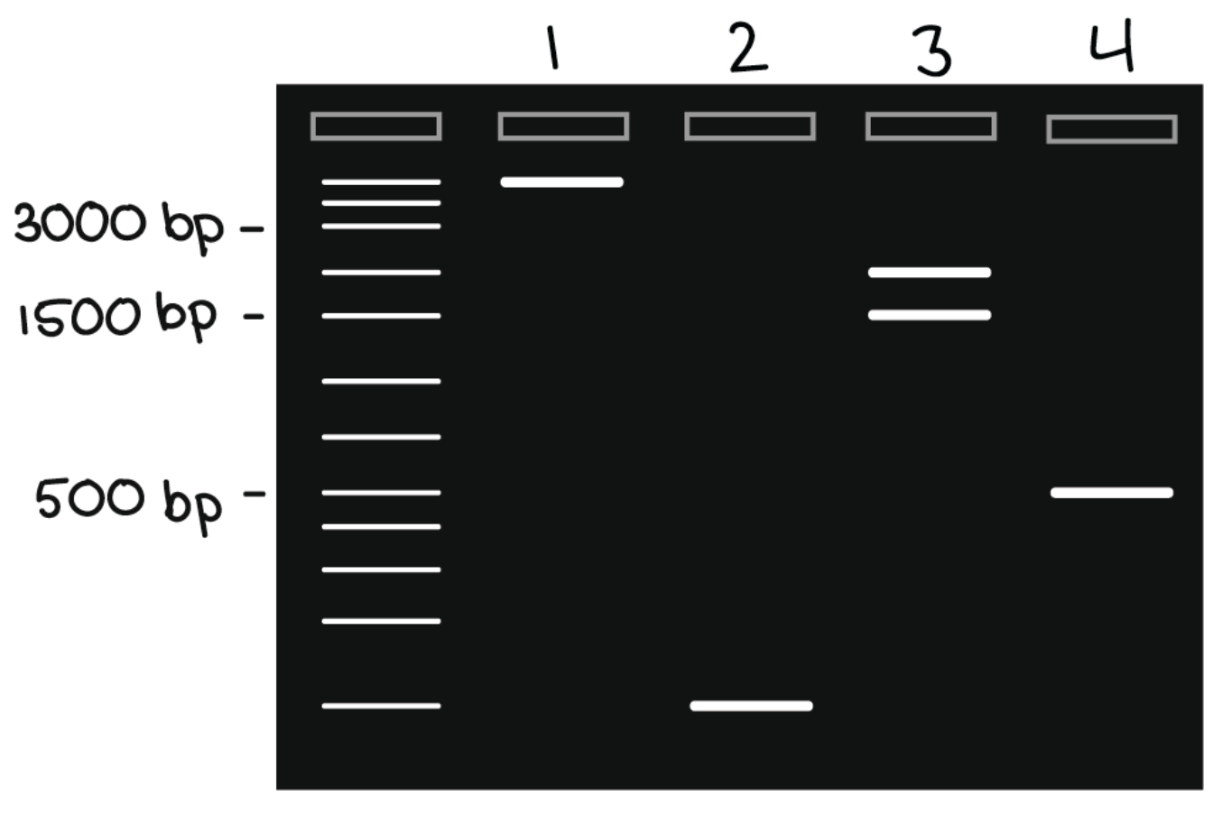
What is 0.5 kb?
400
An isolated colony may contain millions of cells, but it develops from this unit, which can be one cell or a group of attached cells.
What is a colony-forming unit (CFU)?
400
This cell-wall component is much thicker in Gram-positive bacteria and helps them retain the crystal violet–iodine complex.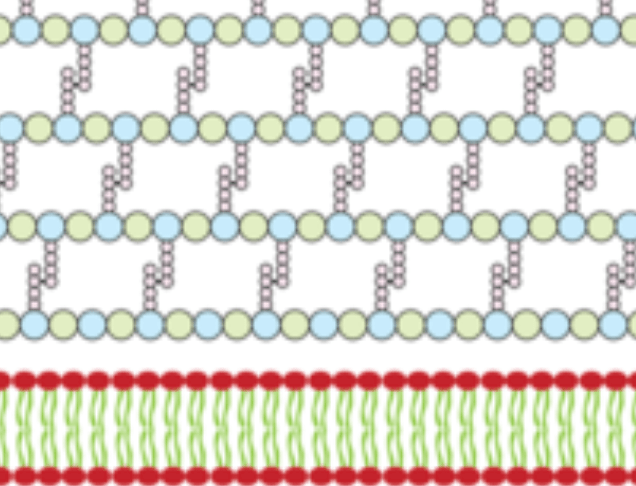
What is peptidoglycan?
400
A plate contains 80 colonies after you plate 0.1 mL of a 10⁻⁵ dilution. This is the original culture’s concentration in CFU/mL.
What is 8 × 10⁷ CFU/mL?
400
This organism grew, and the medium surrounding it turned yellow on Mannitol Salt Agar. What two properties does this demonstrate?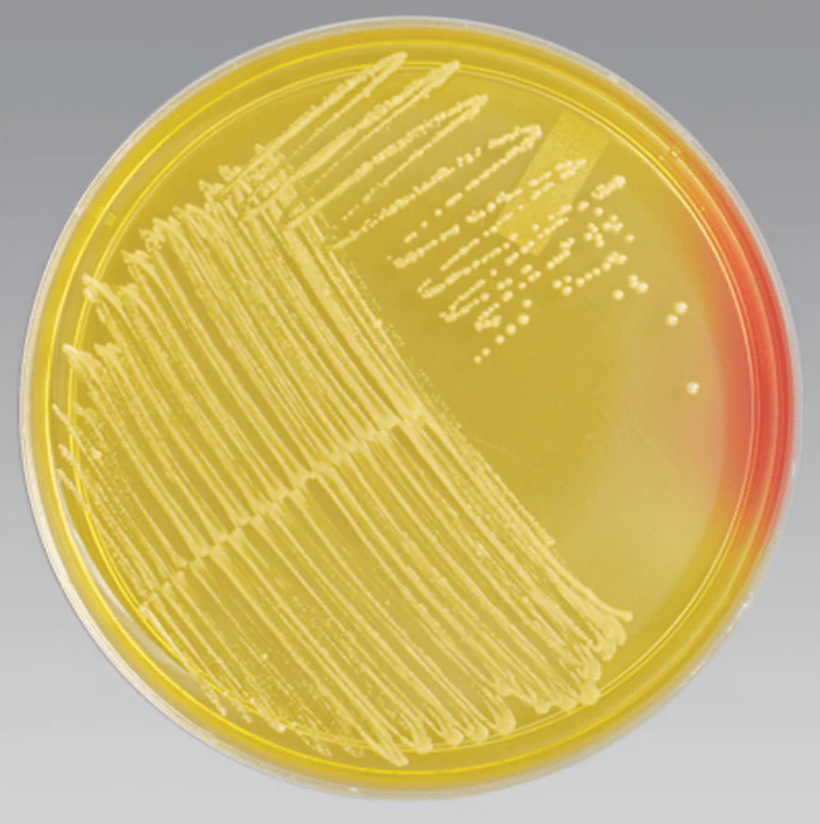
What are salt tolerance and mannitol fermentation?
400
These DNA fragments travel farther through an agarose gel: smaller fragments or larger fragments.
What are smaller fragments?
500
During this growth phase, viable cell numbers remain approximately constant because cell division and cell death occur at similar rates.
What is the stationary phase?
500
Identify the organism shown in this Gram stain. Hint: This bacterium is the most widely recognized bacterial model organism.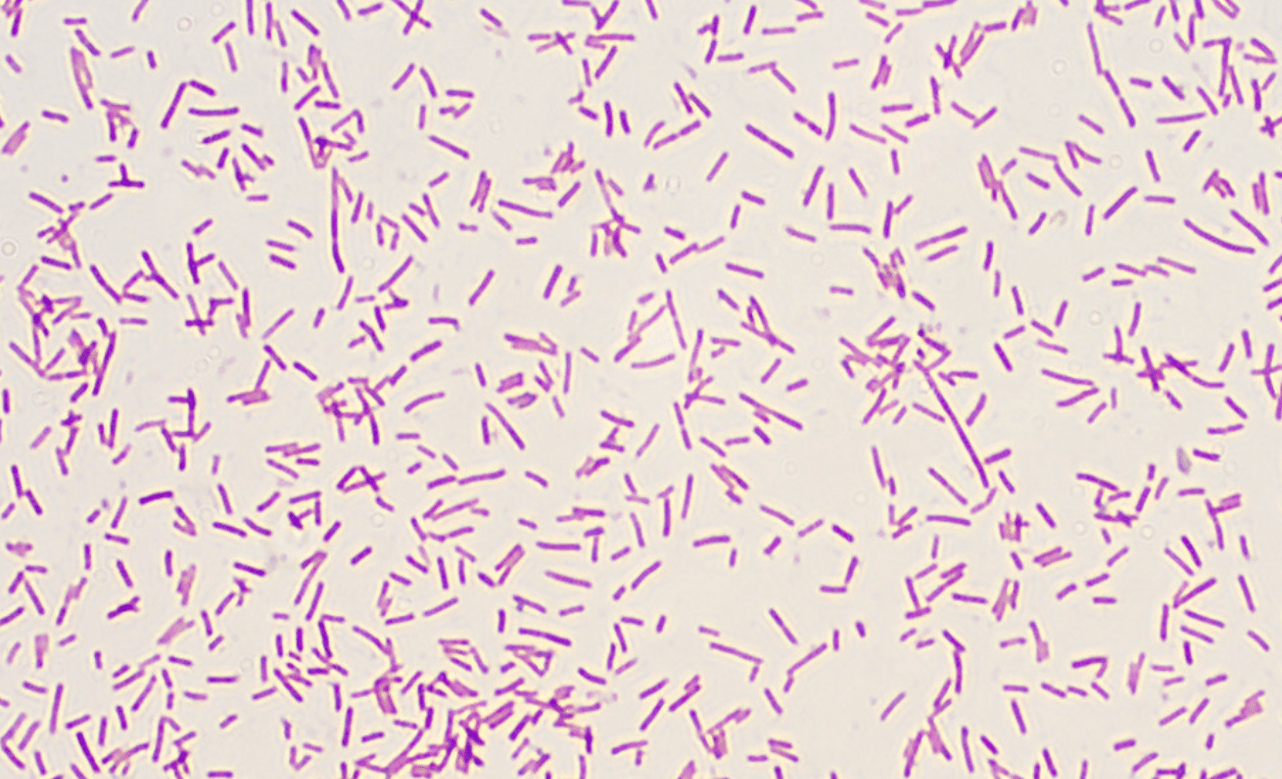
What is Escherichia coli?
500
During exponential growth, a culture’s OD₆₀₀ increases from 0.05 to 0.40 in 90 minutes. This is its generation time.
What is 30 minutes?
500
This positive test indicates that the organism can use this compound as its sole carbon source.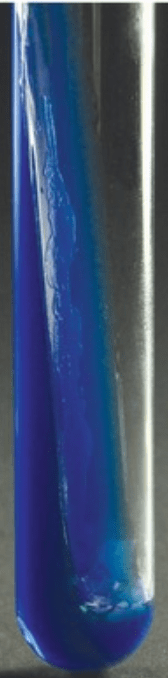
What is citrate?
500
During PCR, this step allows primers to bind to complementary sequences on the template DNA.
What is annealing?