Nutrient Cycling I
Nutrient Cycling II
What's My Niche?
Ecosystems
Potpourri
Biodiversity
100
Over millions of years, carbon from dead organic matter may form into _______.
What are fossil fuels?
100
As a byproduct of photosynthesis, plants release water into the atmosphere from their leaves in a process called ______.
What is transpiration?
100
Which of the following species is most likely to be an invasive species if introduced into a favorable new habitat?
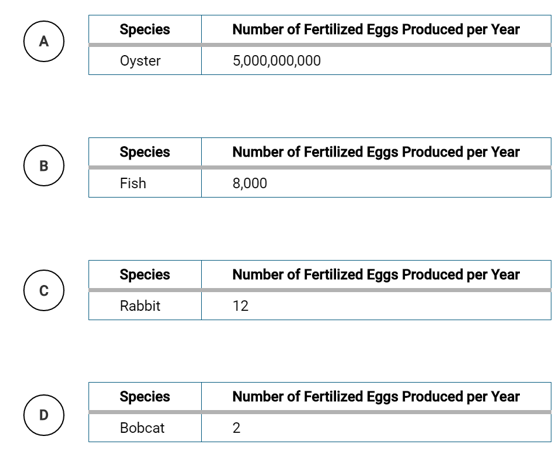
What is A?
100
Raccoons eat a variety of foods and can live in a variety of habitats, including locations near humans.
Are raccoons generalists, or specialists?
What are generalists?
100
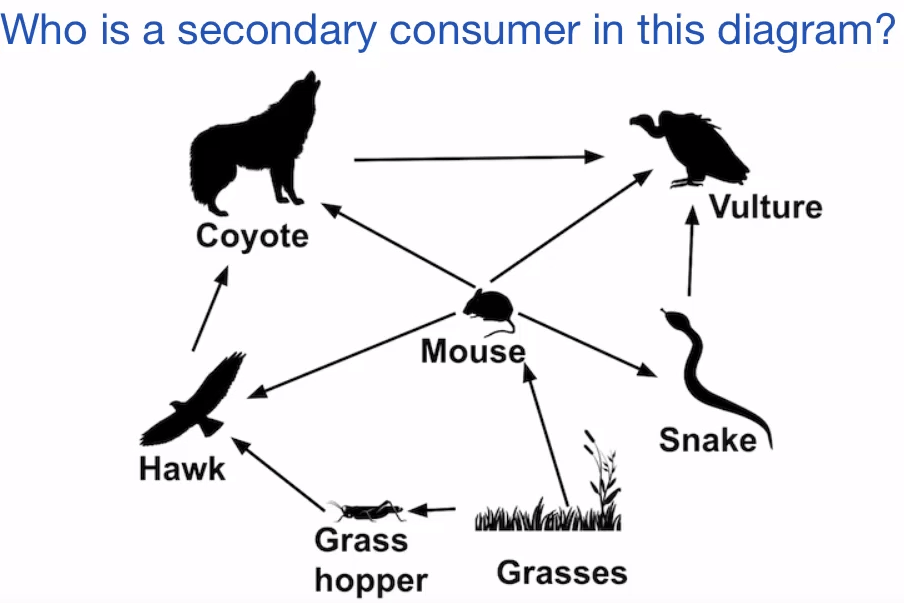
Coyote, Hawk, Snake
100
This type of biodiversity deals with the range of things that organisms do in communities and ecosystems.
What is functional diversity?
200
In the short term, carbon is removed from the atmosphere during this process ________________ and returned to the atmosphere during _____________ _______________ by plants and animals.
What are photosynthesis and cellular respiration?
200
This process must first occur in order to convert atmospheric nitrogen into a usable form for plants and animals. May be done by bacteria in the soil, bacteria on legume roots, or lightning.
What is nitrogen fixing?
200
When species alter their niche to avoid competition.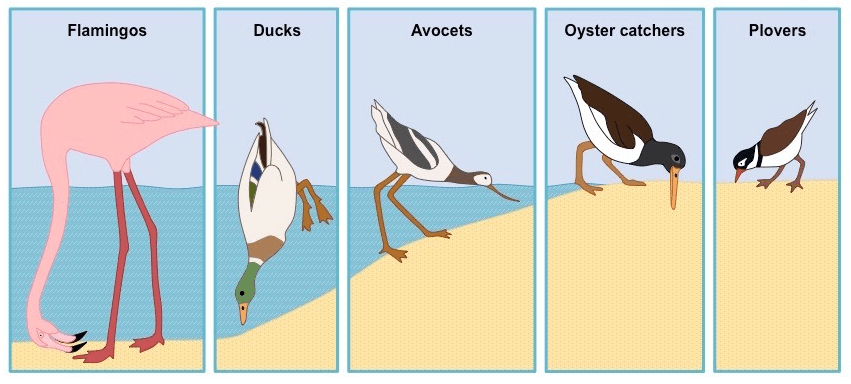
What is resource partitioning?
200
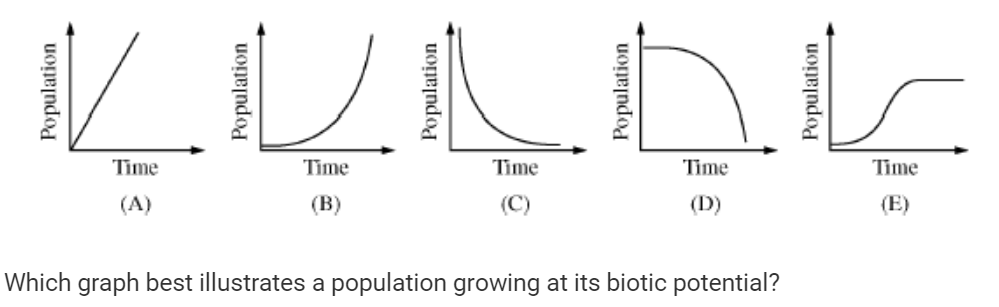
What is B?
200
The net annual primary productivity of a particular wetland ecosystem is found to be 8,000 kcal/m2 per year. If respiration by the aquatic producers is 12,000 kcal/m2 per year, what is the gross annual primary productivity for this ecosystem, in kcal/m2 per year?
What is 20,000 kcal/m2 per year?
200
The number of known species in the world ( +/- 200,000).
What is 1.8 million?
300
The process in which organic substances are burned to provide energy or heat and releases carbon dioxide into the atmosphere
What is combustion?
300
The ultimate source of all phosphorus.
What are rocks?
300
Alligators use their tails to make burrows to stay warm and when they move on, these burrows fill with water which is used by other species. Alligators are also predators, keeping the numbers of other species in check. What type of species are alligators?
What is a keystone species?
300
What are two traits of k-selection species?
What are:
few offspring, live in stable environments, expend significant energy for each offspring, many years of extended youth and parental care, have long life spans/life expectancy, and reproduce more than once in their lifetime.
300
Identify two different scales on which biodiversity can be measured.
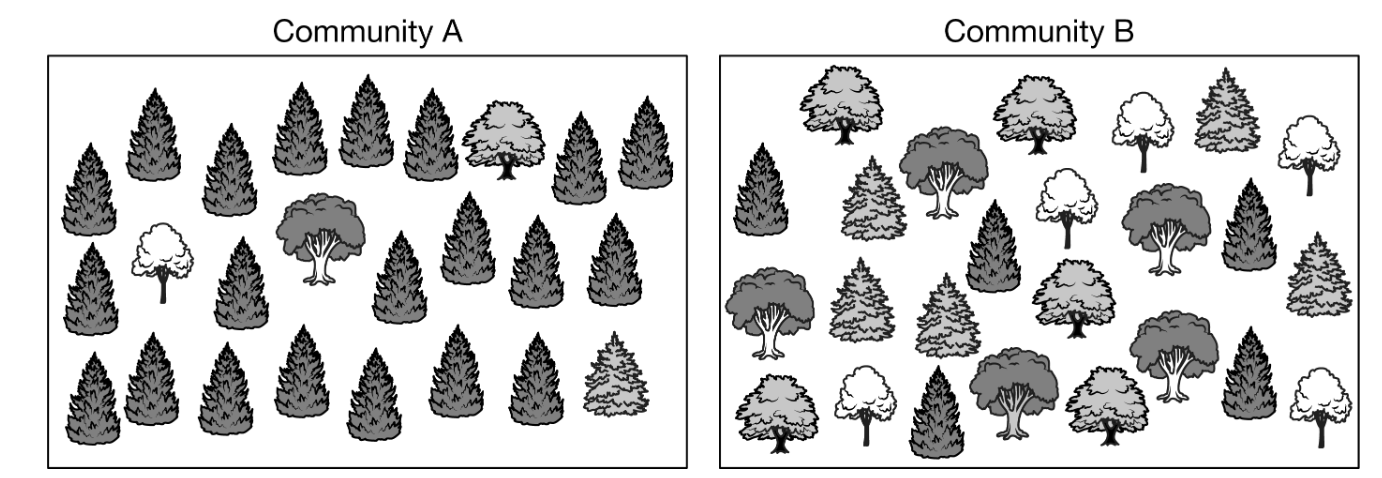
What is richness and evenness?
300
Two of the greatest threats to biodiversity.
Habitat loss or degradation
Invasive species
Population growth
Pollution
Climate change
Overexploitation
400
In the process of ________, bacteria release nitrogen back into the atmosphere.
What is denitrification?
400
When falling to the ground as precipitation, water may enter the ground through ________ or flow along the surface as _______.
What are infiltration and runoff.
400
Hyenas and lions cover the same ground, hunt the same prey, and scavenge the same remains of animals. Consequently they steal food from each other, chase each other, and even kill each other's young. Theirs is an example of this type of species interaction.
What is interspecific competition?
400
Bats developed hunting by echolocation. Moths who had sharper hearing capabilities tended to survive because they could hear the bat chirps used in echolocation. This is an example of __________.
What is coevolution?
400
Based on the theory of island biogeography, which of the following islands of equal size would be more likely to have a higher number of species, Island A which is 5 kilometers from a continent or Island B which is 15 kilometers from a continent?
What is Island A?
400
What combination of island size (big/small) and distance (far/close) from the mainland tends to support greatest species richness?
big and close
500
The chemical formula for photosynthesis (it does not need to be balanced)
CO2 + H2O + sunlight --> C6H12O6 + O2
500
This process, which results from nutrient-rich runoff from the land, causes a dense growth of algae in receiving waters, which can eventually deplete dissolved oxygen levels, and kill aquatic life.
What is eutrophication?
500
The nymphs of mayflies have external gills that make them very vulnerable to silting and pollution, and they are rarely found in degraded bodies of water. The presence of mayflies is evidence of the health of a body of water. What type of species are mayflies?
What is an indicator species?
500
What is GPP - R? (Write it out)
What is Net Primary Productivity?
500
In a given ecosystem, producers convert solar energy into 15,000 kcal of chemical energy stored in organic compounds. Which of the following is the most likely amount of energy available to secondary consumers?
What is 150 kcal?
500
This term describes the continuous, low level of extinction of species
What is background extinction?