People & Leaders
Battles & Events
Resources & Strategy
Homefront & Society
Main Ideas
Maps
100
This Confederate general led the Army of Northern Virginia and ultimately surrendered at Appomattox Courthouse.
Robert E. Lee
100
The event where Confederate forces fired on a Union fort in South Carolina.
Attack on Fort Sumter
100
This side had a much larger population and more factories — an advantage in men and manufactured goods.
The Union
100
Name one way women served during the Civil War that was usually done by men (e.g., performed daily chores on farms and plantations).
Working farms/plantations, making ammunition, serving as clerks, nursing (taking care of sick or wounded soldiers)
100
This was the primary cause of the Civil War.
Slavery
100
Identify this map:
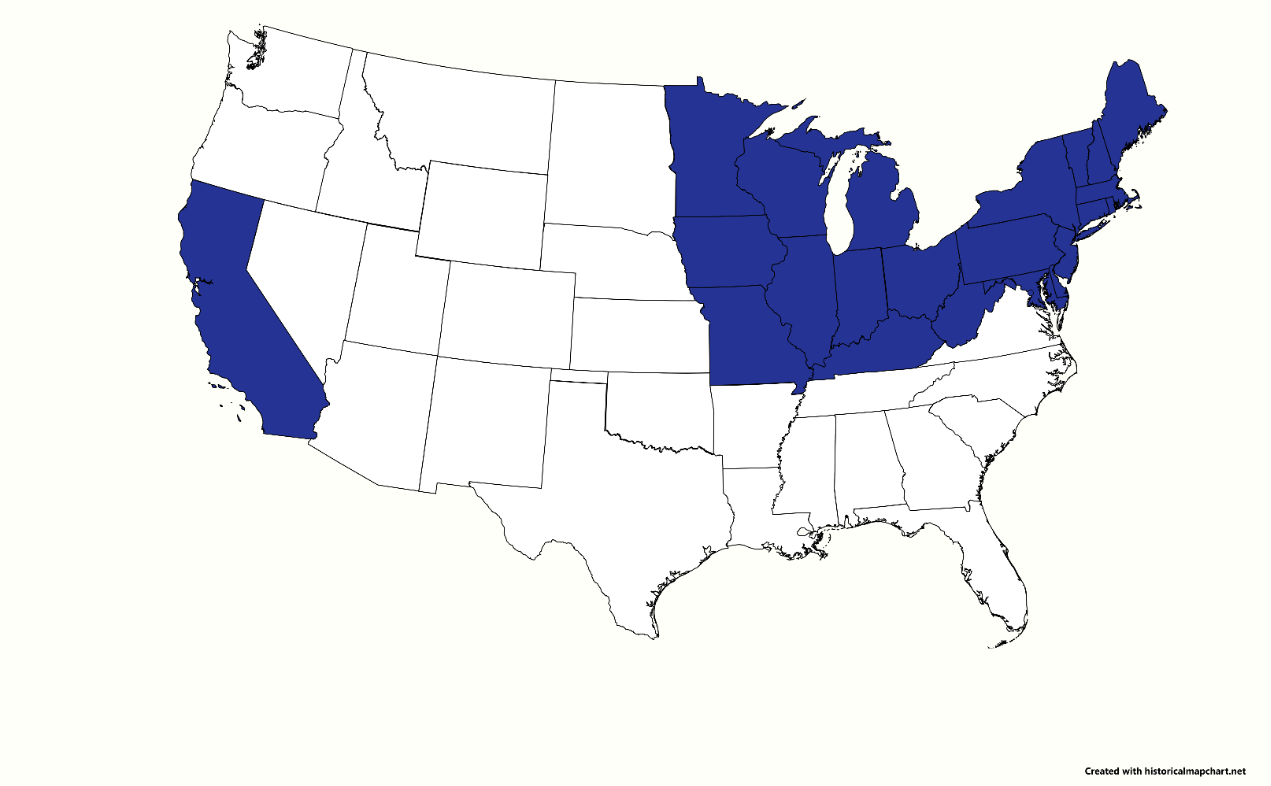
The Union/The United States
200
This Confederate general earned his nickname at First Bull Run (Manassas).
Thomas "Stonewall" Jackson
200
This three-day battle in July 1863 is often called the turning point of the war and resulted in massive casualties.
Battle of Gettysburg
200
The South relied heavily on this cash crop and its expected exports to gain European support.
Cotton exports
200
This 1863 proclamation symbolically changed the purpose of the war and proclaimed freedom for slaves in rebelling states.
Emancipation Proclamation — it symbolized that the war was also about ending slavery.
200
At the beginning of the war, the North fighting for this, not to end slavery.
Keeping the country together (union)
200
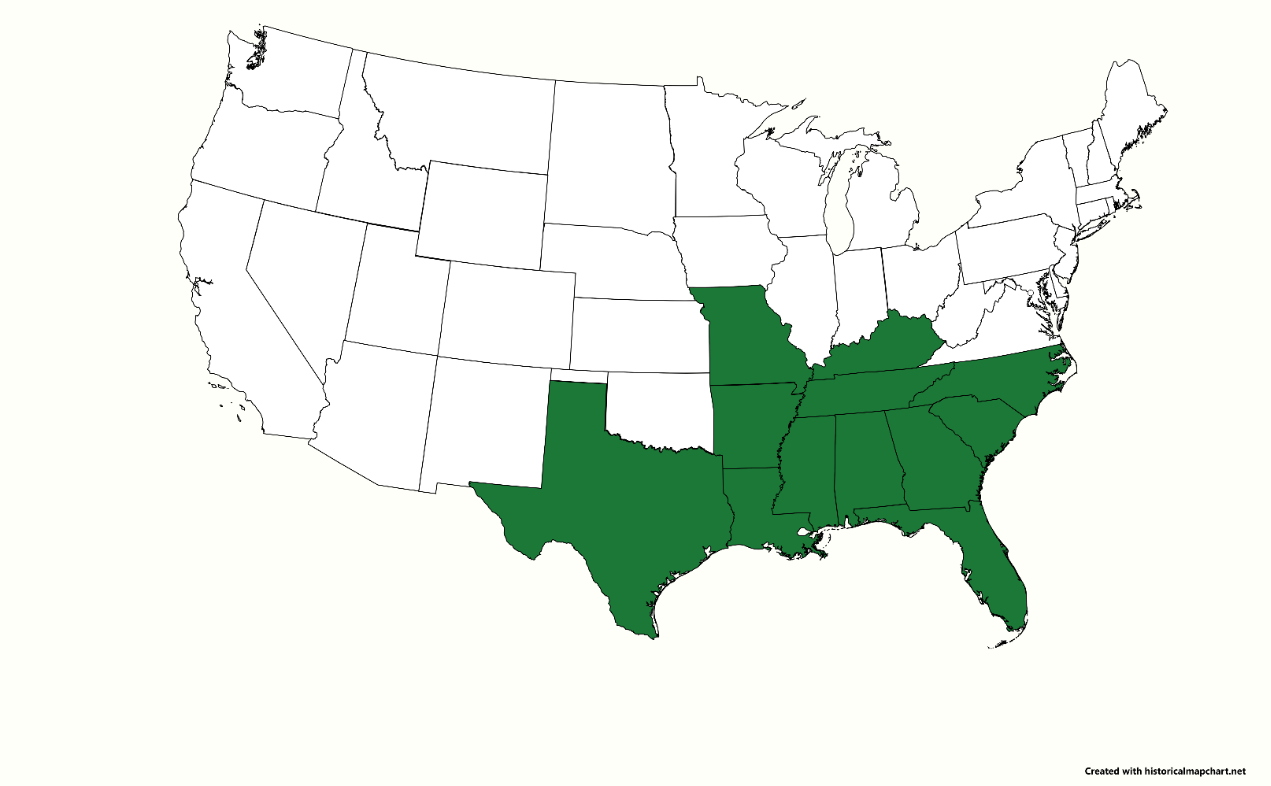
Identify this map:
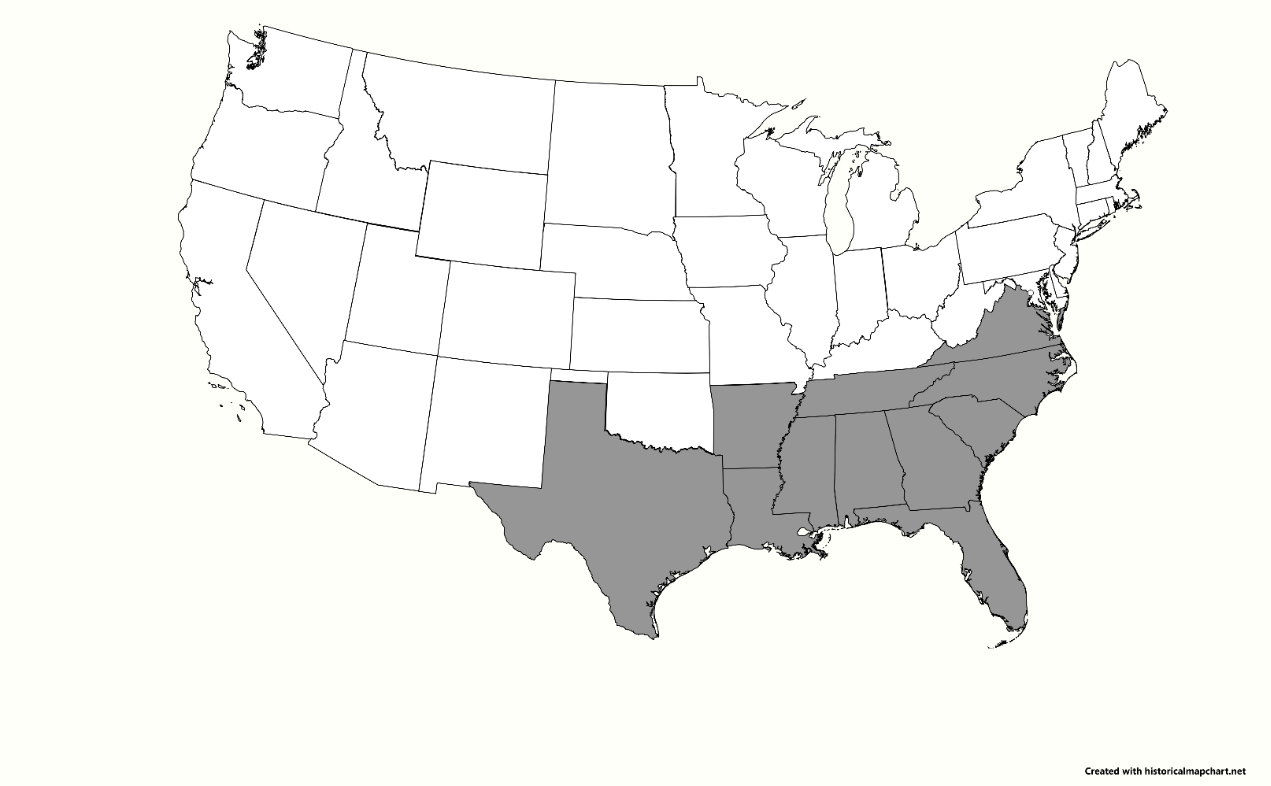
The Confederacy/The Confederate States of America
300
This Union general was criticized for moving slowly and was hesitant to attack early in the war.
George B. McClellan
300
The 1863 surrender here gave the Union control of the Mississippi River and split the Confederacy.
Vicksburg
300
Name the naval innovation — and the two iron-armored ships — that fought each other at Hampton Roads.
USS Monitor and CSS Virginia (Merrimack) — ironclads
300
In July 1863 New York City experienced this violent reaction to the draft and attacks on African Americans.
The New York City Draft Riots
300
This many soldiers died during the war, primarily because of this.
600,000+; disease
300
What were the states highlighted in yellow were called, and why were they different?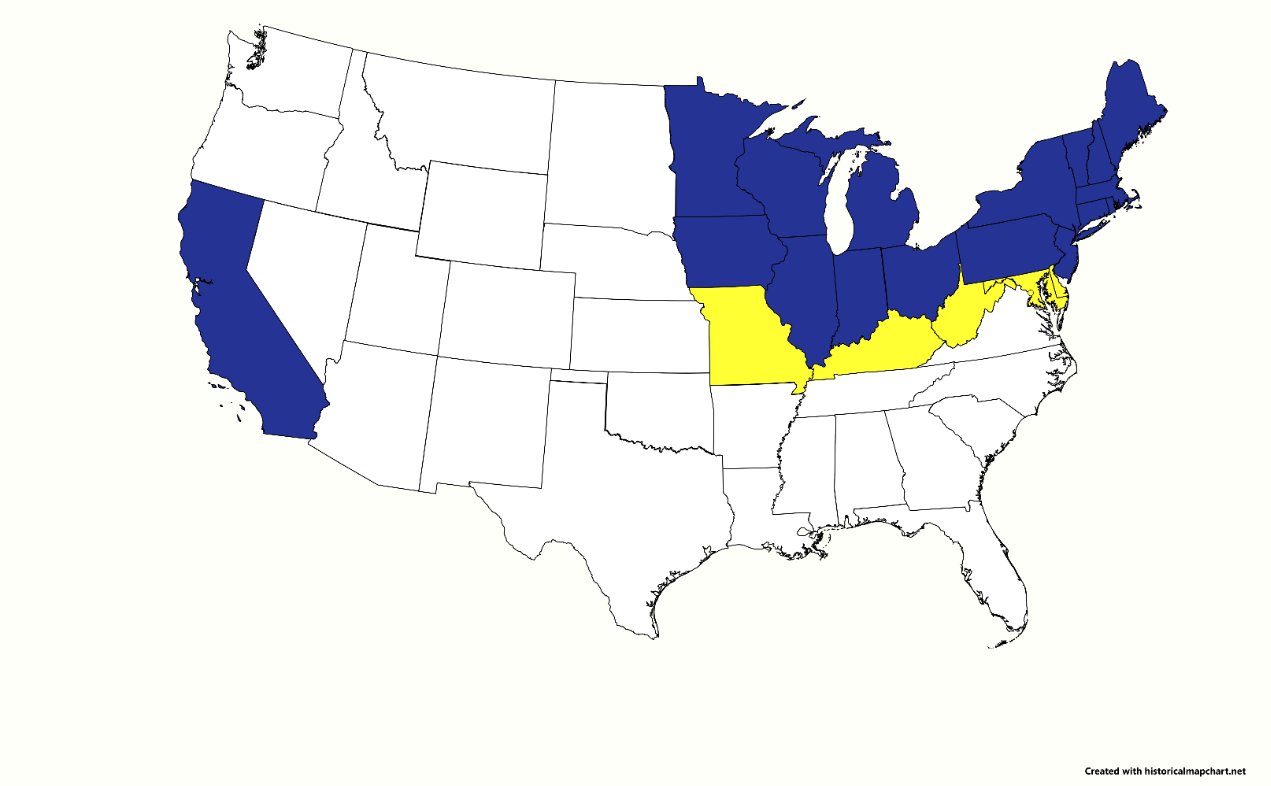
Border states; they had slavery despite staying in the Union.
400
He was the Union admiral who captured New Orleans, giving the Union control of a major port.
David Glasgow Farragut
400
This 1862 battle was the bloodiest single day in American history and led President Lincoln to issue the Emancipation Proclamation.
Battle of Antietam (Sharpsburg)
400
This Union strategy aimed to blockade Southern ports and split the Confederacy along the Mississippi River.
Anaconda Plan (blockade and control of Mississippi)
400
This term describes attacking an enemy's ability to make war, as opposed to only attacking military targets.
Total war
400
This factor, which helped America get its independence during the Revolutionary War, would have almost guaranteed victory for the Confederacy.
Assistance from Europe
400
Identify this map:
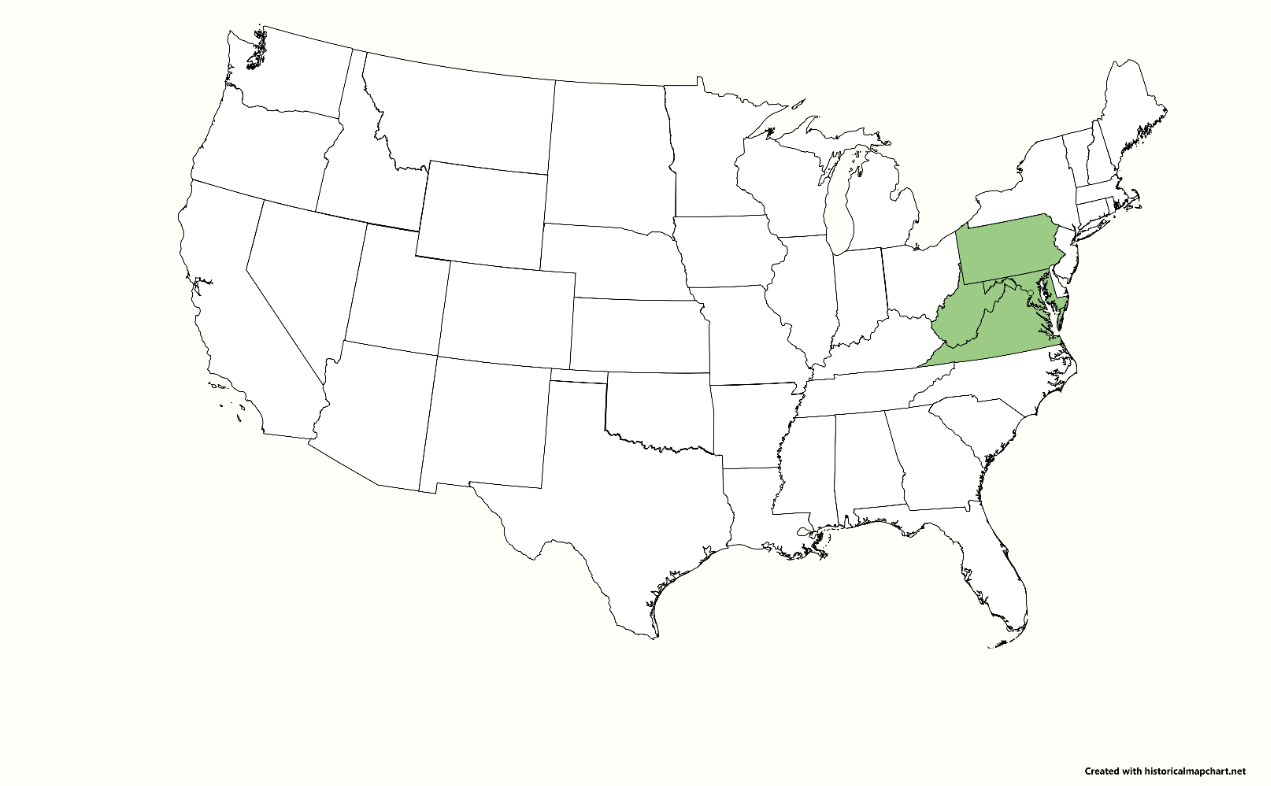
The Eastern Theater
500
This Union general accepted Robert E. Lee's surrender, helping to end the war.
Ulysses S. Grant
500
Number these events chronologically from 1–4.:
States in the Upper South secede; States in the Lower South secede; President Lincoln calls for soldiers; Fort Sumter is attacked
1– States in the Lower South secede; 2– Fort Sumter is attacked/surrenders; 3– President Lincoln calls for soldiers; 4– States in the Upper South secede.
500
Identify three advantages that helped the Confederacy (choose any three).
Cotton exports, war goals, mobilization rate (slavery), better generals (early on)
500
This famous speech said the Union would win the war so that the ideals it was founded upon would continue.
The Gettysburg Address
500
Why was the Eastern Theater of the war so much more important than the Western Theater psychologically?
Washington D.C. (the U.S. Capital) and Richmond (the C.S. Capital) were less than 100 miles from each other.
500
Identify this map:
The Western Theater