Moon Phases
Tides
Eclipses
Seasons
Solar System
100
What phase occurs when the Moon is completely lit as seen from Earth?
Full Moon
100
What is the main cause of Earth's tides?
Moon's Gravity / Gravitational Pull of the Moon
100
What eclipse happens when the Moon blocks the Sun?
Solar Eclipse
100
What causes the seasons on Earth?
The tilt of Earth's Axis (23.5°)
100
What is the name of our closest star?
The Sun
200
Name this phase.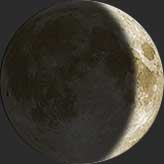
Waxing Crescent
200
How long is a tidal cycle?
12.5 hours
200
What eclipse happens when Earth’s shadow falls on the Moon?
Lunar Eclipse
200
Which season occurs when your hemisphere tilts toward the Sun?
Summer
200
Which is found between the orbits of Mars and Jupiter?
The Asteroid Belt
300
The Moon reflects sunlight as it revolves (orbits) around Earth and how much is seen from Earth explains...
why we have moon phases
300
During which moon phases do neap tides occur?
First and Third Quarter
300
During which Moon Phase(s) does a solar eclipse occur?
New Moon
300
What is the name for the longest day or night of the year?
Solstice
300
What 2 categories do we use to sort planets based on their composition?
Rocky Planets & Gas Giants OR
Terrestrial & Jovian
400
During which phase do we see half of the Moon illuminated and it is growing brighter? Name & Draw it.
Last Quarter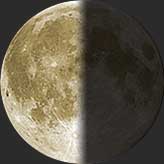
400
Draw a spring tide as seen from space.

400
Which eclipse is safe to view without special eye protection?
Lunar Eclipse
400
What happens during an equinox?
Day and night are equal in length OR the sun's direct rays hit Earth's equator
400
What 2 forces keep planets orbiting?
Gravity & Inertia
500
How long does it take for the Moon to orbit Earth?
29.5 Days
500
Why are neap tides weaker than spring tides?
The Sun and Moon pull at right angles (perpendicular), partially canceling each other’s gravity
500
Why don’t eclipses happen every month?
The Moon’s orbit is tilted (5°) relative to Earth’s orbit
500
Why are seasons opposite in the Northern and Southern Hemispheres?
because Earth’s tilt causes one hemisphere to tilt away from the Sun while the other tilts toward it
500
What is the name of the region beyond Neptune filled with icy objects and dwarf planets like Pluto?
Kuiper Belt