Intro to Chem
Atomic Structure
Matter and Energy
Periodic Table
100
How many significant figures are in 100200?
4
100
What is the net charge if an element contains 11 protons, 15 neutrons, and 9 electrons?
+2
100
Sublimation is the phase change from a ____________ to a ____________
solid to a gas
100
Which element has the same electron configuration as Se-2 ?
Kr
200
Name the following piece of lab equipment
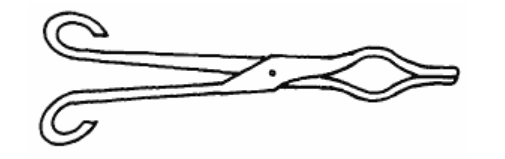
crucible tongs
200
Which element(s) are contained in the bright line spectrum below?

B and C
200
convert 153 K to C
-120 C
200
How strongly an atom is pulling for electrons in a chemical bond is known as its______________
Electronegativity
300
Record the following temperature to the correct number of significant figures
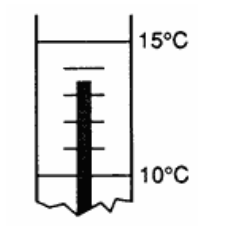
13.5 C
300
Draw the lewis dot diagram for a Br-1 ion
Show me
300
Draw the particle diagram for fluorine in the gas phase

300
Label the following as metal nonmetal or metalloid and indicate their phase:
Hg:
H:
As:
metal (liquid), nonmetal (gas), metalloid (solid)
400
Calculate the volume of 17 grams of Al to the correct number of significant figures
6.3 cm3
400
Explain in terms of atomic structure why I-131 and I-128 are isotopes of one another
I-131 and I-128 have the same number of protons but a different number of neutrons
400
Calculate the final temperature if 20 grams of water at 30 C releases 1450 J of heat? *to the nearest degree
13 C
400
In terms of atomic structure, why do Rb and K have similar chemical properties?
They have the same number of valence electrons
500
In a laboratory activity, the density of a sample of vanadium is determined to be 6.9 g/cm3 at room temperature. What is the percent error for the determined value?
15%
500
Calculate the average atomic mass given the following isotopic percentages to the 100ths:
Ag-107 (51.16%)
Ag-109 (48.14)
107.21 amu
500
The following particle diagram represents the cooling curve of a substance starting as a gas. How long does it take the substance to condense once it has reached the condensing point AND what is the temperature this occurs?
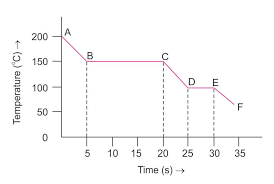
Takes 15 minutes and occurs at 150 C
500
As you move left to right across a period, explain what happens to the atomic radius, ionization energy, and electronegativity
Atomic radius: decreases
Ionization/Electronegativity: increases