Electrical Theory
Multimeter Anatomy
Multimeter Technique
Basic Multimeter Theory
Advanced Multimeter Theory
100
One of the 3 most common properties of electricity that all multimeters measure
Voltage, Current, or Resistance
100
What this multimeter is set up to read?
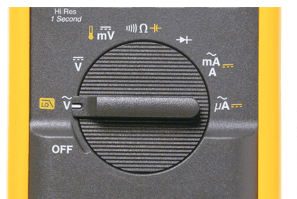
AC Voltage
100
The lead you connect first whenever you measure a circuit
Black lead or Common
100
The value being read on this multimeter
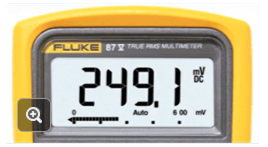
249.1 mVDC or 0.249 VDC
100
A value that can be measured with a multimeter besides voltage or resistance.
Temperature, pressure, current, Hertz, Capacitance, Diodes, etc.
200
The type of multimeter needed to read this AC wave correctly.
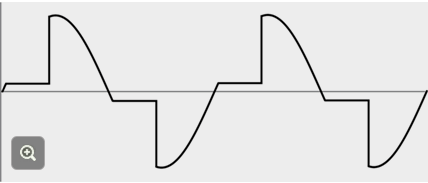
True-RMS meter
200
What this multimeter is set up to read.
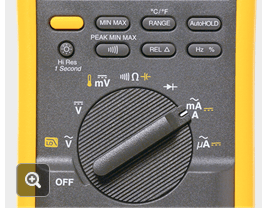
AC or DC current
200
The lead that's connected incorrectly for measuring current.
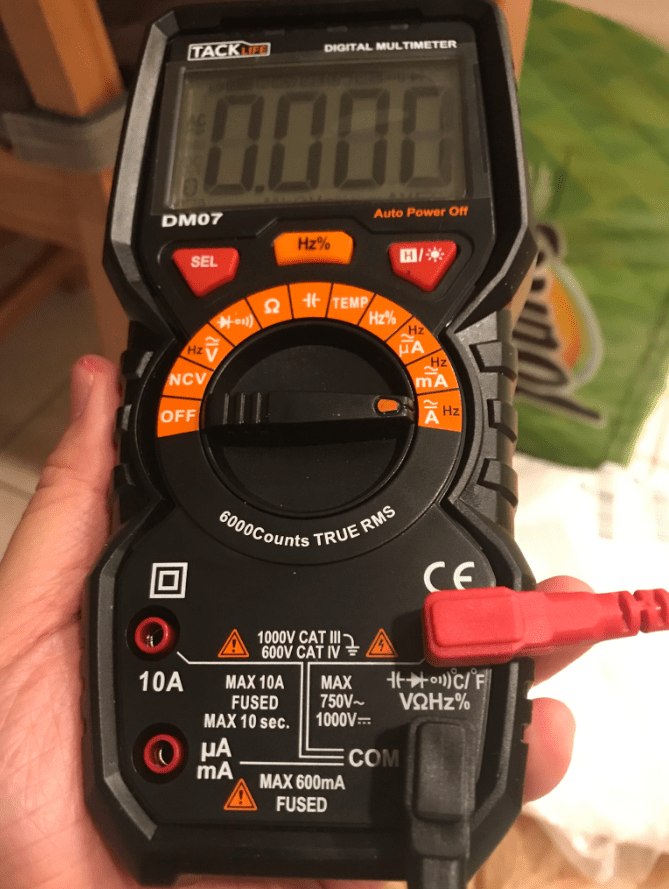
The read lead (should be in "A" or "mA")
200
The value being read on this multimeter
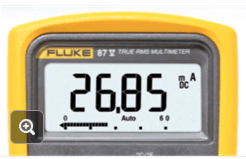
26.85 mA or 0.02685 A
200
The voltage you will read if your negative test lead has a broken wire internally
0 V
300
The resistance that you will measure on a blown fuse.
"OL" or "Overload"
300
The port used to measure current (color & location).
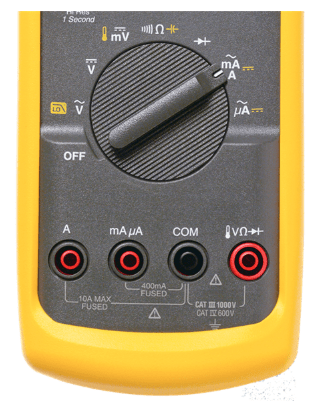
Either of the left two red ports.
300
The preferred way of measuring current on a circuit.
Clamp on connector.

300
This voltage measurement in volts
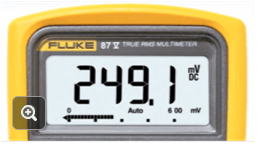
0.2491 VDC
300
A lead that can have different attachments installed for different types of wiring connections
A modular lead
(not adjustable = monolithic)
400
The resistance that you will measure on a closed switch.
0Ω or no resistance
400
The way more complicated accessories measure values such as temperature, pressure, etc.
They simulate a resistance reading that translates to the value being measured.
400
The steps for taking any reading with a multimeter (in order):
A. Read the measurement
B. Set up the multimeter for the desired function
C. Disconnect the red then the black test leads
D. Select the proper PPE, if needed
E. Touch the black test lead to the circuit
F. Touch the read test lead to the circuit
1. Select the Proper PPE (D)
2. Set up the multimeter for the desired function (B)
3. Touch the black test lead to the circuit (E)
4. Touch the read test lead to the circuit (F)
5. Read the measurement (A)
6. Disconnect the red then the black test leads (C)
400
This resistance measurement in kiloohms
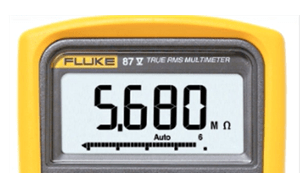
5,680 kΩ
(also 5,680,000 Ω)
400
If there's no safe/easy place to put your multimeter while taking measurements, this is a part of the multimeter you can use to hold it safely.
- Built in magnetic hanging attachment.
- Tilt Bale (meter stand)
- Test lead holder on back of meter
- Alligator clips on wires
500
The difference between DC & AC current.
AC changes direction, DC has a constant current.
500
The number of digits on this multimeter (according to common practice)
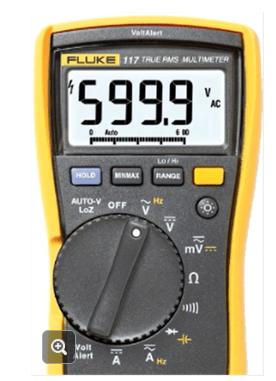
3-3/4 (the decimal place is considered 3/4ths of a digit).
500
The setting you should use for testing an unknown current
"A" or "Amps"
(NOT milliamps or microamps of any value - smaller fuse)
500
The maximum voltage at which you can safely use this lead.
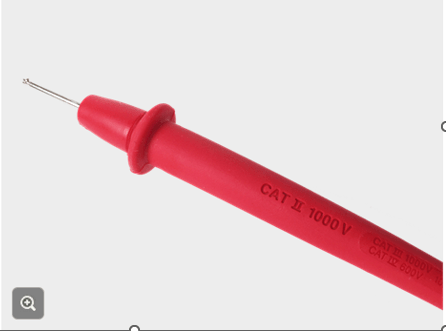
1000V
500
The actual current value when using a 10mA/A AC current clamp.
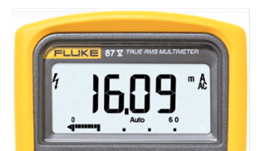
1.609 A
(Divide value by 10)