Multiplication
Division
Name that Product!
Quirky Quotients!
The Language of Math
100
This strategy for multiplying is the to use a rectangle to break large, tricky numbers into smaller, friendlier chunks that are easy to multiply in your head .
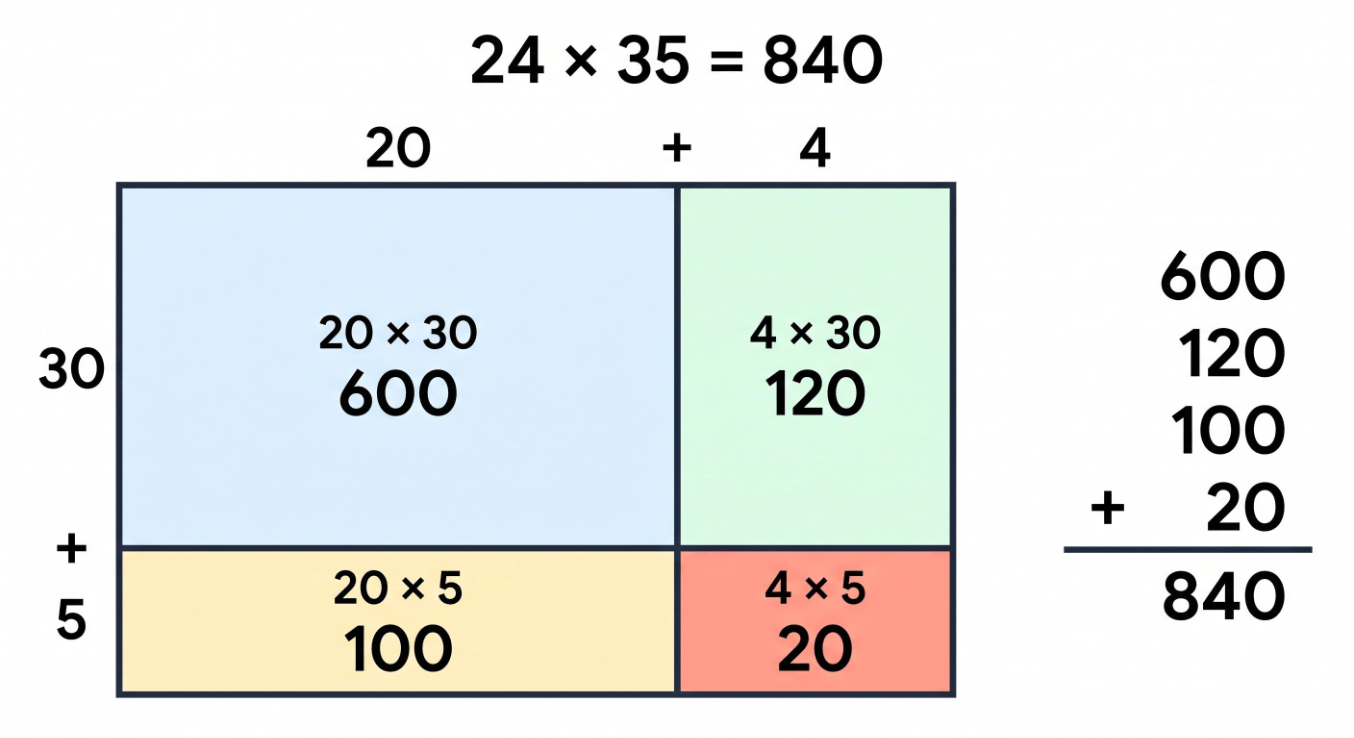
The Area Model
100
When you change the numbers in your problem to do mental math for an estimate. These numbers are called ___________ numbers.
Compatible
100
This is the product of 5x7
35
100
This is the quotient of 10÷5.
2
100
This is the math word for a number sentence.
An Equation
200
This strategy for multiplying is the traditional way to multiply.
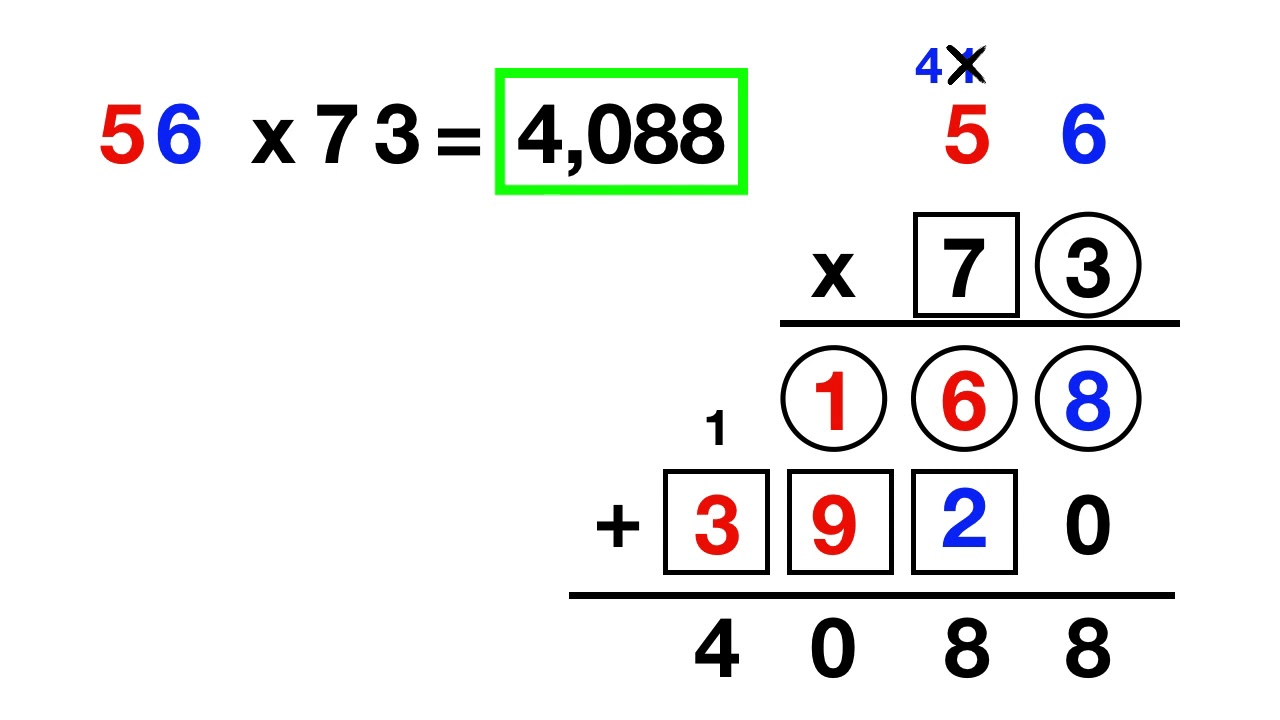
Standard Algorithm
200
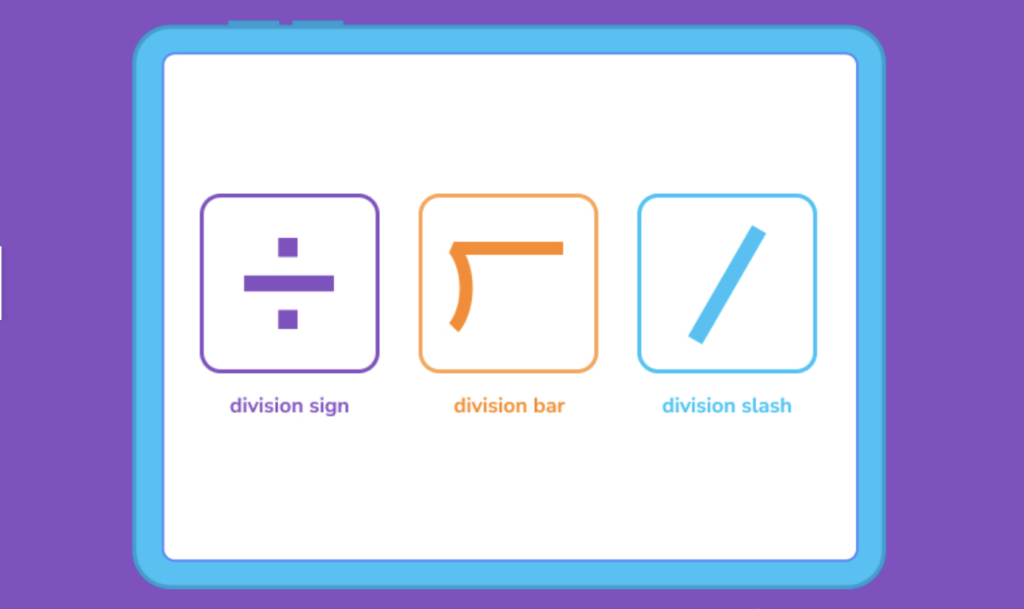
True or False? There is more than one sign that we can use for division
True
200
This is the product of 6x4?
24
200
This is the quotient of 30÷6.
5
200
This is the answer to a subtraction problem.
The Difference
300
This strategy for multiplication does the same thing over and over. It's called repeated ____________.
Addition
300
This is the opposite operation to division.
Multiplication
300
This is the product of 9x5?
45
300
This is the quotient of 56÷8.
7
300
This math word tells us to "round" or use "compatible numbers" to get an answer that's close to the answer, but not the exact answer.
Estimate
400
This is the name for the answer to a multiplication equation.
The Product
400
This is the answer to a division problem.
A Quotient
400
This is the product of 7x8.
56
400
This i the quotient of 88÷8.
11
400
In a story problem using the words, "twice as many" or "groups of" would signal the reader to...
Multiply
500
This property says that multiplication can be "flip flopped". For example 8x3 is the same as 3x8.
The Commutative Property
500
This is the special math name for the numbers that a person divides by.
The Divisor
500
If I have 12 packages of markers and each package has 7 markers with 1 blue in each pack, how many markers so I have altogether?
84
500
The bakery made 144 cupcakes. How many dozen cupcakes are there?
12
500
Addition, Subtraction, Multiplication, and Division are the four primary mathematical ________________.
Operations