Anatomy
Physiology
Surgical
Approaches
Approaches
Instrumentation
History
Image Challenge
Bonus (100)
100
The pterion, a key surgical landmark, is formed by the junction of which four cranial bones?
A) Frontal, parietal, temporal, and sphenoid
B) Frontal, parietal, occipital, and temporal
C) Parietal, temporal, occipital, and sphenoid
D) Frontal, ethmoid, sphenoid, and temporal
A) Frontal, parietal, temporal, and sphenoid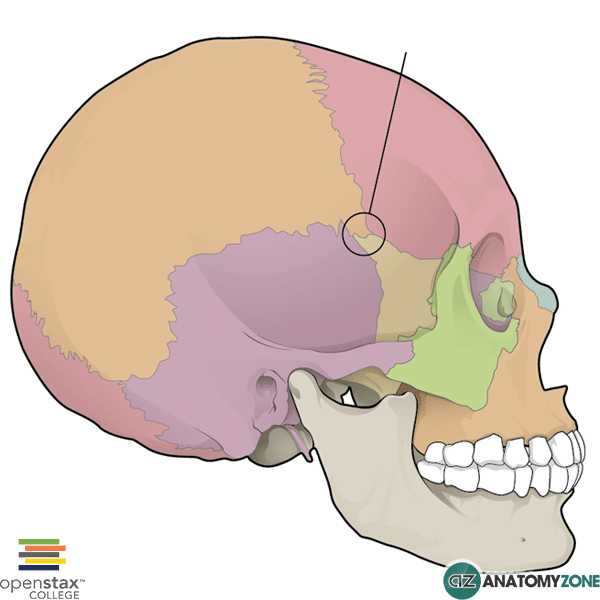
100
Quelle est la plage normale de pression intracrânienne (PIC) chez un adulte en décubitus dorsal ?
A) 0–5 mmHg
B) 5–15 mmHg
C) 20–30 mmHg
D) 35–45 mmHg
B) 5–15 mmHg
100
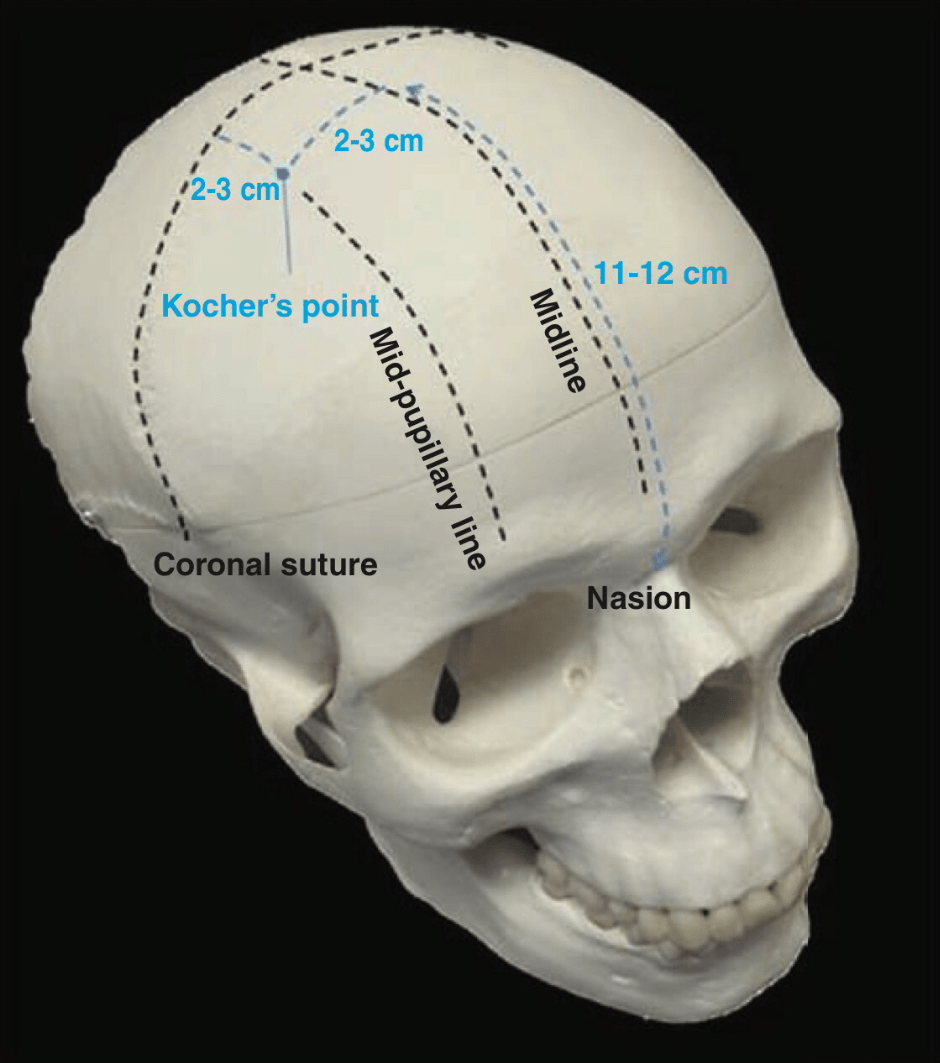
For an external ventricular drain placed at Kocher's point, the entry site is typically located how far from the midline and coronal suture?
A) 1 cm lateral to midline, at the coronal suture
B) 2–3 cm lateral to midline, ~11 cm posterior to nasion (roughly 1 cm anterior to coronal suture)
C) 2 cm lateral to midline, 2 cm behind the coronal suture
D) Directly at the midline, at the lambdoid suture
B) 2–3 cm lateral to midline, ~11 cm posterior to nasion (roughly 1 cm anterior to coronal suture)
100
Une canule d'aspiration de type Frazier, munie d'un orifice de ventilation actionné par le pouce, aspire les tissus délicats vers son ouverture. La source d'aspiration restant inchangée, quel est l'effet de la découverte de cet orifice ?
A) Cela augmente l'aspiration à l'extrémité opératoire
B) Cela réduit l'aspiration à l'extrémité opératoire
C) Il transforme l'aspiration en irrigation sous pression
D) Cela ne modifie pas l'aspiration de l'embout et ne refroidit que la poignée.
B) Cela réduit l'aspiration à l'extrémité opératoire
100
In which year was the Continental Association of African Neurosurgical Societies established?
A) 2002
B) 2006
C) 2016
D) 2012
D) 2012
100
A patient becomes drowsy after transsphenoidal surgery. Which postoperative complication best explains the dominant finding on this CT?
Axial CT without contrast.
A) Diffuse cerebral edema
B) Bifrontal subdural hygromas
C) Tension pneumocephalus
D) Acute intraventricular hemorrhage
C) Tension pneumocephalus
100
Une veine superficielle dominante traverse le lobe temporal latéral en direction du sinus transverse. Sa lésion lors d'une intervention sous-temporale provoque un infarctus veineux temporal. Quelle est la veine la plus probablement impliquée ?
A) Veine septale antérieure
B) Veine cérébrale interne
C) Veine du Labbé
D) Veine de Trolard
C) Veine du Labbé 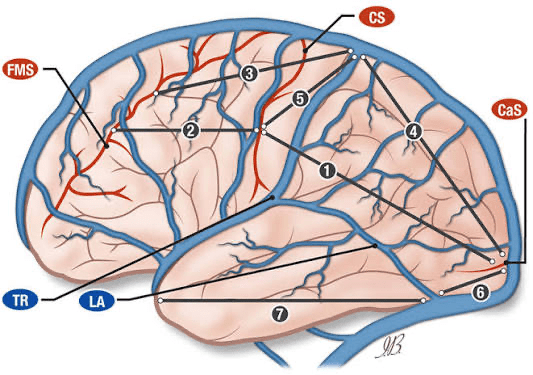
100
In an adult, the spinal cord (conus medullaris) typically terminates at which vertebral level?
A) T12
B) L1–L2
C) L3–L4
D) S1–S2
B) L1–L2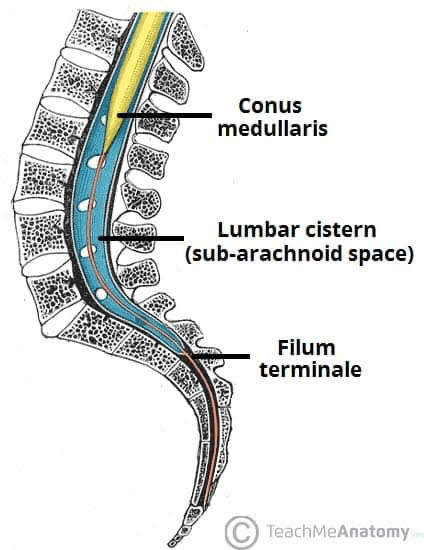
100
La triade de Cushing, indiquant une hypertension intracrânienne critique, se compose classiquement de quelle combinaison de signes ?
A) Hypertension, tachycardie, tachypnée
B) Hypotension, bradycardie, apnée
C) Hypertension, bradycardie, respiration irrégulière
D) Hypotension, tachycardie, respiration irrégulière
C) Hypertension, bradycardie, respiration irrégulière
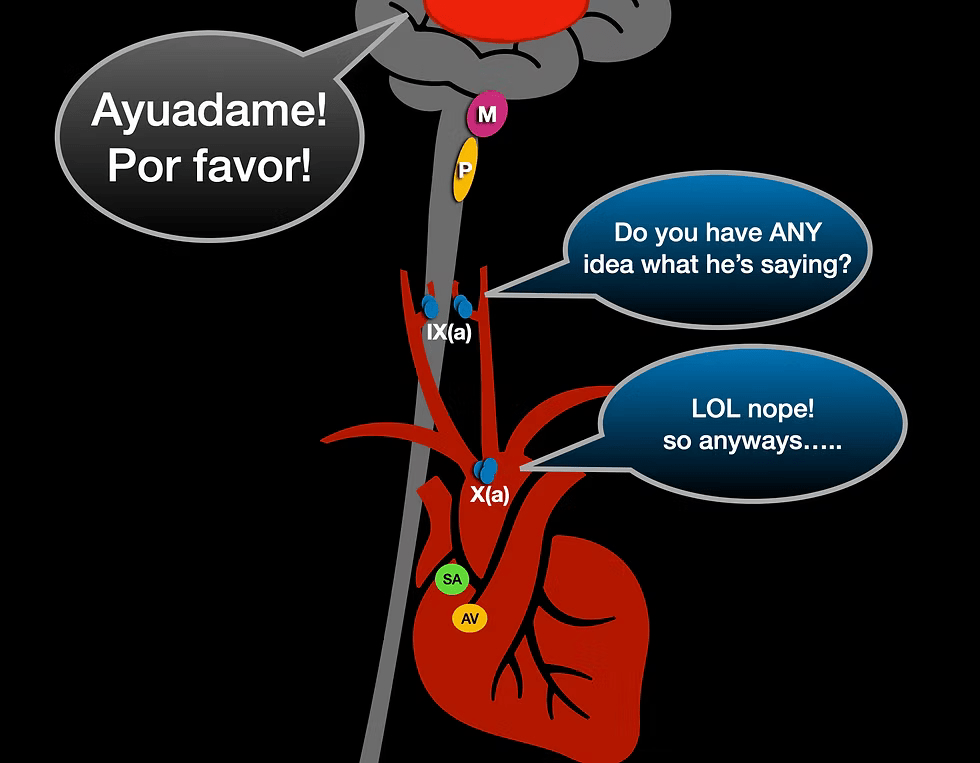
100
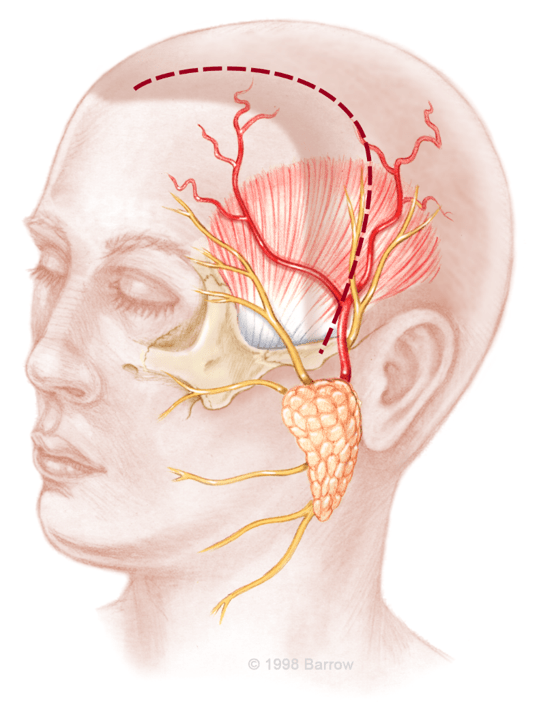
In a pterional exposure, an interfascial dissection plane is chosen while reflecting the temporal soft tissues. Which structure is this maneuver particularly intended to protect?
A) Frontal branch of the facial nerve
B) Maxillary nerve at the foramen rotundum
C) Parietal branch of the facial nerve
D) Auriculotemporal nerve within the infratemporal fossa
A) Frontal branch of the facial nerve
100
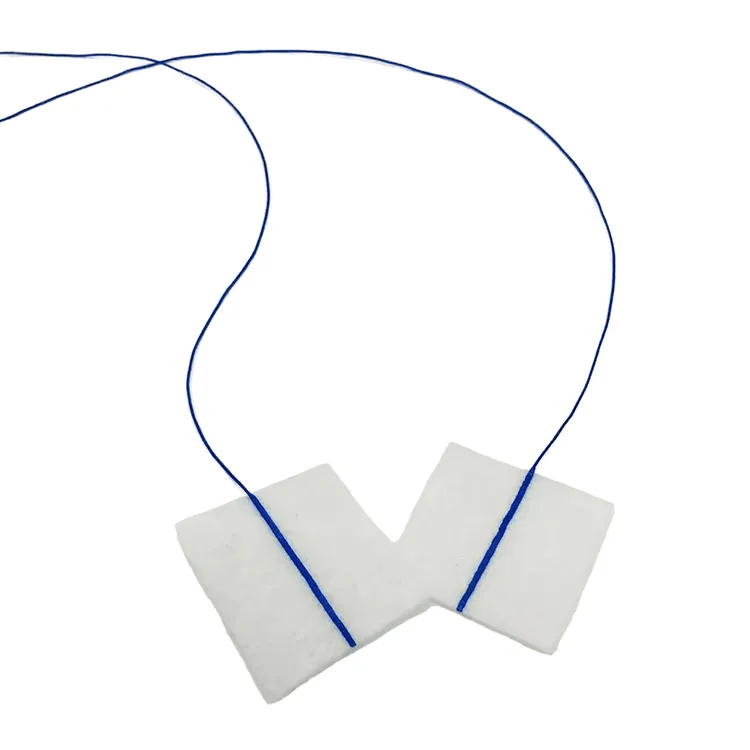
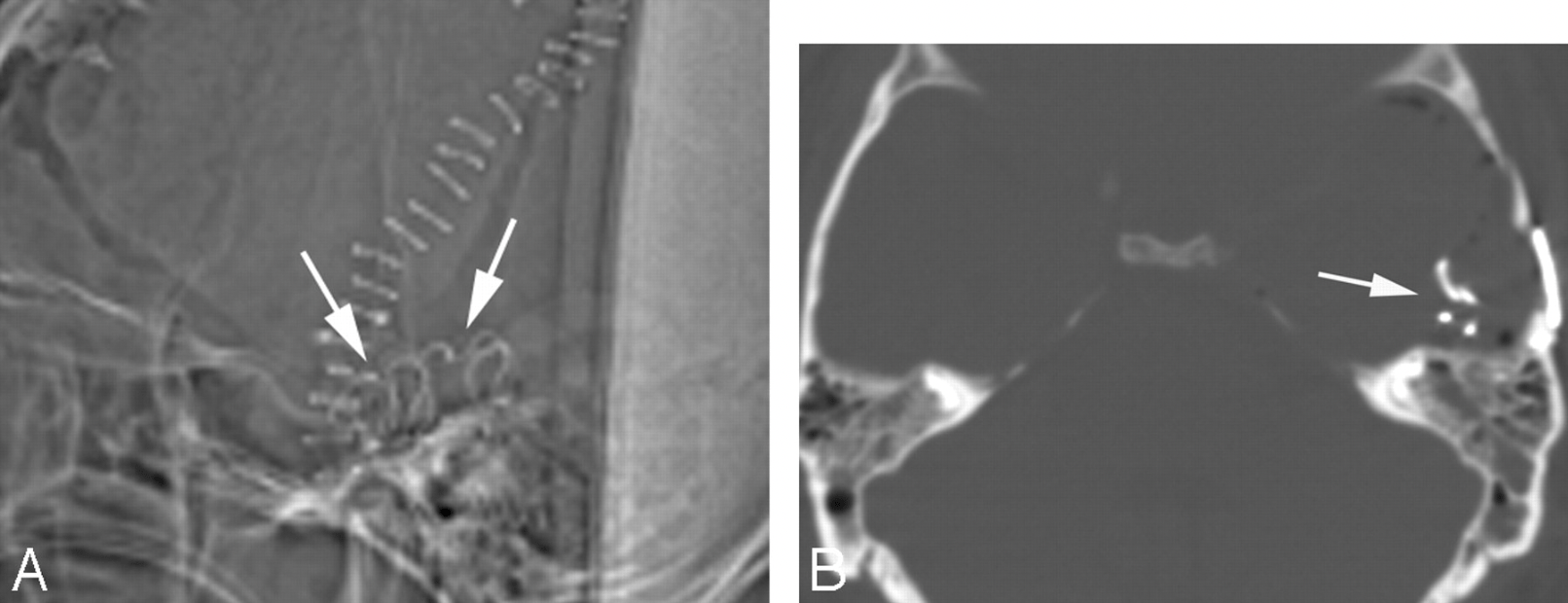
Un coton chirurgical n'est pas comptabilisé lors du comptage final. Quelle caractéristique d'une compresse détectable aux rayons X est conçue pour faciliter sa localisation radiographique ?
A) Son marqueur radio-opaque incorporé
B) Seule sa ficelle de comptage attachée
C) La solution saline utilisée pour l'humidifier
D) Ses fibres absorbantes sans marqueur
A) Son marqueur radio-opaque incorporé
100
Which city hosted the 2005 WFNS World Congress of Neurosurgery, the first such World Congress held on the African continent?
A) Marrakech
B) Rabat
C) Cairo
D) Cape Town
A) Marrakech
100
The arrows show lesions of the same type in three patients. Focus on the CT and sagittal postcontrast MRI in panels E and F. Which diagnosis best explains the lesion and associated ventricular enlargement?
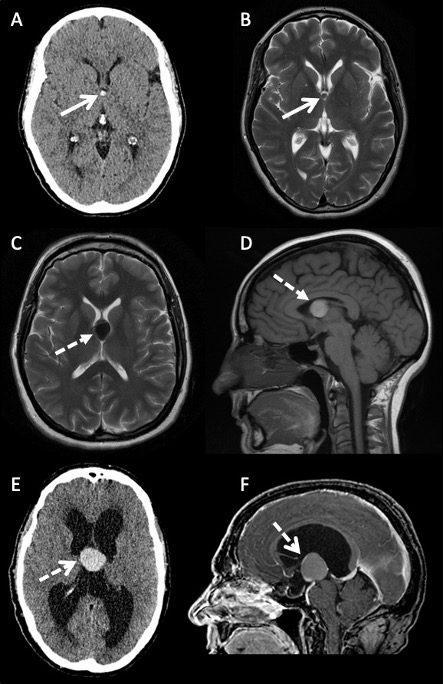
A–B, C–D, and E–F are paired scans from three different patients.
A) Pineal germinoma
B) Colloid cyst
C) Subependymal giant cell astrocytoma
D) Central neurocytoma
B) Colloid cyst
100
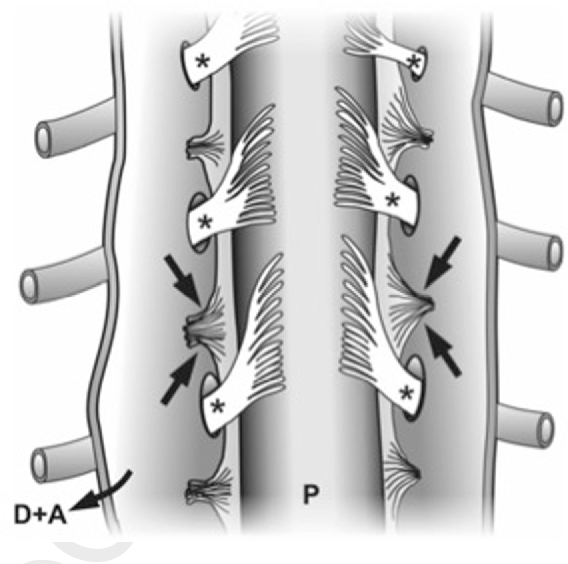
Lors d'une exposition postéro-latérale d'une lésion intradurale thoracique ventrale, le chirurgien identifie une insertion latérale entre les radicelles nerveuses dorsale et ventrale. Elle s'étend de la moelle épinière à la dure-mère. De quelle structure s'agit-il ?
A) Manchon radiculaire dorsal, un prolongement tubulaire de la dure-mère autour de la racine
B) Ligamentum flavum, une spécialisation des ligaments interlamaires
C) Ligament longitudinal postérieur, une attache du corps vertébral
D) Ligament denticulé, une spécialisation de la pie-mère
D) Ligament denticulé, une spécialisation de la pie-mère
100
Within the temporal bone, which segment of the facial nerve is the narrowest and thus most susceptible to ischemic compression (implicated in Bell's palsy)?
A) Tympanic segment
B) Labyrinthine segment
C) Mastoid segment
D) Meatal segment
B) Labyrinthine segment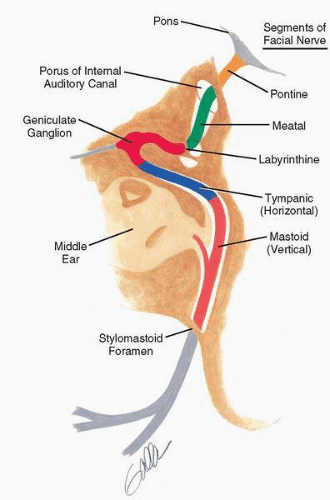
100
L'œdème entourant une métastase cérébrale résulte principalement d'une fuite de constituants plasmatiques dans les espaces extracellulaires de la substance blanche. Quel mécanisme est responsable de cet œdème ?
A) Augmentation de la perméabilité de la barrière hémato-encéphalique
B) Diminution du dioxyde de carbone plasmatique provoquant une vasoconstriction
C) Défaillance isolée des pompes ioniques neuronales dépendantes de l'ATP
D) Obstruction de l'aqueduc cérébral
A) Augmentation de la perméabilité de la barrière hémato-encéphalique
100
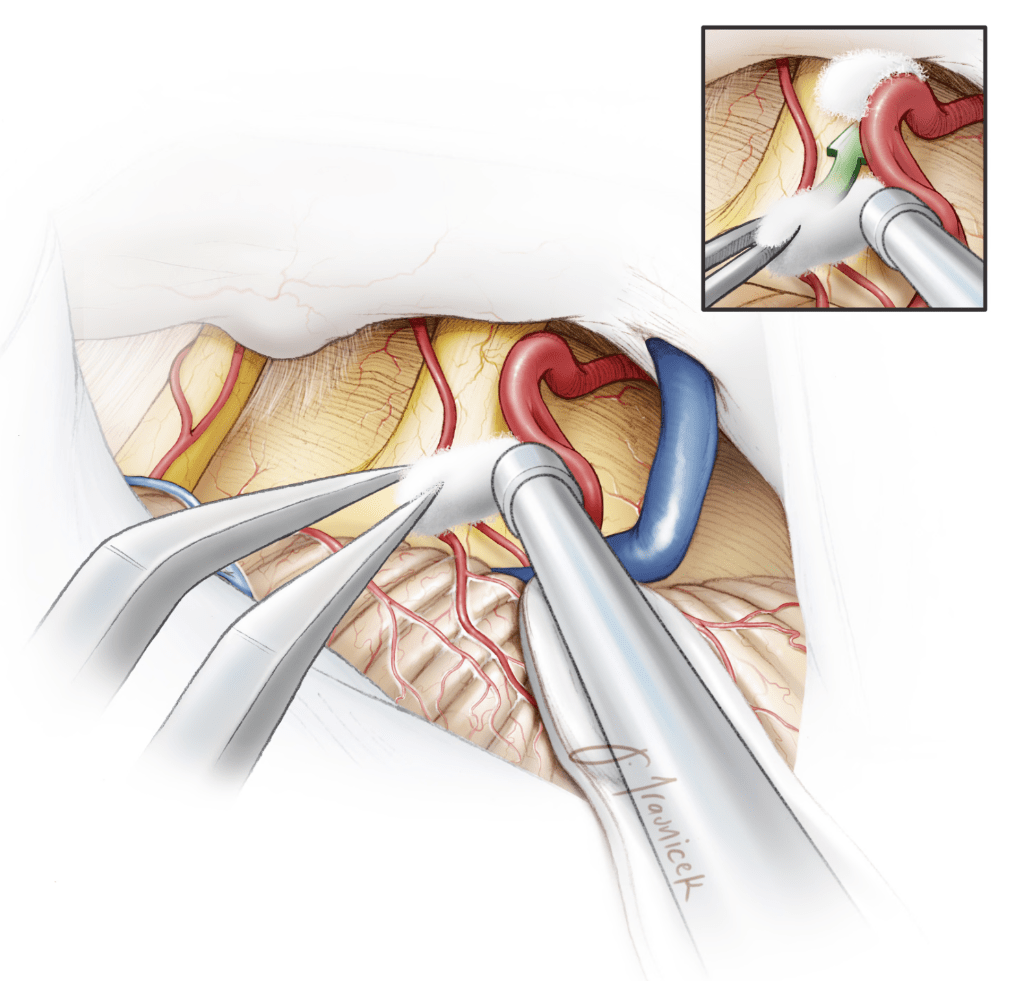
During microvascular decompression for classical trigeminal neuralgia, which artery is most commonly found compressing the trigeminal nerve?
A) Recurrent artery of Heubner
B) Superior cerebellar artery
C) Anterior inferior cerebellar artery
D) Posterior inferior cerebellar artery
B) Superior cerebellar artery
100
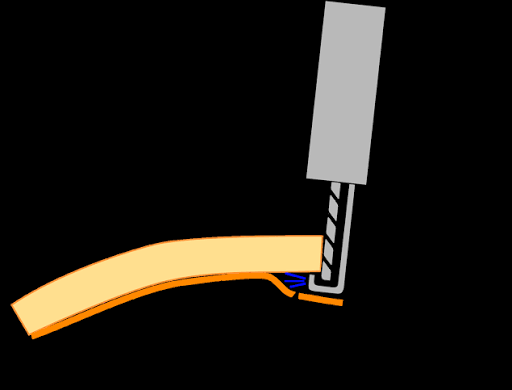
Un craniotome à pied est utilisé pour relier les trous de trépanation. Quelle description identifie correctement la fonction prévue de sa platine de pied ?
A) Il passe sous l'os pour aider à protéger la dure-mère sous-jacente de l'instrument de coupe.
B) Il mesure l'épaisseur de l'os et règle la profondeur de coupe électroniquement.
C) Il fournit un courant bipolaire pour coaguler la dure-mère
D) Il arrête automatiquement le moteur lorsque la table intérieure est atteinte
A) Il passe sous l'os pour aider à protéger la dure-mère sous-jacente de l'instrument de coupe.
100
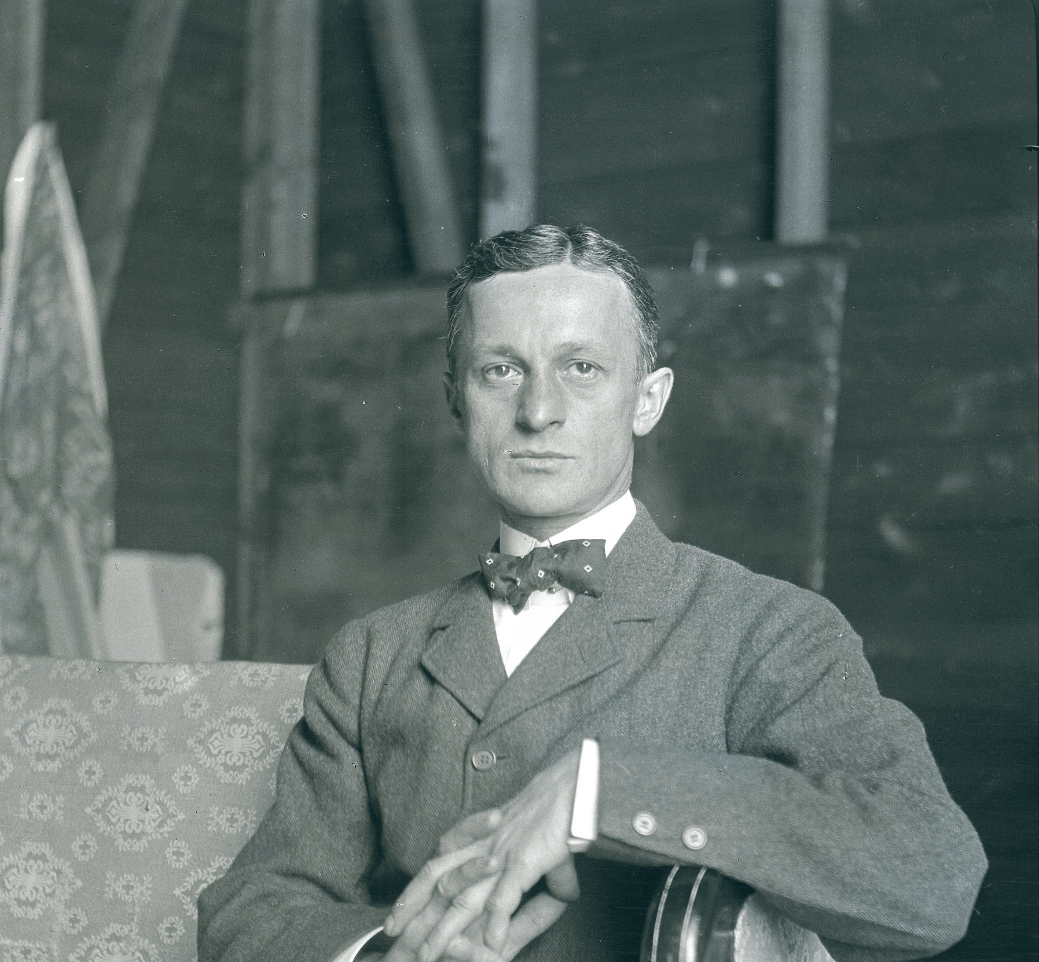
Which surgeon, working largely at Johns Hopkins in the early 20th century, is widely regarded as the 'father of modern neurosurgery'?
A) Wilder Penfield
B) Harvey Cushing
C) Walter Dandy
D) Victor Horsley
B) Harvey Cushing
Harvey Cushing dramatically reduced operative mortality through meticulous hemostasis, physiological monitoring, and systematic technique, and is widely credited as the father of modern neurosurgery
100
An adult has slowly progressive visual disturbance. The CT and MRI show a sellar–suprasellar lesion. Which diagnosis is most likely given its cystic component, peripheral calcification, and enhancing nodular tissue?
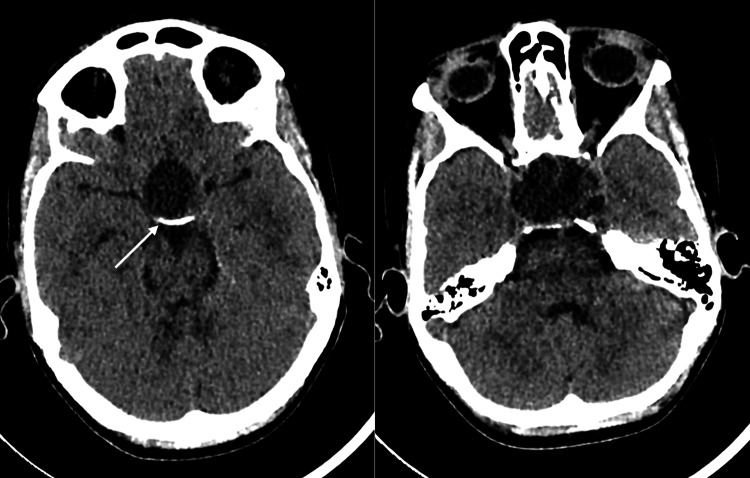
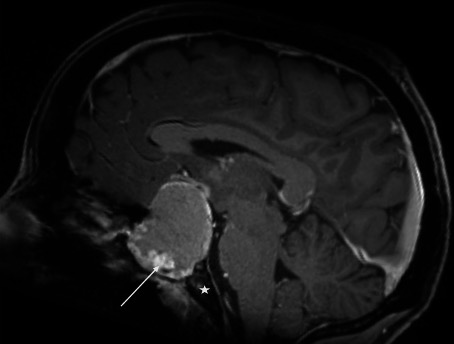 Left: axial noncontrast CT. Right: sagittal postcontrast T1-weighted MRI.
A) Optic pathway glioma
B) Suprasellar arachnoid cyst
C) Uncomplicated Rathke cleft cyst
D) Craniopharyngioma
D) Craniopharyngioma
100
Quel plan intermusculaire naturel est développé lors de l'approche lombaire de Wiltse ?
A) Entre le psoas majeur en avant et le carré des lombes en arrière
B) Entre le grand droit de l'abdomen et l'oblique externe
C) Entre le multifidus médialement et le longissimus latéralement
D) Entre le longissimus médialement et l'iliocostalis latéralement
C) Entre le multifidus médialement et le longissimus latéralement
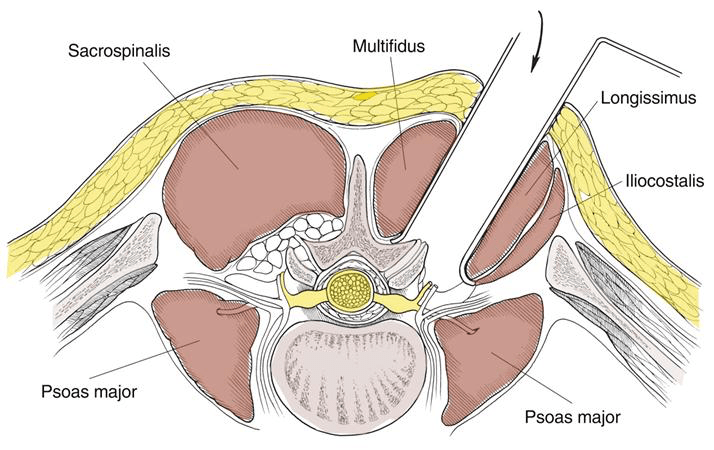
150
Which cranial nerve travels freely within the body of the cavernous sinus rather than within its lateral dural wall?
A) CN III (oculomotor)
B) CN IV (trochlear)
C) CN V1 (ophthalmic)
D) CN VI (abducens)
D) CN VI (abducens)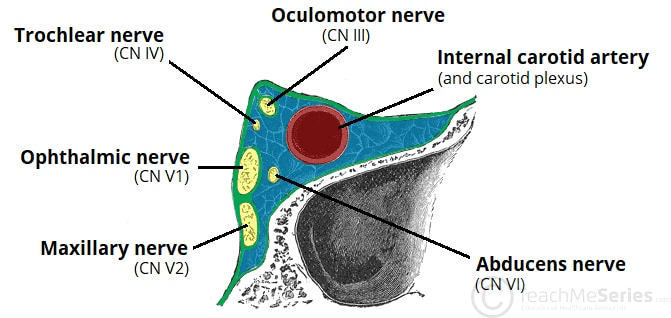
150
L'autorégulation du débit sanguin cérébral maintient un débit relativement constant dans quelle plage approximative de pression artérielle moyenne chez un adulte normotendu ?
A) 20–60 mmHg
B) 50–150 mmHg
C) 100–200 mmHg
D) 150–250 mmHg
B) 50–150 mmHg
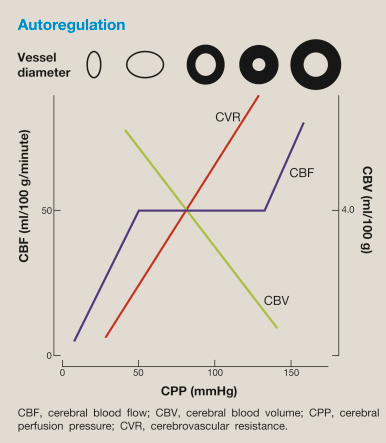 Chez un sujet normotendu, l'autorégulation cérébrale maintient un débit sanguin cérébral stable pour une pression artérielle moyenne (PAM) d'environ 50 à 150 mmHg grâce à une vasoconstriction/vasodilatation myogénique. Cette courbe est décalée vers la droite en cas d'hypertension chronique et peut être altérée après un traumatisme crânien ou dans les zones entourant une lésion ischémique.
150
Compared to the translabyrinthine approach, the retrosigmoid approach to a vestibular schwannoma offers which key advantage?
A) Guaranteed total tumor removal regardless of size
B) Potential for hearing preservation
C) No risk to the facial nerve
D) Potential for neuro-monitoring guided resection
B) Potential for hearing preservation
150
What does CUSA stand for, and what is its primary surgical function?
A) Cavitron Ultrasonic Surgical Aspirator
B) Continuous Ultrasound Suction Apparatus
C) Cranial Underdrain Suction Assembly
D) Cortical Unipolar Stimulation Array
A) Cavitron Ultrasonic Surgical Aspirator
It fragments and aspirates tissue via ultrasonic vibration while relatively sparing vessels
150
The establishment of the WFNS Rabat Training Center in 2002 was led by the efforts of which Moroccan neurosurgeon?
A) Abdeslam El Khamlichi
B) Abdessamad El Ouahabi
C) Najia El Abbadi
D) Mohammed Boucetta
A) Abdeslam El Khamlichi
150
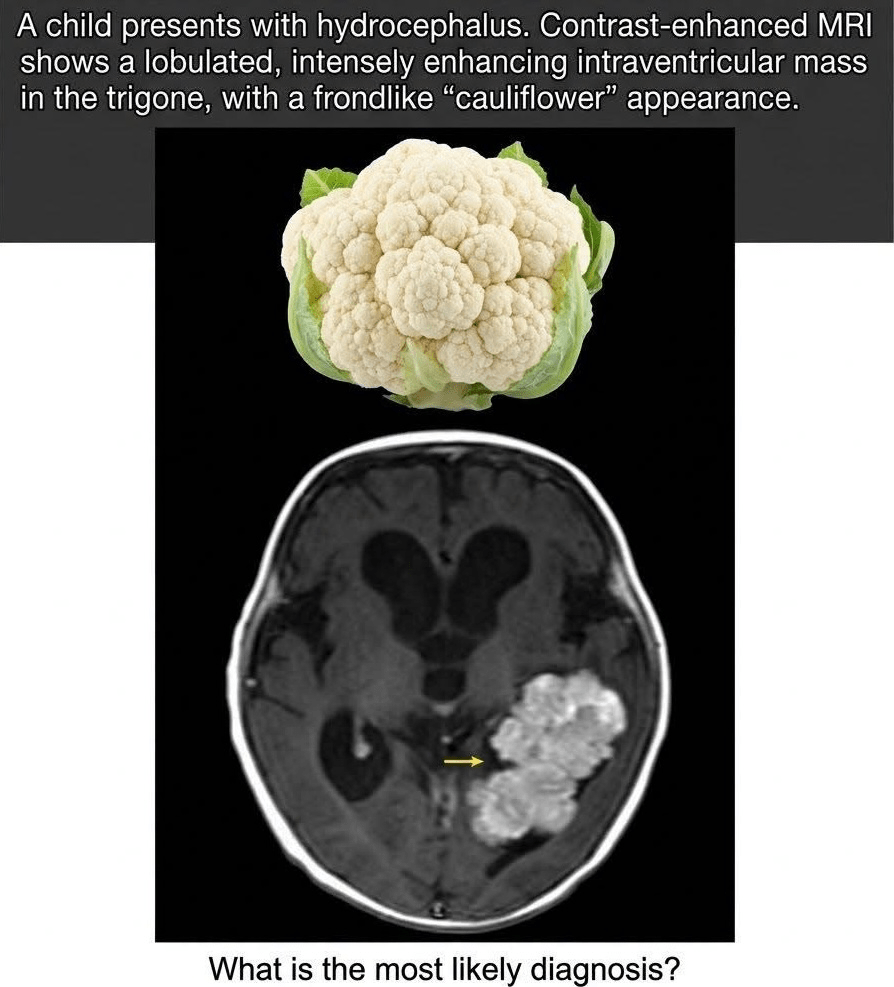 A- Intraventricular ependymoma
B- Choroid plexus tumor
C- Intraventricular meningioma
D- Central neurocytoma
B- Choroid plexus tumor
150
Lors d'une exposition transcalleuse interhémisphérique antérieure, deux artères longent étroitement la face supérieure du corps calleux. Quels vaisseaux doivent être identifiés et protégés avant la callosotomie ?
A) Artères choroïdiennes postérieures médiales
B) Artères communicantes postérieures
C) Artères péricallosales
D) Artères choroïdiennes antérieures
C) Artères péricallosales
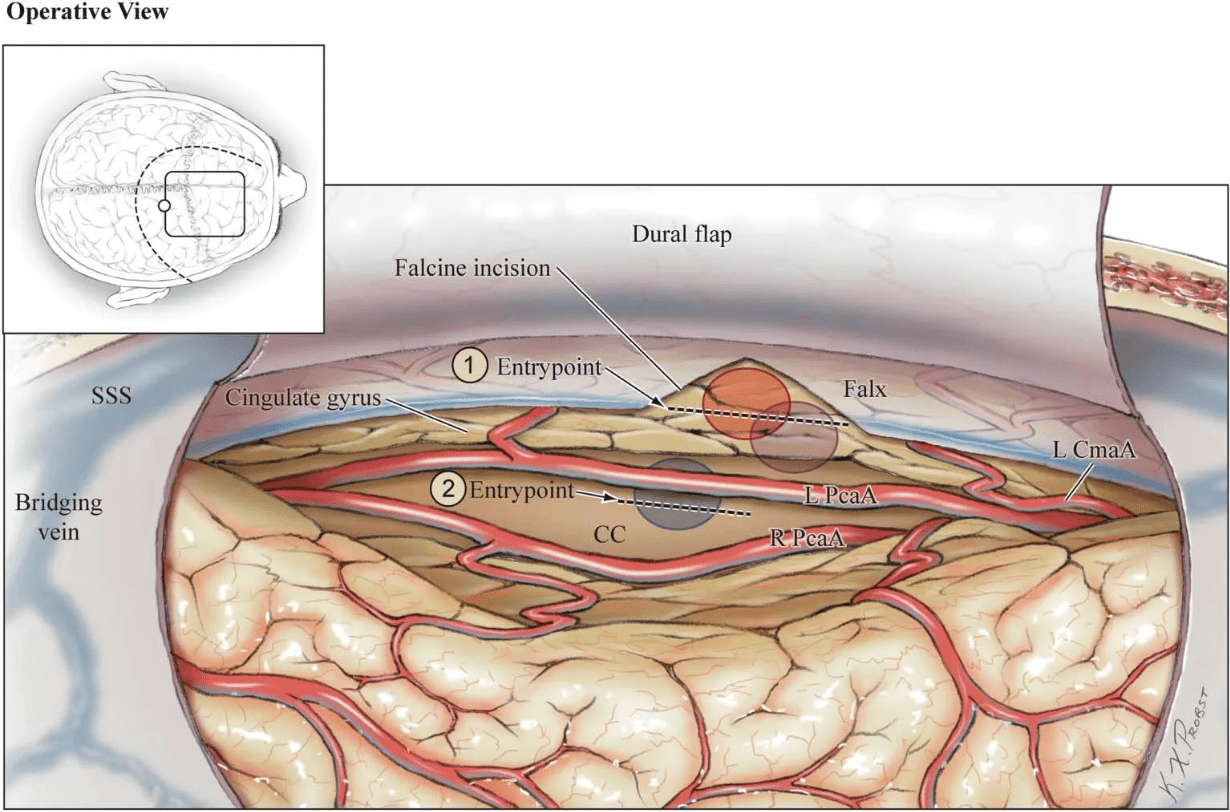
150
The recurrent artery of Heubner supplies the head of the caudate and anterior limb of the internal capsule. From which segment does it most commonly arise?
A) A1 segment of the ACA, proximal to the ACoA
B) A2 segment of the ACA, just distal to the ACoA
C) M1 segment of the MCA
D) The anterior choroidal artery
B) A2 segment of the ACA, just distal to the ACoA
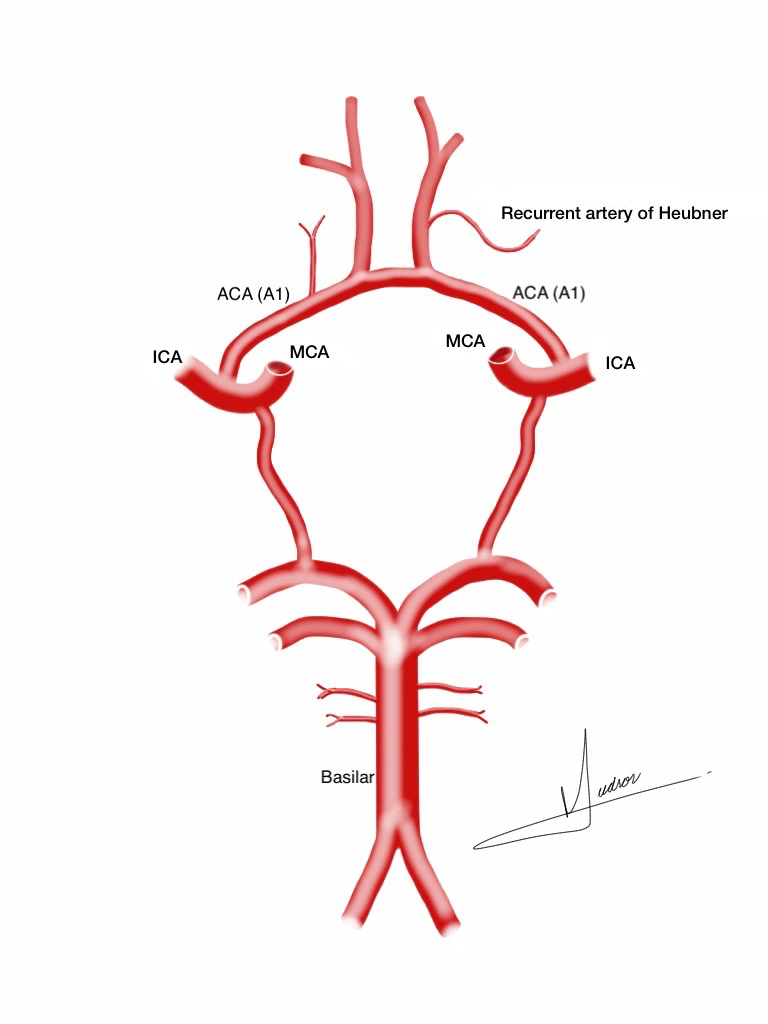
150
Selon la doctrine Monro-Kellie, lorsqu'une lésion intracrânienne s'agrandit, quel mécanisme compensatoire est généralement épuisé EN PREMIER ?
A) Déplacement du LCR dans le sac dural spinal
B) Réduction du volume sanguin cérébral
C) Atrophie du tissu cérébral
D) Expansion crânienne
A) Déplacement du LCR dans le sac dural spinal
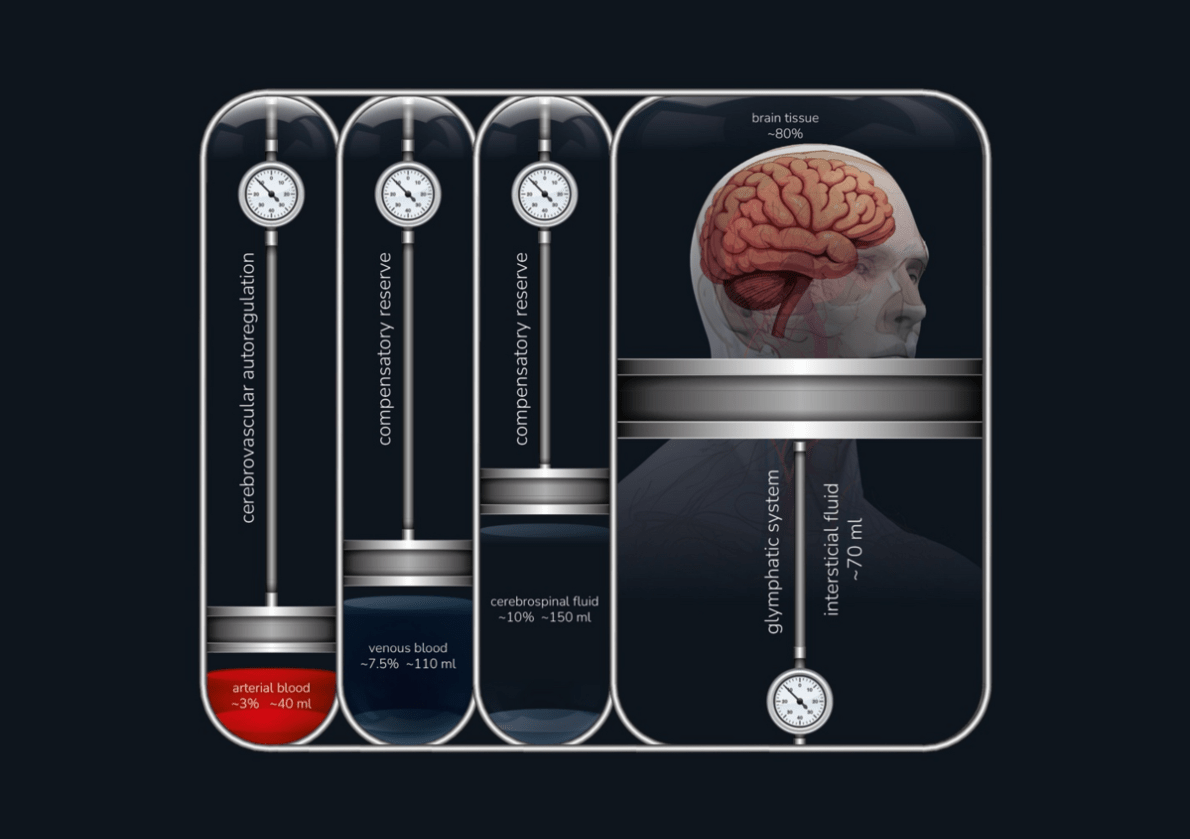
150
With recognizable third ventricular anatomy, which location is the conventional target for fenestrating the floor during endoscopic third ventriculostomy?
A) The lateral wall of the third ventricle
B) The midline tuber cinereum between the infundibular recess and mammillary bodies
C) The posterior commissure immediately below the pineal recess
D) The lamina terminalis above the optic chiasm
B) The midline tuber cinereum between the infundibular recess and mammillary bodies
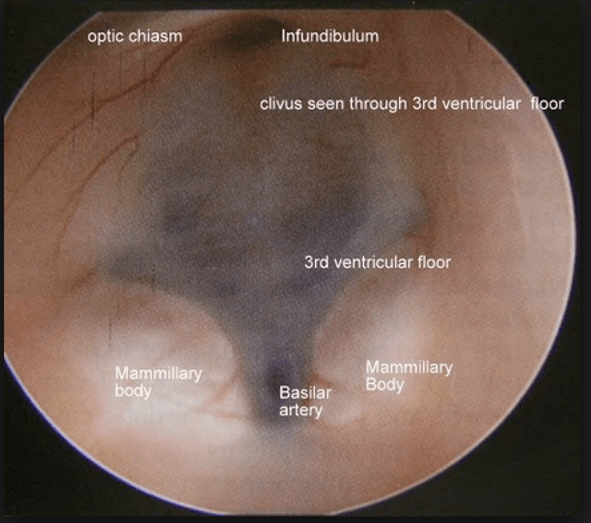
150
Intraoperative neuromonitoring with motor evoked potentials (MEPs) is particularly useful for detecting injury to which pathway in real time?
A) Dorsal column–medial lemniscus pathway
B) Corticospinal tract
C) Spinothalamic tract
D) Optic radiations
B) Corticospinal tract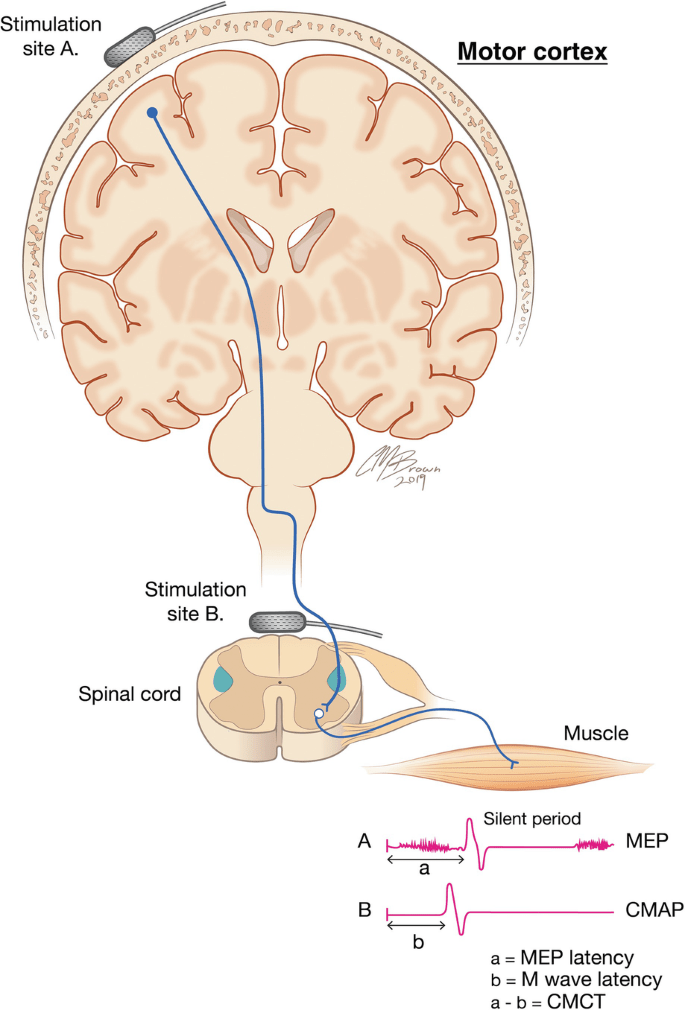
150
Harvey Cushing began using William Bovie's electrosurgical generator in 1926. Which operative problem did this collaboration most directly address?
A) Bleeding during intracranial tumour dissection
B) Inaccurate radiographic localisation of deep tumours
C) Failure to visualise the third ventricular floor
D) Inability to monitor cortical electrical activity
A) Bleeding during intracranial tumour dissection
150
A patient with a known pituitary macroadenoma develops sudden severe headache and new visual loss. Considering the noncontrast T1-weighted MR images, which complication best explains the presentation?
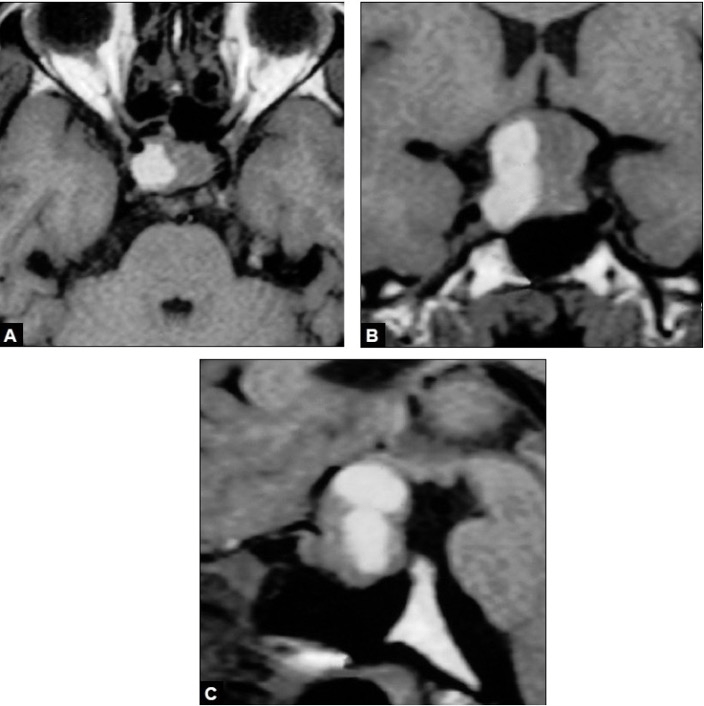
Noncontrast T1-weighted MRI: axial (A), coronal (B), and sagittal (C).
A) Isolated optic neuritis
B) Rupture of a suprasellar arachnoid cyst
C) Cavernous sinus thrombosis without sellar hemorrhage
D) Hemorrhagic pituitary apoplexy
D) Hemorrhagic pituitary apoplexy
150
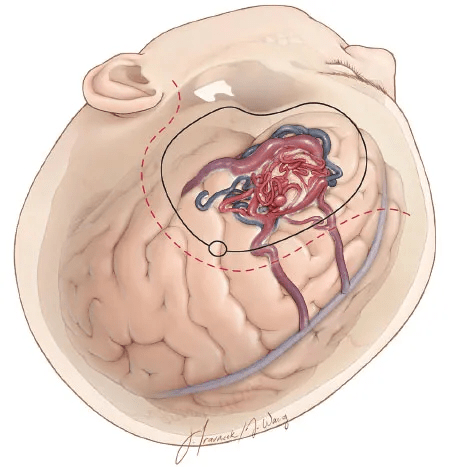
Lors de la résection microchirurgicale d'une MAV piale compacte, la veine de drainage principale est facilement accessible tandis que les artères nourricières restent perméables. Pourquoi évite-t-on de sectionner prématurément cette veine ?
A) Cela empêche l'identification du sillon central par inversion de phase.
B) Elle provoque l'occlusion immédiate de toutes les artères nourricières
C) Elle transforme la MAV en une fistule artério-veineuse durale
D) Elle peut augmenter la pression intranidale et provoquer une hémorragie avant que le flux artériel ne soit contrôlé.
D) Elle peut augmenter la pression intranidale et provoquer une hémorragie avant que le flux artériel ne soit contrôlé.
200
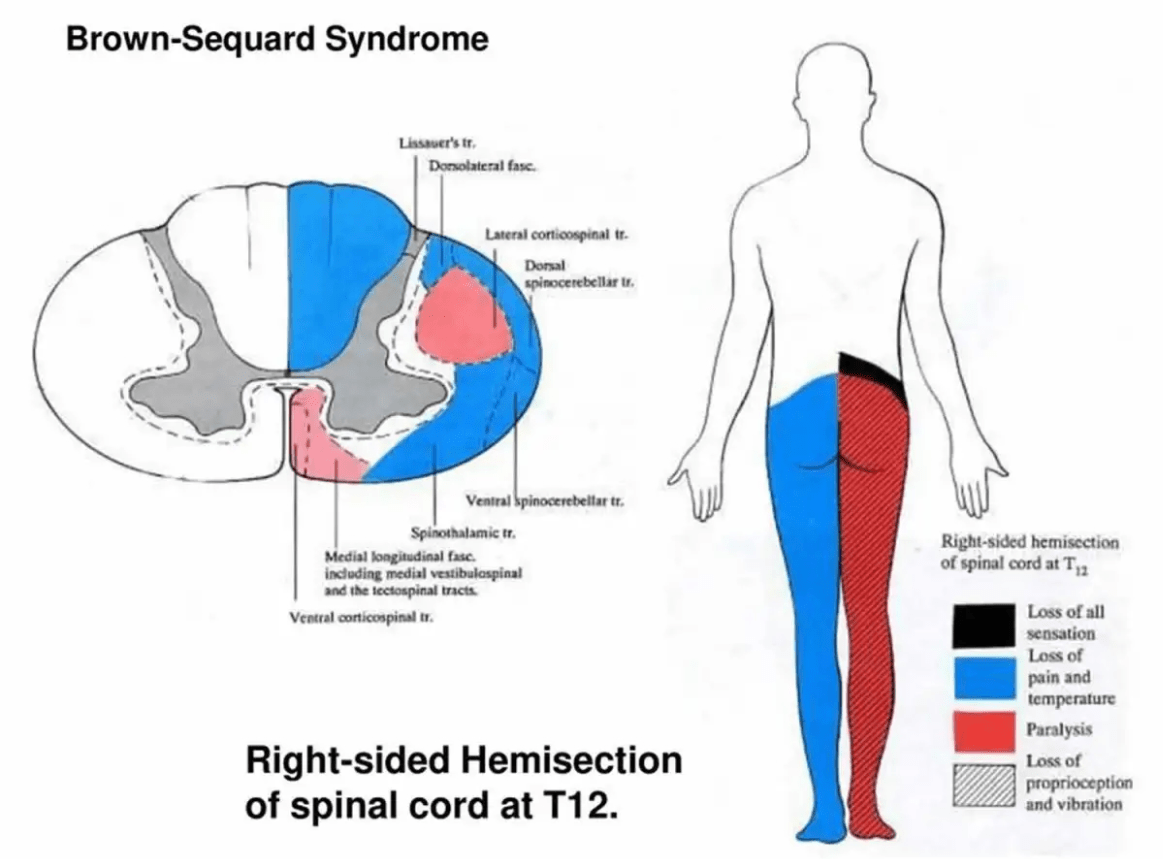
After the acute spinal shock phase, a right hemicord lesion at T10 is expected to produce which pattern well below the lesion?
A) Right leg weakness and loss of pain and temperature, with preserved position sense
B) Right leg weakness and impaired position sense, with left-sided loss of pain and temperature
C) Left leg weakness and impaired position sense, with right-sided loss of pain and temperature
D) Bilateral loss of position sense with preserved motor power
B) Right leg weakness and impaired position sense, with left-sided loss of pain and temperature
200
Le lendemain d'une intervention chirurgicale hypophysaire, un patient présente une diurèse de 450 mL par heure pendant quatre heures. La natrémie est de 151 mmol/L, l'osmolalité plasmatique de 310 mOsm/kg et l'osmolalité urinaire de 90 mOsm/kg. La glycémie est normale et aucun diurétique n'a été administré. Quel trouble physiologique explique le mieux ces observations ?
A) Sécrétion excessive d'arginine vasopressine
B) Diminution de la filtration glomérulaire
C) Sécrétion excessive d'aldostérone
D) Sécrétion déficiente d'arginine vasopressine
D) Sécrétion déficiente d'arginine vasopressine 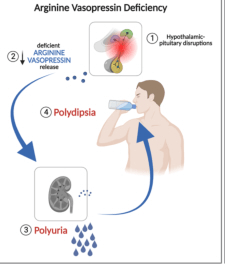
200
During an endonasal transsphenoidal approach, which structure is the key midline landmark used to avoid lateral deviation into the cavernous sinus/carotid arteries?
A) The middle turbinate
B) The vomer / nasal septum
C) The cribriform plate
D) The eustachian tube orifice
B) The vomer / nasal septum leading to the sella floor
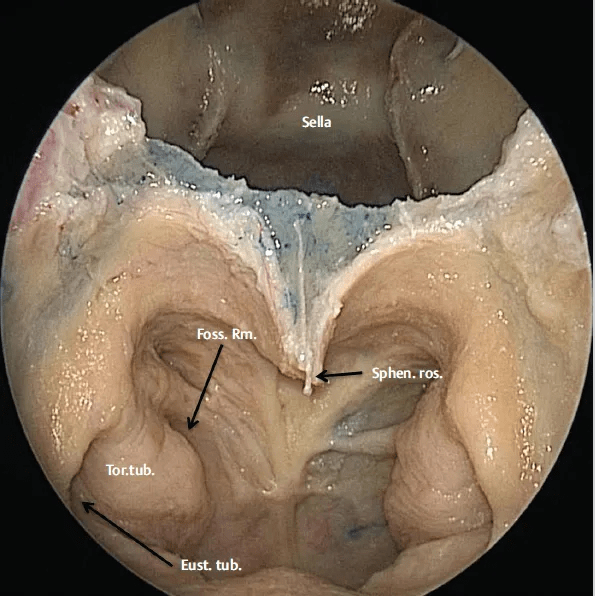
200
After aneurysm clipping, a micro-Doppler probe is applied to the exposed parent artery. What does the Doppler signal primarily provide information about?
A) Histological completeness of aneurysm neck closure
B) Blood flow velocity within the sampled vessel
C) Electrical conduction in the adjacent nerve
D) Oxygen saturation of the vessel wall
B) Blood flow velocity within the sampled vessel
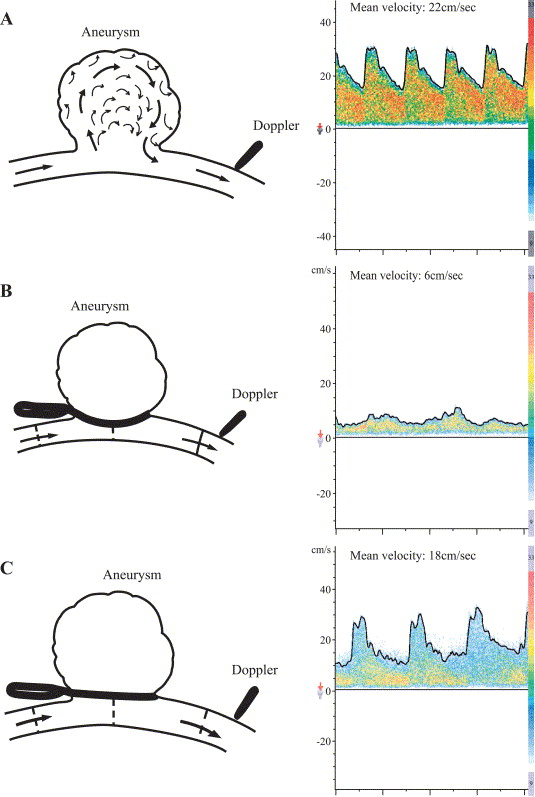
200
Wilder Penfield is best known for which major contribution to neurosurgery?
A) Development of the operating microscope
B) Intraoperative cortical stimulation mapping and the cortical homunculus, and the 'Montreal Procedure' for epilepsy
C) Invention of the CUSA
D) First description of the pterional approach
B) Intraoperative cortical stimulation mapping and the cortical homunculus, and the 'Montreal Procedure' for epilepsy
Wilder Penfield, co-founder of the Montreal Neurological Institute, pioneered awake cortical stimulation mapping to localize function during epilepsy surgery (the 'Montreal Procedure'), producing the famous sensory and motor homunculus maps
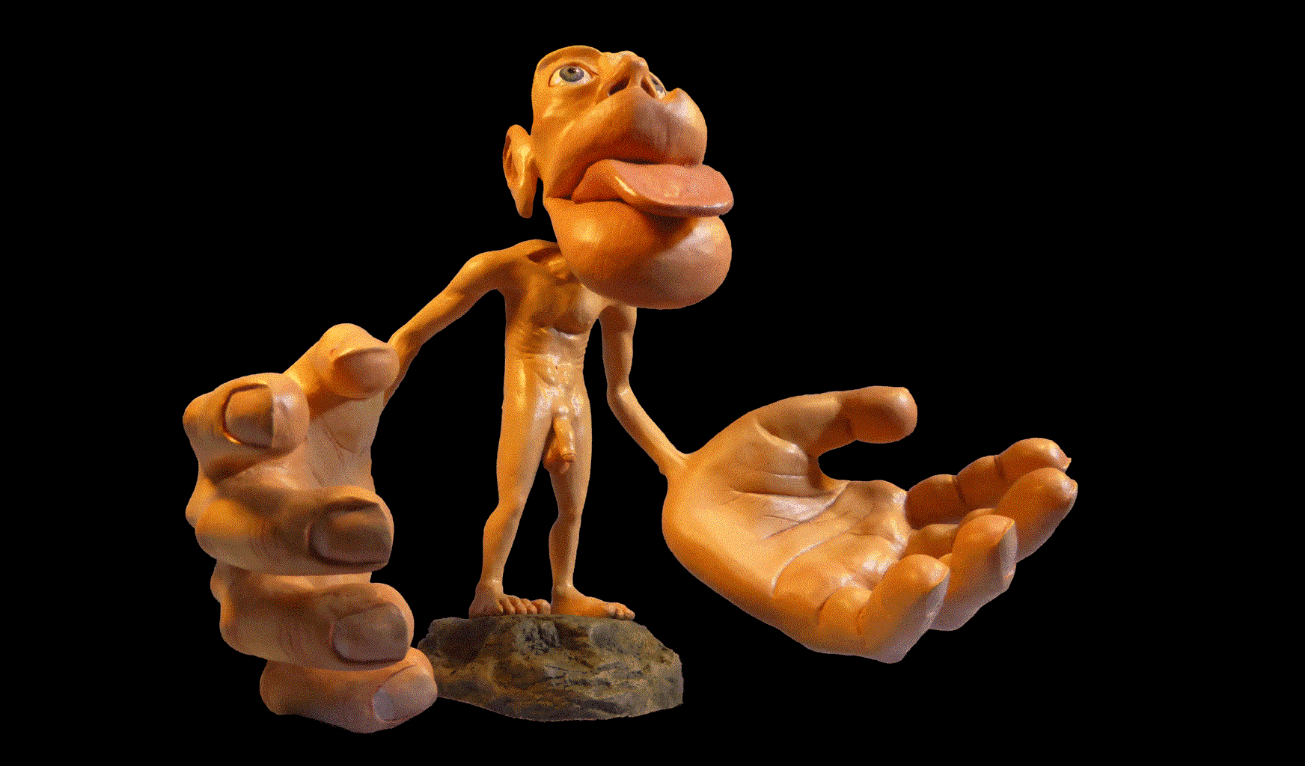
200
A patient with progressive headache and papilledema undergoes contrast-enhanced CT. What does the arrowed posterior midline abnormality most strongly suggest?
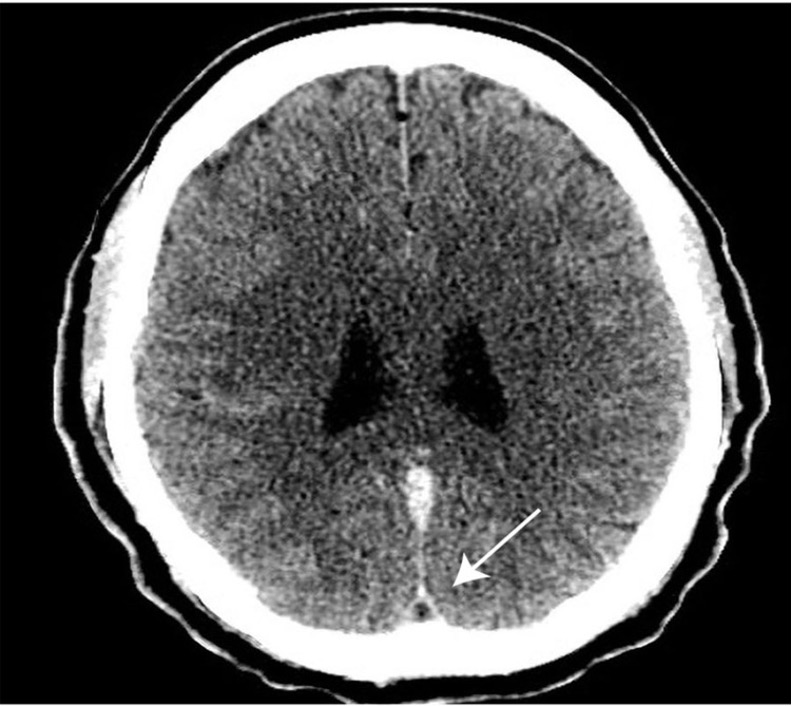
Axial contrast-enhanced CT.
A) Superior sagittal sinus thrombosis
B) Arachnoid granulation within an otherwise patent sinus
C) Posterior parasagittal meningioma
D) Dural arteriovenous fistula without sinus thrombosis
A) Superior sagittal sinus thrombosis
200
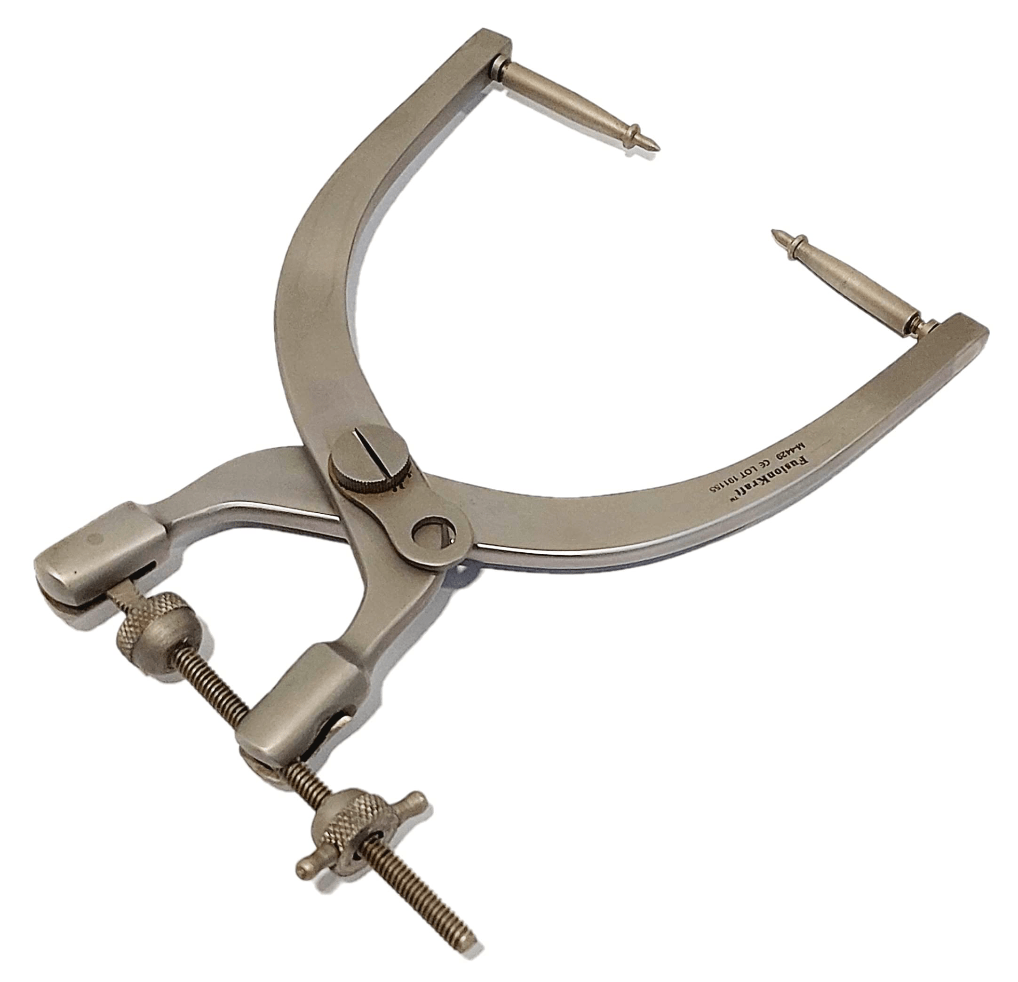
Parmi les dispositifs suivants, lesquels permettent d'assurer une traction squelettique en cas de fracture/luxation cervicale ?
A- Pinces de Cushing
B- Pinces Yasargil
C- Pinces Crutchfield
D- Gigli
C- Pinces Crutchfield
200
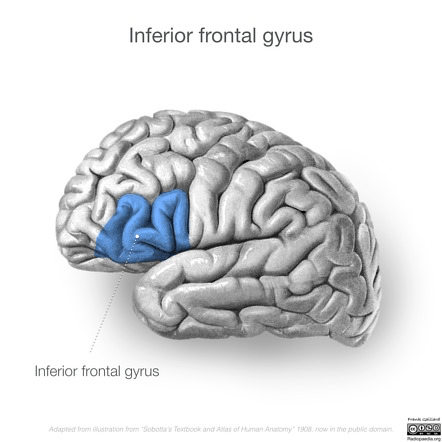
A right-handed patient speaks in short, effortful, grammatically incomplete phrases. Simple spoken commands are understood, but repetition is impaired. Which cortical region is classically associated with this syndrome?
A) Dominant primary visual cortex
B) Nondominant inferior parietal lobule
C) Dominant inferior frontal gyrus
D) Dominant posterior superior temporal gyrus
C) Dominant inferior frontal gyrus
200
Which formula correctly defines cerebral perfusion pressure (CPP)?
A) CPP = MAP + ICP
B) CPP = MAP − ICP
C) CPP = ICP − MAP
D) CPP = MAP / ICP
B) CPP = MAP − ICP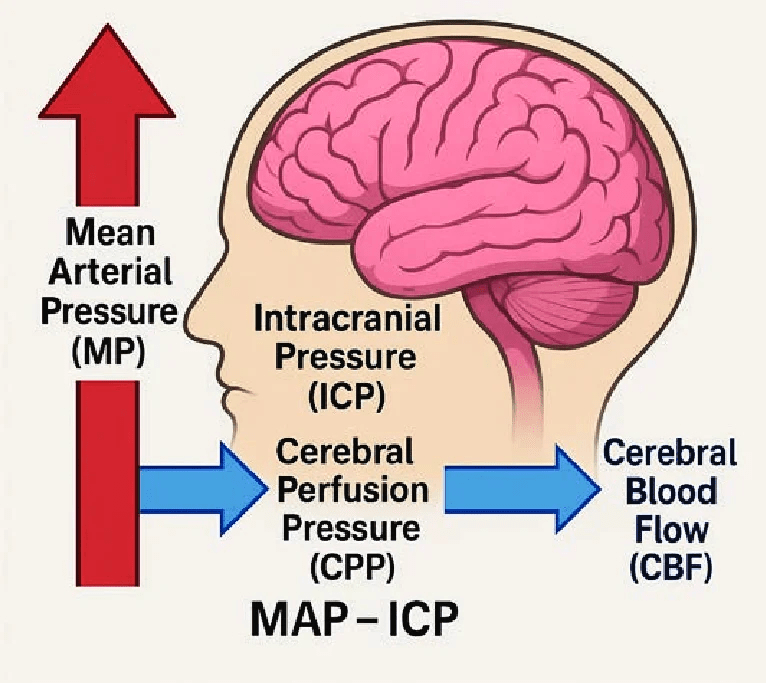
200
A telovelar approach is selected to expose the fourth ventricle without splitting the vermis. Which structures form the lower ventricular roof opened through this route?
A) Middle cerebellar peduncle and dentate nucleus
B) Superior medullary velum and superior cerebellar peduncle
C) Tela choroidea and inferior medullary velum
D) Nodulus and uvula of the vermis
C) Tela choroidea and inferior medullary velum
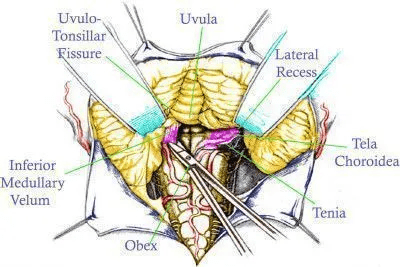
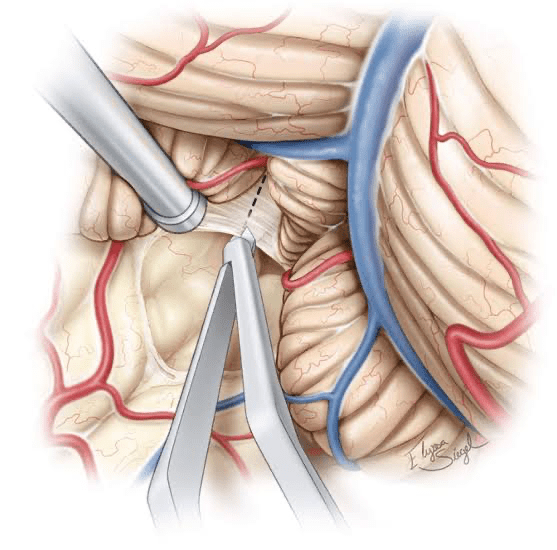
200
A diamond burr is used to thin bone adjacent to a cranial nerve. What is the principal protective purpose of continuous irrigation at the drilling site?
A) Electrical insulation from monopolar current generated by the burr
B) Prevention of venous thrombosis by systemic dilution
C) Dissipation of frictional heat to reduce thermal injury
D) Increasing friction to improve cutting efficiency
C) Dissipation of frictional heat to reduce thermal injury
200
Benjamin Warf's 2005 prospective study in Uganda helped establish a combined endoscopic approach to childhood hydrocephalus. Which procedure was introduced?
A) Endoscopic septostomy
B) Bilateral choroid plexus cauterisation
C) Aqueductal stent placement
D) Endoscopic fenestration of the foramen of Magendie
B) Bilateral choroid plexus cauterisation

200
An MRI shows a well-circumscribed extra-axial posterior fossa mass with a 'dural tail,' adjacent bony hyperostosis, a broad dural base, and homogeneous enhancement, isointense to gray matter on T1/T2. Which finding most strongly argues AGAINST a vestibular schwannoma and FOR a meningioma?
A) Internal auditory canal widening
B) Dural tail sign with adjacent hyperostosis
C) Cystic degeneration within the mass
D) Location at the cerebellopontine angle
B) Dural tail sign with adjacent hyperostosis
200
Lors d'une arthrodèse cervicale intersomatique, le plateau cartilagineux est retiré tandis que le plateau osseux porteur est préservé autant que possible. Quelle complication cette technique permet-elle principalement de limiter ?
A) Dissection de l'artère vertébrale
B) Syndrome de Horner postopératoire
C) Affaissement de la cage intersomatique
D) Paralysie du nerf laryngé récurrent
C) Affaissement de la cage intersomatique
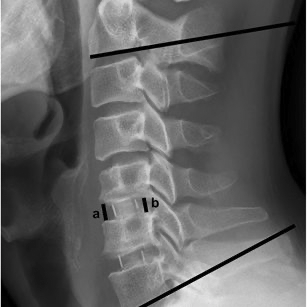
300
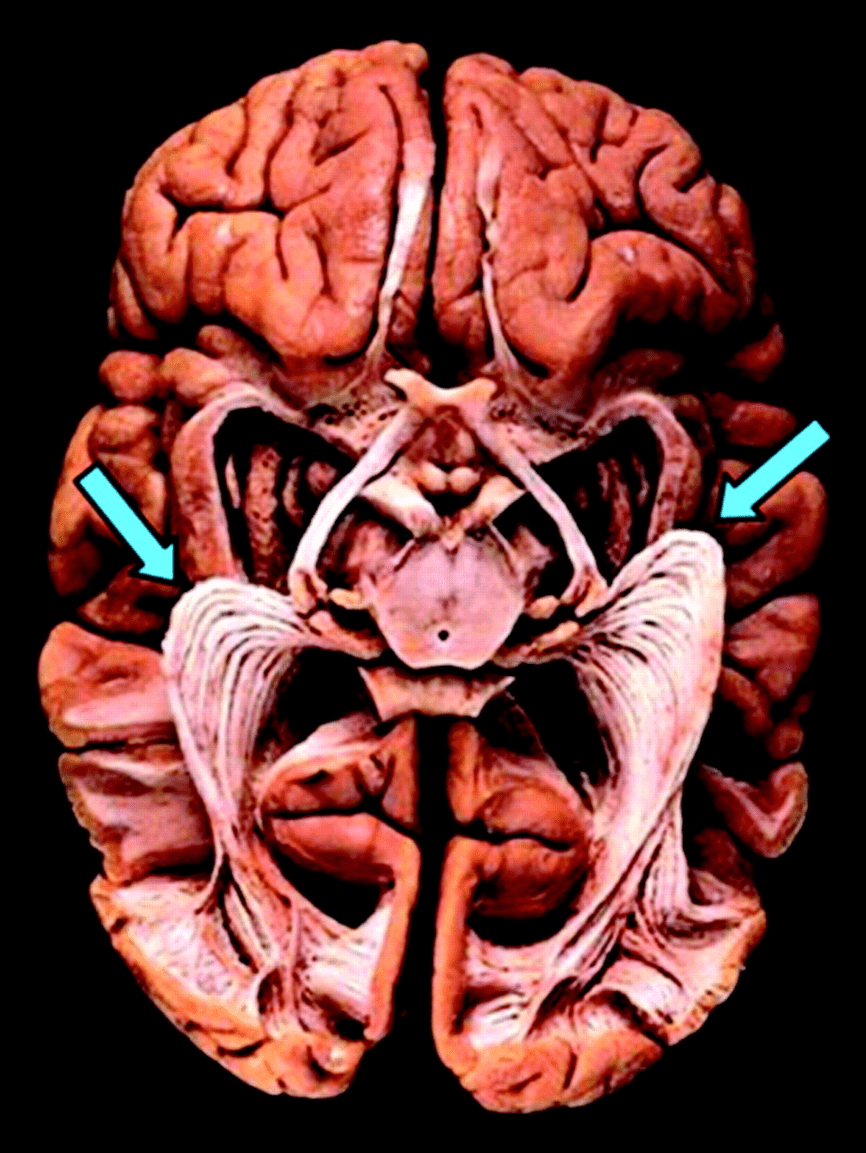
After a left anterior temporal resection, a patient develops a right superior homonymous quadrantanopia. Injury to which structure most directly explains this deficit?
A) Right optic tract
B) Left parietal optic radiation
C) Central optic chiasm
D) Left Meyer loop of the optic radiation
D) Left Meyer loop of the optic radiation
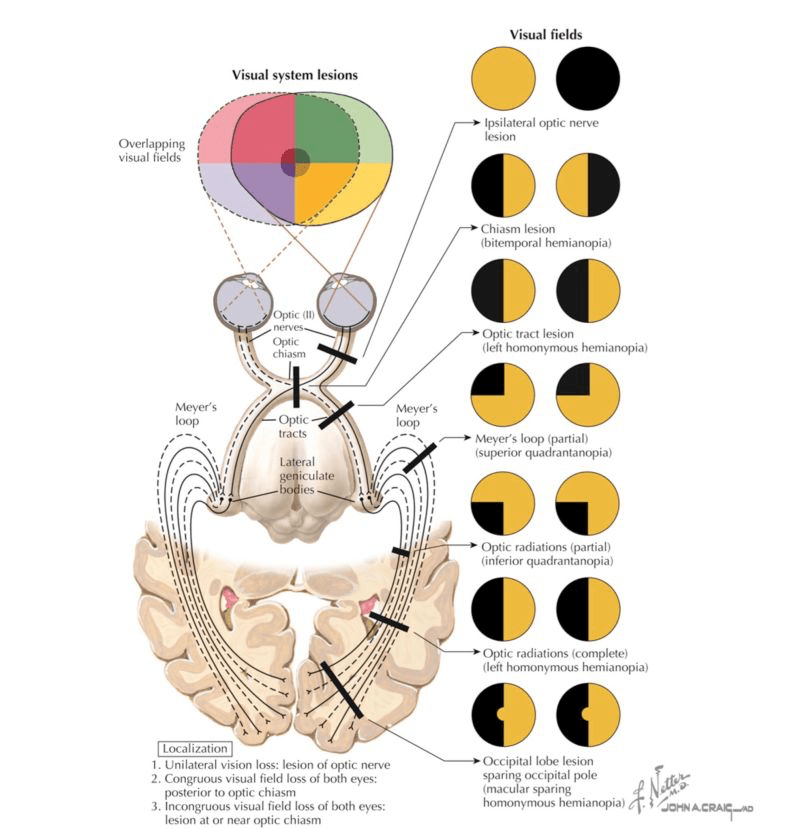
300
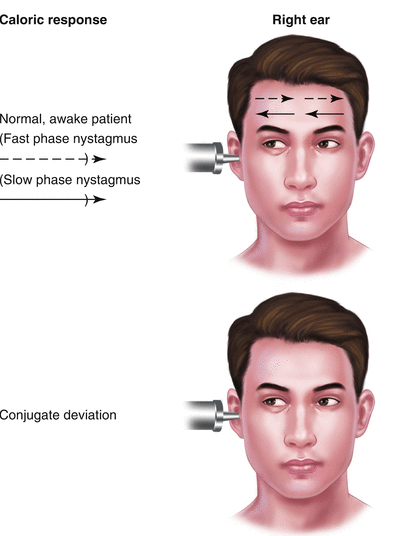
Chez un patient dans un coma profond, l'appareil vestibulaire périphérique et les voies vestibulo-oculaires du tronc cérébral sont intacts. La tête étant correctement positionnée et le tympan intact, quel mouvement oculaire devrait être provoqué par l'irrigation à l'eau froide de l'oreille droite ?
A) Déviation conjuguée lente vers la droite sans phase corrective rapide
B) Déviation conjuguée lente vers la gauche sans phase corrective rapide
C) Nystagmus vertical ascendant pur
D) Nystagmus battant à droite avec une phase rapide vers la droite
A) Déviation conjuguée lente vers la droite sans phase corrective rapide
300
For reconstruction after an expanded endonasal approach, a Hadad–Bassagasteguy nasoseptal flap is raised. Which arterial pedicle is essential to preserve its conventional posterior blood supply?
A) Posterior septal branch of the sphenopalatine artery
B) Anterior ethmoidal artery
C) Superior labial artery
D) Anterior septal branch of the sphenopalatine artery
A) Posterior septal branch of the sphenopalatine artery
300
An electromagnetic navigation system becomes inaccurate when a large metal retractor is placed near the tracking field. The patient reference has remained fixed. Which mechanism most directly explains the change?
A) Failure of the MRI scanner to encode diffusion
B) A necessary consequence of CSF drainage
C) Loss of optical line of sight between infrared markers
D) Distortion of the electromagnetic tracking field by the metal
D) Distortion of the electromagnetic tracking field by the metal
300
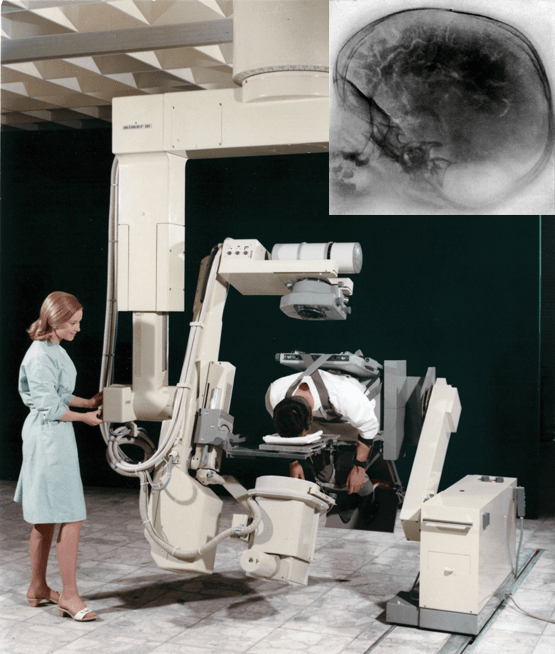
Walter Dandy is credited with pioneering which diagnostic imaging technique around 1918–1919, allowing indirect visualization of the ventricular system in the pre-CT/MRI era?
A) Cerebral angiography
B) Pneumoencephalography / ventriculography (air as contrast)
C) Positron emission tomography
D) Doppler ultrasonography
B) Pneumoencephalography / ventriculography (air as contrast)
Walter Dandy introduced pneumoencephalography and ventriculography, injecting air as a contrast agent (via lumbar puncture or directly into the ventricles) to outline the ventricular system on plain X-ray — a major diagnostic advance before the advent of CT and MRI, though the procedure was notoriously uncomfortable for patients.
300
A young adult presents with headache. Examine the CT and MRI panels, especially the internal signal pattern on T2 and the susceptibility signal in panel C. Catheter angiography shows no arteriovenous shunt. Which diagnosis is most likely?
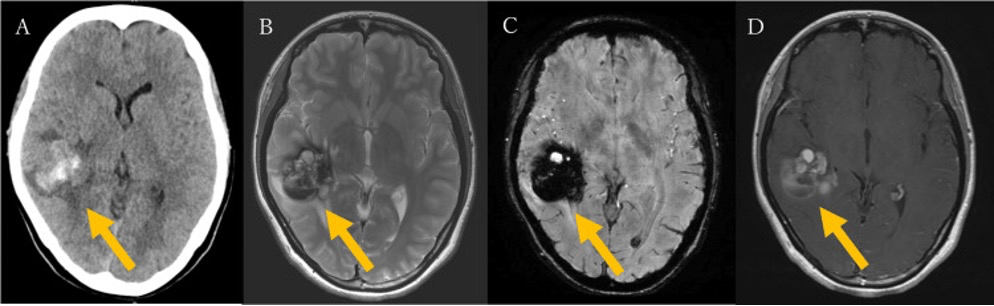
A: CT. B: T2 MRI. C: SWI. D: MRI after gadolinium.
A) Developmental venous anomaly alone
B) Pial arteriovenous malformation
C) Calcified oligodendroglioma
D) Cerebral cavernous malformation
D) Cerebral cavernous malformation
300
Lors d'une approche endoscopique lombaire transforaminale à travers le triangle de Kambin, quelle structure neurale forme la limite supéro-latérale oblique et est exposée au risque d'une canule de travail surdimensionnée ?
A) Racine nerveuse sortante
B) Ganglion de la racine dorsale controlatérale
C) Racine nerveuse traversante
D) Filum terminale
A) Racine nerveuse sortante
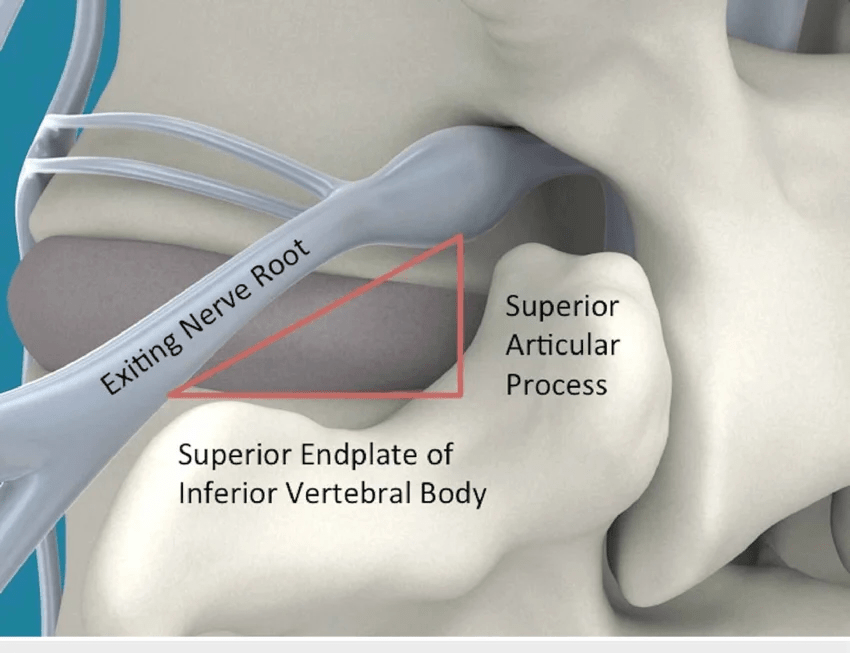
300
Occlusion of the anterior choroidal artery classically produces which clinical triad?
A) Contralateral hemiplegia, hemianesthesia, and homonymous hemianopia
B) Ipsilateral CN III palsy with contralateral hemiplegia (Weber syndrome)
C) Ataxia, nystagmus, and Horner syndrome (lateral medullary syndrome)
D) Bitemporal hemianopia with panhypopituitarism
A) Contralateral hemiplegia, hemianesthesia, and homonymous hemianopia
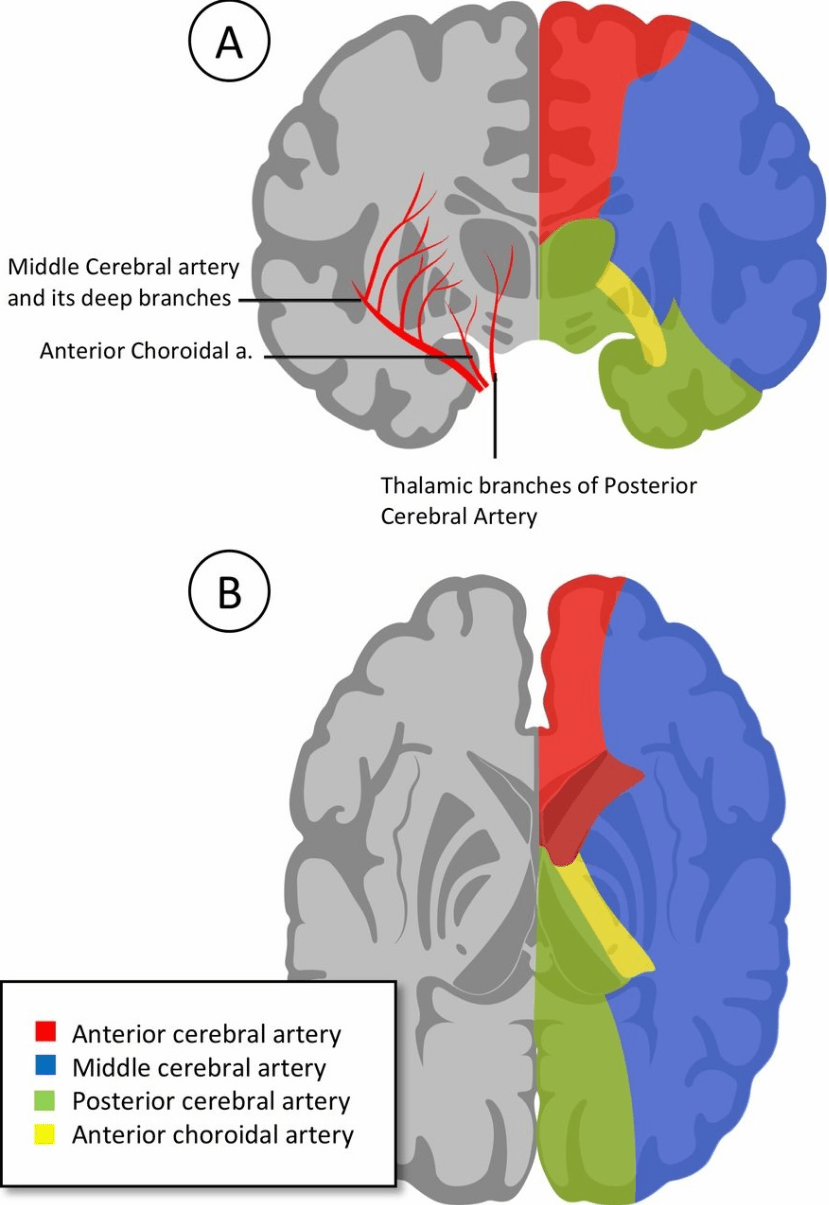 The anterior choroidal artery supplies the posterior limb of the internal capsule, optic tract, and parts of the thalamus/temporal lobe. Its occlusion classically produces contralateral hemiplegia (internal capsule), hemianesthesia (thalamus), and homonymous hemianopia (optic tract) — notable because, despite this wide territory, the AChA is a small, deep perforator often spared surgically but vulnerable to injury during aneurysm surgery near its origin from the ICA.
300
Dans les régions cérébrales où la barrière hémato-encéphalique est intacte, quel mécanisme explique la composante osmotique de la réduction de l'eau cérébrale après administration intraveineuse de mannitol ?
A) L'augmentation de l'osmolalité plasmatique attire l'eau du tissu cérébral vers la circulation sanguine.
B) Une baisse de l'osmolalité plasmatique entraîne une sortie d'eau du cerveau
C) Le mannitol ouvre directement les foramens du quatrième ventricule.
D) Le mannitol pénètre dans les neurones et y attire l'eau.
A) L'augmentation de l'osmolalité plasmatique attire l'eau du tissu cérébral vers la circulation sanguine.
300
A conventional direct low-flow superficial temporal artery to middle cerebral artery bypass is planned for flow augmentation. Which recipient and anastomotic arrangement is most typical?
A) A cortical M4 branch with an end-to-side anastomosis
B) An M2 branch with an end-to-end anastomosis
C) A cortical M4 branch with an end-to-end anastomosis
D) The M1 trunk with an end-to-end anastomosis
A) A cortical M4 branch with an end-to-side anastomosis
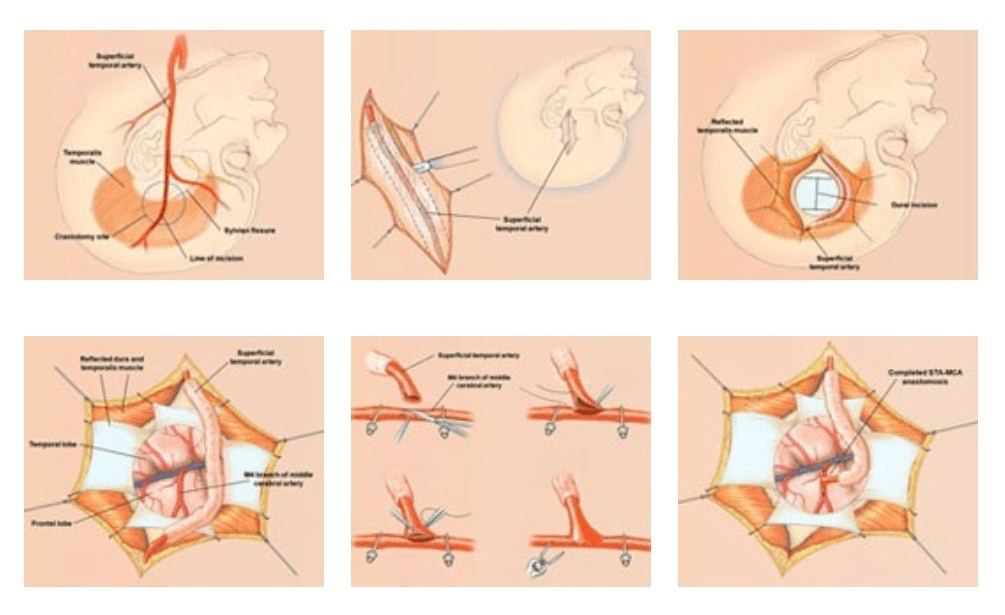
300
The shaft of a rigid 30-degree endoscope is held at a fixed position and direction, then rotated around its long axis. What changes principally?
A) The physical bend of the shaft toward the new target
B) The optical system becomes a 0-degree endoscope
C) The direction of the oblique view around the shaft axis
D) The diameter of the working channel increases
C) The direction of the oblique view around the shaft axis
300
Who is credited with the first successful surgical removal of a spinal cord tumor, in 1887?
A) Victor Horsley
B) Harvey Cushing
C) William Macewen
D) Wilder Penfield
A) Victor Horsley
Victor Horsley performed the first successful removal of an intradural spinal tumor in 1887, a landmark case in the founding of spinal neurosurgery
300
Identify the septal vein in this image:
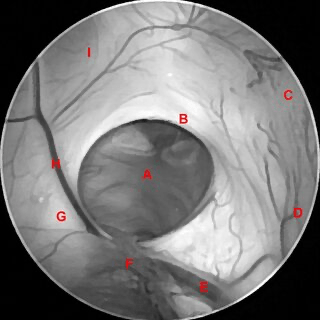
A- D
B- E
C- F
D- H
D- H
300
Lors d'une intervention rétrosigmoïde de préservation auditive, la paroi postérieure du conduit auditif interne est forée latéralement. Quelle structure est particulièrement importante à ne pas léser ?
A) Canal semi-circulaire antérieur
B) Canal semi-circulaire latéral
C) Canal semi-circulaire postérieur
D) Canal carotidien à l'apex pétreux
C) Canal semi-circulaire postérieur
400
MRI shows a purely extraforaminal disc herniation at L4–L5 on the right, without a central or lateral-recess component. Which nerve root is most likely to be compressed?
A) Right L3 root
B) Right L4 root
C) Right L5 root
D) Right S1 root
B) Right L4 root
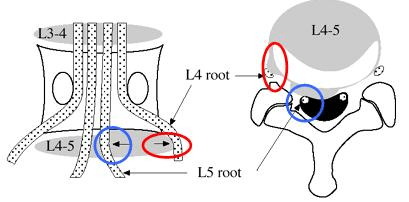
400
Au niveau des plexus choroïdes, quelle structure constitue la principale barrière anatomique limitant le passage paracellulaire du sang vers le LCR ?
A) La pie-mère recouvrant les convexités cérébrales
B) Jonctions communicantes entre les astrocytes
C) Jonctions serrées entre les cellules épithéliales des plexus choroïdes
D) Jonctions serrées entre les cellules endothéliales capillaires fenêtrées
C) Jonctions serrées entre les cellules épithéliales des plexus choroïdes
400
After anterior clinoidectomy, the surgeon seeks additional mobility of the paraclinoid internal carotid artery. Which dural structure directly tethers the artery at its transition into the intradural compartment?
A) Petroclinoid ligament over Dorello's canal
B) Free edge of the tentorium
C) Distal dural ring
D) Falciform ligament
C) Distal dural ring 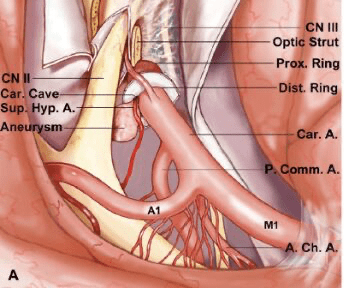
400
Quel est le nom de cet instrument ?
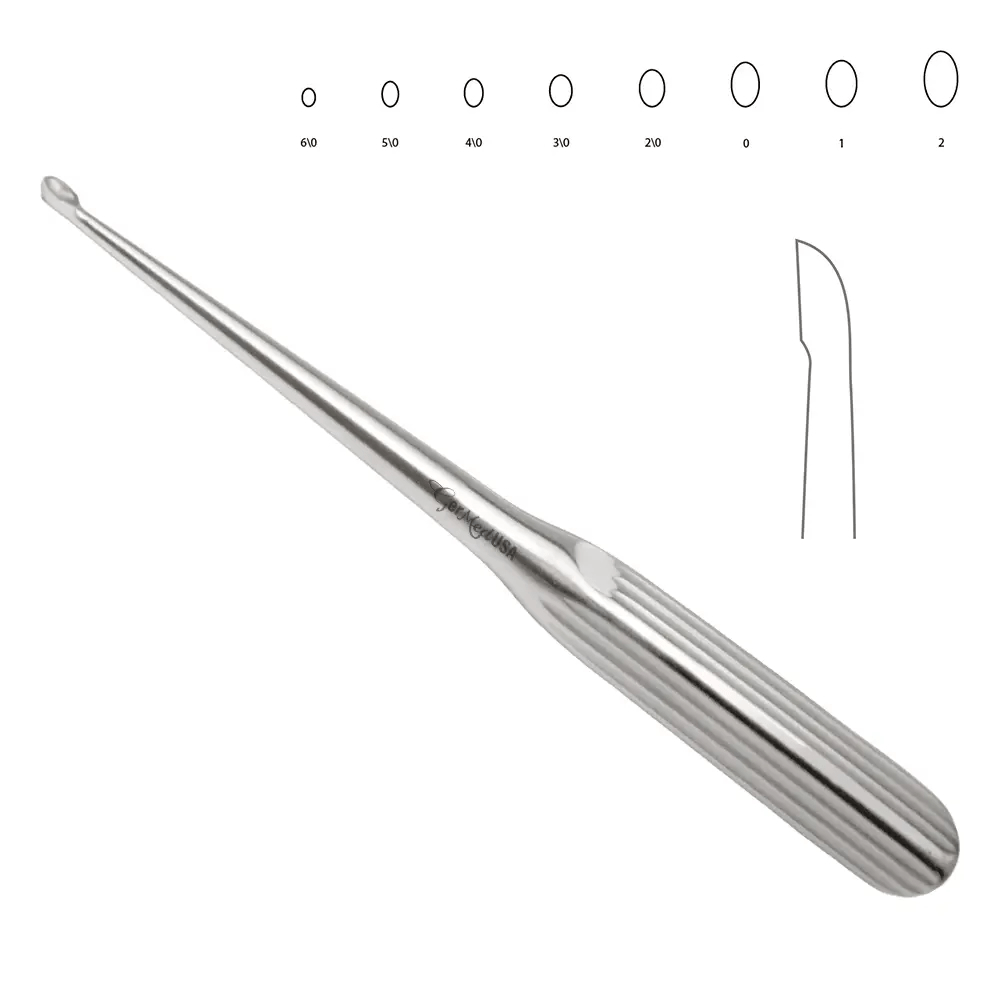
A- Curette de Still
B- Curette de Volkmann
C- Ma curette : « Rendez-moi ma curette ! »
D-Curette D-Lempert
Curette D-Lempert
400
Theodore Kurze is credited with the first reported neurosurgical use of the operating microscope in 1957. Which surgeon is most closely associated with subsequently popularizing and refining microneurosurgical technique broadly across vascular and skull base surgery in the following decades?
A) Harvey Cushing
B) M. Gazi Yasargil
C) Wilder Penfield
D) Victor Horsley
B) M. Gazi Yasargil
M. Gazi Yasargil is widely credited with developing and popularizing microneurosurgical technique from the 1960s onward — including microsurgical approaches to aneurysms, AVMs, and skull base tumors — fundamentally shaping the field of modern microneurosurgery
400
A patient has orthostatic headache and these MR findings. A prior lumbar puncture recorded an opening pressure within the laboratory’s normal range. Which interpretation best reconciles the clinical and imaging evidence?
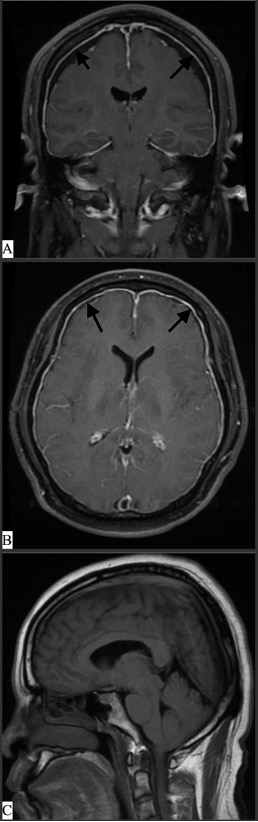
Postcontrast MRI: coronal (A), axial (B), and sagittal (C).
A) Pachymeningeal enhancement proves bacterial leptomeningitis
B) Spontaneous intracranial hypotension from CSF loss remains possible despite the normal opening pressure
C) The findings establish congenital Chiari I malformation without a CSF-volume disorder
D) The normal opening pressure excludes spinal CSF leakage
B) Spontaneous intracranial hypotension from CSF loss remains possible despite the normal opening pressure
400
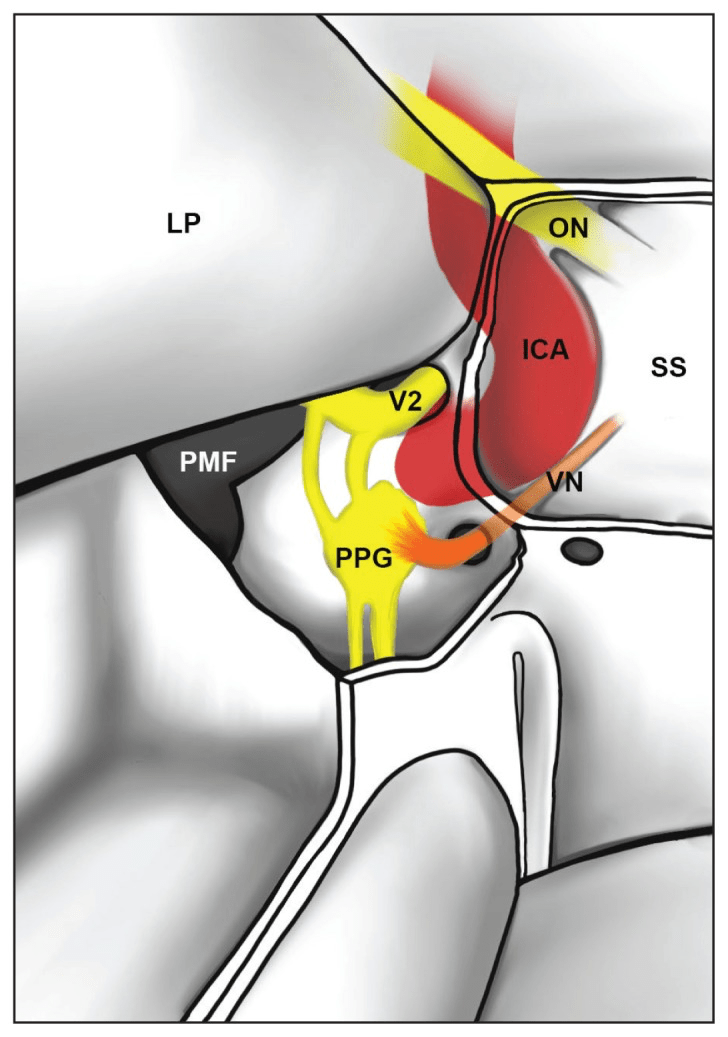
Lors d'une exposition endoscopique transptérygoïdienne, le canal vidien sert de repère postérieur pour localiser l'artère carotide interne. Quelle région permet-il de localiser ?
A) La bifurcation de la carotide en artères cérébrales antérieure et moyenne
B) Le genou antérieur de l'ACI pétreuse à sa transition vers le segment lacéré
C) L'artère carotide interne cervicale immédiatement sous le canal carotidien
D) L'ACI supraclinoïdienne à l'origine de l'artère communicante postérieure
B) Le genou antérieur de l'ACI pétreuse à sa transition vers le segment lacéré
400
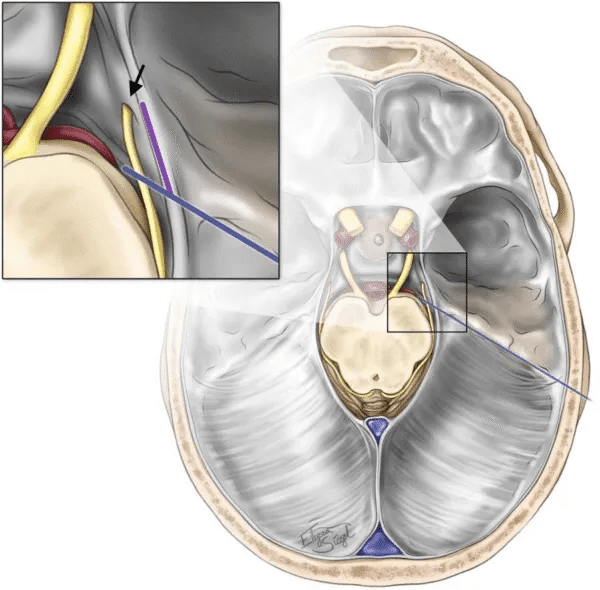
During a transtentorial exposure, a thin cranial nerve must be identified before dividing the free tentorial edge. It has passed around the midbrain through the ambient cistern and then enters a dural canal within that edge. Which nerve is it?
A) Trochlear nerve
B) Ophthalmic division of the trigeminal nerve
C) Oculomotor nerve
D) Abducens nerve
A) Trochlear nerve
400
Un patient présente une hyponatrémie hypotonique profonde depuis plusieurs jours. Quelle adaptation cérébrale permet d'expliquer le risque de démyélinisation osmotique en cas d'augmentation trop rapide de la tonicité plasmatique ?
A) Augmentation de la sécrétion de LCR qui reste inchangée pendant la correction
B) Fermeture irréversible de tous les canaux d'aquaporine lors d'une hyponatrémie
C) Accumulation d'osmolytes intracellulaires suivie d'un afflux d'eau lors d'une correction rapide
D) Perte d'osmolytes intracellulaires suivie d'un efflux d'eau lors d'une correction rapide
D) Perte d'osmolytes intracellulaires suivie d'un efflux d'eau lors d'une correction rapide
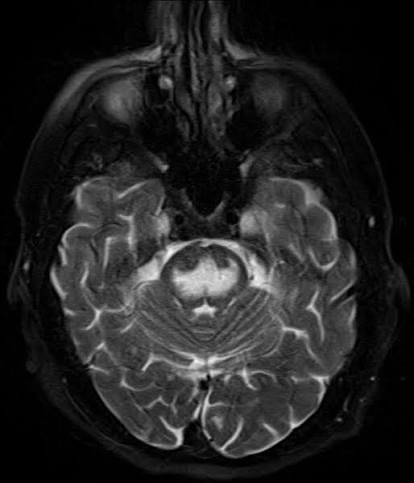
La myélinolyse centropontine (MCP), également connue sous le nom de syndrome de démyélinisation osmotique, survient lorsque l'eau sort rapidement des cellules cérébrales et nerveuses, ce qui les fait rétrécir et les déshydrater gravement.
400
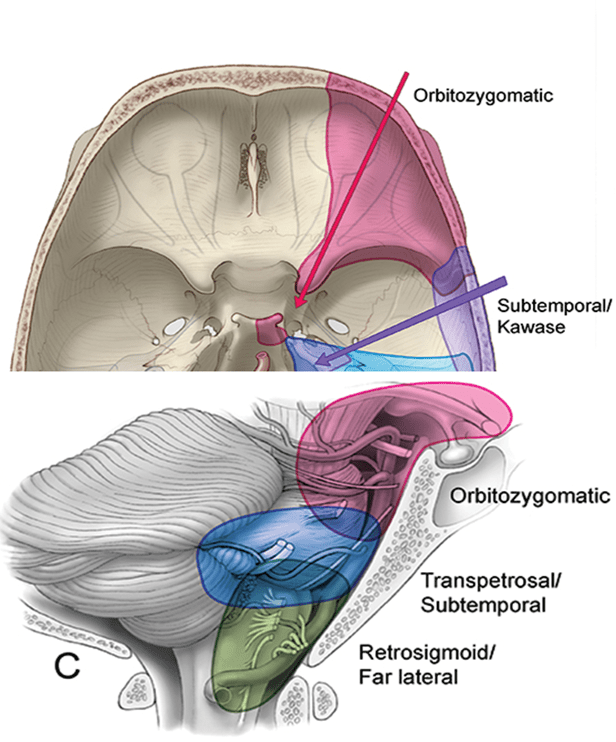
In the orbitozygomatic extension of the pterional approach, removal of the orbital rim and zygomatic arch primarily achieves which surgical advantage?
A) A shallower, wider trajectory to CPA and lateral midbrain lesions
B) A shallower, wider trajectory to basilar apex/upper clival lesions with reduced temporal/frontal lobe retraction
C) Direct access to orbital and infra temporal fossa
D) Direct access to the contralateral cavernous sinus without crossing midline
B) A shallower, wider trajectory to basilar apex/upper clival lesions with reduced temporal/frontal lobe retraction
400
Quel est le nom de ces instruments chirurgicaux de haute précision utilisés principalement en neurochirurgie vasculaire, en chirurgie de la base du crâne et en microchirurgie vasculaire ?
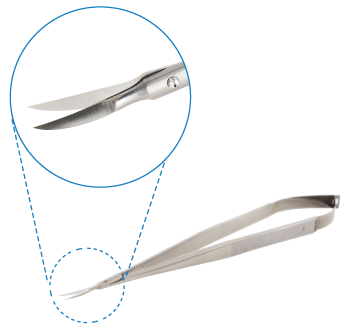
Ciseaux Takayama
Ciseaux B-Kamiyama
Ciseaux Kamisori C
Ciseaux D-Muranaka
Ciseaux B-Kamiyama
400
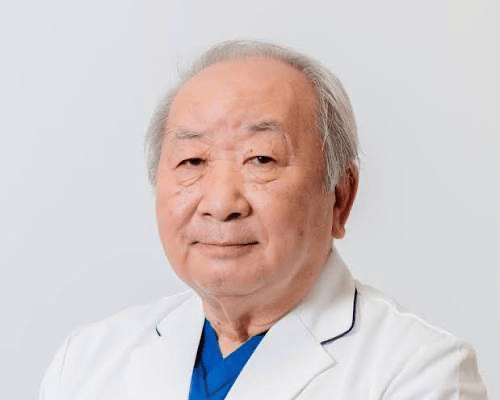
Which pair introduced the clinical scale described in the 1974 Lancet paper on assessment of coma and impaired consciousness, later widely known as the Glasgow Coma Scale?
A) William Hunt and Robert Hess
B) Graham Teasdale and Bryan Jennett
C) Robert Spetzler and Neil Martin
D) C. Miller Fisher and J. Philip Kistler
B) Graham Teasdale and Bryan Jennett

400
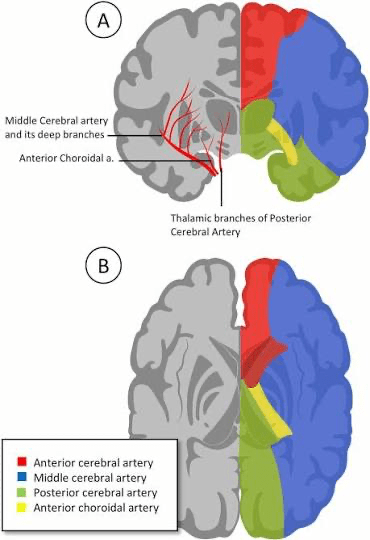
The image shows MRI patterns of cerebral stroke. Which artery is most likely to cause this image?
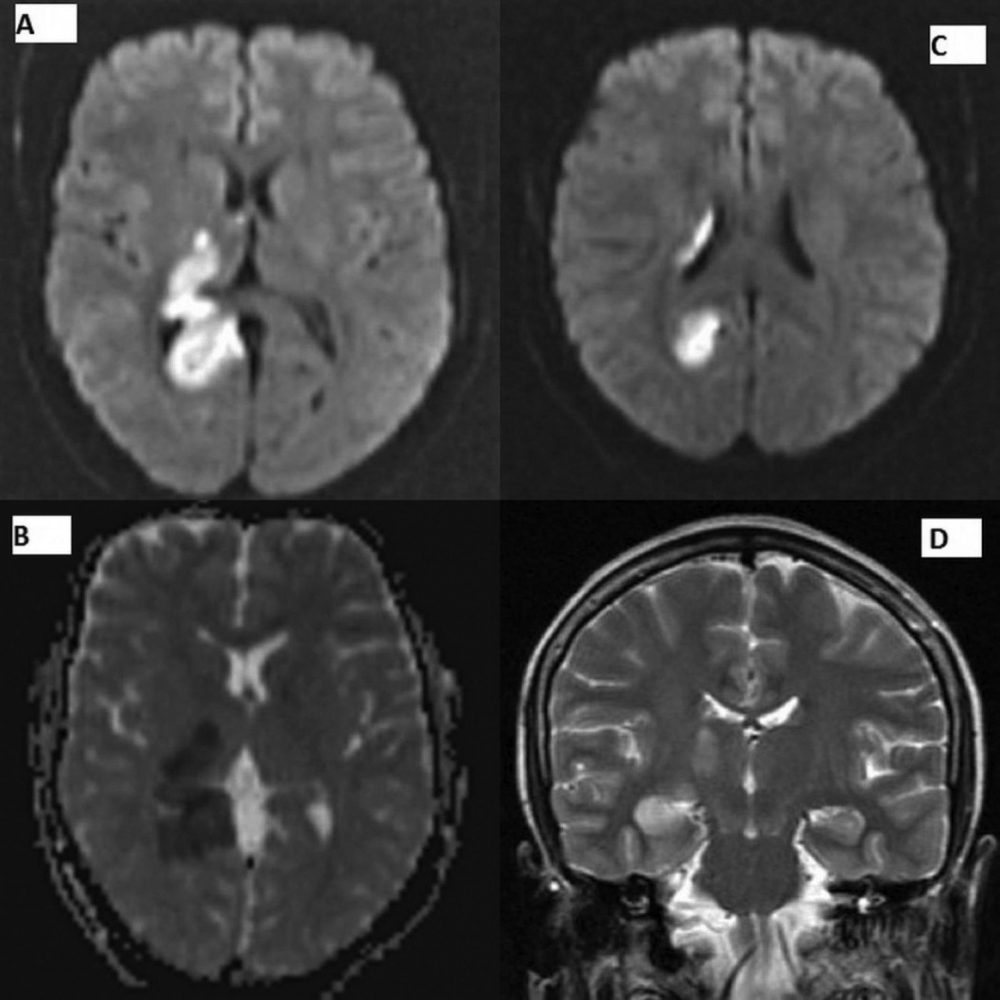 A- Pericallosal artery
B- Middle cerebral artery
C- Anterior choroidal artery
D- Heubner artery
C- Anterior choroidal artery
400
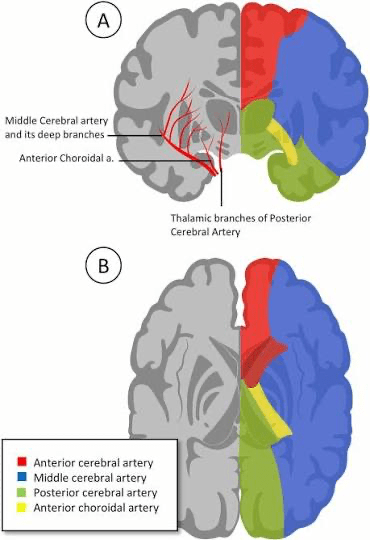
Après le clampage d'un anévrisme de la carotide interne, une hémiplégie controlatérale, une hémianopsie et une hémianopsie homonyme apparaissent sans aphasie. L'infarctus touche la capsule interne postérieure et la voie visuelle rétrochiasmatique. Quelle branche artérielle est la plus susceptible d'être atteinte ?
A) Artère récurrente de Heubner
B) Artère communicante antérieure
C) Artère choroïdienne antérieure
D) Artère orbitofrontale médiale
C) Artère choroïdienne antérieure
500
After occlusion of a small perforator arising from one P1 segment, a patient develops bilateral paramedian thalamic and rostral midbrain infarction despite patent basilar and distal posterior cerebral arteries. Which arterial variant explains this distribution?
A) A persistent primitive trigeminal artery connecting the carotid and basilar systems
B) An artery of Percheron supplying both paramedian thalami from a single P1 origin
C) An azygos anterior cerebral artery supplying both medial frontal lobes
D) A fetal posterior cerebral artery supplied through the posterior communicating artery
B) An artery of Percheron supplying both paramedian thalami from a single P1 origin
500
Laquelle des propositions suivantes décrit le mieux le débit sanguin cérébral lorsque l'autorégulation cérébrale est totalement perdue ?
A. Elle reste constante malgré les variations de la PAM.
B. Elle devient directement dépendante de la pression de perfusion cérébrale.
C. Elle devient indépendante de la pression intracrânienne.
D. Elle est exclusivement régulée par la PaCO₂.
B. Elle devient directement dépendante de la pression de perfusion cérébrale.
La perte d'autorégulation cérébrale rend le débit sanguin cérébral passif en termes de pression, ce qui signifie que les changements de la PPC influencent directement le débit sanguin cérébral, en supposant que les autres déterminants restent stables.
500
The far-lateral approach to ventral foramen magnum lesions requires partial drilling of which structure, and this exposure places which vessel at particular risk?
A) Drilling the jugular tubercle; risk to the sigmoid sinus
B) Drilling the occipital condyle; risk to the V3 (horizontal/extradural) segment of the vertebral artery
C) Drilling the mastoid tip; risk to the internal jugular vein
D) Drilling the clivus; risk to the basilar artery
B) Drilling the occipital condyle; risk to the V3 (horizontal/extradural) segment of the vertebral artery
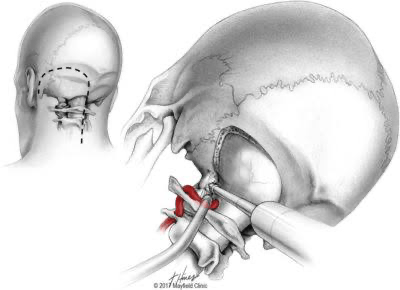
The far-lateral approach involves partial (typically posterior one-third) drilling of the occipital condyle to widen the exposure to the ventral foramen magnum/lower clivus. The V3 segment of the vertebral artery, which curves posteriorly around the C1 lateral mass before entering the dura, is at significant risk during this exposure and must be carefully mobilized.
500
Lors du traitement d'un anévrisme par clippage, quel type de clip est spécialement conçu pour préserver l'artère mère traversant la configuration du clip ?
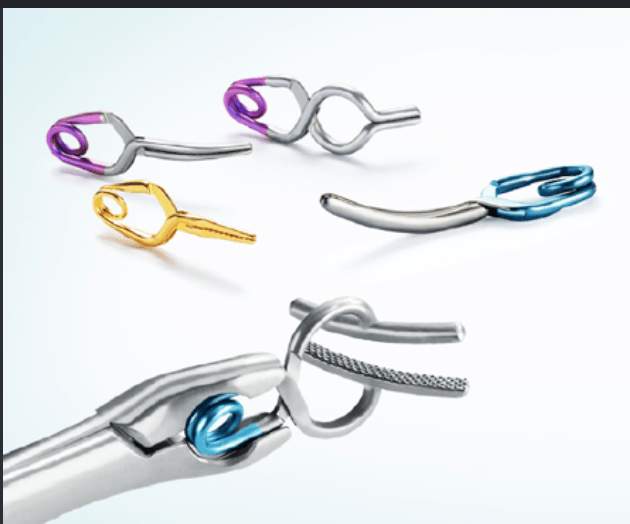
A. Clip droit
B. Clip de baïonnette
C. Clip fenêtré
D. Clip incurvé
C. Clip fenêtré
Un clip d'anévrisme fenêtré possède une ouverture qui permet à l'artère mère ou à une autre structure vasculaire de passer, tandis que les lames occluent le collet de l'anévrisme.
Son utilisation nécessite une évaluation minutieuse de l'anatomie vasculaire afin d'éviter toute sténose ou occlusion.
500
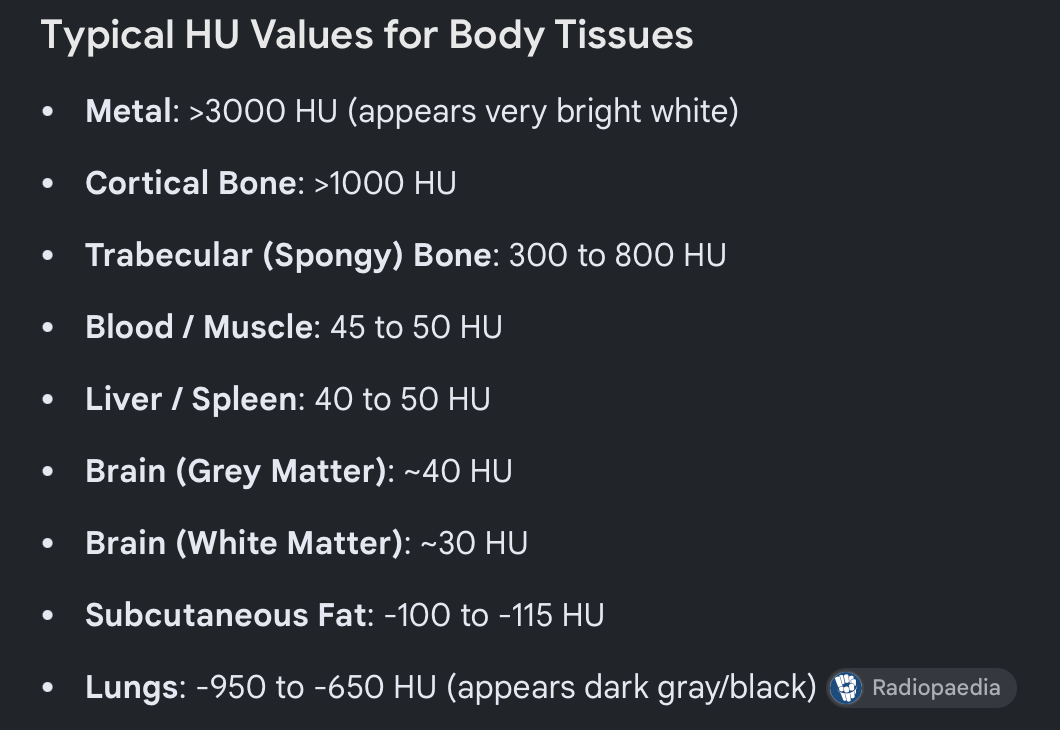
Which pair shared the 1979 Nobel Prize in Physiology or Medicine for work that transformed neurosurgical diagnosis through computed tomography?
A) Paul Lauterbur and Peter Mansfield
B) Felix Bloch and Edward Purcell
C) Egas Moniz and Walter Hess
D) Allan Cormack and Godfrey Hounsfield
D) Allan Cormack and Godfrey Hounsfield
500
A patient presents with persistent headaches, and transient episodes of blurred vision. MRI performed is suggestive of what pathology?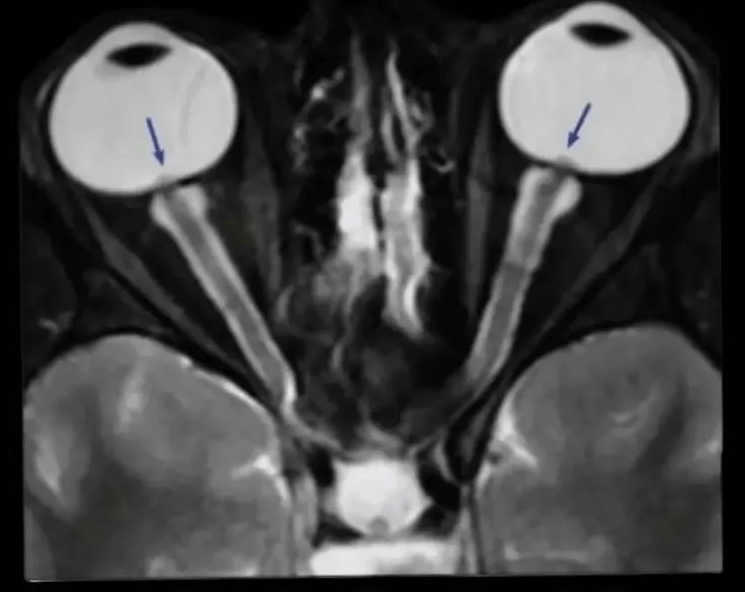
A- Optic neuritis
B- Optic Nerve glioma
C- Papilledema secondary to IIH
D- Optic nerve atrophy
C- Papilledema secondary to IIH
The MRI shows bilateral tortuous, fluid-filled optic nerve sheaths, flattening of the posterior sclerae, and protrusion of the optic discs into the globes.
500
Lors de la surveillance peropératoire des potentiels évoqués moteurs (PEM), quel agent anesthésique supprime le plus fortement les réponses PEM ?
A. Propofol
B. Rémifentanil
C. Kétamine
D. Sévoflurane
D. Sévoflurane
Les anesthésiques volatils entraînent une suppression dose-dépendante de l'amplitude des potentiels évoqués moteurs (PEM). Le sévoflurane affecte significativement la fiabilité des PEM, notamment à fortes concentrations.
L’anesthésie intraveineuse totale (TIVA), utilisant généralement du propofol et du rémifentanil, est généralement préférée pour une surveillance fiable des MEP.