Strokes and Safety
Breathe Easy
Vascular Access
Wounds and Ostomies
Tubes and Drains
A Mixed Bag
100
This is the most significant indicator for a fall.
What is if the patient has a history of falling.
100
GT is admitted with a 5 lb weight gain overnight, SOB, VS - HR 112, RR 24, O2 sat 86% on RA, 2+ LE pitting edema, LS with crackles. Based on this information, this is GT's most likely diagnosis.
What is CHF exacerbation.
100
This is the length of time that a peripheral IV catheter can be left in a vein before it needs to be removed.
What is, there isn't one. A peripheral IV catheter can remain in for the duration of therapy provided the site is healthy and the catheter and dressing are clean, dry, and intact.
100
This is when you can use a chair pad and green heel suspension boots when caring for your patient.
What is with any patient who is at risk for or who has a pressure injury.
100
This is the frequency with which Foley care should occur (at least).
Every shift
100
This is the person who is responsible to notify NEDS of an asystolic death at BIDN
Who is the RN
200
This is an assessment done by Speech Therapists if a patient is suspected of having a new stroke.
What is a bedside swallow screen
200
A 26-year-old patient with asthma desaturates to 85% on room air. His saturation increases to 92% with oxygen via nasal cannula. This is what the Derenzo RN does next.
What is contacts the provider and obtains an O2 order.
200
It is 3:00 AM on an extremely busy night shift. You notice that your patient's IV site is a little wet underneath the transparent dressing. This is your next step. Your patient is known to have difficult IV access.
What is take down the dressing to check for a loose connection. If the connection is loose, tighten it, then flush it to see if it leaks. If the IV is patent, re-dress. If it is leaking, remove the IV.
Check to see when the patient's next IV infusion is due and get help as needed.
200
This is the name of the devitalized tissue in the picture below:
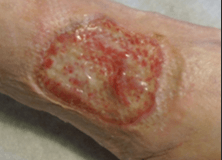
What is slough.
200
This is one way to locate discharge teaching instructions in Epic for a patient who is being discharged with a urinary leg bag.
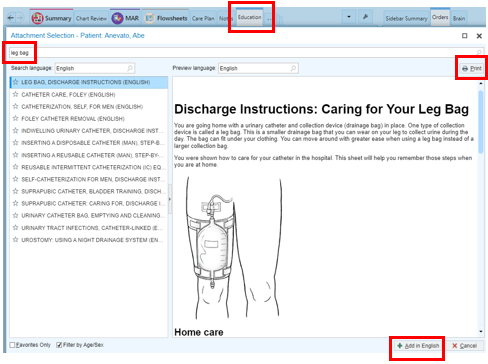
200
This is where the nurse can find out how to manage a transfusion reaction.
What is in the policy: Transfusion Reaction Management Guideline CPM 200-2.
300
These are 3 of the four times that patients on the inpatient units are assessed for fall risk using the Johns Hopkins Fall Risk Assessment Tool.
What is:
On admission
At least once per shift
With a change in condition
On transfer to a different level of care
300
This is why you should be cautious about having an elder drink through a straw.
What is because a straw tends to make the liquid go to the back of the throat more quickly by passing the taste, temperature, and other sensory aspects, thereby increasing the risk for aspiration.
300
This is the method for how we flush IV catheters.
What is (pulsatile) push-pause method.
300
This is when the nurse needs to communicate a new pressure injury to the provider.
What is always!
Safety report
Wound consult
Document
300
This is a one reason you should never let a CBI run dry.
What is because a clot can accumulate and occlude the catheter which worsens retention
The clot consumes clotting factors which perpetuates bleeding
Forceful hand irrigation causes more bleeding which requires that patients have a CBI longer
300
You pick up blood for your patient. Before you start infusing the blood, you notice that the IV is infiltrated and your first attempt to insert a new IV is unsuccessful. This is what you should consider while getting help to establish IV access.
What is returning the blood to the blood bank
400
This is what must always be activated before calling a Code Stroke
A Rapid Response by calling x33737
Once the operator answers provide the following information: location of patient, building/department, floor & room, callback number
400
This is the only time an order is not needed on the med/surg units to begin or increase oxygen.
What is in an emergency when the doctor is on their way.
400
This is when Basic Infusion might be used on the Alaris pump.
What is when there are no options for delivering a medication within the Guardrails system.
-> First, review with a senior nurse and/or pharmacist
400
This is the type of ostomy typically created when a reversal is expected (temporary).
What is a loop ostomy.
400
These are the indications for an indwelling urinary catheter (name as many as you can)
Hematuria
Obstruction
Urologic Surgery
Decubitus Ulcer
I&O Critical
No code/palliative/hospice
Immobility
400
This is what you would do if you are unable to draw blood from one of the lumens of a double lumen PICC line after flushing
Reposition, change the needless connector, pursue Cathflo (alteplase)
500
These are at least 3 of your priority interventions when a Code Stroke is initiated
1 - Record LKW
2 - Check FSBG
3 - Patient to CT
4 - EKG
5 - Labs
6 - Ensure at least 1 IV access, preferably 2
7 - Accurate weight (if receiving TNK)
500
This is the acceptable O2 sat range for a known CO2 retainer admitted with a COPD exacerbation
What is 88-93%.
500
This is when the RN should change a patient's central line/PICC dressing (include all circumstances)
- Every seven days
- Immediately if compromised or soiled
- Every 24 hours if there is gauze at the insertion site
500
Due to its location in the intestine, this is a major emphasis of teaching with patients who have had an Ileostomy.
Hydrate!
500
This is the grade at which the CBI should be increased:
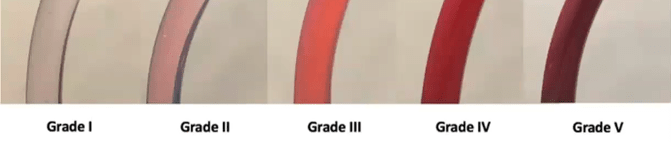
What is grade IV or V
500
This is when you will need to do a 2-nurse verification with a continuous heparin infusion
What is...
New Bag
Restarted
Rate Change
Handoff